Connect with us

News

Sad: Two women die as residents flee Niger communities over fears of bandit attacks

Published

on

ADVERTISEMENT
Zoom Ad
ADVERTISEMENT
Zoom Ad

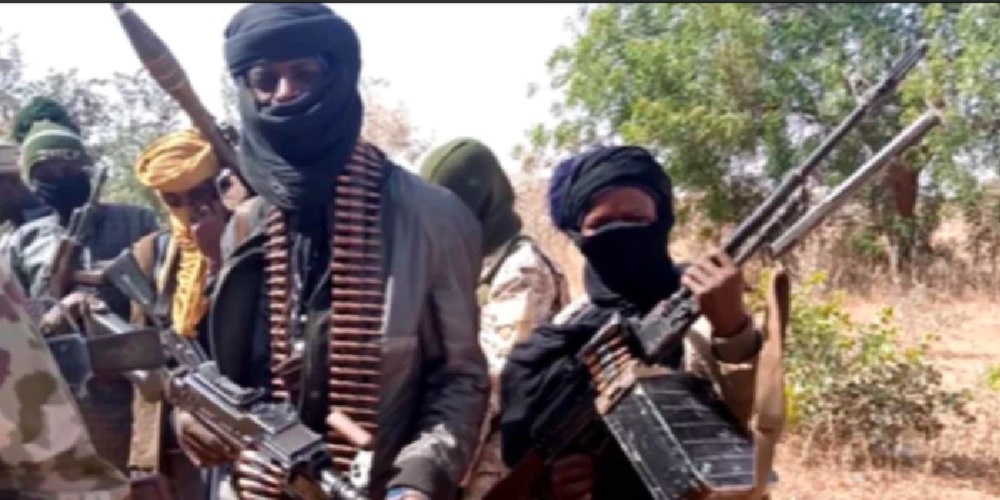
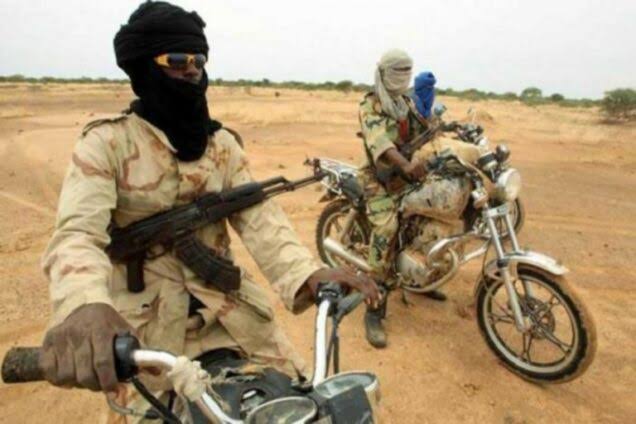
Residents of Bassa and surrounding communities in Shiroro Local Government Area have abandoned their homes in large numbers, rendering the towns virtually deserted, after rumours of an impending bandit attack sparked widespread panic.


Two women who had high blood pressure were said to have collapsed and died as they rushed out of the town to Kuta, which is the headquarters of Shiroro local government area.

Local sources who spoke directly to residents in Bassa, Bagna, and Erena confirmed there has been no actual bandit attack in Bassa, but the exodus from the town was triggered by fear that bandits planned reprisals against vigilantes and local hunters who had assisted security forces during a recent large-scale bandit incursion into Bagna and Erena communities.

Sources said that Bassa itself is now empty, adding that surrounding communities, including Erena and Bagna, are similarly deserted. Several of the residents are said to have crossed to Gurumana or Kuta for safety. The panic is not limited to one location; sources described it as a general flight for safety across the axis.

Advertisement

Sources also reported that tragic deaths occurred during the hasty evacuation, which included two women from Bassa, who were hypertension (BP) patients, who collapsed while fleeing to Gurumana; one died on arrival, and the other died after arriving at the hospital. A male vigilante from Bassa who is also a BP patient is said to have also died from shock during the flight.

The tension stems from recent violence in the area. Bandits had stormed Bagna and Erena in large numbers, leading to clashes with the Joint Security Taskforce and local volunteer forces. Vigilantes from Bassa were said to have supported operations in Bagna, heightening fears of targeted reprisals.

Hunters in the axis have advised residents to leave immediately, citing their inability to engage heavily armed bandits due to their lack of sophisticated weapons.

Social media had claimed an attack on Bassa, further fuelling the panic, though on-ground sources insist no attack has taken place there.

Advertisement

As of Thursday, the communities remain empty, with residents scattered in safer locations.

The Nation

Continue Reading
Advertisement

News

National Assembly moves to place security funding on first-line charge

Published

on

By

ADVERTISEMENT
Zoom Ad
ADVERTISEMENT
Zoom Ad

The National Assembly is considering a constitutional amendment that would place security funding on the first-line charge of the Federation’s revenue as part of efforts to tackle the country’s growing security challenges.

The proposal is contained in Bill No. 8 among the measures recommended for passage by the House of Representatives Committee on Constitution Review.

The amendment seeks to alter Section 81 of the Constitution to include the Armed Forces among institutions entitled to direct funding from the Consolidated Revenue Fund of the Federation.

Currently, agencies enjoying first-line charge funding under the Constitution include the Independent National Electoral Commission (INEC), the National Assembly and the Judiciary through the National Judicial Council (NJC).

Advertisement

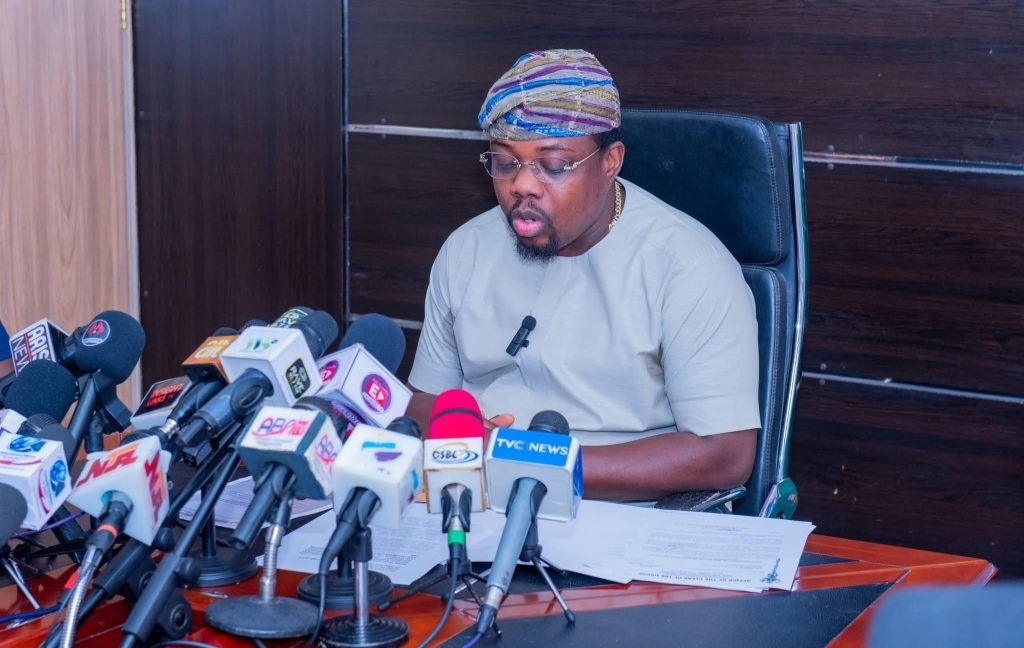
Speaking at the Chatham House Africa Programme Roundtable in London on Tuesday, Deputy Speaker of the House of Representatives, Benjamin Kalu, said security has remained the foremost priority of the 10th National Assembly since its inauguration in June 2023.

Addressing the theme, “Nigeria’s 2027 Elections: How to Ensure Electoral Integrity Amid a Deepening Security Crisis,” Kalu said the legislature has deployed its constitutional powers to confront insecurity through increased funding, enhanced oversight and ongoing efforts to establish state police.

He noted that allocations to the security and defence sector have risen from ₦2.98 trillion to ₦5.41 trillion in the 2026 budget, representing an 81 per cent increase over the past three years.

According to him, committees of the House are working closely with the executive arm of government and security agencies to monitor expenditure and ensure effective implementation of security-related projects and programmes.

Advertisement

Kalu expressed confidence that sustained investment, stronger oversight mechanisms and institutional reforms would strengthen the country’s capacity to address insecurity and safeguard democratic processes ahead of future elections.

The Deputy Speaker said, “Through its appropriation powers, the National Assembly has ensured that security funding has grown consistently and remains the single largest sectoral allocation in the national budget. Since the 10th Assembly commenced in June 2023, security and defence allocations have risen from 2.98 trillion naira to 5.41 trillion naira in the 2026 budget, an increase of over 81% in 3 years, and the single largest sectoral allocation for three consecutive years.

“We are also advancing a constitutional amendment to make security funding a first-line charge on the national budget, guaranteeing its release before other lines and removing it entirely from the uncertainty of discretionary timing. We believe it will pass. Because the protection of citizens is not a budget item that should compete for space.

“Through its oversight function, our committees have worked in partnership with the executive and the security agencies to ask the questions that strong institutions must ask of themselves. Not to find fault, but to find answers. How are appropriated funds being deployed? Where are the gaps between planning and execution? What does implementation look like on the ground? This is the work of a legislature that takes its constitutional responsibility seriously, and it is work we conduct in the spirit of shared commitment to a more secure Nigeria.

Advertisement

“Resources must translate into results and parliament’s role is to help ensure that they do that. Through its representative function, the House has considered over 1,500 substantive motions in its first three legislative years, between June 2023 and June 2026, with between 350 and 400 of them specifically focused on security matters.

“The majority addressed issues of urgent public importance, including banditry, kidnappings, attacks on farming communities, and the protection of vulnerable populations. These were not procedural gestures. They produced results.

“Resolutions led to the summoning of security chiefs before the House. They mandated the recruitment of forest guards. They secured commitments to protect schools in high-risk areas and to establish permanent security outposts in communities that had been left exposed.”

He disclosed that under its representative mandate, the House has considered over 1,500 substantive motions between June 2023 and June 2026, about 400 of which focused mainly on security, banditry, kidnappings, attacks on farming communities, and protection of vulnerable populations.

Advertisement

According to him, the motions led to the concrete actions of summoning security chiefs, mandating recruitment of forest guards, securing commitments to protect schools in high-risk areas, and pushing for permanent security outposts in exposed communities.

The Deputy Speaker also said that the National Assembly has passed the revised Cybercrimes Act 2024 and the Control of Small Arms and Light Weapons Act 2024 while advancing the Joint Doctrine and Warfare Centre Bill for better coordination among armed forces.

On state Police which he described as the “legacy initiative” of President Bola Ahmed Tinubu, Kalu said the piece of legislation that was overwhelmingly passed with 289 votes in the House recently would enhance the security of the country.

He argued Nigeria’s centralised police, designed before independence has failed to provide quick response, fast enough for a 923,000 sqkm nation with over 230 million people.

Advertisement

He said: “we have passed the revised Cybercrimes Act 2024 and the Control of Small Arms and Light Weapons Act 2024. We are advancing the Joint Doctrine and Warfare Centre Bill to institutionalise coordination across the armed forces.

“The reform I want to speak about most specifically, because it bears most directly on the 2027 elections, is the State Police Bill, the legacy initiative of President Bola Ahmed Tinubu, which the House of Representatives passed with 289 votes. And as I speak here right now, the Senate is in chamber considering this bill for further legislative actions.

“The case for state police begins with a simple question about response time. When a security incident occurs in a Nigerian community today, how long does it take for help to arrive? The honest answer, in too many communities, is: too long.

“Studies of centralised policing in large federations consistently demonstrate that response times beyond 15 minutes allow situations to escalate from manageable to irreversible. In communities distant from federal police infrastructure, that window closes long before the response arrives.

Advertisement

“Nigeria’s current centralised policing architecture was designed before independence. It was not designed for the security complexity of a 923,000 square kilometre or a population of over 230 million people in 2026.

“State police addresses this directly. The officer who comes from a community knows its roads, its markets, its people, its tensions. The officer who knows the forest will police the forest better than those hired from outside”, he said.

while allaying the fears of many Nigerians on the possible abuse of the State Police, Kalu said the bill inherently carries formidable guardrails, saying “I am clear about the safeguards. State police is not a licence for political capture.

“The bill mandates merit-based recruitment, national minimum standards, independent state police service commissions for oversight, state assembly accountability and strict constitutional limits on political interference.

Advertisement

“The concern about governors weaponising state police is legitimate, and we have legislated against it. What is not legitimate is allowing that concern to perpetuate a policing model that is visibly failing the communities it exists to protect. Currently, it is obsolete and must be done with”.

Speaking on electoral matters, the Deputy Speaker said the Electoral Act 2026, signed by President Bola Ahmed Tinubu on 18 February this year on the ongoing efforts to achieve the credibility of the elections in Nigeria, carries some reforms to close what the 2022 Act left open.

He listed some of the reforms to include making electronic transmission of results to IReV a legal obligation admissible before the election tribunals, with 10 years imprisonment for officers who announce false results and empowering INEC to review declarations made under duress or contrary to procedure within seven days to correct errors before they become court cases.

It also include creating a permanent National Electronic Register of Election Results accessible to every citizen as certified documents; keeping voter registration open until 90 days before elections while allowing transfers and downloadable PVCs to reduce disenfranchisement; and requiring parties to submit verified digital membership registers 21 days before primaries, abolishing indirect primaries to enforce “one member, one vote” and transparent candidate selection”.

Advertisement

He said even though the country was yet to arrive at its democratic journey, it is making steady progress in all facets of its national life.

He said, “We know this better than anyone. 27 years of democracy is, by the measure of nations, a young journey. We have made mistakes. We have faced security challenges that have tested the limits of our institutions and we have not always had the answers we wished we had. But we have never stopped asking the right questions.

“We have never stopped building. What I have shared today is not a finished story. It is a progress report from a legislature that is working, that is learning, and that believes deeply that the democratic project in Nigeria is worth every difficult reform it demands”.

Advertisement
Continue Reading

News

IGP bans unauthorised social media use by Police Officers

Published

on

By

ADVERTISEMENT
Zoom Ad
ADVERTISEMENT
Zoom Ad

The Inspector-General of Police, IGP Olatunji Disu, has prohibited unauthorised social media activities by personnel of the Nigeria Police Force, warning that such actions could undermine the Force’s integrity, professionalism and public image.

The directive, contained in a statement issued on Monday by the Force Public Relations Officer, CSP Anietie Iniedu, followed concerns over the increasing involvement of police officers in social media activities while in uniform or in circumstances that clearly identify them as members of the Force without official approval.

According to the IGP, although social media remains a valuable platform for communication and public engagement, its use by serving police personnel must strictly conform to existing laws, regulations and the Nigeria Police Force Social Media Policy.

He stressed that officers are barred from creating or sharing unauthorised content while in police uniform, publicly commenting on official police matters, disclosing sensitive operational information, or using their status as police officers for personal promotion, entertainment or commercial purposes.

Advertisement

The police boss directed all Commissioners of Police, Heads of Departments, Commanders and other supervisory officers to immediately sensitise personnel under their commands and ensure strict compliance with the directive.

He further warned that supervisory officers would be held accountable for any failure to address violations committed by personnel under their watch.

To strengthen enforcement, Disu ordered the Force Intelligence Department, FID, and the Professional Standards Department, also known as X-Squad, to intensify monitoring of social media platforms and identify officers whose online activities fall short of the professional standards expected of members of the Nigeria Police Force.

The IGP reiterated the Force’s commitment to discipline, professionalism and responsible public communication, assuring Nigerians that the Police would continue to uphold public trust and institutional integrity in the discharge of its duties.

Advertisement
Continue Reading

News

Benin monarch to place a curse on kidnappers, armed robbers, fixes date

Published

on

By

ADVERTISEMENT
Zoom Ad
ADVERTISEMENT
Zoom Ad

The Benin monarch, Omo N’Oba N’Edo Uku Akpolokpolo, Oba Ewuare II, has set July 10 as the date to place a curse on kidnappers, armed robbers, and anyone posing a security threat in his domain and in Edo State in general.

Oba Ewuare II set the date for his meeting with native doctors, the water goddess priestess Osokpikan, and adherents of Aiyelala and Olokun.

He told them to bring all instruments in their possession on that date to perform the exercise.

According to him, “Today is a great day. I welcome you with the power of our ancestors. Many things that are not supposed to be happening are happening in this state. We have to pray. Those that want to destroy the kingdom will not succeed.”

Advertisement

Speaking through Chief Osaigbovo Osamwonyi, the Akenuwa of Benin, Oba Ewuare II said his efforts were to support the state government to ensure peace reigns in the state.

“You all know what is happening. The Oba is trying to bring peace. All the bad things are what we want to wipe away. Use all that you have to send all the wicked ones away, so that we can have a good sleep.

“We don’t want kidnapping, armed robbery and other social vices in this state. We want peace. The Palace has done much behind closed doors. Use all that you have to chase away wicked ones.

“After 10 days, you all will return to the Palace with all you have to place a curse on whoever and wherever they are. We want to see change.”

Advertisement

On his part, Chief Egboye said, “Our Oba called us to remove all the wahala in this state. The prayers and actions will work. That is what our forefathers did. It has never failed.”

The Ohen N’ Ogbeguma N’ Ayen, Princess Juliet Ehigiamusoe, said they would come out with all things in the river and on the land to carry out the Oba’s order.

Continue Reading

Trending

Copyright © 2024 Naija Blitz News