By Gloria Ikibah


The House of Representatives has ordered the Central Bank of Nigeria to immediately stop further payments to ZTE Corporation until clear explanations are provided on the execution of a controversial $460 million CCTV surveillance project.
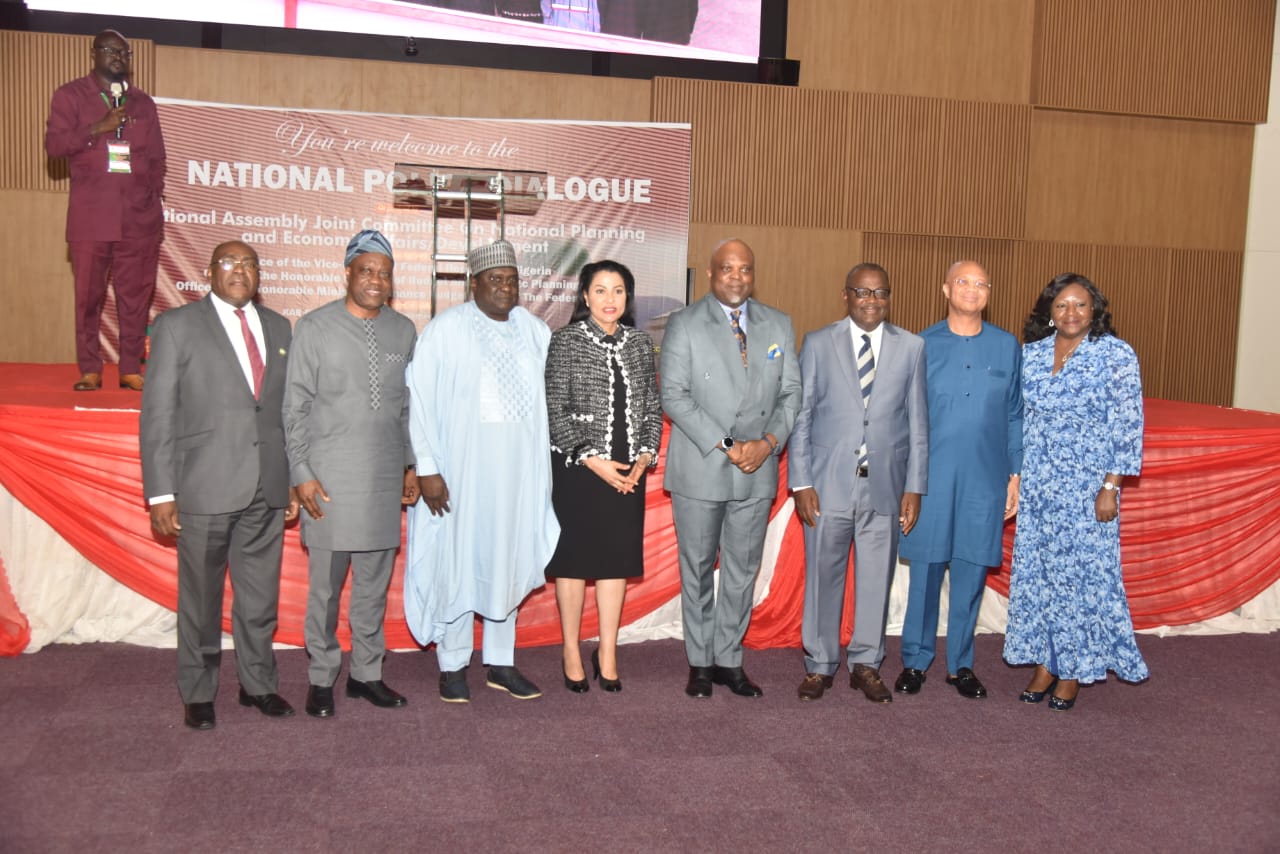
The directive followed the adoption of a motion presented during an investigative hearing by the Ad-Hoc Committee probing the $460 million Closed Circuit Television (CCTV) surveillance project in the Federal Capital Territory on Tuesday in Abuja.. 
Lawmakers voiced strong frustration over what they described as unclear and inconsistent responses from company representatives, particularly on key issues such as where the systems were installed, how they were deployed and whether they are still functioning.
As part of its resolution, the committee directed ZTE to return with detailed and verifiable records, including a full inventory of equipment supplied, exact installation locations across the country and the identities of hundreds of Nigerians reportedly trained to manage the system.
Opening the session, Committee Chairman Rep. Donald Ojogo stressed that the probe was aimed at uncovering facts rather than targeting individuals.
“This is a constructive engagement, not an attempt to witch-hunt anyone. Nigerians deserve clear answers, and we expect ZTE to respond in line with the documents before us,” he said.
Also during the hearing, ZTE’s representative, Irene Momoh, stated that the company completed installation of CCTV infrastructure in Abuja and Lagos between 2011 and 2012.
However, she admitted that the current state of the system could not be confirmed.
“To the best of our knowledge, the equipment was delivered and installed within the project timeline, but I cannot confirm its present operational status,” she said.
The admission drew sharp reactions from lawmakers, who questioned how such a high-value project could lack a clear maintenance structure.
Momoh explained that the company initially handled maintenance for three months and later extended it to six months before handing the system over to the government. She suggested that the decline in performance was linked to a lack of sustained funding after the handover.
The committee’s intervention signals mounting pressure for transparency and accountability in the handling of major public infrastructure projects.
“There was no continued funding from the government to maintain and run the system after handover,” he added.
Despite this explanation, lawmakers challenged several of the company’s claims, particularly on the geographical spread of the installations.
Citing documents from the Federal Ministry of Police Affairs, Iyawe Esosa disputed ZTE’s assertion that installations were limited to Abuja and Lagos.
“Official records indicate installations in Edo State. As someone who lives in Benin City, I can confidently say these facilities do not exist in the listed locations,” he said.
Momoh insisted that all components listed in the Bill of Quantities were fully delivered and installed in line with the terms of the contract.
However, Rep. Kolawale Akinlayo strongly disputed claims that any installations were carried out in Ekiti State, maintaining that there was no visible evidence to support such assertions.
“None of the locations listed, including Ado-Ekiti, has any of these facilities. Outside Lagos, there is no visible deployment in the South-West,” he said.
The hearing grew more tense when Momoh explained that his limited responses were due to the fact that he only took up his role in 2023, adding that several officials who handled the original contract were no longer with the company.
Lawmakers were unimpressed, interpreting the explanation as an attempt to sidestep accountability and warning that the matter could be escalated to the Nigerian Bar Association for possible disciplinary action.
A representative of the Central Bank of Nigeria, Josiah Okike, advised that any directive on payments should be channelled through the Office of the Accountant-General of the Federation to ensure proper execution.
He also revealed that, as of March 2026, ZTE was still expecting a payment of 15.37 million dollars under the loan repayment arrangement.
The committee resolved to summon the company again, demanding concrete documentation to confirm the handover of the project, including details of the government agencies that took over responsibility for the infrastructure.
The CCTV surveillance project, launched during the administration of former President Goodluck Jonathan, was conceived as a major step towards strengthening urban security through modern technology.
Funded through a loan agreement with the Chinese government and implemented by ZTE Corporation, the project was designed to install extensive camera networks across key cities such as Abuja and Lagos, backed by centralised command systems to support law enforcement operations.
Although initially presented as a breakthrough in tackling security threats such as terrorism, kidnapping and urban crime, the initiative has remained mired in controversy. Years after completion, doubts continue to surround its visibility, effectiveness and overall contribution to national security.
Successive governments have faced criticism over the failure to sustain the system, with persistent issues including inadequate maintenance, limited technical expertise, funding shortfalls and questions over contract execution.
The ongoing investigation by the House of Representatives reflects renewed efforts to uncover the fate of what lawmakers consider a major public investment that has yet to deliver meaningful results.