

News
Vice President Shettima Pushes Urgent Overhaul of Nigeria’s Planning System

By Gloria Ikibah
Vice President Kashim Shettima has called for sweeping reforms to Nigeria’s budgeting framework, warning that the country must adopt a more realistic and development-driven approach to public spending.
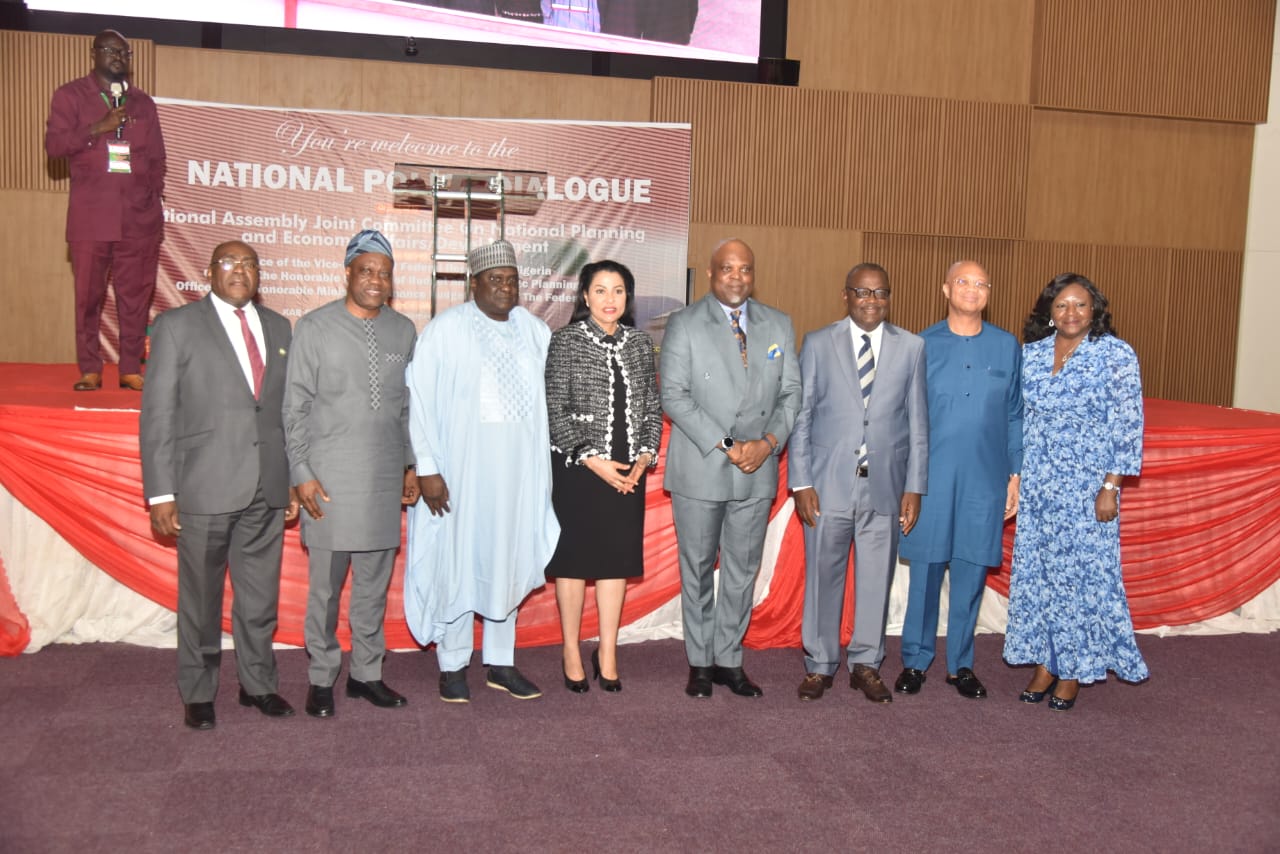
Speaking at a two day National Policy Dialogue organised by the National Assembly Joint Committee on National Planning and Economic Development with the Theme: “The Imperatives of National Development Plan for Effective Budgeting System and Sustainable Growth Of the Nigerian Economy”, which began in Abuja on Tuesday,the Vice President stressed the need to align annual budgets more closely with long-term development plans in order to achieve sustainable growth.

Shettima who was represented by his Special Adviser on Economic Matters, Tope Fasua, highlighted the importance of rethinking how budgets are designed and implemented, noting that the country’s development ambitions depend heavily on a more coherent planning structure.
The event brought together policymakers and experts to examine how Nigeria can accelerate progress through better integration of planning and budgeting.
He stressed that the focus of the discussions was to find practical ways of linking short-term fiscal decisions with medium- and long-term national priorities.
He said, “t the very time, it was a very important topic for the moment and for the time to come in view of President Tinubu’s great vision for the people of Nigeria, according to the renewed agenda of Mr. President.
“Also, it’s asked, how can our budgets be impacted more positively by these plans and how do we institute a path towards sustainable growth, which not only focuses on the annual trajectory of our domestic product GDP, but also focuses on the improvement of standards of living of our people as measured by reduction in poverty rates and the rise of per capita income.
“This is an apt moment to echo the thoughts of President Bola Ahmed Tinubu, and the Minister, the Minister of Budget and Planning, to the extent that our budgets should not only be people-focused. But our budgets should actually be larger than they are presently. This informed the recent adjustment to the 2026 budget, fiscal budget, by about 10 trillion line, to taking the sum to 68 trillion”.
According to the Vice President some critics, have opined that Nigeria should have a much smaller budget, adding that “they need to be reminded that budgeting is not a process of reviewing past shortcomings and capitulating to limitations, but a process by which Nigeria documents its greater future and challenges itself to do even better than the past.
“The usual refrain about revenue generation has been well addressed by Mr. President’s Acts on Revenue Reforms, which have kicked in since January 2026, with great promise. Many institutions have become fiscalized. Many are leading to a decline. Many institutions have become fiscalized. Many are leading to a better capture of revenues that would have otherwise been lost to government.
“Technology has also been deployed to get to where human beings need to go. And so we believe that revenue numbers for 2026 and beyond will paint a positively different picture. Indeed, we must also recognize the recent Fiscal Policy Measures, (FPMs), which were articulated by the Office of the Minister of Finance and Foundation Management. Nor is it a symbol of the beneficial and positive impact of high-quality business on the economy”.
He further stated that many tariffs on essential raw materials and other similar products were reduced to the benefit and further benefit of the citizenry tariffs on essentials, raw materials and other similar products were reduced adding that Duty of pharmaceuticals, fabric, machinery, and some specific manufacturing equipment have also been removed with a view to encouraging higher productivity in critical sectors.
“This deft move signals that the Tinubu government greatly cares for the people of Nigeria, and there is so much more to come. Economic planning is a national imperative, and President Tinubu is a great believer in this idea, not necessarily in the rigidities and strictures reminiscent of Soviet-era economics, but in a more nuanced and data-driven manner, which quickly distills into the economic well-being of the people.
“Currently, our budgets are being guided by the Medium-Term Expenditure Framework (MTEF) as well as the national development plans. These plans could be put together by the budgets and planning ministry. Distinguished ladies and gentlemen, the largest room in the world is the room for improvement. Therefore, in spite of current achievements and structures of ground, a lot more can be achieved, especially around sustainable development.
“Again, this will be measured by higher per capita income for our people and long-term growth. As well as better standards of living and significant leaps in the 17 metrics measured under the United Nations Sustainable Development Goals. Measurements around poverty in general, food poverty in particular, health, education, water, and much more”, he added.
Also speaking at the forum, Director General of the Nigeria Institute of Social and Economic Research, Professor Anthonia Simbine, pointed to deep-rooted structural issues undermining development efforts.
She said the country’s challenges are not due to a lack of plans, but rather poor execution and weak coordination.
“The challenges facing the country was not as a result of absence of development planning, but weak implementation discipline as well as misalignment between plans and budgets, unrealistic macro fiscal assumptions and weak execution of monitoring systems,” she said.
Her remarks reinforced concerns that without stronger discipline and accountability, even well-crafted policies may fail to deliver meaningful results.
The Director General noted that global experience has consistently shown that successful economies are built on strong alignment between national plans and budgets, backed by credible fiscal rules, independent forecasting and the use of digital systems alongside performance-based budgeting.
Professor Anthonia Simbine argued that for Nigeria to close its implementation gaps and deliver inclusive, long-term growth under the Renewed Hope Mid-Term National Development Plan (2026–2030), it must move away from conventional budgeting practices and embrace a more flexible, technology-driven fiscal approach.
She outlined the need for a structured link between planning and budgeting, moving beyond basic compliance to a more strategic allocation of resources. This, she explained, would involve ensuring that capital projects are tightly aligned with national priorities, placing greater emphasis on value for money and measurable impact, and redesigning government programmes to focus on scalable, high-impact outcomes.
She also pushed for a more responsive budgeting model, proposing the adoption of rolling frameworks that allow for periodic adjustments based on changing realities. This would include quarterly forecasts, a more flexible medium-term expenditure framework and the ability to reallocate resources within approved limits when necessary.
In addition, she highlighted the importance of innovative financing and stronger collaboration across sectors. This would involve pooling resources across government departments, expanding the use of public-private partnerships, exploring blended financing options and making better use of national and subnational investment platforms.
Technology, she stressed, must play a central role in modernising the budgeting process. She called for deeper integration of digital financial systems, the introduction of real-time tracking tools and automated reporting mechanisms to improve transparency, monitoring and early detection of inefficiencies.
She further emphasised the need to strengthen coordination between federal and state governments through incentive-based frameworks, including performance-linked transfers and joint project platforms that encourage alignment across all levels.
To improve accountability, she advocated a shift towards outcome-driven budgeting, where funding releases are tied to clearly defined performance indicators. This, she noted, should be supported by performance contracts for government agencies, real-time audits and data-driven evaluation systems.
Professor Simbine also pointed to the need for better tools to measure socio-economic impact, proposing the development of standardised metrics and the integration of cost-benefit analysis into decision-making.
At the same time, she stressed the importance of balancing flexibility with fiscal discipline, recommending the establishment of stabilisation mechanisms and contingency reserves to manage uncertainties while maintaining economic stability.
The two-day dialogue is expected to generate recommendations aimed at strengthening Nigeria’s budgeting system and ensuring it supports long-term economic growth.
News
NTAC Boss Says A Sustainable democracy In West Africa Is Dependent on Building An Educated Population

By Gloria Ikibah
The Director-General of the Nigerian Technical Aid Corps, Rt. Hon. Yusuf Buba Yakub, has stressed that sustainable democracy across West Africa depends largely on building an educated and skilled population.
The Director-General stated this at the 2026 Voice of Nigeria Forum in Abuja, held to commemorate the 51st anniversary of ECOWAS, where he highlighted Nigeria’s long-standing role in supporting stability across the sub-region.
Yakub praised the vision of early African leaders, particularly General Yakubu Gowon, whose efforts led to the creation of ECOWAS under the Lagos Accord. He also commended the organisers of the forum for sustaining a platform that encourages policy dialogue and reflection on regional progress.
Represented by his Media Assistant, Nkem Anyatta-Lafia, the NTAC chief said the forum’s theme aligns closely with the agency’s mission of promoting education, empowerment and skills transfer across member states.
He said: “It is a profound honour to stand before this distinguished assembly of thinkers, policymakers, and patriots as we reflect on a milestone that is as much about our shared history as it is about our collective future.
“For over five decades—nearly four of which NTAC has been in existence—Nigeria has played a leading role in the sub-region, not only through economic and military support but also through the strategic deployment of soft power and human capital development.”
He emphasised that democracy extends beyond elections, pointing instead to the importance of strong institutions and human capacity.
“For nearly 40 years, NTAC Volunteers—comprising doctors, engineers, teachers, and legal professionals—have advanced these ideals across Africa, the Caribbean, and Pacific (ACP) countries. They serve as Nigeria’s peace ambassadors, strengthening the social and technical foundations of partner nations”, he stated.
Yakub also linked instability in parts of the region to poverty and limited technical capacity, noting that NTAC’s interventions are designed to build resilience and support governance.
Highlighting the agency’s impact, he revealed that more than 11,000 Nigerian professionals have been deployed to over 40 countries in the past four decades, contributing to development efforts under Nigeria’s foreign policy priorities.
“This is the mandate NTAC continues to pursue in strengthening Nigeria’s global partnerships and reinforcing its leadership role in Africa and beyond,” he added.
He therefore urged continued collaboration among stakeholders to tackle emerging threats to democracy, while applauding the Voice of Nigeria for promoting meaningful regional conversations.
The event drew a wide range of dignitaries, including senior government officials, lawmakers, traditional rulers, members of the diplomatic corps and top military officers.
News
Just in: ADC, fires Bala, Abejide, others as crisis escalates

The African Democratic Congress (ADC) has expelled several prominent members of the party, including a sitting lawmaker, during its national convention held on Tuesday.
Among those affected are Leke Abejide, a member of the House of Representatives; Nafiu Bala, a former deputy national chairman of the party; Kenneth Ehiator; Stella Chukwu; and Elias Adiukwu.
The expulsions were carried out by a faction of the party loyal to former Senate President David Mark, signaling deepening internal divisions within the ADC.
According to proceedings at the convention, the decision to expel the members was formally presented before party delegates for approval.
The motion for their expulsion was moved by Binos Yaroe, who represents Adamawa South in the Senate.
While details surrounding the reasons for the expulsions were not immediately disclosed, the development is expected to intensify the ongoing leadership crisis within the party.
The move underscores growing tensions between rival factions in the ADC, as the party continues to grapple with internal disagreements ahead of future political contests.
Efforts to reach the flushed out members for comments were unsuccessful as of the time of filing this report.
News
Reps Halt Payments to ZTE Over CCTV Project, Demand Full Accountability

By Gloria Ikibah
The House of Representatives has ordered the Central Bank of Nigeria to immediately stop further payments to ZTE Corporation until clear explanations are provided on the execution of a controversial $460 million CCTV surveillance project.
The directive followed the adoption of a motion presented during an investigative hearing by the Ad-Hoc Committee probing the $460 million Closed Circuit Television (CCTV) surveillance project in the Federal Capital Territory on Tuesday in Abuja..
Lawmakers voiced strong frustration over what they described as unclear and inconsistent responses from company representatives, particularly on key issues such as where the systems were installed, how they were deployed and whether they are still functioning.
As part of its resolution, the committee directed ZTE to return with detailed and verifiable records, including a full inventory of equipment supplied, exact installation locations across the country and the identities of hundreds of Nigerians reportedly trained to manage the system.
Opening the session, Committee Chairman Rep. Donald Ojogo stressed that the probe was aimed at uncovering facts rather than targeting individuals.
“This is a constructive engagement, not an attempt to witch-hunt anyone. Nigerians deserve clear answers, and we expect ZTE to respond in line with the documents before us,” he said.
Also during the hearing, ZTE’s representative, Irene Momoh, stated that the company completed installation of CCTV infrastructure in Abuja and Lagos between 2011 and 2012.
However, she admitted that the current state of the system could not be confirmed.
“To the best of our knowledge, the equipment was delivered and installed within the project timeline, but I cannot confirm its present operational status,” she said.
The admission drew sharp reactions from lawmakers, who questioned how such a high-value project could lack a clear maintenance structure.
Momoh explained that the company initially handled maintenance for three months and later extended it to six months before handing the system over to the government. She suggested that the decline in performance was linked to a lack of sustained funding after the handover.
The committee’s intervention signals mounting pressure for transparency and accountability in the handling of major public infrastructure projects.
“There was no continued funding from the government to maintain and run the system after handover,” he added.
Despite this explanation, lawmakers challenged several of the company’s claims, particularly on the geographical spread of the installations.
Citing documents from the Federal Ministry of Police Affairs, Iyawe Esosa disputed ZTE’s assertion that installations were limited to Abuja and Lagos.
“Official records indicate installations in Edo State. As someone who lives in Benin City, I can confidently say these facilities do not exist in the listed locations,” he said.
Momoh insisted that all components listed in the Bill of Quantities were fully delivered and installed in line with the terms of the contract.
However, Rep. Kolawale Akinlayo strongly disputed claims that any installations were carried out in Ekiti State, maintaining that there was no visible evidence to support such assertions.
“None of the locations listed, including Ado-Ekiti, has any of these facilities. Outside Lagos, there is no visible deployment in the South-West,” he said.
The hearing grew more tense when Momoh explained that his limited responses were due to the fact that he only took up his role in 2023, adding that several officials who handled the original contract were no longer with the company.
Lawmakers were unimpressed, interpreting the explanation as an attempt to sidestep accountability and warning that the matter could be escalated to the Nigerian Bar Association for possible disciplinary action.
A representative of the Central Bank of Nigeria, Josiah Okike, advised that any directive on payments should be channelled through the Office of the Accountant-General of the Federation to ensure proper execution.
He also revealed that, as of March 2026, ZTE was still expecting a payment of 15.37 million dollars under the loan repayment arrangement.
The committee resolved to summon the company again, demanding concrete documentation to confirm the handover of the project, including details of the government agencies that took over responsibility for the infrastructure.
The CCTV surveillance project, launched during the administration of former President Goodluck Jonathan, was conceived as a major step towards strengthening urban security through modern technology.
Funded through a loan agreement with the Chinese government and implemented by ZTE Corporation, the project was designed to install extensive camera networks across key cities such as Abuja and Lagos, backed by centralised command systems to support law enforcement operations.
Although initially presented as a breakthrough in tackling security threats such as terrorism, kidnapping and urban crime, the initiative has remained mired in controversy. Years after completion, doubts continue to surround its visibility, effectiveness and overall contribution to national security.
Successive governments have faced criticism over the failure to sustain the system, with persistent issues including inadequate maintenance, limited technical expertise, funding shortfalls and questions over contract execution.
The ongoing investigation by the House of Representatives reflects renewed efforts to uncover the fate of what lawmakers consider a major public investment that has yet to deliver meaningful results.
News16 hours agoBorno–Yobe Border Airstrike: Peter Obi Calls for Urgent Defence Overhaul
News16 hours ago‘Jilli Is A Boko Haram Stronghold,’ Yobe Govt Reacts To Military Air Strikes
News16 hours agoIf FG Is Serious, Insecurity Can End In Six Months — Ndume
News11 hours agoWAR: US, Israel ground Iran’s aircraft
News10 hours agoSupreme Court to hear appeals on PDP leadership crisis on April 20
News16 hours agoGov Abiodun endorses Senator Adeola for Ogun 2027
News5 hours agoEx-Gov El-rufai to remain in detention until bail conditioner is fulfilled
News12 hours agoWhy the Amukpe-Escravos pipeline sale is no longer a routine transaction