
News
Vice President Shettima Pushes Urgent Overhaul of Nigeria’s Planning System

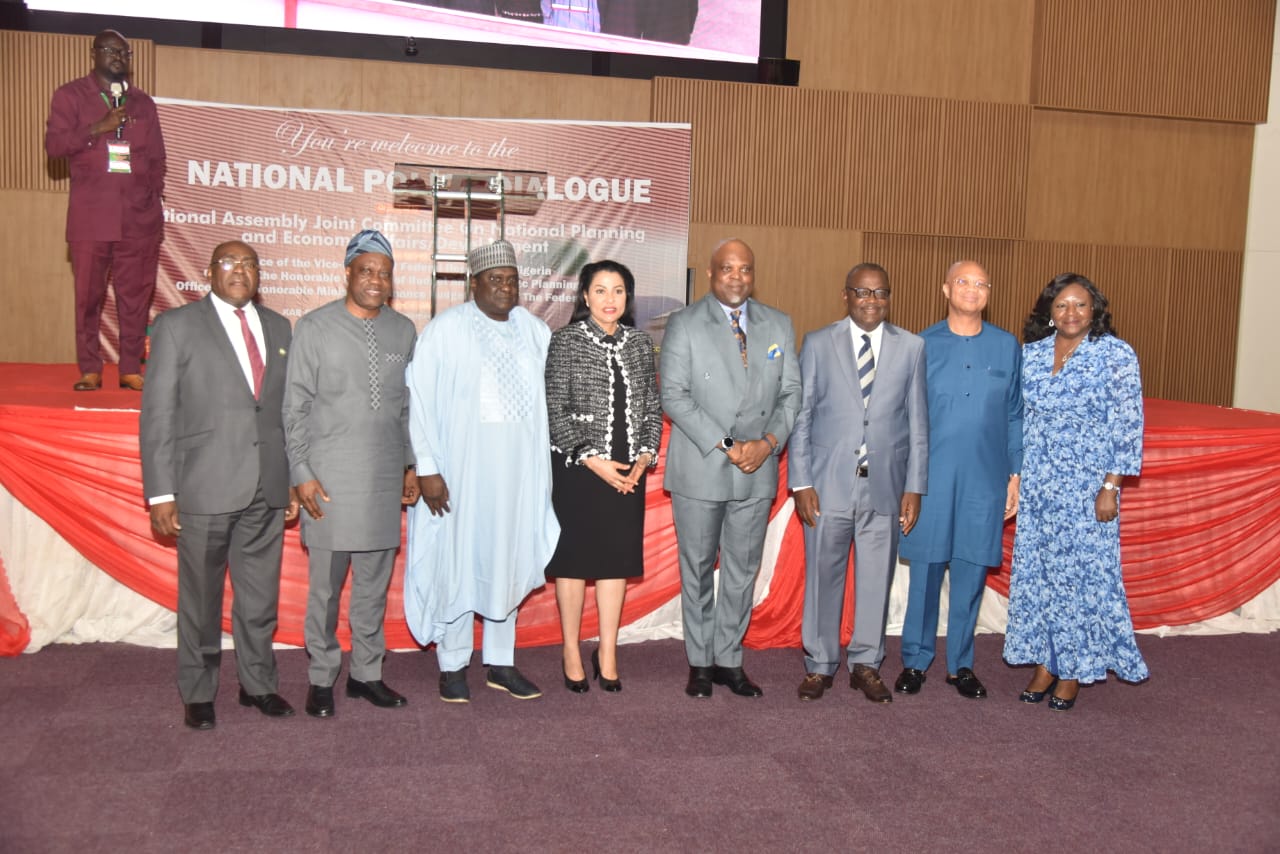


By Gloria Ikibah
Vice President Kashim Shettima has called for sweeping reforms to Nigeria’s budgeting framework, warning that the country must adopt a more realistic and development-driven approach to public spending.
Speaking at a two day National Policy Dialogue organised by the National Assembly Joint Committee on National Planning and Economic Development with the Theme: “The Imperatives of National Development Plan for Effective Budgeting System and Sustainable Growth Of the Nigerian Economy”, which began in Abuja on Tuesday,the Vice President stressed the need to align annual budgets more closely with long-term development plans in order to achieve sustainable growth.
Shettima who was represented by his Special Adviser on Economic Matters, Tope Fasua, highlighted the importance of rethinking how budgets are designed and implemented, noting that the country’s development ambitions depend heavily on a more coherent planning structure.
The event brought together policymakers and experts to examine how Nigeria can accelerate progress through better integration of planning and budgeting.
He stressed that the focus of the discussions was to find practical ways of linking short-term fiscal decisions with medium- and long-term national priorities.
He said, “t the very time, it was a very important topic for the moment and for the time to come in view of President Tinubu’s great vision for the people of Nigeria, according to the renewed agenda of Mr. President.
“Also, it’s asked, how can our budgets be impacted more positively by these plans and how do we institute a path towards sustainable growth, which not only focuses on the annual trajectory of our domestic product GDP, but also focuses on the improvement of standards of living of our people as measured by reduction in poverty rates and the rise of per capita income.
“This is an apt moment to echo the thoughts of President Bola Ahmed Tinubu, and the Minister, the Minister of Budget and Planning, to the extent that our budgets should not only be people-focused. But our budgets should actually be larger than they are presently. This informed the recent adjustment to the 2026 budget, fiscal budget, by about 10 trillion line, to taking the sum to 68 trillion”.
According to the Vice President some critics, have opined that Nigeria should have a much smaller budget, adding that “they need to be reminded that budgeting is not a process of reviewing past shortcomings and capitulating to limitations, but a process by which Nigeria documents its greater future and challenges itself to do even better than the past.
“The usual refrain about revenue generation has been well addressed by Mr. President’s Acts on Revenue Reforms, which have kicked in since January 2026, with great promise. Many institutions have become fiscalized. Many are leading to a decline. Many institutions have become fiscalized. Many are leading to a better capture of revenues that would have otherwise been lost to government.
“Technology has also been deployed to get to where human beings need to go. And so we believe that revenue numbers for 2026 and beyond will paint a positively different picture. Indeed, we must also recognize the recent Fiscal Policy Measures, (FPMs), which were articulated by the Office of the Minister of Finance and Foundation Management. Nor is it a symbol of the beneficial and positive impact of high-quality business on the economy”.
He further stated that many tariffs on essential raw materials and other similar products were reduced to the benefit and further benefit of the citizenry tariffs on essentials, raw materials and other similar products were reduced adding that Duty of pharmaceuticals, fabric, machinery, and some specific manufacturing equipment have also been removed with a view to encouraging higher productivity in critical sectors.
“This deft move signals that the Tinubu government greatly cares for the people of Nigeria, and there is so much more to come. Economic planning is a national imperative, and President Tinubu is a great believer in this idea, not necessarily in the rigidities and strictures reminiscent of Soviet-era economics, but in a more nuanced and data-driven manner, which quickly distills into the economic well-being of the people.
“Currently, our budgets are being guided by the Medium-Term Expenditure Framework (MTEF) as well as the national development plans. These plans could be put together by the budgets and planning ministry. Distinguished ladies and gentlemen, the largest room in the world is the room for improvement. Therefore, in spite of current achievements and structures of ground, a lot more can be achieved, especially around sustainable development.
“Again, this will be measured by higher per capita income for our people and long-term growth. As well as better standards of living and significant leaps in the 17 metrics measured under the United Nations Sustainable Development Goals. Measurements around poverty in general, food poverty in particular, health, education, water, and much more”, he added.
Also speaking at the forum, Director General of the Nigeria Institute of Social and Economic Research, Professor Anthonia Simbine, pointed to deep-rooted structural issues undermining development efforts.
She said the country’s challenges are not due to a lack of plans, but rather poor execution and weak coordination.
“The challenges facing the country was not as a result of absence of development planning, but weak implementation discipline as well as misalignment between plans and budgets, unrealistic macro fiscal assumptions and weak execution of monitoring systems,” she said.
Her remarks reinforced concerns that without stronger discipline and accountability, even well-crafted policies may fail to deliver meaningful results.
The Director General noted that global experience has consistently shown that successful economies are built on strong alignment between national plans and budgets, backed by credible fiscal rules, independent forecasting and the use of digital systems alongside performance-based budgeting.
Professor Anthonia Simbine argued that for Nigeria to close its implementation gaps and deliver inclusive, long-term growth under the Renewed Hope Mid-Term National Development Plan (2026–2030), it must move away from conventional budgeting practices and embrace a more flexible, technology-driven fiscal approach.
She outlined the need for a structured link between planning and budgeting, moving beyond basic compliance to a more strategic allocation of resources. This, she explained, would involve ensuring that capital projects are tightly aligned with national priorities, placing greater emphasis on value for money and measurable impact, and redesigning government programmes to focus on scalable, high-impact outcomes.
She also pushed for a more responsive budgeting model, proposing the adoption of rolling frameworks that allow for periodic adjustments based on changing realities. This would include quarterly forecasts, a more flexible medium-term expenditure framework and the ability to reallocate resources within approved limits when necessary.
In addition, she highlighted the importance of innovative financing and stronger collaboration across sectors. This would involve pooling resources across government departments, expanding the use of public-private partnerships, exploring blended financing options and making better use of national and subnational investment platforms.
Technology, she stressed, must play a central role in modernising the budgeting process. She called for deeper integration of digital financial systems, the introduction of real-time tracking tools and automated reporting mechanisms to improve transparency, monitoring and early detection of inefficiencies.
She further emphasised the need to strengthen coordination between federal and state governments through incentive-based frameworks, including performance-linked transfers and joint project platforms that encourage alignment across all levels.
To improve accountability, she advocated a shift towards outcome-driven budgeting, where funding releases are tied to clearly defined performance indicators. This, she noted, should be supported by performance contracts for government agencies, real-time audits and data-driven evaluation systems.
Professor Simbine also pointed to the need for better tools to measure socio-economic impact, proposing the development of standardised metrics and the integration of cost-benefit analysis into decision-making.
At the same time, she stressed the importance of balancing flexibility with fiscal discipline, recommending the establishment of stabilisation mechanisms and contingency reserves to manage uncertainties while maintaining economic stability.
The two-day dialogue is expected to generate recommendations aimed at strengthening Nigeria’s budgeting system and ensuring it supports long-term economic growth.

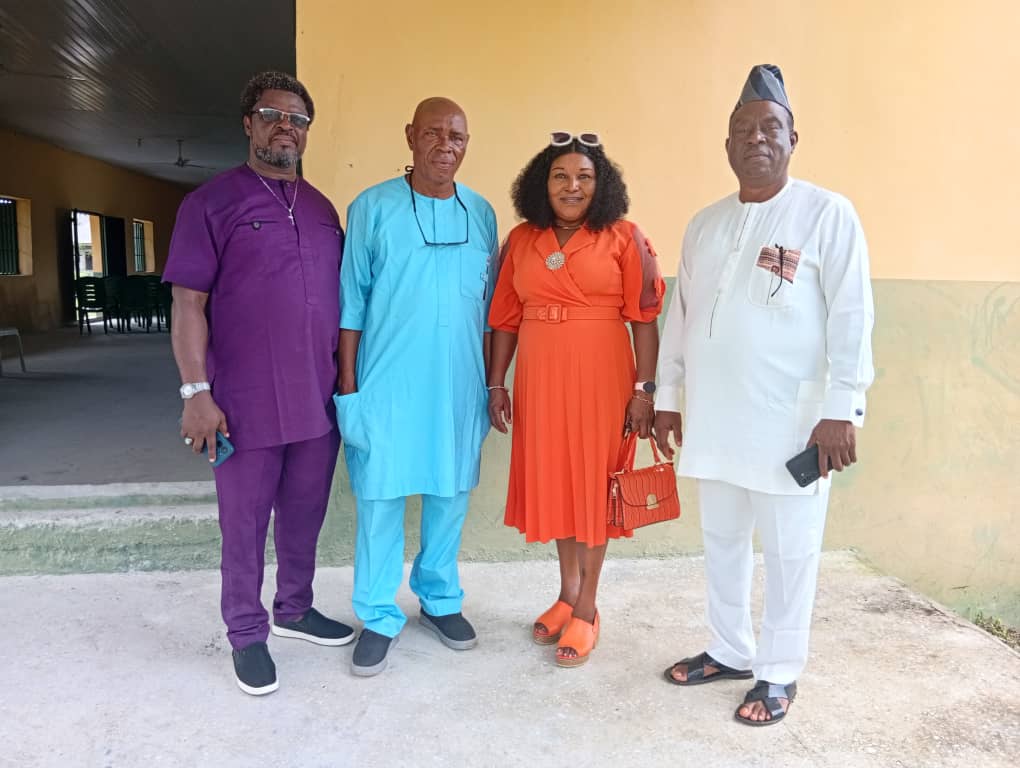
The Iluelogbo Grammar School Old Students Association (IGSOSA), Owhelogbo, has unveiled a series of measures aimed at strengthening its nationwide structure, improving members’ welfare and accelerating the development of the alma mater.
The decisions were contained in a communiqué issued at the end of the Association’s Annual General Meeting (AGM), held in Owhelogbo, where old students from various sets and branches participated in deliberations on the growth of the association and the development of Iluelogbo Grammar School.
A major outcome of the meeting was the appointment of five Zonal Coordinators to improve grassroots mobilisation and deepen participation among members across the country.
The newly appointed coordinators are Dr. Israel Adaigho for Asaba Zone; Barr. Faith Enajedu for Port Harcourt/Akwa Ibom/Abia Zone; Mr. Ben Akelemo for Lagos Zone; Dr. Fortune Erume for Warri Zone; and Mr. Simon Enajedu for Abuja Zone.
According to the communiqué, the coordinators are expected to mobilise old students within their respective zones and serve as a link between the zones and the National Executive of the association.
The AGM also approved the establishment of a Welfare/Benevolent Trust Fund Committee to coordinate welfare-related matters affecting members.
The committee is chaired by Dr. Tony Alabi, with Mr. Patrick Nebe, Mr. Nathais Otobo, Barr. Ovah Frederick, Dcns. Vivian Okpobrisi, Mrs. Flora Utunedi-Whiskey and Chief Jonathan Orife as members.
Engr. Lawrence Enna was appointed Secretary of the committee.
In another major resolution, the AGM proposed an amendment to the association’s constitution to accommodate three additional positions — Legal Adviser, Internal Auditor and Board of Trustees (BOT).
The proposed constitutional amendment is to be posted on the association’s general online platform for members to consider and vote on within one week from the date of the communiqué.
The association said the measures were part of its broader effort to strengthen its administrative structure, promote members’ welfare and ensure greater participation in the affairs of the old students’ body.
IGSOSA expressed appreciation to members for their continued support and called on old students who are yet to join the association to connect with the appropriate Zonal Coordinators.
The communiqué was signed by the National President of the Iluelogbo Grammar School Old Students Association, Owhelogbo.
Ven. Moses Edeki
Secretary General.

President Bola Ahmed Tinubu has again adjusted his return schedule from Europe, with the President now expected to return to Nigeria on Tuesday, September 29, according to sources familiar with his itinerary.
Tinubu had been expected back in the country this weekend after the Presidency announced on September 21 that he would extend his working vacation by a few days and return before the end of the week. However, his itinerary has since been revised. The reason for the latest change has not been disclosed.
Sources had earlier indicated that Tinubu would return to Lagos and remain there for up to a week before travelling to Abuja.
The President left Nigeria on August 30 for London to begin a three-week working vacation as part of his annual leave. After spending about a week in the United Kingdom, he proceeded to Paris, France, where he held meetings with French President Emmanuel Macron and businessman Vincent Bolloré.
The Presidency had initially announced that Tinubu would return after the three-week vacation. It later said on September 21 that his stay in Europe had been extended by a few days, with a weekend return planned.
According to the Presidency, Tinubu has remained in contact with officials in Nigeria and continued to direct government affairs while abroad. Vice-President Kashim Shettima was delegated to represent him at some official functions during his absence.
Shettima, however, travelled to New York on September 20 to represent Nigeria at the 81st United Nations General Assembly. The Secretary to the Government of the Federation, George Akume, has also represented the President at some official engagements.
The repeated adjustment to Tinubu’s return schedule has renewed public and political debate over the length of his absence from the country and the constitutional procedure for transferring presidential powers when the President is away.
Section 145 of the 1999 Constitution provides for a President proceeding on vacation to transmit a written declaration to the President of the Senate and the Speaker of the House of Representatives, after which the Vice-President performs the functions of the President in an acting capacity.
Opposition figures have questioned whether the prolonged absence requires a formal transfer of presidential powers to Shettima, particularly as the President’s stay abroad has extended beyond the period initially announced.
The Presidency has maintained that Tinubu has remained engaged in governance throughout his stay abroad.
Senate President Godswill Akpabio also dismissed suggestions of a leadership vacuum, saying Tinubu remained in charge despite his absence from Nigeria.
Speaking in Akwa Ibom on September 22, Akpabio said he was not the Acting President because Tinubu remained in power and continued to direct the affairs of government.
If the latest itinerary holds, Tinubu will return to Lagos on Tuesday, September 29, ending a four-week working vacation in Europe. Reports indicate that he is expected to participate in Independence Day activities in Lagos before proceeding to Abuja.
News
Reforms in NNPCL under Ojulari have increased Nigerians’ trust in current administration – Centre


The Centre for Reforms and Good Governance (CRGG) has hailed the transformative leadership of Engr. Bashir Bayo Ojulari as Group Chief Executive Officer of the Nigerian National Petroleum Company Limited (NNPCL), declaring that the sweeping reforms under his stewardship have significantly boosted public confidence in President Bola Ahmed Tinubu’s administration.
In a statement signed by its Executive Director, Maxwell Onazi, the Centre described Ojulari’s tenure since his appointment on April 2, 2025, as a defining chapter in the commercialisation and professionalisation of Nigeria’s national oil company.
According to the CRGG, Ojulari’s results-driven approach has delivered measurable gains across upstream production, financial performance, transparency, infrastructure delivery and investor confidence, reversing years of opacity and operational inefficiency.
The Centre noted that these outcomes align directly with the Renewed Hope Agenda and demonstrate the administration’s capacity to appoint competent technocrats capable of delivering tangible national value.
“Engr. Bayo Ojulari has shown that with disciplined leadership, commercial focus and commitment to transparency, NNPCL can be transformed from a historically loss-making entity into a profitable, investor-ready national asset,” Maxwell Onazi stated.
“The surge in production, the restoration of regular Federation Account remittances, the unprecedented financial disclosures and the unlocking of multi-billion-dollar investments are not abstract achievements.
“They are concrete evidence that the Tinubu administration’s reforms in the oil and gas sector are working and that Nigerians can once again trust that their most strategic national resource is being managed with integrity and competence.”
The Centre highlighted the dramatic rise in upstream output under Ojulari’s watch.
According to the CRGG, the first half of 2026 alone produced clear evidence of the transformation. NNPCL recorded ₦19.04 trillion in revenue and ₦2.28 trillion in profit after tax between January and June 2026, while statutory remittances to the Federation Account reached ₦6.286 trillion in the same period and climbed to ₦7.913 trillion by the end of July, including a single-month payment of ₦1.627 trillion in July.
These figures, the Centre noted, represent a decisive break from past patterns of irregular transfers and limited disclosure.
“The 2026 half-year numbers speak louder than any rhetoric. Revenue of ₦19.04 trillion, profit after tax of ₦2.28 trillion and nearly ₦8 trillion remitted to the Federation Account in seven months show that NNPCL is now operating as a true commercial entity that delivers value to the Nigerian people,” Maxwell Onazi stated.
“When citizens see consistent, transparent remittances and rising production under a leadership appointed by this administration, their trust in the broader reform agenda of President Tinubu naturally increases.
“Ojulari’s results have made that connection clear and credible.”
The Centre further highlighted the operational gains that underpinned the financial performance.
National crude oil production has been sustained at levels above 1.7 million barrels per day for much of 2026, reaching peaks of approximately 1.73 million barrels per day, the highest in five years.
NNPC Exploration and Production Limited continued to post strong output, with earlier records of 355,000 barrels per day in late 2025 extended into higher peaks of around 365,000 barrels per day.
Gas production also strengthened, hitting 7,841 million standard cubic feet per day in June 2026, supporting the administration’s gas-based industrialisation push.
“Infrastructure progress has been equally notable, the group added. “The Ajaokuta–Kaduna–Kano (AKK) and Obiafu–Obrikom–Oben (OB3) gas pipelines advanced to 94 per cent and 98 per cent completion respectively in 2026, while major upstream projects such as Bonga Southwest-Aparo moved closer to delivering additional barrels and jobs.
“Cost discipline remained a priority, with Ojulari’s team achieving $3.4 billion in savings through systematic contract reviews and optimisation.
“These are not isolated successes. Higher production, stronger gas output, near-completion of critical pipelines and multi-billion-dollar cost savings form a coherent picture of a national oil company that is finally being run with commercial rigour,” Onazi said.
The Centre for Reforms and Good Governance concluded that Ojulari’s first year-plus in office has set a new benchmark for public-sector performance and provided a clear demonstration that competent, reform-minded leadership can deliver results that benefit the entire nation.
It called on stakeholders to sustain support for the ongoing transformation so that the gains already recorded can be consolidated and expanded in the years ahead.

IGSOSA Restructures, Names Zonal Coordinators, Moves to Strengthen Members’ Welfare

Tinubu Shifts Return Date Again, Now Expected Back Tuesday

Sad! 27 Killed, 26 Injured in Two South Africa Mass Shootings as Police Hunt Gunmen


-

 Sports16 hours ago
2027: NDC chairmen reject Obi-Kwankwaso structures
-
 News17 hours ago
Police, DSS, ICPC Cleared Me of PFIPC Scam Allegations — Gbajabiamila
-

 News16 hours ago
‘I’m like three women’ — Ivie Atuwatse rules out polygamy for Olu of Warri
-
 News17 hours ago
PHOTOS: Jerry Eze leads thousands in prayer at Man United’s Old Trafford
-
 Economy16 hours ago
Nigeria’s Public Debt Hits N166.79trn as Borrowing Rises by N7.44trn
-

 News12 hours ago
Decoupling Sovereignty Index (1): The Anatomy of Becoming Nobody