Connect with us

Tech

NCC moves to improve telecom services in Nigeria

Published

on

ADVERTISEMENT
Zoom Ad
ADVERTISEMENT
Zoom Ad

The Nigerian Communications Commission (NCC) says operators will upgrade 12,000 base stations in 2026 and begin compensating subscribers for poor telecom service.


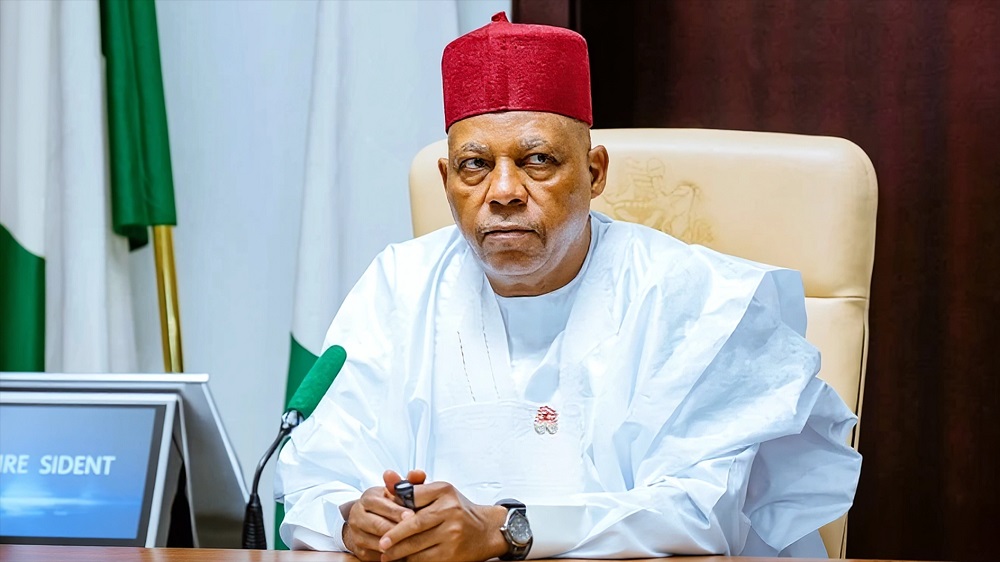
The Executive Vice-Chairman of NCC, Dr Aminu Maida, said this during a breakfast meeting with the media on Thursday in Lagos.

Maida said the planned infrastructure expansion marked a major step in addressing persistent challenges in network quality and capacity across the country.

He noted that the industry had made limited progress in 2025, with just over 300 base station upgrades recorded, a situation he said contributed to service pressure amid rising data demand.
According to him, the sector has already recorded improved momentum in 2026, with about 2,800 base station upgrades completed within the first part of the year.

Advertisement

He explained that the upgrades include expansion of existing site capacity, deployment of new infrastructure and conversion of legacy 2G and 3G sites to 4G and 5G technologies.

“These upgrades cover additional spectrum for 4G sites and the conversion of older networks to more advanced technologies,” he said.

Maida said the commission had also supported operators through spectrum reallocation, which allowed better utilisation of previously underused frequency bands.

He described spectrum as the “highways” of telecommunications, noting that increased availability directly improves network capacity and data performance.
According to him, recent spectrum trading in the sector has contributed to improved data speeds in some parts of the country.

Advertisement

Maida, however, cautioned that improvements in service quality might not immediately translate to perceived user experience due to rapidly increasing data consumption.
He said digital platforms and changing user behaviour often lead to higher demand, which could quickly place renewed pressure on upgraded networks.

“When service improves, usage increases. This often leads to congestion returning faster than expected if capacity is not continuously expanded,” he said.

The NCC boss stressed that sustained investment in fibre infrastructure remained critical for achieving long-term, affordable and high-quality internet access.
He said fibre deployment was the most viable solution for delivering large-scale, unlimited connectivity to homes, schools and public spaces.

Maida added that the commission was closely monitoring network performance indicators such as data speed and latency to ensure compliance with regulatory standards.

Advertisement

On consumer protection, he said the NCC had introduced a compensation framework to address service shortfalls experienced by subscribers.
He explained that affected users would receive airtime credits based on quality of service assessments conducted at the local government level.

“We have moved monitoring from the state level to the local government level to better reflect the real experience of subscribers,” he said.
Maida said the compensation covers service performance between November 2025 and January 2026, with subsequent periods to be processed after validation.
He added that subscribers would receive notifications once the rollout begins, following completion of verification processes.

According to him, the compensation is a regulatory penalty on operators for failing to meet defined service quality benchmarks, not a refund.
Maida said independent verification mechanisms have been introduced to ensure transparency and accountability in the process.
He emphasised that the combined approach of infrastructure expansion and consumer compensation was aimed at improving service delivery and restoring confidence in the telecom sector.


Advertisement
Continue Reading
Advertisement

Tech

NCC inaugurates IPv6 Council, pushes for urgent adoption

Published

on

ADVERTISEMENT
Zoom Ad
ADVERTISEMENT
Zoom Ad

The Nigerian Communications Commission (NCC) has inaugurated the Nigeria IPv6 Council, urging coordinated and accelerated adoption of IPv6 to strengthen Nigeria’s digital competitiveness, security and sovereignty.

The Executive Vice Chairman of NCC, Dr Aminu Maida, said this during the inauguration of the council in Lagos on Thursday.

He described the move as a defining moment in Nigeria’s digital evolution and readiness to lead in the next phase of the global internet.
Maida said Nigeria’s IPv6 adoption remained at about five per cent, far below the global average of over 40 per cent, noting that the country must act decisively to close the gap.

Internet Protocol version 6 (IPv6) is the latest version of the internet protocol used to identify and connect devices on the internet, designed to address the limitations and address exhaustion challenges of Internet Protocol version 4 (IPv4).

Advertisement

He said the exhaustion of IPv4 resources, combined with the rapid expansion of 5G networks, Internet of Things (IoT), cloud services and artificial intelligence-driven applications had pushed legacy internet infrastructure to its limits.

“In this context, IPv6 is not optional; it is a strategic necessity for national competitiveness, security and economic sovereignty,” he said.
Maida noted that the transition required the coordinated efforts of regulators, telecom operators, enterprises, academia and government institutions, adding that no single stakeholder could drive the process alone.

He said the commission had been preparing for the transition through deliberate policies and partnerships.
Maida added that its partnerships included its collaboration with the African Network Information Centre (AFRINIC), which had supported capacity-building programmes across public and private sectors.

According to him, the council will drive alignment with a National IPv6 Deployment Strategy, which outlines clear, time-bound targets, including raising Nigeria’s adoption level to rank among Africa’s leading countries within the next three years.

Advertisement

He outlined key priorities for the council to include establishing a monitoring and reporting framework with quarterly updates and an annual national report.

Other priorities, the NCC boss said, included driving capacity building and certification of IPv6 engineers, and promoting public sector leadership through migration of government platforms to IPv6-enabled systems.

He said that other responsibilities included engaging industry players such as internet service providers, data centres, content providers and financial institutions to remove deployment barriers.
Maida noted that advising on policy incentives and regulatory frameworks to accelerate adoption are also responsibilities.

Also speaking, the Chief Executive Officer of the Internet Exchange Point of Nigeria (IXPN), Muhammed Rudman, said the continued availability of IPv4 remained a major constraint, as many operators saw no immediate urgency to migrate.

Advertisement

He explained that while Nigeria had over 200 Autonomous System Numbers (ASNs) and more than 100 networks with IPv6 allocations, only a limited number were actively deploying and assigning IPv6 addresses to end users.

“In simple terms, many operators have IPv6 capability, but it is not yet deployed in a meaningful way,” he said.

Rudman said reliance on Network Address Translation (NAT) under IPv4 had allowed multiple users to share limited IP addresses, but created challenges in security, traceability and performance.
He added that the council had developed a National IPv6 Implementation Strategy with clear targets, including achieving at least 20 per cent IPv6 compliance in government networks by 2027, 25 per cent active deployment among telecom operators, and about 30 per cent nationwide adoption by 2030.

According to him, the council also plans to intensify capacity building, with a target to train at least 50 professionals in IPv6 by October through structured programmes and partnerships with academic institutions and regional bodies.

Advertisement

Rudman noted that funding and skills gaps remained challenges, especially as many trained engineers had migrated abroad, making continuous training essential.

He said the implementation roadmap would begin with awareness campaigns and training in 2026, followed by policy integration and accelerated deployment through 2027, leading to broader national adoption by 2030.

In his remarks, a technology expert, Chris Uwaje, said Nigeria must move beyond reliance on legacy systems and embrace modern internet infrastructure to strengthen its digital sovereignty.
Uwaje stressed that IPv6 adoption required not just technical upgrades but a national shift in mindset toward innovation, local capacity development and infrastructure investment.

Advertisement
Continue Reading

Tech

Standardizing regulations,safety of Artificial Intelligence

Published

on

ADVERTISEMENT
Zoom Ad
ADVERTISEMENT
Zoom Ad

By Sonny Aragba-Akpore

When the International Telecommunications Union (ITU) held its Artificial Intelligence (AI) for Good Global Summit in Geneva,Switzerland ,July 6-7,2023,it was specifically to drum up standardization ,safety and regulatory processes for Artificial Intelligence (AI).

Follow up summits in parts of the globe including the one held in Dubai,United Arab Emirates ( UAE) took place thus putting together what is likely to be the direction for standardization of AI
by May 29,this year,when Nigeria
marks the first year of a new regime and speeches are being made at the Eagle Square or somewhere else in the country,global technology leaders will converge in Geneva,but Nigeria is not likely going to be on their minds ,as discussions will focus on AI governance that will explore the surge in global efforts to craft AI policy, regulation, and governance frameworks.

“The AI Governance Day will bring together representatives of governments, companies, academia, civil society, and UN agencies and this aims to forge pathways to transform dialogue around AI governance into impactful action” according to ITU documents.

Advertisement

On October 30,2023,United States President Joe Biden signed an Executive Order(EO) requiring that developers of the most powerful AI systems share their safety test results and other critical information with the U.S. government.

In accordance with the Defense Production Act, the Order will require that companies developing any foundation model that poses a serious risk to national security, national economic security, or national public health and safety must notify the federal government when training the model, and must share the results of all red-team safety tests. These measures will ensure AI systems are safe, secure, and trustworthy before companies make them public.

“Develop standards, tools, and tests to help ensure that AI systems are safe, secure, and trustworthy. The National Institute of Standards and Technology will set the rigorous standards for extensive red-team testing to ensure safety before public release.

The Department of Homeland Security will apply those standards to critical infrastructure sectors and establish the AI Safety and Security Board. The Departments of Energy and Homeland Security will also address AI systems’ threats to critical infrastructure, as well as chemical, biological, radiological, nuclear, and cybersecurity risks. Together, these are the most significant actions ever taken by any government to advance the field of AI safety.”
“Protect against the risks of using AI to engineer dangerous biological materials by developing strong new standards for biological synthesis screening. Agencies that fund life-science projects will establish these standards as a condition of federal funding, creating powerful incentives to ensure appropriate screening and manage risks potentially made worse by AI.”

Advertisement

“Protect Americans from AI-enabled fraud and deception by establishing standards and best practices for detecting AI-generated content and authenticating official content. The Department of Commerce will develop guidance for content authentication and watermarking to clearly label AI-generated content. Federal agencies will use these tools to make it easy for Americans to know that the communications they receive from their government are authentic—and set an example for the private sector and governments around the world.”
“Establish an advanced cybersecurity program to develop AI tools to find and fix vulnerabilities in critical software, building on the Biden-Harris Administration’s ongoing AI Cyber Challenge. Together, these efforts will harness AI’s potentially game-changing cyber capabilities to make software and networks more secure.”
“Order the development of a National Security Memorandum that directs further actions on AI and security, to be developed by the National Security Council and White House Chief of Staff. This document will ensure that the United States military and intelligence community use AI safely, ethically, and effectively in their missions, and will direct actions to counter adversaries’ military use of AI.”

And In the United Kingdom (UK) ,Office for Artificial Intelligence has been established and is now part of the AI Policy Directorate in the Department for Science, Innovation and Technology (DSIT).

On November 15,2023,the UK government released £17million funding for scholarships on AI and data science conversion courses to help underrepresented groups get tech jobs even if they have no previous experience in the field.
Companies are encouraged to contribute to funding to boost skills pipeline for future workforce.
The £17 million in government funding will create more scholarships for AI and data science conversion courses, helping young people from groups underrepresented in the tech industry including women, black people, and people with disabilities and people from disadvantaged socioeconomic backgrounds join the UK’s world-leading Artificial Intelligence (AI) industry.

The government is encouraging companies to play their part in creating a future pipeline of AI talent by co-funding the AI scholarships for the conversion courses. Industry support for these scholarships will help get more people into the AI and data science job market quicker and strengthen UK their businesses.

Advertisement

Together, government and industry funding will create two thousand scholarships for masters AI and data science conversion courses, each worth £10,000. The programme is enabling graduates to do further study courses in the field even if their undergraduate course is not directly related, creating a new generation of experts in data science and AI.
From May 30 to 31,Global leaders and innovators in artificial intelligence (AI) will join the humanitarian community at the AI for Good Global Summit 2024 in Geneva, Switzerland to explore how new technology can drive sustainable development.

This year’s edition of the AI for Good summit event will showcase innovations in generative AI, robotics,​ and brain-machine interfaces that can accelerate progress in areas such as climate action, accessibility, health, and disaster response.

Summit speakers, including some of the world’s foremost AI luminaries, will explore the latest breakthroughs in AI and examine actions to ensure that AI works to humanity’s benefit.

“ITU’s yearly AI for Good Global Summit brings together a diverse set of voices to look at the latest AI developments and find ways to ensure this technology remains a force for good, driving inclusive growth and sustainable and equitable progress for all,” said ITU Secretary-General Doreen Bogdan-Martin. “This summit and our year-round AI for Good platform are powerful tools for accelerating progress in our race to achieve the UN Sustainable Development Goals by 2030.”

Advertisement

AI for Good identifies practical applications of AI to accelerate progress toward the UN Sustainable Development Goals and connects AI innovators with public and private-sector decision-makers to help scale up AI solutions globally.

ITU, the UN specialized agency for information and communication technologies, organizes the yearly AI for Good Global Summit together with 40 partner UN agencies. The event is co-convened by the Government of Switzerland.

AI for Good discussions foster international cooperation and innovation to create equitable access to new technologies. The discussions support ITU in spurring timely policy exchanges, developing best practices and technical standards, and catalysing partnerships for AI solutions to contribute to sustainable development.

In addition to talks by AI thought leaders, this year’s summit will host machine learning masterclasses, curated by experts for experts, covering topics from deepfakes and climate change to brain-machine interfaces, AI for public services, explainable AI, and machine learning in communication networks.

Advertisement

Start-ups, young people and creatives will demonstrate their ideas at the AI for Good Innovation Factory Grand Finale, Robotics for Good Youth Challenge, and Canvas of the Future art contest.

The summit’s exhibition space will feature an array of cutting-edge demos, including AI for accessibility, collective drone swarms, bio-inspired rescue robots, a RoboCup robot football tournament, performance-boosting exoskeletons, and AI-inspired art.

Exhibition highlights will include demos of brain-machine interfaces – an AI advancement that promises to open new frontiers for neurotechnology. A press conference on brain-machine interfaces will highlight new technologies enabling mind-controlled movement and communication for persons with disabilities, offering insights on how progress in the field could impact the future of human performance, mental health, and wellbeing.

Advertisement
Continue Reading

Trending

Copyright © 2024 Naija Blitz News