Connect with us

News

Reps back digital overhaul of election petition procedures

Published

on

ADVERTISEMENT
Zoom Ad
ADVERTISEMENT
Zoom Ad

…support finalising presidential petitions at Supreme Court

By Gloria Ikibah

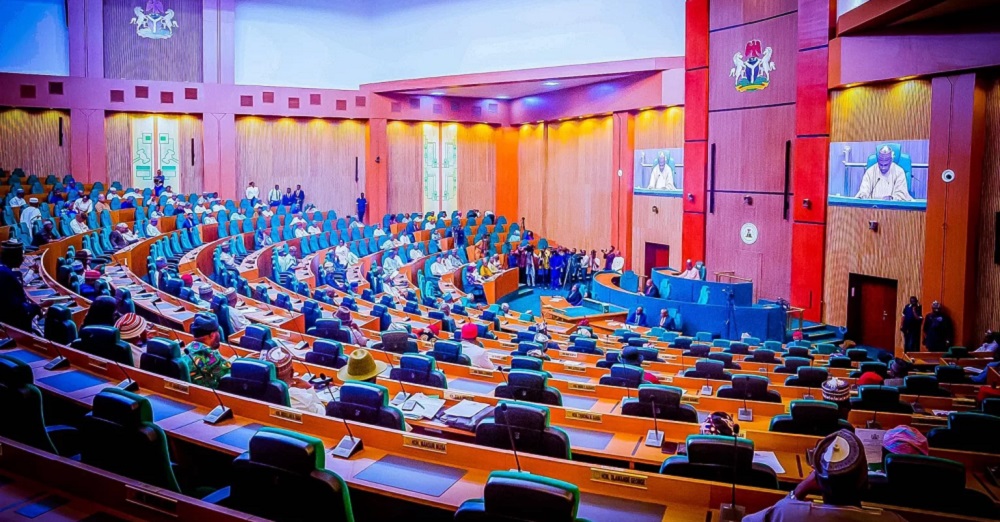
The House of Representatives has moved to modernise the handling of election petitions by introducing a more flexible and technology-led system for serving legal processes, as part of preparations for the 2027 general elections.

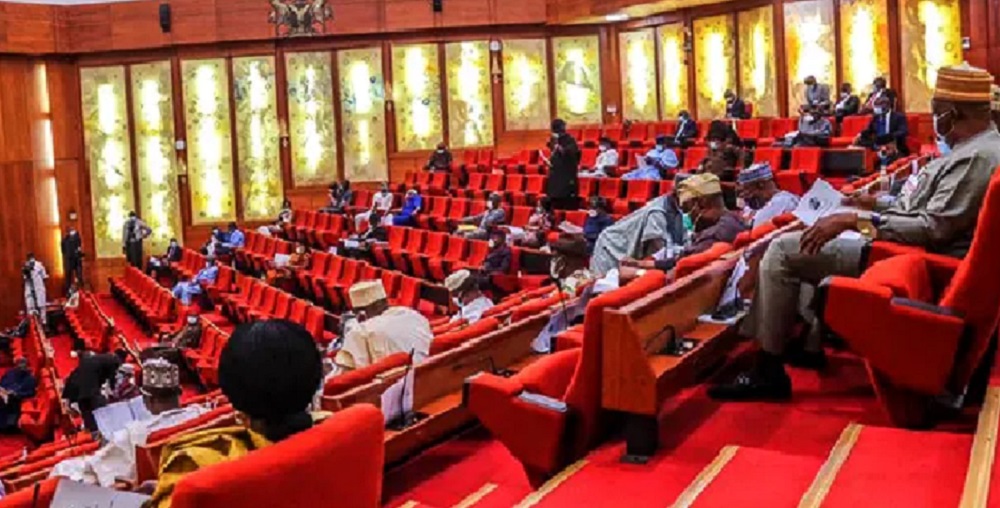
The decision followed consideration of a report presented by the House Committee on Electoral Matters during deliberations in the Committee of the Whole on Wednesday.

Advertisement

In the same sitting, lawmakers advanced proposed amendments to the Electoral Act 2026, including provisions that will see disputes arising from presidential elections concluded at the Supreme Court, while cases involving governorship and National Assembly contests will terminate at the Court of Appeal.

Earlier in plenary, the two related bills scaled second reading and were subsequently referred to the Committee of the Whole, overseen by the Deputy Speaker, Benjamin Kalu, who presided over proceedings.

Speaking on the general principles of the bills, Chairman, Committee on Electoral Matters, Rep. Adebayo Balogun listed the objectives of the bills to include “providing clarity and certainty on the jurisdiction of courts in pre-election matters; enhancing timely and efficient adjudication of pre-election matters; introducing flexible and technology-driven modes of service of election petition processes and curbing delays and technicalities associated with service of court processes.”

The first bill amended Section 29(8) to mandate candidates to provide both physical and electronic contact details (email, phone number, etc.). The amendment recognises multiple modes of service, including “personal delivery, registered post; electronic transmission (email, SMS, and other digital means), provided that service is deemed effective upon proof of transmission.”

Advertisement

The revised provisions spell out what qualifies as valid proof that court papers have been served, recognising electronic confirmations and automated system records. They also make clear that a respondent’s refusal or failure to acknowledge receipt does not render the service invalid.

In a separate measure addressing jurisdiction in pre-election disputes, a new Section 29(a) has been proposed. It grants the Federal High Court original authority to hear pre-election cases relating to National Assembly, state assembly and governorship contests, while maintaining that election petitions in these categories will conclude at the Court of Appeal.

“The Court of Appeal is to exercise original jurisdiction over presidential pre-election matters and terminates at the Supreme Court, while restricting courts from entertaining pre-election matters outside the prescribed jurisdiction, the amendment reads in part”, he said.

Balogun said in the committee’s findings, “the reliance on physical service alone is outdated and susceptible to manipulation, evasion, and logistical challenges. Technological advancements provide credible, verifiable, and efficient alternatives for the service of court processes.

Advertisement

“There exists ambiguity and inconsistency in the current legal framework governing jurisdiction for pre-election matters, leading to conflicting judicial decisions. There are delays in the service of election petition processes, which have significantly affected the timely resolution of electoral disputes.”

The Committee Chairman noted that amendments were consistent with Section 285 of the Constitution of the Federal Republic of Nigeria, 1999 (as amended) and align with international best practices in electoral dispute resolution and judicial efficiency.

“The Committee engaged in extensive deliberations on the provisions of the bills, noting that the delineation of jurisdiction will significantly reduce preliminary objections and expedite hearing of pre-election matters”, he added.

According to him, granting original jurisdiction to the Court of Appeal in presidential pre-election matters is consistent with the importance and urgency of such disputes.

Advertisement

“The Committee is of the considered view that the proposed amendments will significantly improve the administration of electoral justice in Nigeria. By clarifying jurisdictional boundaries and embracing technology in the service of processes, the bills will promote efficiency, reduce delays, discourage frivolous objections, and strengthen the credibility of the electoral system.

The amendment: Section 29(5) of the Principal Act is amended by substituting for the existing subsection (5) a new subsection to read, “An aspirant who participated in the primaries of his political party and who has reasonable grounds to believe that any information given by the political party’s candidate in the affidavit or any document submitted by that candidate in relation to his constitutional requirements to contest the election is false, may file a suit at a court in the Federal Capital Territory or in the jurisdiction where the cause of action arose, against that candidate seeking a declaration that the information contained in the affidavit is false.”

Insertion of new Section 29A of the Principal Act, read, “Notwithstanding the provisions of any other law, all pre-election matters arising from the nomination of candidates and other pre-election activities under Section 285 of the Constitution of the Federal Republic of Nigeria, 1999 (As Altered) and this Act shall be commenced, heard and determined in accordance with the provisions of this section.

“Pre-election matters relating to elections into the National Assembly, the State Houses of Assembly, the office of Governor and Deputy Governor shall be commenced at the Federal High Court, and any appeal arising therefrom shall lie as of right to the Court of Appeal.

Advertisement

“Pre-election matters relating to the Office of President and Vice President shall be commenced at the Court of Appeal, which shall have and exercise original jurisdiction, and any appeal arising therefrom shall lie as of right to the Supreme Court.

“No court shall entertain any pre-election matter except in accordance with the provisions of this section.

“The provisions of this section shall apply to all actions instituted under this Act in respect of pre-election matters.”

Rep. Abdussamad Dasuki, called the attention of the House to possible transmission of electronic mails to spam folders, but was put aside as both the Deputy Speaker and Rep. Balogun insisted that the amendment was not meant to replace the physical transmission of service, but also to expand the mode of communication.
Advertisement
Continue Reading
Advertisement

News

2027: My opponents are arming terrorists against me — Tinubu

Published

on

ADVERTISEMENT
Zoom Ad
ADVERTISEMENT
Zoom Ad

President Bola Tinubu has declared his intention to seek re-election in 2027, saying critics exploiting the country’s security challenges were doing the bidding of his political opponents.

Tinubu made the remarks while receiving Plateau State Governor Caleb Mutfwang and other stakeholders from the state, telling them that hostile forces were weaponising insecurity to undermine his administration.

“You are playing to the hand of agents, including my own enemies, who want to use insecurity to get rid of me,” he said, adding that he would not be deterred.

“I’m a very stubborn politician. I just refuse to go. And I will campaign for my second term.”

Advertisement

The declaration comes amid sustained pressure on the Federal Government over attacks by armed groups, kidnappings, and killings across several states, with opposition figures and civil society organisations demanding stronger federal action.

NDLEA raids 3 illicit drug warehouses, recovers N16.9bn worth of opioids

Tinubu has consistently defended his administration’s security record, maintaining that agencies are being adequately supported to restore stability.

The President took office in May 2023 and is constitutionally eligible to seek a second four-year term when Nigerians go to the polls in 2027.

Advertisement
Continue Reading

News

Lawmakers Move To Establish Military Strategy Hub

Published

on

ADVERTISEMENT
Zoom Ad
ADVERTISEMENT
Zoom Ad

…proposal aim to strengthen coordination and innovation across the Armed Forces

By Gloria Ikibah

The House of Representatives has passed for second reading a proposal to set up a Joint Doctrine and Warfare Centre, envisioned as a high-level strategic hub to improve coordination, efficiency and overall performance within Nigeria’s Armed Forces.

The bill, sponsored by the Speaker, Tajudeen Abbas, is titled “A Bill for an Act to Establish the Joint Doctrine and Warfare Centre to Enhance the Coordination and Effectiveness of Military Operations of the Armed Forces of Nigeria by Integrating the Capabilities of Its Respective Services; and for Related Matters (HB 2741).”

Advertisement

It progressed to the next stage following debate by lawmakers on Wednesday during plenary.

The planned centre is intended to serve as a focal point for defence research, development of military doctrine, strategic planning and innovation in warfare, with particular attention on fostering closer collaboration among military and paramilitary bodies.

Commencing debate on the general principles of the legislation on behalf of the Speaker, Rep. Daniel Asama said, “the initiative is designed to bridge critical gaps in Nigeria’s defence framework, particularly the lack of a dedicated institution for developing and coordinating joint military doctrines.”

“The centre would establish a structured system for the formulation, validation and dissemination of joint doctrines, while also promoting interdisciplinary research on multi-domain operations”.

Advertisement

Asama further observed that Nigeria’s increasingly complex security landscape demands a more integrated and strategic military response.

“Nigeria faces complex security challenges, including terrorism, insurgency and cyber warfare, which require coordinated doctrinal responses among the Armed Forces.

“The absence of a dedicated institution for joint doctrine development has created operational gaps and limited interoperability among the services”, he said.

According to him, the proposed centre will serve as both a think-tank and a centre of excellence for doctrine formulation and warfare strategy.

Advertisement

“This bill provides the legal and institutional framework for the Joint Doctrine and Warfare Centre as a think-tank and centre of excellence for doctrine development and warfare strategy.

“It addresses the need for integrated doctrine development, unified command thinking and joint operational planning”, he added.

He described the bill as timely, the lawmaker said it would strengthen Nigeria’s capacity to respond to evolving threats while enhancing cooperation among the Army, Navy and Air Force.

He explained that the proposed centre would provide a standing platform for defence research, simulation exercises and policy coordination, with the aim of strengthening the long-term sustainability of the country’s security efforts.

Advertisement

The institution is expected to draw together major players in the security architecture, including the Ministers of Defence, service chiefs and specialists from the private sector.

Its responsibilities would cover aligning warfare strategies, monitoring emerging threats, reviewing operational requirements and offering strategic guidance for defence activities.

The centre would also work closely with defence institutions, universities, international allies and research organisations to advance joint doctrine development, simulation tools and contemporary warfare practices.

Among its core aims are improving Nigeria’s capacity to respond to hybrid and asymmetric threats, enhancing cooperation among the armed services, promoting defence research and expanding both regional and global security partnerships.

Advertisement

Asama expressed optimism that the proposal would markedly strengthen the nation’s military preparedness and strategic depth.

“The Joint Doctrine and Warfare Centre will serve as the intellectual and operational hub for defence coordination, doctrine formulation and integrated warfare planning,” he said.

Following its passage for second reading, the bill was referred to the House Committee on Defence for further legislative consideration.

When passed into law, the piece of legislation is expected to provide a solid institutional framework for advancing joint military operations and improving Nigeria’s response to current and emerging security challenges.

Advertisement
Continue Reading

News

BREAKING:Tinubu Fires NMDPRA CEO, Mohammed, Nominates Rabiu Abdullahi Umar as Replacement

Published

on

ADVERTISEMENT
Zoom Ad
ADVERTISEMENT
Zoom Ad

President Bola Ahmed Tinubu has approved the immediate removal of Mr. Saidu Mohammed as Chief Executive of the Nigerian Midstream and Downstream Petroleum Regulatory Authority (NMDPRA).

He has nominated Mr. Rabiu Abdullahi Umar to take over as the new Chief Executive. The appointment is pending confirmation by the Senate.

Details shortly….

Continue Reading

Trending

Copyright © 2024 Naija Blitz News