
News
Full Text of Press Briefing on The Bills Proposing Constitutional Alterations For a Transition To Parliamentary System of Government

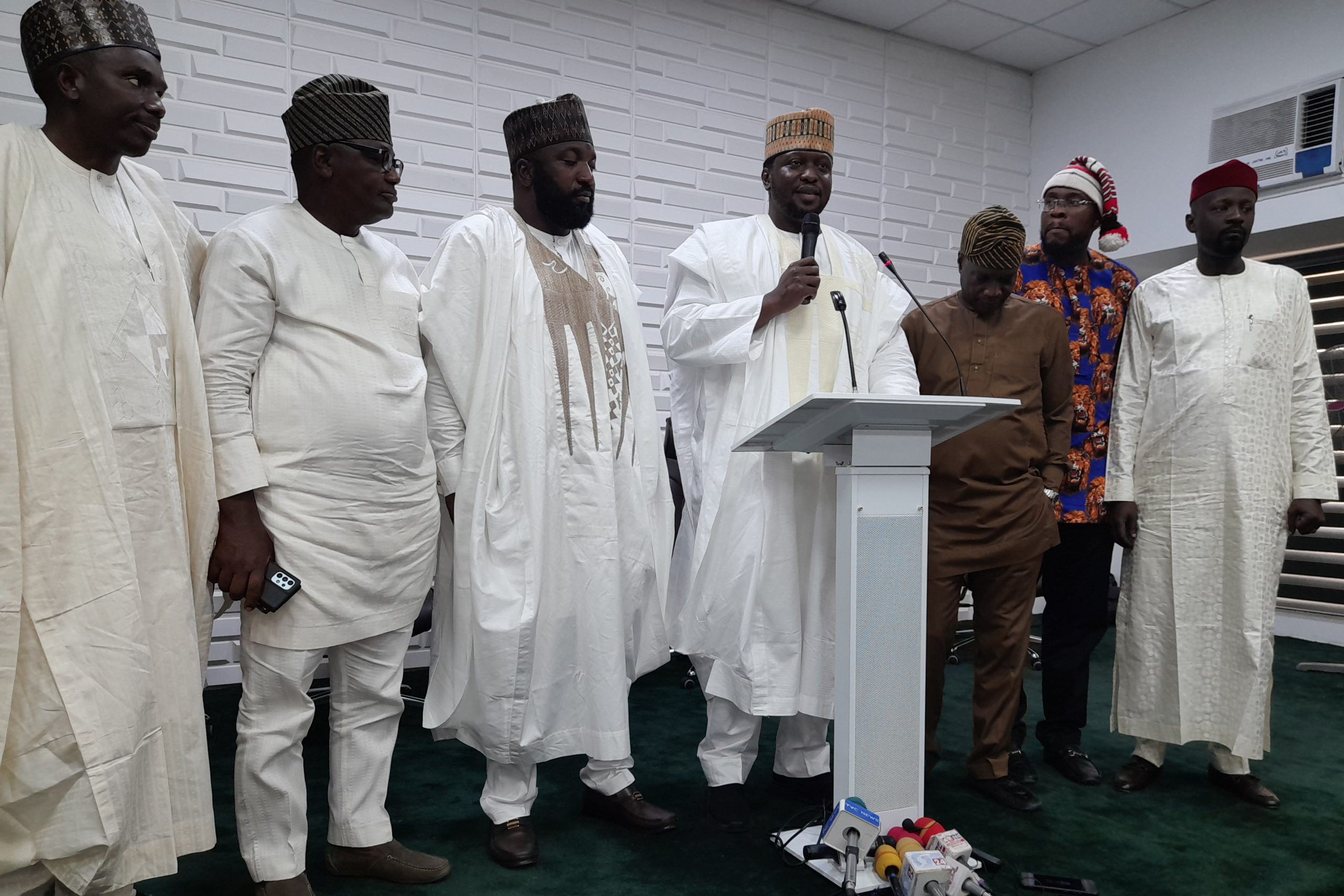


Good afternoon ladies and gentlemen of the press.
Today, we stand on the cusp of history, as lawmakers across party affiliations and regional backgrounds come together to present bills proposing Constitutional Alterations that seek a transition to Parliamentary System of Government.
These bills, seeking to alter the Constitution of the Federal Republic of Nigeria 1999, advocate a transition from the current presidential system to a parliamentary system at all levels – federal, state, and local government.
The proposed alterations, when passed, would significantly impact the national political landscape.
Our founders in their wisdom and in a political atmosphere devoid of compulsion, and having considered the interests of their native peoples and their desire to live together in a country where truth and justice reign, where no man is oppressed, and where all citizens live in peace and plenty, adopted the parliamentary System of Government.
That was the governance system of the First Republic, a period when legislative and executive powers were exercised by the representatives of the people in parliament and in the executive, and by the nature of the system these representatives were accountable to the people. For six years while it was in operation, the system worked for the country.
The collapse of the First Republic and the long stretch of military rule culminated in the adoption of a new system of government, theoretically fashioned after the Presidential System of the United States but in practice imbibed the uttermost attributes of military rule. No wonder the Nigerian President appears to be one of the most powerful Presidents in the world.
Over the years, the imperfections of the Presidential System of Government have become glaring to all, despite several alterations to the constitution to address the shortcomings of a system that has denied the nation the opportunity of attaining its full potentials.
Among these imperfections are the high cost of governance, leaving fewer resources for crucial areas like infrastructure, education, and healthcare, and consequently hindering the nation’s development progress, and the excessive powers vested in the members of executive, who are appointees and not directly accountable to the people.
The bills presented today seek a return to the system of government adopted by our founders, which made governance accountable, responsible and responsive, and ultimately less expensive.
With the presentation of these bills today, we hope to achieve the following:
1. Ignite, provoke a national conversation about the future of Nigerian governance system.
2. To ensure robust public debates, stakeholder consultations, expert analyses, and a thorough and informed decision-making process.
3. To raise awareness about this significant development and encourage constructive dialogue on the potential implications of these proposed constitutional alterations.
The future of Nigerian governance rests on informed public engagement, and responsive and responsible leadership.
The fundamental changes outlined in the bills include:
1. Parliamentary System: Replacing the President with a Prime Minister to serve as the Head of Government and establishing the office of the President as a ceremonial leader. These elective offices are to be chosen from the elected members of the legislature.
2. Legislative Elections: Shifting the process of electing Governors and Chairmen of Local Governments from general election to voting within their respective legislative bodies.
3. Streamlined Administration: Potentially reducing bureaucratic hurdles and fostering closer collaboration between the executive and legislative branches.
Our conviction is that a streamlined Executive Branch, which replaces the President and Vice President with a Prime Minister and Cabinet chosen from the legislature could lead to a smaller central government, reducing salaries and administrative expenses.
We also hold strongly that shifting the election of Governors and Local Government Chairmen from general election to votes within their respective legislative bodies could save billions spent on state and nationwide campaigns.
Because ministers, commissioners (at the state level) and supervisors (at the local government level) emerge from parliament, there is a greater coordination between the executive and the legislature, just as there will be increased legislative scrutiny, which would make cabinet members responsive to the yearnings of the people and more accountable.
Gentlemen of the press, the proponents of these alterations to the constitution for a parliamentary system of government have placed the interest of our nation above all other interests. Our hope is that the national conversation that would be ignited by these bills would lead to a system of government that works and our dear nation would attain her full potentials.
Thank you.
Rep. ABDUSSAMAD DASUKI
Spokesman Parliamentary Bill Sponsors

News
Watch moment FCT minister Wike being conferred with title of Abuja Hasken, Light of Abuja by FCT Traditional Council led by Ona of Abaji (Video)


Watch moment FCT Minister, Nyesom Wike, being conferred with the title of Hasken Abuja (The Light of Abuja) today, by the FCT Traditional Council led by The Ona of Abaji, Dr Adamu Baba Yunusa.
It’s indeed a well deserved title as truly Wike brought light to the Territory.
Watch:

The Nigerian National Petroleum Company Limited has increased the premium motor spirit price after Dangote Refinery raised its gantry price.
A market survey by DAILY POST on Thursday showed NNPCL outlets in Abuja and its environs have adjusted their petrol pump price to N1,364 per liter from N1,295. This means that the state-owned oil firm hiked petrol by N69 per liter.
The latest fuel prices have been implemented at Gwarimpa, Kubwa Expressway, Wuse Zone 6, and Zone 4 NNPCL filling stations in Abuja.
“We adjusted our pump price to N1364 per liter from N1295 this morning, an attendant said.
Filling stations in Abuja, such as MRS, BOVAS, and others, have raised their petrol price to between N1365 and N1370 per liter.
Recall that Dangote Refinery had on Wednesday increased its fuel gantry price by N75 to N1,275 per liter from N1,200 due to a hike in crude oil price to above $115 per liter.

Troops of the Nigerian Army have successfully foiled a late-night attack by suspected ISWAP/JAS terrorists in Biu Local Government Area of Borno State.
The development was contained in a post shared on Thursday on X by security analyst , Zagazola Makama.
According to the post, the incident happened at about 11:40 p.m. on April 27 when troops of the 162 Amphibious Battalion detected movement of suspected insurgents approaching their position at Mandaraguirau.
Accordibg to Makama who quoted security sources, the attackers were travelling on about 30 motorcycles and were advancing through the Diwa Kamda and Diwa Mbula axis before they were spotted through surveillance systems.
The troops were said to have immediately engaged the group with firepower, forcing them to retreat without reaching their target or making contact.
The attackers reportedly fled after coming under heavy resistance from the soldiers.
The sources added that the quick response by the troops prevented what could have been a coordinated attack on the area.

Watch moment FCT minister Wike being conferred with title of Abuja Hasken, Light of Abuja by FCT Traditional Council led by Ona of Abaji (Video)

BREAKING: NNPCL jerks up fuel price

Troops halt late-night terrorist attack in Borno




-

 Economy21 hours ago
See Black Market Dollar To Naira Exchange Rate Today 29th April 2026
-
 News23 hours ago
Eyiboh’s Purported Suspension Backfires in Esit Eket Ward 9 APC
-
 News9 hours ago
2027: Ogbeide-Ihama Joins Edo South Senatorial Race, Says Upper Chamber Not For Neophytes(Photos)
-
 News22 hours ago
Reps back digital overhaul of election petition procedures
-

 News21 hours ago
BREAKING: Supreme Court fixes date for verdict on ADC, PDP leadership tussles
-
 News21 hours ago
Senate confirms Yuguda as CBN deputy governor
-
News20 hours ago
Lawmakers Move To Establish Military Strategy Hub
-

 News20 hours ago
2027: My opponents are arming terrorists against me — Tinubu