Connect with us

News

Reps back digital overhaul of election petition procedures

Published

on

ADVERTISEMENT
Zoom Ad
ADVERTISEMENT
Zoom Ad

…support finalising presidential petitions at Supreme Court

By Gloria Ikibah

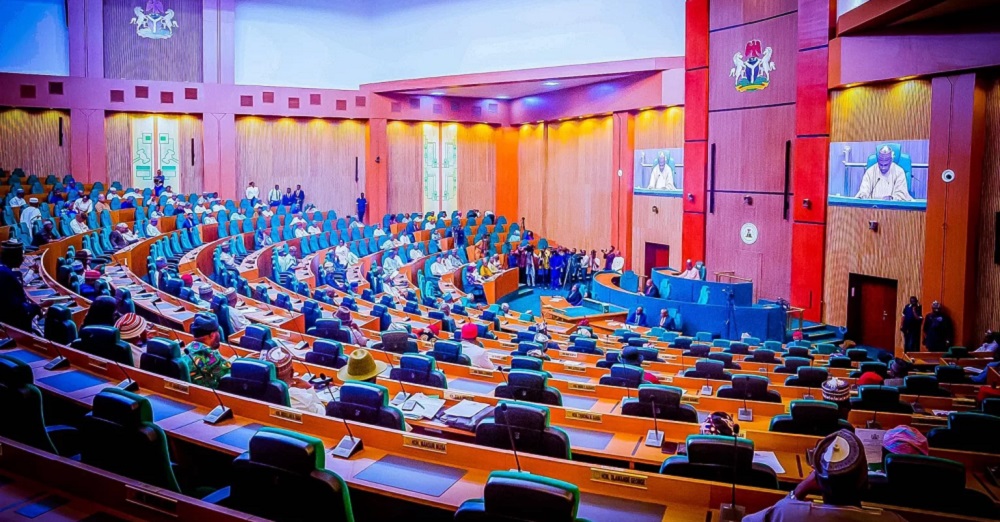
The House of Representatives has moved to modernise the handling of election petitions by introducing a more flexible and technology-led system for serving legal processes, as part of preparations for the 2027 general elections.

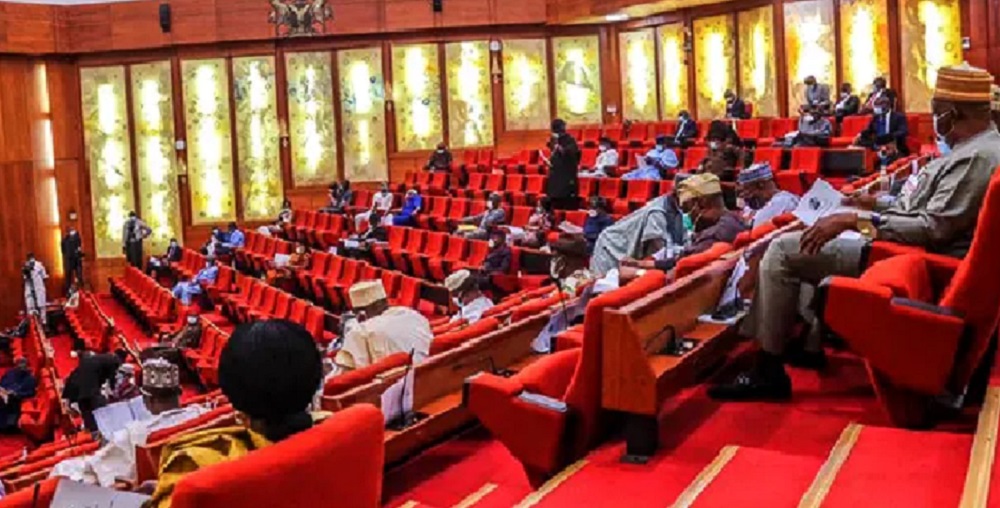
The decision followed consideration of a report presented by the House Committee on Electoral Matters during deliberations in the Committee of the Whole on Wednesday.

Advertisement

In the same sitting, lawmakers advanced proposed amendments to the Electoral Act 2026, including provisions that will see disputes arising from presidential elections concluded at the Supreme Court, while cases involving governorship and National Assembly contests will terminate at the Court of Appeal.

Earlier in plenary, the two related bills scaled second reading and were subsequently referred to the Committee of the Whole, overseen by the Deputy Speaker, Benjamin Kalu, who presided over proceedings.

Speaking on the general principles of the bills, Chairman, Committee on Electoral Matters, Rep. Adebayo Balogun listed the objectives of the bills to include “providing clarity and certainty on the jurisdiction of courts in pre-election matters; enhancing timely and efficient adjudication of pre-election matters; introducing flexible and technology-driven modes of service of election petition processes and curbing delays and technicalities associated with service of court processes.”

The first bill amended Section 29(8) to mandate candidates to provide both physical and electronic contact details (email, phone number, etc.). The amendment recognises multiple modes of service, including “personal delivery, registered post; electronic transmission (email, SMS, and other digital means), provided that service is deemed effective upon proof of transmission.”

Advertisement

The revised provisions spell out what qualifies as valid proof that court papers have been served, recognising electronic confirmations and automated system records. They also make clear that a respondent’s refusal or failure to acknowledge receipt does not render the service invalid.

In a separate measure addressing jurisdiction in pre-election disputes, a new Section 29(a) has been proposed. It grants the Federal High Court original authority to hear pre-election cases relating to National Assembly, state assembly and governorship contests, while maintaining that election petitions in these categories will conclude at the Court of Appeal.

“The Court of Appeal is to exercise original jurisdiction over presidential pre-election matters and terminates at the Supreme Court, while restricting courts from entertaining pre-election matters outside the prescribed jurisdiction, the amendment reads in part”, he said.

Balogun said in the committee’s findings, “the reliance on physical service alone is outdated and susceptible to manipulation, evasion, and logistical challenges. Technological advancements provide credible, verifiable, and efficient alternatives for the service of court processes.

Advertisement

“There exists ambiguity and inconsistency in the current legal framework governing jurisdiction for pre-election matters, leading to conflicting judicial decisions. There are delays in the service of election petition processes, which have significantly affected the timely resolution of electoral disputes.”

The Committee Chairman noted that amendments were consistent with Section 285 of the Constitution of the Federal Republic of Nigeria, 1999 (as amended) and align with international best practices in electoral dispute resolution and judicial efficiency.

“The Committee engaged in extensive deliberations on the provisions of the bills, noting that the delineation of jurisdiction will significantly reduce preliminary objections and expedite hearing of pre-election matters”, he added.

According to him, granting original jurisdiction to the Court of Appeal in presidential pre-election matters is consistent with the importance and urgency of such disputes.

Advertisement

“The Committee is of the considered view that the proposed amendments will significantly improve the administration of electoral justice in Nigeria. By clarifying jurisdictional boundaries and embracing technology in the service of processes, the bills will promote efficiency, reduce delays, discourage frivolous objections, and strengthen the credibility of the electoral system.

The amendment: Section 29(5) of the Principal Act is amended by substituting for the existing subsection (5) a new subsection to read, “An aspirant who participated in the primaries of his political party and who has reasonable grounds to believe that any information given by the political party’s candidate in the affidavit or any document submitted by that candidate in relation to his constitutional requirements to contest the election is false, may file a suit at a court in the Federal Capital Territory or in the jurisdiction where the cause of action arose, against that candidate seeking a declaration that the information contained in the affidavit is false.”

Insertion of new Section 29A of the Principal Act, read, “Notwithstanding the provisions of any other law, all pre-election matters arising from the nomination of candidates and other pre-election activities under Section 285 of the Constitution of the Federal Republic of Nigeria, 1999 (As Altered) and this Act shall be commenced, heard and determined in accordance with the provisions of this section.

“Pre-election matters relating to elections into the National Assembly, the State Houses of Assembly, the office of Governor and Deputy Governor shall be commenced at the Federal High Court, and any appeal arising therefrom shall lie as of right to the Court of Appeal.

Advertisement

“Pre-election matters relating to the Office of President and Vice President shall be commenced at the Court of Appeal, which shall have and exercise original jurisdiction, and any appeal arising therefrom shall lie as of right to the Supreme Court.

“No court shall entertain any pre-election matter except in accordance with the provisions of this section.

“The provisions of this section shall apply to all actions instituted under this Act in respect of pre-election matters.”

Rep. Abdussamad Dasuki, called the attention of the House to possible transmission of electronic mails to spam folders, but was put aside as both the Deputy Speaker and Rep. Balogun insisted that the amendment was not meant to replace the physical transmission of service, but also to expand the mode of communication.
Advertisement
Continue Reading
Advertisement

News

“We will not stop borrowing it’s not an ailment” -Tinubu declares

Published

on

ADVERTISEMENT
Zoom Ad
ADVERTISEMENT
Zoom Ad

President Bola Ahmed Tinubu has defended his administration’s decision to continue seeking external loans to fund national projects, asserting that debt is a necessary tool for economic growth.

Speaking on the matter, the President emphasized that his government would not shy away from borrowing as long as the funds are channeled into productive sectors of the economy.

Addressing stakeholders in a recent session, the President dismissed the stigma often associated with national debt.

He maintained that the focus should not be on the act of borrowing itself, but on the ability of the nation to manage and settle its obligations through consistent economic productivity.

Advertisement

According to him, if we have to borrow money, we will, because borrowing is not leprosy; we just have to work hard to be able to repay it.”

President Tinubu further explained that no nation can achieve significant developmental milestones without strategic financial leverage.

He noted that the current administration is committed to building infrastructure and creating an environment where the economy can thrive enough to service these debts comfortably.

He insisted that the narrative surrounding the country’s debt profile needs to change, as borrowing remains a standard practice for many global powers seeking expansion.

Advertisement
Continue Reading

News

Senate confirms Yuguda as CBN deputy governor

Published

on

ADVERTISEMENT
Zoom Ad
ADVERTISEMENT
Zoom Ad

The Nigerian Senate on Wednesday confirmed Lamido Yuguda as the Deputy Governor of the Central Bank of Nigeria (CBN).

The confirmation follows his screening and clearance by the Senate Committee on Banking, Insurance and Other Financial Institutions.

Recall that President Bola Tinubu had, in March, approved the appointment of Yuguda as Deputy Governor of the Central Bank of Nigeria (CBN), subject to confirmation by the Senate.

The appointment is in accordance with Section 8(1) of the Central Bank of Nigeria Act, 2007.

Advertisement

According to a statement by the Special Adviser to Tinubu on Information and Strategy, Bayo Onanuga, Yuguda’s nomination follows the recent appointment of the erstwhile Deputy Governor, Mr Bala Bello, as Special Adviser to the President on Political Economy.

The President later requested Yuguda’s confirmation by the lawmakers.

Yuguda was given the privilege of a “take a bow and go” during his screening on Wednesday morning by the Senate Committee before the start of plenary.

Chairman of the committee, Senator Adetokunbo Abiru, had initially indicated that the nominee should field questions on monetary and fiscal policy, given the strategic importance of the office.

Advertisement

However, this was overtaken by a motion moved by Senator Osita Izunaso, who urged the panel to adopt the long-standing Senate tradition for well-known and previously vetted nominees.

Izunaso, whose motion was seconded by Senator Sarafadeen Alli (Oyo South), noted that Yuguda had undergone multiple screenings in the past for key national assignments, including his role as Director-General of the Securities and Exchange Commission (SEC) and as a member of the CBN’s monetary policy structure.

He said the nominee had consistently demonstrated competence and integrity in previous roles.

He added that lawmakers were already familiar with his track record.

Advertisement

Following a voice vote, the committee unanimously endorsed the motion, effectively clearing Yuguda for confirmation.

Continue Reading

News

Senate endorses Tinubu’s $516m loan request

Published

on

ADVERTISEMENT
Zoom Ad
ADVERTISEMENT
Zoom Ad

The Senate, on Wednesday, endorsed a $516 million loan request from President Bola Tinubu.

The approval followed the consideration of a report during plenary, presented by the Senate Committee on Local and Foreign Debts, chaired by Senator Aliyu Wamakko.

Recall that President Tinubu had requested the Senate’s approval for the loan to fund part of the Sokoto-Badagry Superhighway project.

The request was conveyed in a letter addressed to Senate President Godswill Akpabio and read during last Thursday’s plenary.

Advertisement

The President said the project is a 1,000-kilometre flagship highway designed to link Nigeria’s North-West to the South-West.

According to the proposal, the highway will run from Illela in Sokoto State through Kebbi, Niger, Kwara, Oyo, and Ogun, terminating in Badagry, Lagos State.

The loan will specifically fund Sections 1, Phase 1a and 1b, covering 120 kilometres of the total corridor.

According to the proposal, the highway will run from Illela in Sokoto State through Kebbi, Niger, Kwara, Oyo, and Ogun, terminating in Badagry, Lagos State.

Advertisement

The loan will specifically fund Sections 1, Phase 1a and 1b, covering 120 kilometres of the total corridor.

Tinubu explained that the funding arrangement involves a syndicated loan from Deutsche Bank AG, backed by a partial risk guarantee from the Islamic Corporation for the Insurance of Investment and Export Credit.

During deliberations, lawmakers highlighted the strategic importance of the highway project.

Senator Tahir Monguno noted that the road was expected to connect three of Nigeria’s geopolitical zones and significantly reduce travel time between the northern and southern parts of the country.

Advertisement

The Senate President, Godswill Akpabio, explained that an earlier $5 million request by the President, approved by the Senate, was to be assessed.

He noted that the borrowing arrangement through Abu Dhabi had stalled owing to escalating conflict in the region, preventing the Federal Government from drawing on the funds.

He added that securing alternative financing sources would accelerate ongoing development efforts.

Beyond transportation, lawmakers argued that the Sokoto–Badagry Super Highway project is expected to boost agricultural productivity by improving access to markets, supporting dam development, and strengthening the agricultural value chain.

Advertisement

The Senate’s approval is expected to be transmitted to the President today for final action.

Naijapunchnews reports that the House of Representatives had earlier approved the loan request.

Continue Reading

Trending

Copyright © 2024 Naija Blitz News