Connect with us

News

Artificial intelligence as matters arising

Published

on

ADVERTISEMENT
Zoom Ad
ADVERTISEMENT
Zoom Ad

By Sonny Aragba-Akpore

As we grapple with the vagaries of life in general and the challenges arising therefrom ,technology is fast taking over our way of thinking and the actions we take as human beings.

This is the era of artificial intelligence whereby robots have been scientifically created to take over some or many of human activities.

Only recently, a full church service took place in Germany and robots were in charge of all departments from the beginning to the end.

Advertisement

Artificial Intelligence (AI) is machine-displayed intelligence that simulates human behavior or thinking and can be trained to solve specific problems.

AI is a combination of Machine Learning techniques and Deep Learning. Types of Artificial Intelligence models are trained using vast volumes of data and have the ability to make intelligent decisions. Now we know.

According to Statista, revenue from the Artificial Intelligence (AI) software market worldwide is expected to reach 126 billion dollars by 2025.

Gartner says that 37% of organizations have implemented AI in some form. The percentage of enterprises employing AI grew 270% over the past four years.

Advertisement

Servion Global Solutions, says that by 2025, 95% of customer interactions will be powered by AI.

A recent 2020 report from Statista reveals that the global AI software market is expected to grow approximately 54% year-on-year and is expected to reach a forecast size of  USD $22.6 billion

Artificial Intelligence technology is now used to create recommendation engines through which one can engage better with customers.

Dawood Patel, CEO of Helm, comments: “AI and ML have demonstrated impressive ca­pabilities in automating tasks, processing large amounts of data, and making informed decisions.

Advertisement

Think of those chatbots that handle customer service inquiries or help you reboot your internet when it’s down, AI has undoubtedly enhanced various domains.

“However, beyond the sur­face of things like sentiment analysis, AI lacks the ability to comprehend emotions, empa­thy, and the intricacies of hu­man relationships which are essential for it to be able to do its job. It’s important that we continue to harness the emo­tion and empathy required or we are in danger of becoming a robotic society.

“Understanding emotions and interpreting personal touches are quintessential human traits that arise from our complex neural networks and emotional intelligence. AI might be able to recognise fa­cial expressions, but it cannot understand the depth of emo­tions that underlie them.”

Only humans can perceive these nuances and adapt their approach accordingly to build meaningful connections.
“One of the greatest con­cerns surrounding AI is the potential threat to jobs. While it is true that some routine and repetitive tasks may be auto­mated, the integration of AI and ML will lead to the evo­lution of existing jobs rather than mass unemployment.

Advertisement

“As AI takes over mundane tasks, it frees up humans to fo­cus on more creative, strategic, and high-level responsibilities which cannot be undertaken by machines. Much like cer­tain jobs implemented with AI could not be fulfilled by humans,” explains Patel.

An example of this would be a conveyor belt in a factory where AI-powered diagnostic tools can analyse the quality of fruit (or if a pizza has been perfectly topped with cheese) with impressive accuracy.

While AI can assist in de­tecting items that are not up to standard for export or resale, it cannot replace the expertise and intuition of a seasoned medical professional for example. This person will understand and consider a pa­tient’s lifestyle, and emotion­al well-being before making a diagnosis and prescribing a treatment plan.

“Instead of replacing doc­tors, AI serves as a valuable tool here to enhance their abilities and streamlining the diagnostic process, supporting the doctor.”

Advertisement

As AI continues to advance, it will create new job opportu­nities that require uniquely human skills. The develop­ment and maintenance of AI systems will require skilled professionals with expertise in data science, Machine Learn­ing, and computer program­ming.

Additionally, AI’s integra­tion across various industries will demand individuals who can understand, interpret, and leverage AI-driven insights to make informed decisions and drive innovation.

“For hardworking people who seek growth in their ca­reers, the rise of AI represents an opportunity rather than a threat. Embracing AI technol­ogy and acquiring the neces­sary skills to work alongside it can open doors to new and challenging roles. These roles may involve human-AI collab­oration, strategic planning, creativity, and problem-solv­ing – the aspects of a job that demand the human touch. This is what excites me,” Patel.

The future of AI and ML is undoubtedly promising, but it is crucial to recognise the indispensable role of humans.

Advertisement

“Emotion, personal touches, and human nuances are qual­ities that define our humani­ty and set us apart from ma­chines. Rather than replacing humans, AI will augment and elevate our capabilities, lead­ing to the evolution of jobs and the emergence of new opportu­nities,” concludes Patel.

Recommendations are made in accordance with browsing history, preference, and interests. These help in improving relationships with customers and their loyalty towards any bran

For instance, Virtual shopping assistants and chatbots help improve the user experience while shopping online whereby Natural Language Processing is used to make the conversation sound as human and personal as possible. Moreover, these assistants can have real-time engagement with your customers.

Credit card frauds and fake reviews are two of the most significant issues that E-Commerce companies deal with. By considering the usage patterns, AI can help reduce the possibility of credit card fraud taking place. Many customers prefer to buy a product or service based on customer reviews. AI can help identify and handle fake news.

Advertisement

Although the education sector is the one most influenced by humans, Artificial Intelligence has slowly begun to seep its roots into the education sector as well.

Even in the education sector, this slow transition of Artificial Intelligence has helped increase productivity among faculties and helped them concentrate more on students than office or administration work.

Some of the applications in this sector include but not limited to Administrative Tasks Automated to Aid Educators.

Artificial Intelligence can help educators with non-educational tasks like task-related duties like facilitating and automating personalized messages to students, back-office tasks like grading paperwork, arranging and facilitating parent and guardian interactions, routine issue feedback facilitating, managing enrollment, courses, and other topics.

Advertisement

Digitization of content like video lectures, conferences, and textbook guides can be made using Artificial Intelligence.

These can apply different interfaces like animations and learning content through customization for students from different grades.

Artificial Intelligence helps create a rich learning experience by generating and providing audio and video summaries and integral lesson plans.

Without even the direct involvement of the lecturer or the teacher, a student can access extra learning material or assistance through Voice Assistants. Through this, printing costs of temporary handbooks and also provide answers to very common questions

Advertisement

Artificial Intelligence has a lot of influence on our everyday lifestyles.

Automobile manufacturing companies like Toyota, Audi, Volvo, and Tesla use machine learning to train computers to think and evolve like humans when it comes to driving in any environment and object detection to avoid accidents.

The email that we use in our day-to-day lives has AI that filters out spam emails sending them to spam or trash folders, letting us see the filtered content only. The popular email provider, Gmail, has managed to reach a filtration capacity of approximately 99.9%.

Our favorite devices like our phones, laptops, and PCs use facial recognition techniques by using face filters to detect and identify in order to provide secure access. Apart from personal usage, facial recognition is a widely used Artificial Intelligence application even in high security-related areas in several industries.

Advertisement

Artificial Intelligence has been very popular in Navigation

“Based on research from MIT, GPS technology can provide users with accurate, timely, and detailed information to improve safety. The technology uses a combination of Convolutional Neural Networks and Graph Neural Networks, which makes lives easier for users by automatically detecting the number of lanes and road types behind obstructions on the roads. AI is heavily used by Uber and many logistics companies to improve operational efficiency, analyze road traffic, and optimize routes.

Robotics is another field where Artificial Intelligence applications are commonly used. Robots powered by AI use real-time updates to sense obstacles in its path and pre-plan its journey instantly.

Robotics are now prevalent in Carrying goods in factories, essential medical equipment in hospitals and warehouses, Cleaning offices and large equipment, Inventory management among others.

Advertisement

Artificial Intelligence is now in Human Resource management whereby companies use intelligent software to ease the hiring process.

Artificial Intelligence helps with blind hiring. Using machine learning software, you can examine applications based on specific parameters. AI drive systems can scan job candidates’ profiles, and resumes to provide recruiters an understanding of the talent pool they must choose from.

Continue Reading
Advertisement

News

Ports post robust first-quarter gains as cargo volumes and vessel capacity rise

Published

on

ADVERTISEMENT
Zoom Ad
ADVERTISEMENT
Zoom Ad

…NPA records 46.75m GRT as Cargo throughout hits 32.38m tons

…bigger ships and surging vehicle traffic boost performance across Nigerian terminals

By Gloria Ikibah

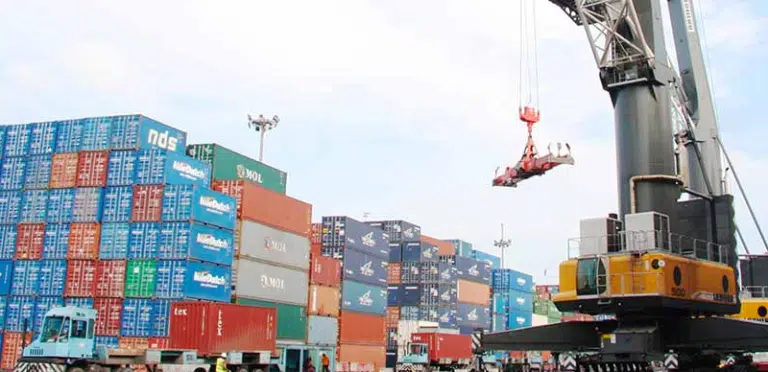
Nigeria’s port system delivered a strong showing in the opening quarter of 2026, with fresh figures pointing to notable increases in both vessel capacity and cargo movement.

Advertisement

Data released in the Q1 operational review by the Nigerian Ports Authority showed that Gross Registered Tonnage for ocean-going vessels climbed by 19.5 per cent to reach 46.75 million. Cargo throughput also remained solid, hitting 32.38 million tonnes during the period.

The figures reflect a growing preference for higher-capacity vessels calling at Nigerian ports, a trend widely linked to improving efficiencies and rising confidence among global shipping operators. The shift has been further supported by developments such as the Lekki Deep Sea Port, which continues to attract larger ships and expand handling capabilities.

Vehicle imports recorded a particularly sharp rise, jumping by 67 per cent, adding further momentum to overall port activity.

This uptick comes as authorities push ahead with plans to modernise port infrastructure and streamline operations in a bid to strengthen Nigeria’s position within the African Continental Free Trade Area framework AfCFTA.

Advertisement

Managing Director of the Nigerian Ports Authority, Abubakar Dantsoho, has emphasised the need for faster turnaround times, improved logistics and greater innovation if Nigeria is to secure a larger share of cargo flows in an increasingly competitive African market.

‎Speaking at an industry forum in Lagos, the NPA Boss reiterated that efficiency, speed, innovation and reliability will determine which countries dominate cargo flows in the new continental trade environment.

‎“The time has come for a paradigm shift in the structure of Nigeria’s economy towards the full utilisation of our marine resources. Our port system, if properly harnessed, can serve as a major driver of economic growth,” he said.

Cargo activity across Nigerian ports maintained a steady upward trend in the first quarter of 2026, even when crude oil terminals were excluded. Throughput rose by 11.6 per cent year-on-year to 32.38 million metric tonnes, up from 29.02 million metric tonnes recorded in the same period of 2025.

According to the Nigerian Ports Authority, the increase was driven by higher trade volumes, stronger import and export flows, improved efficiency at the ports and sustained demand for related services.

Exports proved to be a standout performer during the quarter, with outward cargo climbing by 23.7 per cent to 14.13 million metric tonnes. This points to improving competitiveness of Nigerian goods and a deeper foothold in both regional and global supply chains.

Containerised exports also expanded sharply. Outward laden container traffic rose by 67.6 per cent, moving from 61,332 TEUs in the first quarter of 2025 to 102,803 TEUs in the same period this year, reflecting gains in logistics coordination and terminal operations.

Advertisement

Vehicle handling recorded similar momentum, with total units processed surging by 67 per cent to 58,870, compared with 35,262 a year earlier.

Transshipment activity saw one of the most dramatic increases, with container volumes in that category rising by 83.1 per cent. Analysts say this is a key signal that Nigeria is becoming more central to cargo redistribution within West Africa, an important development as the African Continental Free Trade Area continues to lower barriers to trade across the continent.

Ongoing reforms under the administration of Bola Ahmed Tinubu have focused on modernising infrastructure, expanding digital systems and restructuring institutions to position the country as a leading maritime and logistics hub in Africa.

A central part of this effort is the large-scale upgrade of major facilities, including the Lagos Port Complex and the Tin Can Island Port, where rehabilitation works are underway following the approval of a one-billion-dollar overhaul aimed at tackling long-standing infrastructure gaps and improving competitiveness.

Efforts to upgrade Nigeria’s port system are being broadened, with the Minister of Marine and Blue Economy, Adegboyega Oyetola, confirming that procurement is in progress for improvement works at ports in Warri, Port Harcourt, Onne and Calabar. The move is part of a wider plan to ensure more even development across the country’s maritime infrastructure.

Advertisement

Alongside physical upgrades, the administration of Bola Ahmed Tinubu is advancing a strong digitalisation drive. This includes rolling out systems such as the Port Community System and the National Single Window, both designed to simplify cargo clearance, cut delays and improve transparency across port operations.

Stakeholders in the sector say these measures could help reduce the cost of doing business while boosting efficiency and shortening vessel turnaround times.

Attention has also turned to improving cargo evacuation, with increased investment in rail links, inland dry ports, barging services and dedicated export corridors aimed at easing congestion around port access routes.

Security conditions in Nigerian waters have also improved markedly. The country has gone more than four years without recorded piracy incidents, a shift widely credited to the Deep Blue Programme and enhanced maritime surveillance capabilities.

Advertisement

According to the Nigerian Ports Authority, the latest performance figures indicate that the sector is steadily transforming into a more commercially active and cargo-driven system, better positioned to support trade, economic growth and regional integration.

Even so, challenges remain. Despite accounting for a significant share of West Africa’s economic output, Nigeria still handles only about a quarter of the region’s cargo traffic, highlighting the need to sustain reforms and fully unlock the country’s maritime potential.

‎“With sustained commitment to these initiatives, Nigeria’s port system will enter a new phase and emerge as a leading maritime logistics hub in Africa,” he assured.

Continue Reading

News

Galatasaray looking for player who can fill Osimhen’s big shoes

Published

on

ADVERTISEMENT
Zoom Ad
ADVERTISEMENT
Zoom Ad

Galatasaray are looking for a player who can fill striker Victor Osimhen’s shoes at the club in the near future.

This was disclosed by Turkish sports commentator Ibrahim Seten.

Speaking on the 343 Digital YouTube, Seten shared information regarding current events at Galatasaray.

He said, “Galatasaray is looking for a young player who can fill Osimhen’s shoes when he’s not there, but also who can play alongside Osimhen, both on the wings and in the back.

Advertisement

“They told me, ‘Like a younger version of Batshuayi’,” he said.

Osimhen, who led Galatasaray to win the Turkish Super Lig on Saturday, has been linked with a move away from the club this summer.

Continue Reading

News

Serious allegation: Gumi claims US intelligence behind insecurity in Nigeria

Published

on

ADVERTISEMENT
Zoom Ad
ADVERTISEMENT
Zoom Ad

Kaduna-based Islamic cleric Ahmad Gumi has claimed that American intelligence agencies are behind banditry and Boko Haram terrorism in Nigeria.

Gumi made the allegation in a Facebook post on Saturday while reacting to comments by Mike Arnold, who has spoken publicly about alleged persecution of Christians in Nigeria.

Arnold had shared photos of himself with several Nigerians, including former Cross River Governor Donald Duke and Nigeria’s Information Minister Mohammed Idris.

“These are a few of the people I’ve met and places I’ve been to in Nigeria over the years,” Arnold wrote while sharing the photos.

Advertisement

In response, Gumi accused Arnold of spreading what he described as a false narrative about Christian killings in Nigeria.

He also alleged that American intelligence agencies were linked to insecurity in some northern states.

“After all the barking about ‘fake Christian genocide’, it is shameful to realise that this man has been almost everywhere where Christians are prosperous, yet he has not visited Zamfara, Katsina and other northern states suffering from the activities of bandits and Boko Haram allegedly sponsored by the same American intelligence. One of the things Islam abhors is lies and liars,” Gumi wrote.

Gumi has repeatedly criticised US involvement in Nigeria’s security issues.

Advertisement

In December, after airstrikes reportedly ordered by US President Donald Trump targeted suspected terrorist hideouts in Sokoto State, Gumi condemned the action and described it as an attack on Islam.

The latest allegation comes as Nigeria and the United States continue to strengthen security cooperation to combat insecurity.

On Friday, presidential spokesman Bayo Onanuga said National Security Adviser Nuhu Ribadu met with US Vice President JD Vance and other American officials to discuss deeper cooperation on Nigeria’s security challenges.

Advertisement
Continue Reading

Trending

Copyright © 2024 Naija Blitz News