News
NCDC Bill scales through second reading in Senate
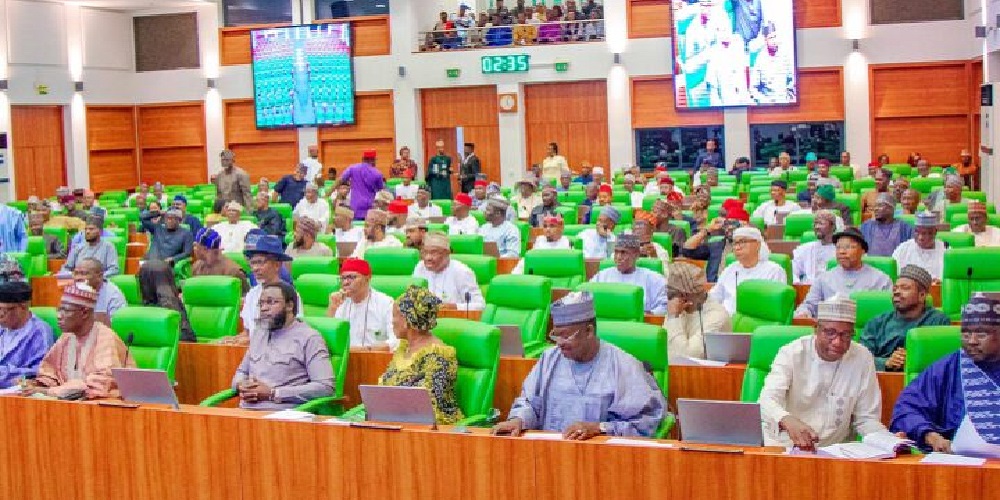
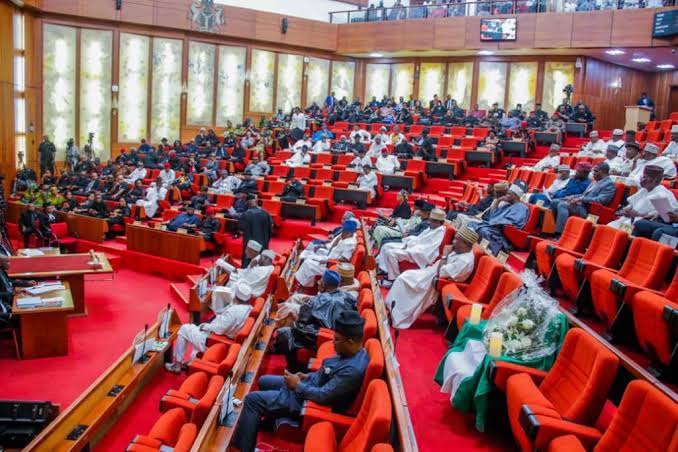
The bill seeking the establishment of North Central Development Commission (NCDC), being sponsored by the senator representing Benue South Senatorial District and Senate Minority Leader, Comrade Abba Moro and co-sponsored by all the senators from North Central, on Wednesday, passed Second Reading on the floor of the senate.

The bill, which passed First Reading on the 5th of October, 2023, was first sponsored in the 9th Senate by Senator Moro where it passed First and Second Readings but could not get presidential assent before the expiration of the 9th Senate.
In his lead debate, the Senate Minority Leader said the Commission, when established would be saddled with the responsibility of receiving and managing funds from the federal government and donors for the resettlement, rehabilitation, integration and reconstruction of roads, houses and business premises of victims of flood and farmers/herders clashes, communal clashes, construction of large format drainage systems, dredging of rivers Niger and Benue to control flood and incidental matters, as well as tackling the menace of poverty, illiteracy and other related environmental or developmental challenges facing the North Central Nigeria.

The Lead debate reads;
“Mr. President, Distinguished colleagues.
“May I humbly seek your leave to lead the debate on this very important Bill.
“Mr. President, Distinguished Colleagues, the North Central Zone of Nigeria, in no particular order, comprises the following geopolitical States of the Federation; Kogi, Niger, Benue, Kwara, Plateau, Nasarawa and the Federal Capital Territory, Abuja.
“Over the past years, Mr. President, Distinguished Colleagues, the North Central Zone of Nigeria has been devastated and left in bollix by the noxious antics of terrorists, incidents of flood and erosion, insurgency, kidnapping, herder/farmer clashes, poverty, high rate of illiteracy, to mention but a few.
“The Zone is blessed with several mineral resources that can boost the economy of Nigeria if properly harnessed. However, because of the breeding aforementioned, the North Central Zone is handicapped and cannot do much in this regard.
“May I mention here, Mr. President, that the North Central Zone of Nigeria hosts two of West Africa’s great rivers;(a) The River Niger and (b) The River Benue, which flows into Nigeria from The Republic of Cameroon. The two rivers meet in North central Nigeria and flow as one river on to the Atlantic Ocean. However, the presence of these two rivers has made flood a perennial challenge in the region with increasing intensity every year, leaving not just the North Central Zone but the entire Country with great losses and trauma.
“Mr. President, Distinguished Colleagues, according to statistics from the Nigerian Meteorological Agency, In 2012 and very recently, devastating flooding forced two million Nigerians from their homes and over 363 people died in Plateau, Benue, Niger, Nasarawa and Kogi states.
“Between 2016 and 2023, more than 92,000 people were displaced and over 578 died from incidents of flood in Benue, Kogi, Niger and Nasarawa States, and other parts of Nigeria.
“Annually, Mr. President, Distinguished Colleagues, hundreds of thousands of acres of farmlands are damaged in the North Central Zone of Nigeria where the people are largely agrarian as a result of flood, and this happens, Mr. President, whenever there is a heavy precipitation upstream on the Benue and Niger Rivers. On the Benue River, the main problem is Lagdo Dam in Cameroon, which usually causes the river to swell when water is released. Flood has caused a lot of damage to the North Central Zone. In Agatu, Benue state, farmers continue to lose their crops and farmland to flood and erosion. This is applicable to states like Niger, Nasarawa and Plateau, which have suffered loses and trauma because of flood and erosion.
“Mr. President, Distinguished Colleagues, it is no longer news that over the years, herder/farmer clashes in North Central Nigeria, especially in Benue State, have continuously made headlines. Consequently, infrastructure ranging from places of worship, roads, hospitals, schools, houses, recreational centres, etc, have been left tattered, shattered and pierced by bullets. Women, children, pregnant women and in fact the entire population is a victim of the atrocities perpetrated by suspected herders and bandits in the North Central Zone of Nigeria. Even animals and the environment are not spared the chaos and conundrum imparted on the Zone by the perpetrators of these unwholesome acts.
“Mr President, Distinguished Colleagues, between February 24, 2016 and January 2024, rural dwellers in 45 villages of Agatu LGA were awakened by sound of gunshots and flicks of matchets as suspected militias swept into the area unleashing an orgy of violence. The unfortunate incident left, in its wake, more than 800 persons dead, among which were children and women, with more than 59,000 persons displaced from their ancestral homes. The displaced communities have been scattered with many seeking refuge in various Internally Displaced Persons (IDPs) camps scattered across Benue and Nasarawa states.
“Mr. President, Distinguished Colleagues, this Bill seeks, therefore, to; establish the North Central Development Commission (NCDC) saddled with the responsibility of receiving and managing funds allocated by the Federal Government and Donors (International and Local Donors) for the resettlement, rehabilitation, integration and reconstruction of roads, houses, farmlands and business premises affected by flood, erosion and farmer/herder clashes, terrorist activities, construction of large format drainage systems, dredging of rivers Benue and Niger to control flood, erosion and other incidental matters, as well as tackling the menace of poverty, illiteracy and other related environmental and developmental challenges in the North Central Nigeria.
“Mr President, Distinguished Colleagues, we all know the bond and attachment a man has with his ancestral home, and the psychological effects of being displaced from same. The funds allocated by the Federal Government and Donors (Local and International) will be used to rehabilitate displaced persons, and to indeminify them to their former economic status.
“Recent advocacy has centered on the need to make Nigeria’s geopolitical zones centers of development, as intervening centers of development between the states and the Federal government. It is our hope that the aggregate of developments via the instrument of Zonal Development commissions will make Nigeria stronger and greater again. Mr President, unbundling the federal government now has become an imperative need given the development inertia of most states and the near emasculation of local government councils in Nigeria.
“Mr. President, Distinguished Colleagues, may I mention that this Bill was actually initiated by my humble self in the 9th Senate , passed all necessary legislative processes and got a resounding support from every quarter of the nation. However, the Bill was unable to get to the presidency for further necessary action before the end of the 9th Senate.
“Today, Mr President, Distinguished Colleagues, in the 10th Senate this Bill is co-sponsored by all senators from North Central Zone across party lines.
“Mr. President, Distinguished Colleagues, I humbly urge you all to support this Bill for the Establishment of the North Central Development Commission (NCDC) and pass it appropriately for a second reading for equity, fairness and the development of our country.
“Thank you all for your kind audience.”
The Senate President, Senator Godswill Akpabio, in his remarks thanked Senator Moro and all the co-sponsors of the bill for sponsoring the all-important bill. He said development in any part of the country was development for all Nigerians. He agreed with the sponsors of the bill that North Central deserved a development commission to address the myriads of challenges confronting the region.
The bill was refered to the committee on Special Duties to report back to the Senate within four weeks.

News
Wike Pledges More Projects for Kuje, Cautions Chairman elect Against ‘Away Leadership’
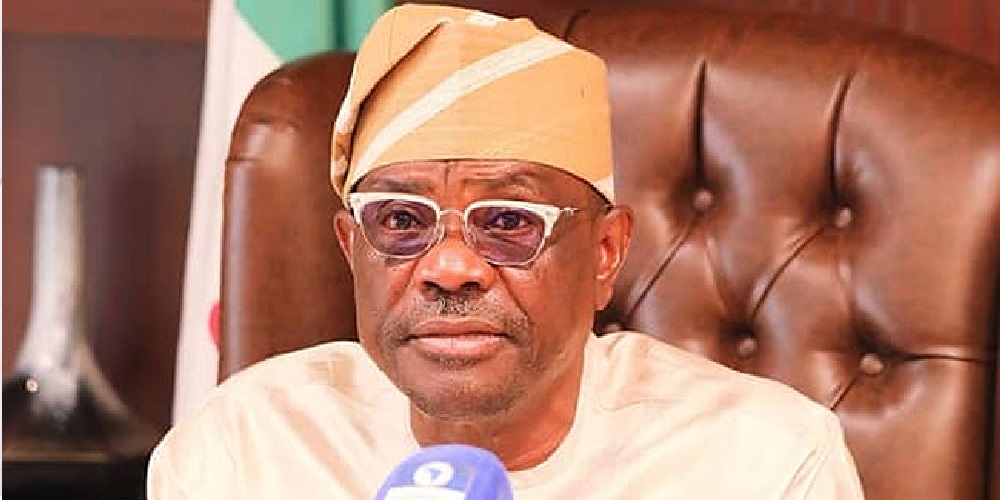
The Minister of the Federal Capital Territory (FCT), Nyesom Wike, has pledged more infrastructure projects for Kuje Area Council, warning the incoming council chairman against abandoning the people after assuming office.
Wike gave the assurance on Thursday during a thank-you visit to Kuje Area Council to appreciate residents for their support in the recent council elections.
Addressing traditional rulers, political leaders and residents, the minister said the Federal Government would continue to deliver projects to the area in recognition of the support given to President Bola Ahmed Tinubu and candidates aligned with his administration.
He emphasised that politics should be a covenant between leaders and the people, stressing that elected officials must fulfil their promises.
“Politics should be a contract between those elected and the people who elected them. It is not where our people vote for you and at the end of the day you disappear,” Wike said.
The minister noted that his visit to Kuje was part of President Tinubu’s directive that government officials must return to communities to appreciate their support rather than take it for granted.
According to him, the administration had already delivered key projects requested by the people of the council.
Wike recalled that during a previous town hall meeting in Kuje, traditional rulers had requested the completion of the road from Airport Junction to Kuje and the dualisation of the Kuje Garage Road.
He said the Garage Road project had already been completed and commissioned, while the Airport Road to Kuje project, being handled by Arab Contractors, had returned to site and was expected to be completed before the third anniversary of President Tinubu’s administration.
“We did not only award the Garage Road; it has been completed and commissioned. The contractor handling the Airport Road to Kuje has also returned to site and assured us the road will be ready for inauguration during the President’s third anniversary,” he said.
Wike further disclosed that the 16-kilometre Kuje–Gwagwalada road, being constructed by Gilmor Engineering Nigeria Limited, was progressing steadily and could be ready for commissioning by June.
He assured residents that additional projects would commence once the newly elected chairman assumes office.
“By the time your chairman is sworn in, we will sit with the traditional rulers and decide which of the roads you mentioned we will start first,” he said.
The minister also cautioned the incoming council chairman against distancing himself from the people after assuming office, stressing that leadership at the grassroots level requires constant engagement with residents.
“Don’t be an away chairman. Be a home chairman. When you were campaigning, you were always at home. Now that you have won, do not run away from your people,” Wike warned.
He added that power and money often change people quickly, urging the incoming chairman to remain humble and committed to the welfare of the people.
“Power and money are two things that can change a man within seconds. But I believe you will not abandon your people,” he said.
Wike expressed satisfaction with the outcome of the council election in Kuje, describing the results as a reflection of the people’s confidence in the administration.
Earlier, the outgoing Chairman of Kuje Area Council, Abdullahi Sabo, thanked the minister for visiting the council to appreciate residents for their peaceful conduct before and after the elections.
He described Wike as a unifier and bridge builder whose leadership had accelerated development across the FCT.
Sabo also urged residents to support the incoming administration to ensure continuity of development in the council.
In his remarks, the Chairman-elect of Kuje Area Council, Danladi Samuel Shekwolo, expressed gratitude to the minister for supporting his campaign and pledged to deliver the dividends of democracy to the people.
He also appealed to the minister to consider constructing key roads linking Kuje to neighbouring communities, including Gwagwa, Rubochi and Kebi, to boost economic activities in the council.
The chairman-elect assured residents that his administration would work closely with the FCT Administration to improve infrastructure and strengthen development in the area council.
News
Reps Commence Probe into Disability Commission over Alleged Procurement Irregularities
By Gloria Ikibah
The House of Representatives has begun an investigation into the activities of the National Commission for Persons with Disabilities following allegations of procurement irregularities and questionable project implementation raised by stakeholders.
The decision was taken by the House Committee on Disability during its sitting in Abuja after receiving a number of complaints concerning contract awards, project execution and administrative conduct within the commission.
Members of the committee, led by Chairman Bashiru Dawodu, said the probe would focus on the procurement processes adopted by the commission as well as how projects intended to support persons living with disabilities were executed.
Stakeholders who appeared before the committee raised concerns that several contracts and procurement activities carried out by the commission may have been significantly inflated. The claims have stirred unease within the disability community, particularly over the management of public funds meant to support vulnerable citizens.
One of the petitioners, Abdullahi Ibrahim, told the lawmakers that some projects and supply contracts linked to the commission appeared to have been awarded at costs running into tens of millions of naira, far above what stakeholders believe to be reasonable.
The committee indicated that its inquiry would seek to determine whether due process was followed and whether public resources allocated to programmes for persons with disabilities were properly utilised.
“It is worrisome that the National Disability Commission is becoming the headquarters of corruption in the disability community because of what has been happening there,” he alleged.
Ibrahim cited what he described as a questionable procurement involving Point-of-Sale (POS) machines, claiming the contract value was allegedly exaggerated.
“How can a disability commission pay about N97 million for 101 POS machines with starter packs when the actual cost is far lower?” he queried.
Further concerns were raised over some training programmes and equipment procurement exercises carried out by the commission, which stakeholders alleged were approved at costs far above reasonable estimates.
Members of the committee acknowledged the gravity of the claims but stressed that any allegation must be backed by credible and verifiable documentation. They urged those making submissions to provide detailed records and evidence that would enable the panel to conduct a thorough and objective investigation.
Earlier in his presentation, Executive Secretary of the National Commission for Persons with Disabilities (NCPWD), Ayuba Burki Gufwan, informed the lawmakers that steps had already been taken to address certain procurement concerns identified shortly after he assumed office.
He explained that although he was appointed by Bola Ahmed Tinubu on 6 August 2024, he was unable to resume duties immediately due to hospitalisation following an accident. He eventually took up the position roughly two weeks later.
According to him, upon resuming office he discovered that several contracts had been awarded during the interim period under his predecessor, a situation he considered irregular and one that required administrative review.
“Upon resumption about two weeks afterwards, I was shocked to discover that my predecessor, who should have handed over on the 6th, took decisive decisions on behalf of the commission as a former executive secretary,” he told the committee.
He explained that the commission’s Procurement Tenders Board (PTB) subsequently reviewed the process and declared the contracts illegal.
“So we summoned the meeting of the PTB and the decision was reached that all of the procurements that the former ES presided over were illegal, null and void. Those contracts were revoked and a new process was initiated for the 2024 procurement,” he said.
The Executive Secretary assured lawmakers that detailed documentation regarding the procurement process would be formally submitted to the committee for scrutiny.
“I will document everything and formally present it to you,” he assured the lawmakers.
Beyond procurement concerns, the commission’s head also outlined ongoing reforms aimed at expanding the commission’s presence and services across the country.
He noted that when he assumed office, the commission had no operational zonal offices despite provisions in its enabling law mandating nationwide coverage.
“I didn’t inherit one single zonal office. As a person with disability, I understand the logistics of transportation and the challenges involved, which are often overwhelming,” he said.
He disclosed that the commission had since established regional offices in Plateau, Bauchi, Abia and Oyo states, covering the North-Central, North-East, South-East and South-West zones respectively, while plans were underway to open offices in the remaining regions.
“Our goal is to decentralize the operations of the commission and bring government services closer to persons with disabilities across the country,” he added.
The Executive Secretary also explained that limited funding had constrained the commission’s ability to host delegations of persons with disabilities who travel from different parts of the country to seek assistance.
“In most cases when people with disabilities come from far and near, they tell me they do not have accommodation or transport. The commission does not have those funds readily available, and it is for fear of embarrassment that we sometimes decline such visits,” he said.
Members of the committee signalled that further sessions may be organised to allow more stakeholders the opportunity to present their submissions and supporting evidence.
The lawmakers maintained that the exercise is intended to promote transparency, accountability and improved service delivery, noting that millions of Nigerians living with disabilities rely on the programmes and interventions provided by the commission.
News
Reps Consider New Law to Strengthen Nigeria’s Decarbonisation Drive
By Gloria Ikibah
The House of Representatives of Nigeria is weighing fresh legislation aimed at providing stronger legal support for Nigeria’s national decarbonisation programme, as part of wider efforts to deepen the country’s climate transition and speed up the move towards a low-carbon economy.
Chairman House Committee on Mandatory National Decarbonisation, Rep. Sesi Whingan, disclosed this durjng a media parley in Abuja on Wednesday, after a technical roundtable that brought together key stakeholders to examine Nigeria’s decarbonisation agenda.
He explained that while Nigeria already operates under the Climate Change Act 2021, the proposed National Decarbonisation Bill is intended to strengthen existing policies and provide a more comprehensive framework for the country’s climate governance efforts.
According to him, the bill has already passed its first and second readings in the House and is expected to move to the next stage of the legislative process, with a public hearing anticipated before the end of the month.
The proposed legislation is also expected to reinforce the role of the National Council on Climate Change and bring greater coordination to the different energy transition policies and emission-reduction initiatives currently being implemented across several sectors of the Nigerian economy.
“We decided to bring all relevant stakeholders into one room, and currently we are working on a bill known as the National Decarbonisation Bill,” Whingan said.
“This bill is designed to complement what the National Council on Climate Change is already doing. It has already gone through the first and second readings in the House, and hopefully before the end of the month we will move towards the public hearing stage.
“Our plan is to continue engaging stakeholders to see how we can consolidate the different government policies and programmes and incorporate them into a workable and achievable framework.”
Rep. Whingan explained that participants at the roundtable included representatives from the organised private sector, the oil and gas industry, environmental advocacy groups, energy experts and other actors involved in climate governance at both federal and state levels.
He emphasised that adequate funding and policy clarity would be critical to achieving the objectives of Nigeria’s decarbonisation agenda, noting that investors require a stable and predictable framework to support long-term investments in clean energy and low-carbon technologies.
“We all agreed that there is a need for strong collaboration between the executive and the legislature so that investors, both within and outside the country, can clearly understand the direction Nigeria is taking in its decarbonisation efforts,” he said.
The Chairman further stressed that the decarbonisation campaign must go beyond policy discussions at the federal level and actively involve state governments and grassroots communities across the country.
To deepen national engagement on the initiative, he disclosed that the committee plans to convene a National Carbon Summit in June, which will bring together representatives from the 36 states and the 774 local government areas.
The summit, he said, is expected to provide a broader platform for discussions on how Nigeria can effectively implement a national decarbonisation strategy while balancing economic growth and environmental sustainability.
“There is no way we can achieve significant progress if local communities are not involved. We must move beyond conversations at the top and take the programme down to the grassroots,” he stated.
Whingan explained that the committee was set up to review Nigeria’s existing climate laws and policies while also examining the country’s emission levels across key sectors of the economy. The exercise, he noted, is aimed at identifying the institutional, financial and technological structures required to implement a compulsory nationwide decarbonisation programme.
He said the committee has been engaging with ministries, government agencies, state governments, industries, civil society groups and international partners as part of efforts to ensure that the proposed framework reflects global standards in climate governance.
The panel, he added, is also examining possible challenges, risks and socio-economic implications that could arise from implementing a national decarbonisation policy.
According to him, the ongoing consultations with stakeholders, along with the planned public hearing, are intended to ensure that diverse perspectives are reflected in shaping a practical, inclusive and effective legislative framework for Nigeria’s decarbonisation agenda.
“Our mandate includes reviewing existing climate laws and policies, auditing Nigeria’s emission profile and sectoral reduction plans, and consulting widely with stakeholders to determine the institutional and technological requirements for a nationwide decarbonisation programme,” Whingan added.
-
News16 hours agoState police: IG sets up panel to propose framework
-
News17 hours agoDefence Minister Reviews Ongoing Operations, Provides Strategic Direction
-
News17 hours ago2027: Dickson’s move to quit PDP sparks debate
-
News10 hours agoPresident Tinubu Reappoints Ayo Omotayo As NIPSS DG
-
News16 hours agoCourt summons INEC chair over contempt charge
-
News16 hours ago‘I dey kampe’, Obasanjo shoots down death rumour
-
News17 hours agoFEC approves N10bn for HIV drugs procurement, cancer treatment upgrade
-
News9 hours agoArmy Chief, Shaibu deploys more troops to tackle insecurity in Benue