
News
State Police: Governors To Appoint Police Commissioners, Bill Lists Conditions For CPs Sacking


- /home/naijuinz/public_html/wp-content/plugins/mvp-social-buttons/mvp-social-buttons.php on line 27
https://naijablitznews.com/wp-content/uploads/2024/02/police1.jpg&description=State Police: Governors To Appoint Police Commissioners, Bill Lists Conditions For CPs Sacking', 'pinterestShare', 'width=750,height=350'); return false;" title="Pin This Post">
- Share
- Tweet /home/naijuinz/public_html/wp-content/plugins/mvp-social-buttons/mvp-social-buttons.php on line 72
https://naijablitznews.com/wp-content/uploads/2024/02/police1.jpg&description=State Police: Governors To Appoint Police Commissioners, Bill Lists Conditions For CPs Sacking', 'pinterestShare', 'width=750,height=350'); return false;" title="Pin This Post">


A bill seeking the amendment of the 1999 Constitution to empower governors to appoint state commissioners of police scaled second reading on the floor of the House of Representatives on Tuesday.
In the alteration to the constitution under consideration, a commissioner of police appointed from among the serving policemen in the state will head the proposed state police in a long-awaited move to decentralise the Nigeria Police Force which has failed to address the spiralling security crisis confronting the country.
The country has been under assault by bandits, kidnappers, and other nefarious characters that daily launch violent attacks on citizens, many of whom are kidnapped, killed, or maimed.
Though the police authorities had initiated various security operations and also deployed more operatives across the country to tackle the insecurity, the crime wave had yet to abate as gunmen operated freely in several urban areas and rural communities.
Titled, ‘A Bill for an Act to alter the Constitution of the Federal Republic of Nigeria, 1999 to Provide for Establishment of State Police and Related Matters,’ the bill, sponsored by the Deputy Speaker of the House, Benjamin Kalu, and 14 others, put the police on the concurrent list.
In the 1999 Constitution, policing is on the exclusive legislative List and therefore, under the direct control of the Federal Government.
Leading the debate on the general principles of the bill, the co-sponsor and member representing Ilorin West/Asa Federal Constituency, Tolani Shagaya noted that the primary purpose of government as enshrined in section 14(2)(b) of the Constitution of the Federal Republic of Nigeria, 1999, is the security and welfare of the citizens.
He added that in the past few years, the nation’s collective security had been greatly challenged, noting that as a result, state police had become inevitable to augment the efforts of the Federal Government to make the country safe for all.
Highlighting some of the key innovations in the proposed alteration bill, he said, “The transfer of police from the exclusive legislative list to the concurrent list, a move that effectively empowers states to have state-controlled policing; the introduction of a comprehensive framework to ensure cohesion as well as accountability and uniform standards between the federal police and state police; the provision of prescribed rigorous safeguards preventing unwarranted interference by the federal police in state police affairs, emphasizing collaboration and intervention only under well-defined circumstances.’’
Shagaya further listed other key provisions of the bill to include the establishment of the state police service commissions as distinct from the Federal Police Service Commission with clearly defined roles and jurisdictions, a re-calibration of the National Police Council to include the chairmen of the state police service commissions, emphasising the collaborative and consultative nature of policing in our federal system.
Other provisions are the recognition of the possible financial challenges that may be faced by state police which would require the Federal Government to provide grants or aid, subject to the approval of the National Assembly, thus ensuring adequate resources for effective policing.
The proposed amendment also provides that the appointment of the state commissioner of police by the governor shall be on the recommendation of the Federal Police Service Commission and the state assembly’s approval.
CP’s removal
However, the CP can be removed by the governor on the recommendation of the Federal Police Service Commission, subject to two-thirds of the state assembly.
Section 215 (4) of the bill provides that, “A state police shall be headed by a commissioner of police who shall be appointed by the governor of the state on the advice of the Federal Police Service Commission from among serving members of the state police subject to confirmation by the state House of Assembly.’’
Section 216 (3) read, “A Commissioner of Police of a state shall only be removed by the governor upon the recommendation of the Federal Police Service Commission praying that he be so removed on the grounds of (a) misconduct in the performance of his official duties (b) breach of policing standards, law, regulation, and code of conduct (c) conviction of any offence involving fraud or dishonesty by a court of law or tribunal and (d) bankruptcy and mental incapacity.’’
It stated that the governor or commissioner under him may give the commissioner of police lawful directive but if considered illegal, the police commissioner may refer the order to the state service commission, which is empowered to take the final decision.
“The governor or such other commissioner of the government of the state as he may authorise on that behalf may give to the commissioner of police such lawful directions concerning the maintenance and securing of public safety and order as he may consider necessary, and the commissioner of police shall comply with those directions or cause them to be complied with.”
Furthermore, the National Assembly shall do certification of the state police service commission bi-annually to make sure it meets national standards.
Section 216 (b) of the bill empowers the state police to bear such arms as may be determined by an Act of the National Assembly.
In all, the proposal contains 18 clauses to alter sections 34, 35, 39, 42, 84, 89 and 129 of the Constitution of the Federal Republic of Nigeria (as altered).
The bill also seeks to alter sections 153, 197, 214, 215, and 216 as well as Chapter IV Part III, Second Schedule, Part II of the Third Schedule, and Part III of the Third Schedule of the Constitution.
Federal police
In the proposed legislation, section 214 of the Constitution (Establishment of Federal and State Police) is altered to distinguish the federal from the state police.
Section 214 (3a) reads, “The federal police shall be responsible for the maintenance of public security, preservation of public order and security of persons and property throughout the federation to the extent provided for under this Act or by an Act of the National Assembly; and
“(b) be responsible the maintenance of public security, preservation of public order and security of persons and property within a State to the extent that the State has power to make laws under this constitution.’’
Subject to the provisions of the constitution, the bill states that the federal police shall not interfere with the operations of any state police or the internal security affairs of any state except to contain serious threats to public order where it is shown that there is a complete breakdown of law and order within a state and the state police are unable to contain the threat.
The federal police can only intervene where the governor requests their intervention to prevent or contain a breakdown of law and order in the state.
Section 216 (1) of the Constitution was also altered to provide the basis for the removal from office of the Inspector General of Police.
Contributing in support of the bill, Ahmed Jaha representing Damboa, Gwoza/Chibok Federal Constituency, Borno State, stated, “It is not the responsibility of the military to help in the maintenance of internal security. They are involved because of the breakdown of our internal security mechanisms.’’
Also speaking, the member representing Ikorodu Federal Constituency, Lagos State, Babajimi Benson, noted that it is the job of the police to maintain law and order.
According to him, “The about 400, 000 policemen we have today cannot effectively cater for the over 200 million Nigerians. If the 36 states of the federation feel they have the funding, they should be allowed to establish state police provided such is not used to perpetrate political ambitions.’’
Other lawmakers who spoke in support of the bill included Aliyu Madaki (Kano) Ademorin Kuye (Lagos) and Bello Kumo (Gombe).
But the member representing Jibia/Kaita Federal Constituency, Sada Soli, expressed misgivings, citing the financial implication of state police at a time when many states were struggling to meet their financial responsibility to their workforce.
Ex-police commissioner
Speaking on the bill, a former Assistant Inspector General of Police, Ali Amodu, stated that while there were fears about the powers being granted to the governors to have control over the state police, it would strengthen the powers of the judiciary, noting that in the end, the citizens would benefit more from giving control of the police to the states.
He noted, “The constitution even provides that they are the Chief Security Officers of their states. If they should have control over the police, the judiciary will be so strengthened that if the governor wants to use the police against his opponents, his opponents will go to court and seek redress.
“My view is that we should not be afraid, we are having a lot of security challenges today, and we should not be afraid of testing this because it is happening in other countries. But of course, it will need an amendment of the Constitution.’’
Endorsing the control of state police by the governors as proposed by the lawmakers, Amodu said any abuse of the police could be addressed by the court.
“Yes, there is no doubt that there are going to be instances of abuse, but this abuse can be taken care of, if we seek redress in court. We have to experiment with this thing. You will see the advantages and disadvantages of anything you want to experiment with.
“But I say in conclusion that the advantages we are going to have from allowing the states to have control of their police, and provide them with equipment, the citizens tend to benefit more,” he said.
In his contribution, a retired Commissioner of Police, Emmanuel Ojukwu said, “State police or no state police, it is a matter of the constitution. Our constitution says that there shall be only one police force.
“If Nigeria wants to have state police, they should amend the constitution and they should go ahead and create the state police. But right now, every state has police of its own but they are not called police by law. That is why we have Amotekun, etc. If we amend the constitution and allow the state to call them by name, such as Kano State Police, etc, no problem.
“Governors already have these avenues working. A good number of them in the state are armed and licensed by the police to hold arms. If all they want is for state police that have been created to begin to have sophisticated weapons, no problem. It is all Nigeria.
“The Federal Police as of now is not as efficient as it should be because the Federal Government that is funding the police is not giving it what it needs. If the states create their police and give it what it needs, there will not be any problem.”
On its part, the Rivers State Government supported the bill on the state police.
The state Commissioner of Information and Communications, Joseph Johnson, in an interview with one of our correspondents on Tuesday, said the bill would strengthen policing and improve security.
He further said the state Governor, Siminalayi Fubara, was privy to the meeting with the President recently when the issue of state Police dominated discussions.


The President of the Senate, Senator Godswill Obot Akpabio, has expressed profound sadness over the death of veteran journalist and publisher of The Eagle Online, Dotun Oladipo.
Akpabio described Oladipo’s passing as a painful loss to the Nigerian media industry and the nation, noting his significant contributions to journalism, public discourse and the growth of online media in Nigeria.
The President of the Senate commiserated with the family, friends, colleagues and professional associates of the deceased, particularly members of the Guild of Corporate Online Publishers (GOCOP), where Oladipo served as Emeritus President.
“Dotun Oladipo was a courageous, principled and dedicated journalist who devoted a significant part of his life to the pursuit of truth, responsible journalism and the advancement of society.
“His sudden passing is a profound loss to his family, the journalism profession and Nigeria as a whole. His immense contributions to the development of online journalism, as well as his commitment to professional excellence, integrity and public interest, will remain indelible.
“As the philosopher John Stuart Mill reminded us, ‘He who knows only his own side of the case knows little of that.’ Dotun understood that a free and responsible press must listen, question and speak truth to power. His life demonstrated that journalism, when guided by courage and conscience, can illuminate society and strengthen democracy.
“His legacy will continue to inspire journalists and media professionals who believe in the power of responsible journalism to strengthen democracy and contribute to national development,” Akpabio said.
The Senate President prayed that God Almighty would grant the deceased eternal rest and give his family, friends, colleagues and loved ones the fortitude to bear the irreparable loss.
Akpabio also urged members of the media to uphold and build upon Oladipo’s legacy of professionalism, integrity, courage and unwavering commitment to the public interest.
“May God acquaint his soul with the compass of His course” he added.
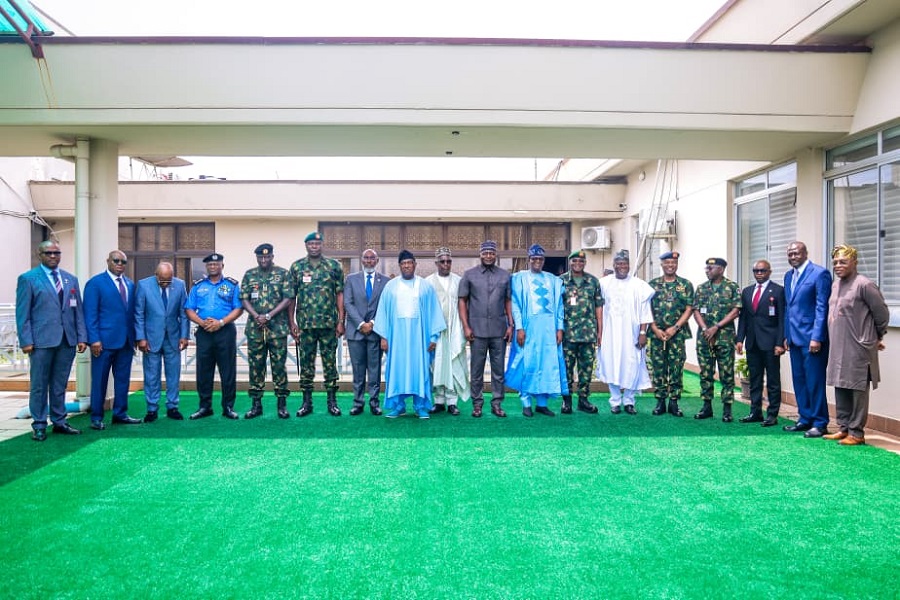
The Secretary to the Government of the Federation (SGF) on Wednesday inaugurated the Presidential Committee on the National Threat Assessment and Five-Year Strategic Defence Operations Plan, charging members to approach the assignment with the highest degree of professionalism, objectivity, urgency and patriotism.
The committee, established by President Bola Ahmed Tinubu, has 90 days to produce a comprehensive National Threat Assessment and a rolling Five-Year Strategic Defence Operations Plan for the President’s consideration and approval.
The SGF, who described the assignment as one of considerable national importance, urged members to bring their collective expertise to bear on developing a coherent framework that would strengthen Nigeria’s capacity to anticipate, plan for and respond to current and emerging security threats.
He assured the committee of the full support and cooperation of the Office of the Secretary to the Government of the Federation, adding that it had been authorised to consult or co-opt representatives of other Ministries, Departments and Agencies whose specialised knowledge might be required.
According to a statement issued by his Special Adviser on Media and Publicity, Yomi Odunuga, Akume said the inauguration marked an important step in strengthening the country’s ability to understand and respond effectively to an increasingly complex and evolving security environment.
He observed that contemporary security threats had become increasingly interconnected and adaptive, with the capacity to exploit gaps between institutions, jurisdictions and operational theatres.
While acknowledging significant successes recorded by the Armed Forces and other security agencies across different theatres in recent months, the SGF said Nigeria must move beyond responding to individual security challenges to building a system capable of anticipating threats, setting priorities, allocating resources rationally and sustaining operational momentum.
Such a system, he said, must also ensure that national security objectives are consistently translated into measurable outcomes.
The SGF stressed that although heads of defence, intelligence and security agencies must retain the flexibility required to respond to immediate threats, their responses should be anchored on a shared national understanding of the security environment and a coherent short-, medium- and long-term strategy.
He noted that operational requirements were sometimes considered independently without sufficient reference to an agreed national threat assessment, clearly prioritised national objectives or a unified capability plan.
According to him, the situation made coordination more difficult and limited the efficient deployment of scarce resources.
The committee, he explained, is therefore expected to help establish a coherent strategic system in which Nigeria’s threat assessment determines operational objectives, while those objectives, in turn, determine the capabilities required.
Capability requirements, he added, should inform expenditure, procurement, force development and industrial priorities.
“In simple terms, we must establish a clear path from threat to objective, from objective to capability, from capability to resource, and from resource to measurable outcome”, the SGF said.
He explained that the National Threat Assessment would provide the government with a comprehensive and objective understanding of Nigeria’s security landscape by identifying what threatens the country, why the threats matter, how they are likely to evolve and the consequences of failing to address them.
It would also determine appropriate government responses and provide a common planning basis for the Armed Forces, intelligence services and other relevant security agencies.
According to him, the assessment should enable the government to distinguish between immediate threats requiring urgent operational responses and emerging threats demanding early investment in intelligence, technology, infrastructure, doctrine, training and other capabilities.
The Five-Year Strategic Defence Operations Plan, on the other hand, would translate the National Threat Assessment into practical and prioritised operational requirements.
The SGF said the plan should establish what must be achieved in each operational theatre and identify the forces, capabilities, equipment, infrastructure, logistics, intelligence, technology and other enablers required to achieve the objectives.
It would also identify existing capability gaps and establish priorities based on the severity and urgency of identified threats, as well as provide a realistic implementation timetable specifying what is required, when it is required, why it is required, who is responsible for delivering it and how progress will be measured.
The five-year timeframe, he said, would provide the medium-term horizon required for force development, capability acquisition, infrastructure development, training, maintenance, research and development and the strengthening of Nigeria’s defence industrial base.
The plan would, however, operate on a rolling basis and be reviewed annually to accommodate emerging threats, changing operational realities, technological developments and lessons from ongoing operations.
Under its Terms of Reference, the committee is to review the principal existing and emerging security threats facing Nigeria and assess their relative urgency and strategic implications.
It is also mandated to define operational priorities and identify capabilities required in each theatre; determine capability gaps and equipment, logistics, infrastructure, technology, personnel and support requirements; and establish procurement priorities based on assessed threats and operational requirements rather than institutional preferences.
The committee will also establish implementation steps and realistic timelines for each priority, including measures for monitoring progress and assessing outcomes, as well as make other recommendations necessary for the formulation and effective implementation of the Strategic Defence Operations Plan.
The SGF said the nation’s military and security personnel, who continue to demonstrate courage and commitment in defending the country, deserve a strategic framework that clearly defines their objectives and provides the capabilities, resources and support required to accomplish them.
He thereafter formally inaugurated the committee on behalf of President Tinubu, wishing members wisdom, diligence, and successful deliberations in discharging the national assignment. Government
The committee, which will be coordinated and supported by the Office of the Special Adviser to the President on Homeland Security, Major General Adeyinka Famadewa (rtd), has as members the National Security Adviser, Nuhu Ribadu; Minister of Defence, General Christopher Musa (rtd); Minister of State for Defence, Bello Muhammad Matawalle; and Chief of Defence Staff, General Olufemi Oluyede.
Others are the Chief of Army Staff, Lt.-General Waidi Shaibu; Chief of Air Staff, Air Marshal Sunday Kelvin Aneke; Chief of Naval Staff, Vice Admiral Idi Abbas; Inspector-General of Police, Olatunji Rilwan Disu; Director-General of the Department of State Services, Tosin Ajayi; and Director-General of the National Intelligence Agency, Ambassador Muhammed Muhammed.
In his closing remarks, Famadewa expressed appreciation to President Tinubu for the confidence reposed in members and the opportunity given to them to contribute to the security and well-being of the country. Government
He urged members to work collectively and in synergy towards strengthening Nigeria’s security architecture, stressing that the assignment must be approached as a shared national responsibility.
Famadewa said his role would not be to command members of the committee but to facilitate collaboration and harness their collective expertise towards achieving the objectives set by the President.
He also said subcommittees would be established to facilitate the work, allow members to concentrate on specialised areas, and ensure the committee completes the assignment within the stipulated 90-day timeframe.
The Nation
News
How Late Nollywood actor Ogogo donated N2.5m to mosque renovation while on sick bed – Muslim community

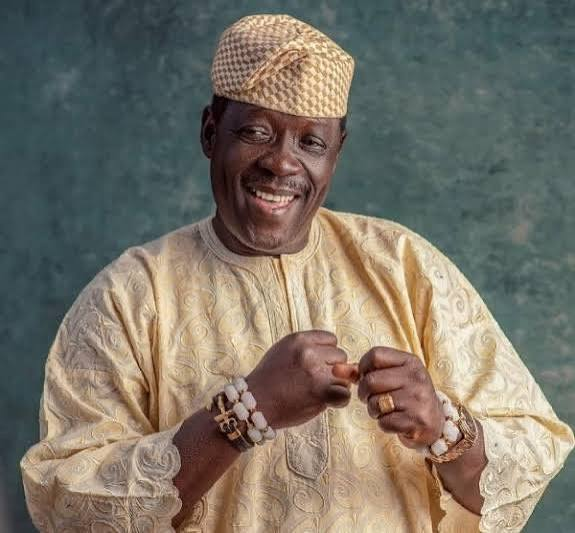
Details have emerged that the late veteran actor Taiwo Hassan, popularly known as Ogogo, donated ₦2.5 million towards the renovation of a mosque in Ilaro, Ogun State, last month despite being on a sick bed.
According to a post by A. Adebanji on X, Ogogo personally contacted the Imam of Ilaro mosque after learning that renovation work was ongoing and expressed his desire to contribute to the project.
The Ilaro Muslim community said it was shocked when it received ₦2.5 million from the actor and immediately contacted him to confirm the donation.
“He told us he would have given us more, but because of his health situation, he didn’t want to come on social media to start begging for financial assistance,” the community said.
The revelation has added a poignant dimension to tributes following Ogogo’s death, highlighting his philanthropic gesture towards his community even while he was battling ill health.
The community prayed for Allah’s forgiveness and eternal rest for the late actor.
Ogogo was widely known for his contributions to the Nigerian film industry, particularly Yoruba-language cinema, and remained a prominent figure in the entertainment industry until his death.

Akpabio sad over demise of Dotun Oladipo, says he was a courageous journalist

SGF sets up presidential security committee, demands professionalism, urgency

How Late Nollywood actor Ogogo donated N2.5m to mosque renovation while on sick bed – Muslim community




-

 News23 hours ago
Just in: Police finally handover 16-year-old Jennifer to parents after alleged forced conversion to Islam
-

 News9 hours ago
Dangote Refinery raises fuel price by N15
-

 Entertainment15 hours ago
Popular crooner of coats of many colours, Dolly Parton dies at 80
-
Entertainment14 hours ago
All you need to know about popular US singer Dolly Parton who just died
-

 Entertainment14 hours ago
Fola, Omah Lay, Ayra Starr Lead 2026 Headies Nominations [FULL LIST]
-

 Economy14 hours ago
Again, NNPC jerks up price of fuel
-

 News14 hours ago
2027: Vote For President Tinubu, Other APC Candidates Or Relocate From Our Local Govt, Kuje LG Chairman Tells Residents
-
 News20 hours ago
Nigeria-Thailand Sign Technical Cooperation Pact, Target Bigger Economic Ties