Connect with us

News

400,000 policemen not enough to secure Nigeria’s – Kalu

Published

on

ADVERTISEMENT
Zoom Ad
ADVERTISEMENT
Zoom Ad

…… Says State Police necessary for effective policing

By Chukwuka Kanu, Abuja

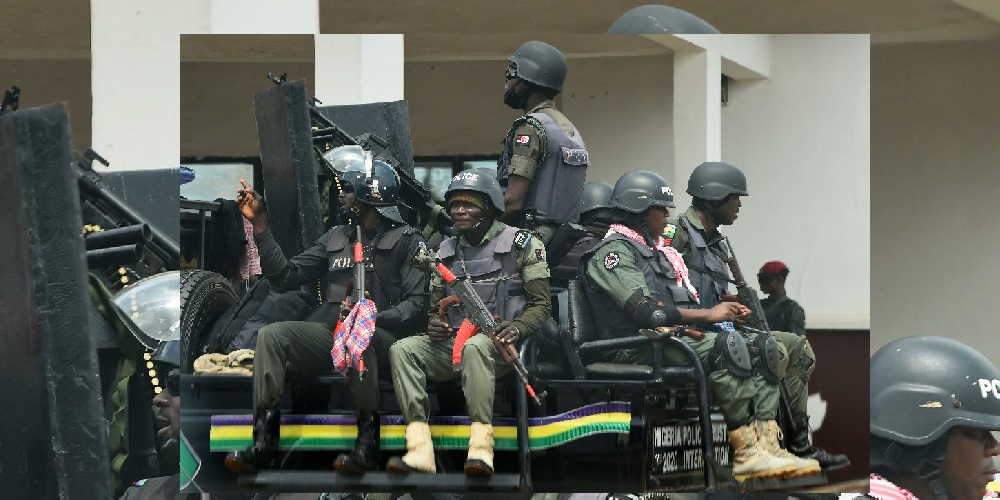
Speaker of the House of Representatives, Rt. Hon. Tajudeen Abbas has said that the number of policemen which is placed at about 400,000 is not sufficient to provide security to over 200 million Nigerians.

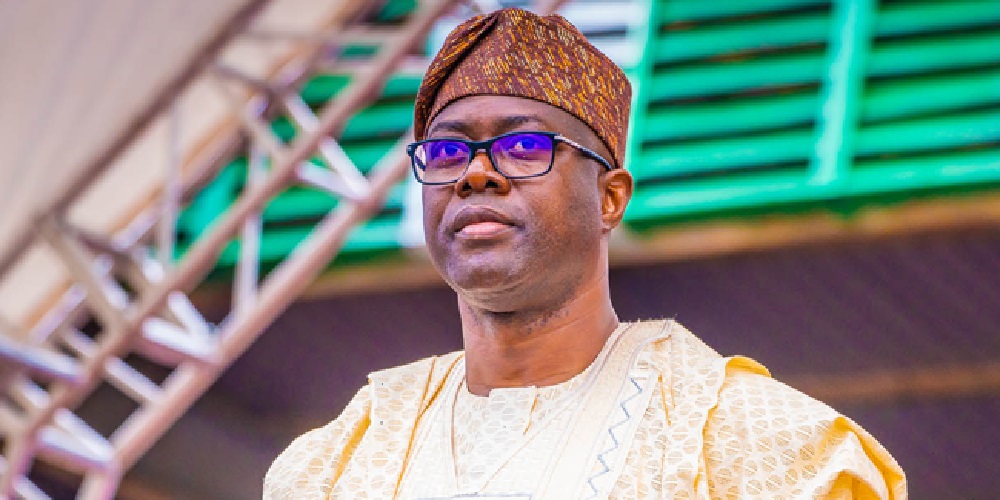
Speaking during a courtesy call on him by the association of Clerks of State Houses of Assembly on Thursday, Abbas who was represented by the Deputy Speaker of the House, Rt. Hon Benjamin Okezie Kalu, said that it became necessary to establish state police.

Advertisement

He said state policing will increase internal security because the operators are already familiar with the terrain they are to police.

Abbas said that the establishment of State Police is akin to the amendments made to issues of railway, power amongst others by the 9th National Assembly to enable the States enjoy some constitution rights under the concurrent list to delve into those issues.

He said: “On other key nationally important matters like state police, for example, the House recognizes the diverse perspectives and needs across different states. We believe that through constructive dialogue and a willingness to find common ground, we can arrive at solutions that truly serves the best interests of all Nigerians.

“Talking about state Police, you will remember also that we did something with the Correctional Services. These are issues that ordinarily fall into the exclusive list of the Constitution of the federal of republic of Nigeria which you had no business tampering with.

Advertisement

But in the spirit of true federalism, the 9th and 10th Assemblies are determined to bring some of these for better governance to take it from the exclusive list to the concurrent list. We did that with the railway and power in the 9th assembly. The question is, how many of the states have drafted laws, domesticating that in their state?

“Now, the State Police is here. We want to use the legislative intervention to improve the needs in our society. One of our needs is security. And we have tried the one layer police system and they overwhelmed us. The truth remains that 400, 000 policemen, policing over 200 million people can never give you the expected security. It is not even in line with the international best practices on police per citizen policing.

“How do we make it trickle down and achieve what we are looking for. Imagine a brother of mine trained in Sokoto or Kaduna during his training as a policeman and he finished and was sent to Bayelsa, a riverine area where the culture is different, language is different, even the way of movement is different -they use mainly boats and this our brother has a phobia for water, how do you expect him to police the people who swim?

The policing will not be thorough. But take a man from that community who knows the in and out of the geography of the area, train him around that place, send him to police, you will agree with me that he will police better. The same thing if you take my brother from Bayelsa to Sokoto, he will not police better than the Sokoto man.

Advertisement

“Yet, the spirit of one nation, national integration, federal character is key and cannot be tampered with. That is why the federal police can have the coloration of what it is at the moment.

“And another thing is, if we don’t streamline it, you will see pockets of organizations, vigilante groups springing up everyday, getting armed everyday. If tomorrow we are not able to manage them in line with the core principle of policing, we may end up creating monsters that will add to insecurity.”

Abbas also called for collaborations among the national parliament and the State Assemblies with regards to the ongoing constitutional amendments.

He said that the synergy was necessary if lofty results were to be achieved.

Advertisement

“The House of Representatives recognizes the crucial role State Assemblies play in shaping the fabric of our nation. We understand that effective governance in a federal system like ours requires inter-governmental collaboration and synergy between the government at the center and the federating units.

“The Nigerian constitutional amendment process has long been a subject of national discourse, and rightfully so because the society is dynamic. It presents a unique opportunity to address critical issues, strengthen our institutions, and pave the way for a more prosperous, enviable and equitable future for all Nigerians.

“However, this process cannot succeed without a unified front. It’s been tested time and again that the federal legislature in isolation of the states legislature cannot amend the grundnom. The constitution is clear on that. Responsibility is shared.

“The House of Representatives firmly believes that collaboration between the National Assembly and State Assemblies is essential to achieve meaningful and lasting reforms. The clerks are the backbones of the State legislature.

Advertisement

“We are committed to working closely with you, the Clerks who serve as the backbone of your respective legislative houses, to ensure open communication, exchange of ideas, and a shared understanding of the issues at stake”, he said.

Earlier in her presentation, the chairman and leadership of the delegation, Rukaiyatu Adamu Jalo told the Speaker that their mission to the House was to seek collaboration with the House, appreciate the national assembly for the passage of the autonomy for state legislature and judiciary bill into law and to understudy the national parliament on the implementation of practice and procedures of legislative business.

Bemoaning the non implementation of the act in many states, Adamu appealed to the House leadership to interface with the Forum of State Speakers to resolve the issue.
Advertisement
Continue Reading
Advertisement

News

NJC Recommends 12 Judges For Appeal Court, Suspends Two Others(See full List)

Published

on

ADVERTISEMENT
Zoom Ad
ADVERTISEMENT
Zoom Ad

The National Judicial Council (NJC) has recommended the appointment of 12 new Justices of the Court of Appeal to President Bola Ahmed Tinubu.

The decision was taken at the NJC’s 111th meeting held on May 13, 2026, under the chairmanship of the Chief Justice of Nigeria, Justice Kudirat Kekere-Ekun.

In a statement issued late Thursday by the NJC Deputy Director of Information, Kemi Babalola-Ogedengbe, the council said the recommendations were made to fill vacancies created by the elevation and retirement of judicial officers.

Those recommended for elevation to the Court of Appeal are Justices Abdulhammeed Mohammed Yakubu, Monisola Oluwatoyin Abodunde, Raphael Ajuwa, Elias Ojie Abua, Mbalamen Jennifer Ijohor, Sabiu Bala Shuaibu, James Kolawole Omotosho, Emeka Nwite, Dauda Njane Buba, Sanusi Kado, Ademola Enikuomehin, and Julcit Veronica Dadom.

Advertisement

The council also recommended Christine T. Clement Ende for appointment as a judge of the Benue State High Court.

Ibrahim Abdullahi Yakubu and Bala Salisu Daura were recommended as Kadis of the Sharia Court of Appeal, Katsina State.

The council also adopted a policy clarifying the eligibility of retired public servants for judicial appointment.

It stated that the 1999 Constitution, as amended, does not bar retired public servants from being appointed to the Bench.

Advertisement

According to the NJC, the decision was guided by judicial precedent, particularly Ayoola v. Baruwa, where the Court of Appeal affirmed that no constitutional provision prevents a retired legal practitioner from judicial appointment.

Under the new policy, retired public servants seeking judicial appointment must have at least 10 years of service remaining before reaching the mandatory judicial retirement age.

They must also disclose any criminal conviction, full employment history, reasons for leaving previous employment, existing obligations and financial status.

The council extended the appointment of Justice Ijeoma Agugua as Acting Chief Judge of Imo State for another three months, from March 26 to June 26, 2026.

Advertisement

The NJC said the extension would allow the state to complete the process of appointing a substantive Chief Judge.

It also commended Justice Ononeze-Madu for declining to be sworn in contrary to established constitutional procedure.

On disciplinary matters, the NJC rejected appeals filed by eight Imo State judges seeking reversal of their compulsory retirement over alleged age falsification.

The affected judges include Justices B.C. Iheka, K.A. Leaweanya, Okereke Chinyere Ngozi, Innocent Chidi Ibeawuchi, Ofoha Uchenna, Everyman Eleanya, Rosemond Ibe, and T.N. Nzeukwu.

Advertisement

However, the council reinstated Justice T.I. Nze of the Customary Court of Appeal after fresh evidence presented before the review committee was found to be authentic.

The NJC also suspended Justice Ibrahim D. Shekarau of the Nasarawa State High Court for one year without pay over judicial misconduct linked to the grant of an ex parte order.

The council found that he failed to observe due process and acted in breach of the Revised Code of Conduct for Judicial Officers.

Similarly, Justice Edward A.E. Okpe of the High Court of the Federal Capital Territory was suspended for one year without pay over breach of fair hearing in a matrimonial case.

Advertisement

The council considered 13 investigation reports on petitions against judicial officers, dismissing eight for lack of merit, want of diligent prosecution or being time-barred.

It also reviewed 98 petitions submitted by its Preliminary Complaints Assessment Committees, dismissing 68 for lack of merit.

Four judges were cautioned, one received a final warning, and 11 petitions were recommended for further investigation.

The NJC also referred some petitioners and lawyers to relevant disciplinary bodies over alleged frivolous and unsupported petitions.

Advertisement

The NJC commended nine judges for exemplary performance during the 2024 and 2025 legal years.

Two judges are to receive letters of commendation for delivering more than 21 considered judgments within the review period, while seven others will receive letters of appreciation.

The council also approved retirement notices for some judicial officers and expressed condolences over the deaths of three judges recorded between December 2025 and April 2026.

Advertisement
Continue Reading

News

PDP starts screening of presidential, guber aspirants

Published

on

ADVERTISEMENT
Zoom Ad
ADVERTISEMENT
Zoom Ad

The Abdulraman Mohammed-led National Working Committee of the Peoples Democratic Party (PDP) is set to commence the screening of its presidential and governorship aspirants for the 2027 general elections.

The party disclosed this in a statement issued by the National Director of Publicity, Chinwe Nnorom, on behalf of the party’s National Publicity Secretary, Jungudo Mohammed, in Abuja on Thursday.

While the governorship aspirants’ screening holds at noon on Thursday at the PDP National Secretariat Annex, Legacy House, Maitama, Abuja, that of the presidential aspirants will begin at 2 p.m. at the same venue.

According to the statement, the presidential aspirants’ screening committee is chaired by the former governor of Abia, Okezie Ikpeazu, with Hassan Sokodobo as secretary.

Advertisement

Other members of the committee are Alhaji Abba Isawa, ⁠Sen. George Sekibo, ⁠Sodipo Semiu, Mrs Chinelo Chidebelu,⁠ Nasiru Mohammed, ⁠Sen. Zainab Kure and ⁠Lindsey Sora.

The statement named the chairman of the governorship aspirants’ screening committee as a former governor of Kaduna State, Ahmed Makarfi, while George Ariolu will serve as secretary.

Other members of the committee are Dr Ibrahim Umar, Prof. Aisha Madawaki, Tajudeen Yusuf, ⁠Dr Abdulganiyu Oloyin, Babangida Modibbo, ⁠Alhaji Buba Biri, Olaniyi Ogungbuji, Mike Ahumibe, Gabriel Igboko, ⁠Pastor Tony Effiong and ⁠Mrs Precious Ojelabi.

The News Agency of Nigeria (NAN) reports that the Tanimu Turaki-led Interim National Working Committee of PDP had, on Wednesday, extended the deadline for the purchase of nomination and expression of interest forms for the 2027 general elections.

Advertisement

The interim NWC, in a public notice jointly signed by the National Publicity Secretary, Ini Ememobong, and the National Organising Secretary, Theophilus Shan, extended the purchase of forms for all offices to May 15.

It also extended the final date for returning completed forms to May 18, while the screening of aspirants is scheduled to take place on May 19.

The interim NWC said that the decision followed appeals from various stakeholders and aspirants across the federation.

It, however, stated that aspirants vying for National and State Assembly positions are to be screened in their respective states, while governorship and presidential aspirants will undergo their own screening in Abuja.

Advertisement

According to the interim NWC, all other activities previously announced remain unchanged.

Continue Reading

News

Desmond Elliot almost made Tinubu sack me – Gbajabiamila

Published

on

ADVERTISEMENT
Zoom Ad
ADVERTISEMENT
Zoom Ad

Chief of Staff Femi Gbajabiamila has revealed he nearly lost his job after President Bola Tinubu received intelligence linking him and lawmaker Desmond Elliot to the 2025 impeachment plot against Lagos Speaker Mudashiru Obasa.

Femi Gbajabiamila, the Chief of Staff to President Bola Tinubu, has disclosed that he nearly lost his position last year due to the political turmoil surrounding the impeachment of Lagos State House of Assembly Speaker, Mudashiru Obasa. Addressing members of the All Progressives Congress (APC) on Thursday, May 14, 2026, Gbajabiamila recounted a tense meeting in Abuja where the President questioned his loyalty. According to the Chief of Staff, the President acted on intelligence suggesting that Gbajabiamila was the hidden hand behind the move to unseat Obasa, using his political protégé, lawmaker Desmond Elliot, as a proxy. “I almost lost my job as Chief of Staff last year because of Desmond Elliot. Mr President called me to his house in Abuja during the Lagos Speaker Obasa saga. He said, ‘I hear this Desmond is your boy, the one we gave you,’ and I said, ‘Yes, sir. He is one of the people causing problems in the Lagos House of Assembly,’” Gbajabiamila stated.

The situation reportedly escalated when the Director-General of the Department of State Services (DSS) contacted Gbajabiamila to report that his name was being frequently cited in connection with the legislative coup. Despite Gbajabiamila’s insistence that Elliot was not involved in the plot, the President maintained that his own intelligence reports suggested otherwise.

“Immediately, I told the president that Desmond wasn’t part of them, but the president replied and said that, from the intelligence he received, Desmond was part of them. Three days later, the DSS DG called me and said there was a problem. He said your name is being mentioned, that you’re the one behind the impeachment saga and that you’re supporting Desmond,” he revealed.

Advertisement

The crisis within the Lagos Assembly, which saw Obasa briefly removed in January 2025 before being reinstated following presidential intervention and a court ruling, has left a lingering rift between Gbajabiamila and Elliot.

The Chief of Staff expressed frustration that despite his personal defense of the actor-turned-politician to the President, Elliot failed to issue a public statement to clear their names. “I spoke to the DSS DG and told him I had spoken to Desmond and he denied being part of the group. I then asked Desmond to make a public statement denying his involvement in the impeachment saga, but till today, he hasn’t done it,” Gbajabiamila noted, highlighting the unresolved nature of the controversy even as Elliot seeks a fourth term in the House.

Continue Reading

Trending

Copyright © 2024 Naija Blitz News