Connect with us

Economy

Forex crisis threatens modular refineries N25bn daily crude input

Published

on

ADVERTISEMENT
Zoom Ad
ADVERTISEMENT
Zoom Ad

Modular refineries in Nigeria are currently facing the threat of shutting down operations following their inability to access foreign exchange for the purchase of crude oil, a commodity priced in United States dollars.


Nigeria has 25 licenced modular refineries with a combined capacity of producing 200,000 barrels of crude oil daily.

Although not all of the plants are currently operational, it was gathered that the functional ones were increasingly finding it difficult to purchase crude due to the worsening foreign exchange crisis in the country.

Brent, the global benchmark for crude, traded at about $80/barrel on Sunday and had remained within that range for months.

Advertisement

With an estimated capacity of 200,000bpd, the modular refineries, if fully operational, would refine about $16m (or N25.14bn if Thursday’s official closing rate of N1,571/dollar is used.”

Annually, it means the modular refineries has capacity for about 73 million barrels annually, representing about $5.84bn worth of crude oil.

But the facilities, which produce Automotive Gas Oil, popularly called diesel, Dual Purpose Kerosene or kerosene, naphtha and black oil, are now finding it hard to make the refined products available to oil marketers for distribution to consumers.

They explained that the scarcity of dollars had made it almost impossible for operators to purchase crude oil, as the modular refinery players and oil marketers demanded for the sale of crude oil in naira from the Federal Government.

Advertisement

The modular refinery operators, who spoke under the aegis of Crude Oil Refinery Owners Association of Nigeria, also lamented that the Federal Government had not been able to keep its part of the bargain with respect to the provision of feedstock to local crude oil refiners.

Speaking with our correspondent on the matter, the Publicity Secretary, Crude Oil Refinery Owners Association of Nigeria, Eche Idoko, stated that modular refineries may close shop if nothing is done to ameliorate the situation.

CORAN is a registered association of modular and conventional refinery companies in Nigeria, while modular refineries are simplified refineries that require significantly less capital investment than traditional full-scale refineries.

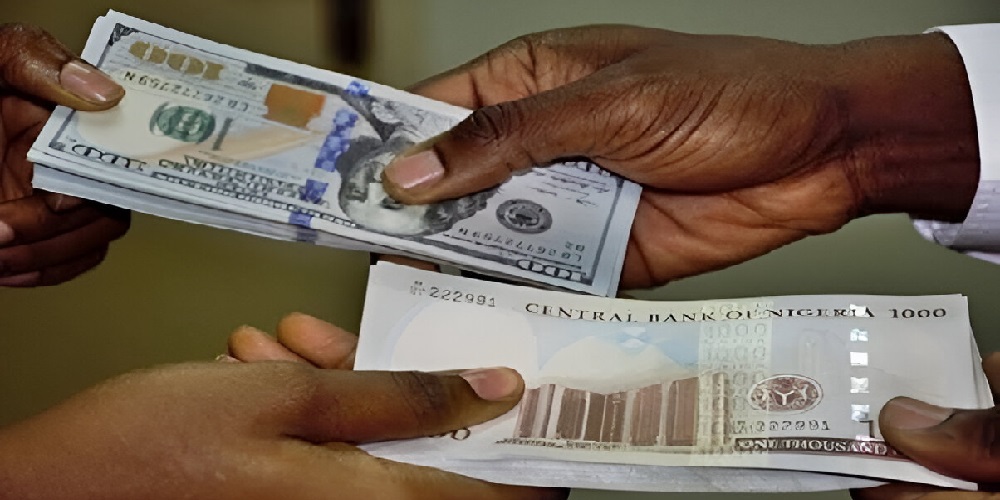
Idoko said, “The purchase of crude oil in dollars is currently the major challenge to modular refineries. We buy crude in dollars and sell our refined products in naira, and this is a major challenge. And apart from that, where do you get the dollars to pay for the crude?

Advertisement

“You heard the Manufacturers Association of Nigeria crying out recently about the dollar saga. We have requested that crude oil be sold to us in naira. And when you do this, you ease the pressure on the naira and this will make our diesel cheaper.

“It will encourage more investors to build and patronise the local refineries. If you take petroleum products off the foreign exchange market, you would have helped the naira by 60 per cent.”

Asked whether the inability of modular refineries to source dollars for crude oil purchase was slowing down production at the plants, Idoko replied, “Yes. We’ve not been able to get enough crude and from the little that we see, we’ve not been able to get forex to buy them.”

On whether this posed a threat to the survival of the plants, the spokesperson of the group said, “Exactly, it is a threat to our existence and it also opens the country to the volatility in the international market.”

Advertisement

Although the association could not state the estimated volume of crude refined by modular refineries in Nigeria, it stated that operators in the sector could refine about 200,000 barrels daily if all of them were operating.

Idoko said, “Right now, I don’t have the actual volume of crude that modular refineries refine annually. However, it is important to state that what each refinery produces in a month is dependent on the amount of crude they are able to get.

“The government has not been able to fulfill its own side of the obligation by providing 60 per cent of the crude required by modular refineries, as captured in the Petroleum Industry Act. So a lot of modular refineries are performing below capacity.

“For instance, OPAC has a 10,000 barrels per day installed capacity, but the most they have been able to refine is like 3,000 to 4,000bpd. The Edo refinery has 1,000bpd, but sometimes they do just 500bpd. Aradel and Waltersmith are the ones that refine as much as 70 and 80 per cent of their capacities because they have their own marginal fields.

Advertisement

“Waltersmith has a capacity of 5,000bpd, while Aradel has 10,000bpd refining capacity. However, if all the modular refineries come onstream, all those that have been licensed so far, our crude demand would be about 150,000bpd and 200,000bpd.”

Nigeria currently has 25 licensed modular refineries. Five of them are operating and producing diesel, kerosene, black oil and naphtha. About 10 are under various stages of completion, while the others have received licences to establish.

Officials of the Federal Ministry of Petroleum could not be reached to tell whether the government would consider selling crude to the modular refineries in naira, as they had yet to respond to enquiries up till when this report was filed.

However, the Minister of State for Petroleum Resources, (Oil), Heineken Lokpobiri, recently confirmed the lack of crude to domestic refiners, noting that Nigeria’s inability to meet its crude oil production quota approved by the Organisation of Petroleum Exporting Countries was the major limiting factor.

Advertisement

Lokpobiri, however, stated that the government was working hard to meet the production quota in order to supply crude oil to local refiners as stipulated in the Petroleum Industry Act.

Meanwhile, Idoko noted that “the current NNPC boss, petroleum minister and NUPRC have all talked about the possibility of having some arrangements with us in naira. But that hasn’t been implemented. Our people still source crude from domestic producers in dollars.

“We buy crude in dollars and sell our refined products in naira. So it is not that we earn dollar proceeds. Our earnings from the sale of diesel, kerosene and black oil is in naira.

“The only dollar component is the sale of naphtha, but most of our refineries won’t sell naphtha, they put it back into the system and reproduce kerosene or diesel. So we still have to visit the Central Bank of Nigeria or domestic dollar market to source our dollars.”

Advertisement

Marketers react

Commenting on the development, oil marketers stated that the continued fall of the naira against the dollar was limiting the release of refined petroleum products from the modular refineries.

Marketers under the aegis of the Natural Oil and Gas Suppliers Association of Nigeria stated that operators of these refineries had stated that the country’s foreign exchange crisis had made it difficult to put a price on refined petroleum products.

They called on the Federal Government and NNPCL to start supplying crude oil to local refineries in naira, considering the persistent fluctuations of the dollar.

Advertisement

The President, NOGASA, Benneth Korie, who conveyed the resolutions of members of the association after their meeting in Abuja, stated that the government should peg the foreign exchange rate at N750/$ in order to enable refineries to start pumping out refined products.

“If for example crude is $80/barrel, we will have to convert it to naira and sell to Nigerians at the naira rate. Let me start by telling you the implications. The problem holding most of these refineries and modular refineries from coming up is the exchange rate crisis.

“So the answer to this is for the government to come out and tell Nigerians that this is how much the dollar is, not this forex rate we hear on TV. Let the government come out and tell us the rate, not the black market rate.

“I know our budget this year was benchmarked at about N750/$. So if the government can maintain the exchange rate at N750/$, heaven will not fall, whether there is inflow or no inflow. It is not the first time we are seeing the dollar at N400 and they (black marketers) are selling for N800.

Advertisement

“So let’s go back and try it, because if we allow this crisis to continue, the dollar may get to what we cannot handle; it may get to the point that all our food items could be sold at dollar rates if care is not taken.

“Therefore, let us go back to N750/$ as it was stated in the budget and work with that, so that the crude oil that will be sold to the refineries will be sold at the exchange rate of N750/$, and it should be converted and we pay in naira.”

Explaining further, he said, “If you are buying crude oil from the government, you pay in dollars, but how do you blend? How much are you going to sell your refined products when you don’t know how much the dollar is going to be tomorrow?

“So it will affect you as a businessman. But if we have one price from the government, then when you are buying the crude from the government or NNPC, you will calculate it based on the government’s rate, convert it to naira and then sell it to Nigerians in naira.

Advertisement

“But when you go to get dollars today and they say it is N1,500, how do you calculate? It creates confusion. So it is causing a problem. Let’s have one rate from the government and things will change positively.”

The NOGASA president went ahead to speak on refineries under the management of NNPCL, as he stated that the forex crisis was also affecting these plants.

“For the Port Harcourt refinery, they said it will come up, and they are also into the business of buying and selling, so if the dollar is not stable, be rest assured it is their problem too,” Korie stated.

When probed further on whether the forex crisis was a major factor limiting the release of products from the refineries, he replied, “For most of them, yes!. This is because you don’t know how much you are going to buy the dollar and so you cannot tell how much you are going to sell (your products). It (dollar) is not stable.”

Advertisement

Speaking further on modular refineries, Korie said operators in this space were finding it tough to source dollars to make crude oil purchase, stressing that the instability of forex had remained a challenge.

On modular refineries, the problem they have is that they do not know how much they will buy and you are selling to them at the dollar rate. If you go to any modular refinery to buy products, the products’ price will be the same at almost the same price as the one you import,” the NOGASA boss stated.
Continue Reading
Advertisement

Economy

CBN sets 18 as minimum age for BVN registration

Published

on

By

ADVERTISEMENT
Zoom Ad
ADVERTISEMENT
Zoom Ad

The Central Bank of Nigeria (CBN) has set 18 years as the minimum age for Bank Verification Number (BVN) registration, as part of new measures aimed at strengthening identity verification and improving security in the Nigerian banking system.

The directive forms part of a set of circulars issued by the apex bank to banks, other financial institutions and payment service providers on March 12, 2026.

Under the new rule, only individuals who are 18 years and above will be allowed to enrol for a BVN. The CBN said the decision is intended to strengthen customer identification processes and reduce the risk of misuse of bank accounts for fraudulent activities.

The bank also introduced new controls within the BVN system to tighten monitoring of suspicious financial transactions across the banking industry.

Advertisement

According to the circular, financial institutions are now required to create a temporary watchlist for BVNs linked to suspected fraudulent transactions. A BVN may remain on the watchlist for a period of up to 24 hours while the affected customer is contacted to clarify the transaction in question.

The CBN explained that the measure will allow banks respond quickly to suspicious activities while still giving customers the opportunity to explain legitimate transactions.

In another change to BVN operations, the apex bank placed restrictions on modifications to phone numbers linked to BVN records.

Under the new directive, customers will only be allowed to change the phone number associated with their BVN once. The CBN said the measure is intended to prevent fraudsters from repeatedly altering phone numbers in order to bypass security checks.

Advertisement

The bank also stated that access to the BVN database will remain strictly limited to financial institutions licensed by the regulator. However, the CBN noted that it may grant access in special circumstances in accordance with existing laws. The new BVN rules are scheduled to take effect from May 1, 2026.

Alongside the BVN reforms, the apex bank also introduced new security measures for instant payment services used for electronic money transfers across Nigerian banks.

The CBN directed all financial institutions offering instant payment services to introduce additional safety features that will allow customers control how their accounts are used for electronic transfers.

Under the new arrangement, customers will be able to voluntarily opt out of instant transfer services if they wish to temporarily stop online transfers from their accounts.

Advertisement

The CBN said once the opt-out option is activated, the customer will not be able to carry out electronic transfers either within the same bank or to other banks.

However, the account holder will still be able to visit a bank branch physically to carry out a transfer.

The apex bank explained that the opt-in and opt-out process must be protected by multi-factor authentication to ensure that only the account owner can activate the feature.

Customers will also be allowed to set their own transfer limits for instant payments. While the existing maximum limits of N25 million for individuals and N250 million for corporate accounts remain unchanged, customers may decide to set lower limits to reduce their exposure to fraud.

Advertisement

According to the circular, any change to transaction limits must pass through enhanced verification procedures and risk assessment by the financial institution.

The CBN also instructed banks to deploy enterprise fraud monitoring systems capable of tracking both incoming and outgoing transactions in real time to detect suspicious activities quickly.

In addition, banks must strengthen identity checks when customers open accounts online or attempt to reactivate inactive accounts.

The apex bank said accounts opened online must undergo liveliness checks, while customer details must be validated immediately against the BVN and National Identity Number databases.

Advertisement

Enhanced authentication tools such as biometric verification, soft tokens and hard tokens are also expected to be used during online account reactivation. The regulator further directed banks to tighten security around mobile banking applications.

Under the new rules, a mobile banking app will only be allowed to operate on one device at a time, meaning customers will not be able to use the same banking application simultaneously on multiple phones.

When a customer switches to a new device, the application will require fresh authentication before it becomes active.

The CBN also introduced temporary transaction limits for newly activated mobile banking applications.

Advertisement

For the first 24 hours after activation, the maximum amount that can be transferred will not exceed N20,000, whether the account is new or an existing account being accessed on a new device.

Similarly, customers accessing internet banking on a new device for the first time will be required to complete additional authentication steps. The instant payment rules will take effect from July 1, 2026.

In a separate circular, the CBN also reviewed guidelines on the management of dormant bank accounts and unclaimed balances in the banking sector.

The apex bank said banks will now be allowed to accept requests for the reactivation of dormant accounts through alternative channels instead of insisting only on physical visits to bank branches.

Advertisement

Financial institutions may adopt these alternative channels provided they put in place strong identity verification measures to ensure that the request is coming from the rightful account owner.

The CBN also removed the requirement for customers to provide an affidavit when reactivating dormant accounts, provided the funds in the account have not yet been transferred to the Unclaimed Balances Trust Fund Pool Account.

However, the bank clarified that affidavits will still be required when customers are reclaiming funds that have already been transferred to the trust fund pool account.

The regulator also directed banks and other financial institutions to improve transparency by publishing information about dormant accounts and unclaimed balances.

Advertisement

Under the directive, banks must display certain details on their official websites, including the name of the account holder, the type of account, the name of the bank and the branch where the account is domiciled.

Financial institutions without operational websites are expected to publish the information on the websites of their industry associations.

Banks are also required to publish the list of dormant accounts once every year in at least two national daily newspapers.

Where the list is very long, the CBN said the bank may publish a short notice directing customers to a section of its website where the full details are available.

Advertisement

State and unit microfinance banks are not required to publish the information in newspapers but must display the details at their business locations.

The apex bank explained that the publication of such information does not violate the Nigeria Data Protection Act 2023 because the law allows personal data to be processed when it is necessary to comply with legal obligations.

The CBN added that its authority to issue the directive is supported by provisions of the Banks and Other Financial Institutions Act 2020, which empowers the regulator to issue guidelines on the management of unclaimed funds held by financial institutions.

The circular on dormant accounts takes immediate effect and replaces an earlier directive issued in February 2025.

Advertisement
Continue Reading

Economy

Naira Strengthens To N1,363.5/$ At Official FX Market

Published

on

By

ADVERTISEMENT
Zoom Ad
ADVERTISEMENT
Zoom Ad

Nigeria’s currency recorded a notable recovery at the official foreign exchange market on Friday, closing at ₦1,363.5 against the United States dollar after weakening earlier in the week.

Data obtained from the website of the Central Bank of Nigeria showed that the naira had opened the week under pressure before gradually regaining strength in subsequent trading sessions.

At the start of the week, the local currency depreciated to ₦1,425 per dollar on Monday, compared with ₦1,398 per dollar recorded the previous Friday.

The decline represented the weakest closing level for the naira since January 12, 2026, when it previously traded at the same rate.

Advertisement

Market conditions, however, improved the following day as the currency appreciated to ₦1,390.5 per dollar on Tuesday.

Additional gains were recorded on Wednesday when the naira strengthened further to ₦1,373.5 against the dollar.

The upward movement continued on Thursday, with the exchange rate improving to ₦1,370 per dollar at the official market.

By Friday, the currency extended its recovery, settling at ₦1,363.5 per dollar after gaining more than ₦60 within four trading days.

Advertisement

Officials of the Central Bank said the country’s improving external reserve position could help shield the naira from sustained pressure in the foreign exchange market.

According to the apex bank, Nigeria’s net foreign exchange reserves increased to about $34.80 billion by the end of 2025, reflecting stronger external liquidity.

The Governor of the Central Bank, Olayemi Cardoso, explained that ongoing monetary and foreign exchange reforms are designed to boost market confidence and enhance liquidity in the financial system.

Advertisement
Continue Reading

Economy

Oil tops $100 as Iran vows to keep Hormuz closed

Published

on

By

ADVERTISEMENT
Zoom Ad
ADVERTISEMENT
Zoom Ad

Oil prices soared above $100 and stock markets extended losses as Iran’s new supreme leader ordered the Strait of Hormuz to be kept closed.

Concerns about a long, drawn out conflict were not assuaged by US President Donald Trump saying that stopping the Islamic republic’s “evil empire” was more important than crude prices.

Global markets have been roiled since the United States and Israel launched attacks on Iran. Tehran’s retaliatory strikes on shipping and Gulf neighbours have nearly cut off maritime traffic through the Strait of Hormuz, through which pass around a fifth of the world’s oil and liquefied natural gas.

“Oil prices are up by double-digit percentages again today, as the realisation sinks in that the US is not about to either end the war or institute some kind of convoy system in the region,” said analyst Chris Beauchamp at IG trading and investment platform.

Advertisement

Energy Secretary Chris Wright acknowledged the US military was currently “not ready” to escort tankers through the critical Strait of Hormuz.

Brent North Sea crude, the international benchmark contract peaked at $101.59 per barrel on Thursday.

At $100 per barrel, Brent is up around 38 percent from the eve of the conflict, which began on February 28 when the United States and Israel launched airstrikes against Iran. It is up nearly two-thirds from the start of the year.

Iran’s new supreme leader Mojtaba Khamenei called on Thursday for using “the lever of blocking the Strait of Hormuz”, which the country’s Revolutionary Guards vowed to carry out.

Advertisement

The call followed fresh attacks against Gulf energy targets: an attack on two oil tankers off Iraq killed at least one crew member, while a cargo ship caught fire after being hit by shrapnel.

Oil prices pared their gains after Iran’s deputy foreign minister said that Tehran had allowed ships from some countries to cross the Strait of Hormuz.

The International Energy Agency said the Mideast war “is creating the largest supply disruption in the history of the global oil market”, a day after its member countries agreed to unlock 400 million barrels of oil from their reserves — their largest release ever.

Analyst David Morrison at Trade Nation said that if the announcements of the release of oil from strategic reserves “were supposed to cap prices, then they failed dismally”.

Advertisement

The moves may have “suggested some panic as hostilities across the Middle East intensified”, he added.

The rise in energy prices could cause prices to rise throughout the economy.

“The longer the oil price remains elevated, the more damaging and long lasting the inflation shock will be for the global economy,” noted Kathleen Brooks, research director at trading group XTB.

Wall Street’s main stock indices were down more than one percent in early afternoon trading.

Advertisement

Europe’s leading equity markets closed lower, as did most Asian markets.

eToro US investment analyst Bret Kenwell said that while US equities had held up rather well to date, a long conflict would have a profound impact on businesses.

“If oil doesn’t retreat meaningfully, the pressure won’t just be felt at the pump — it will bleed into margins, spending, and potentially quarters of softer growth,” he said.

The dollar rose further against major rival currencies.

Advertisement

“The dollar has strengthened, driven by safe-haven demand, fears of inflation, and higher-for-longer interest rate expectations,” said Victoria Scholar, head of investment at Interactive Investor.

– Key figures at around 1630 GMT –

Brent North Sea Crude: UP 8.6 percent at $99.88 per barrel

West Texas Intermediate: UP 9.3 percent at $95.38 per barrel

Advertisement

New York – Dow: DOWN 1.2 percent at 46,871.01 points

New York – S&P 500: DOWN 1.2 percent at 6,698.16

New York – Nasdaq Composite: DOWN 1.4 percent at 22,389.89

London – FTSE 100: DOWN 0.5 percent at 10,305.15 (close)

Advertisement

Paris – CAC 40: DOWN 0.8 percent at 7,978.98 (close)

Frankfurt – DAX: DOWN 0.2 percent at 23,589.65 (close)

Tokyo – Nikkei 225: DOWN 1.0 percent at 54,452.96 (close)

Hong Kong – Hang Seng Index: DOWN 0.7 percent at 25,716.76 (close)

Advertisement

Shanghai – Composite: DOWN 0.1 percent at 4,129.10 (close)

Euro/dollar: DOWN at $1.1525 from $1.1574 on Wednesday

Pound/dollar: DOWN at $1.3355 from $1.3419

Dollar/yen: UP at 159.20 yen from 158.92 yen

Advertisement

Euro/pound: UP at 86.31 pence from 86.25 pence

Continue Reading

Trending

Copyright © 2024 Naija Blitz News