
Economy
Forex crisis threatens modular refineries N25bn daily crude input




Modular refineries in Nigeria are currently facing the threat of shutting down operations following their inability to access foreign exchange for the purchase of crude oil, a commodity priced in United States dollars.
Nigeria has 25 licenced modular refineries with a combined capacity of producing 200,000 barrels of crude oil daily.
Although not all of the plants are currently operational, it was gathered that the functional ones were increasingly finding it difficult to purchase crude due to the worsening foreign exchange crisis in the country.
Brent, the global benchmark for crude, traded at about $80/barrel on Sunday and had remained within that range for months.
With an estimated capacity of 200,000bpd, the modular refineries, if fully operational, would refine about $16m (or N25.14bn if Thursday’s official closing rate of N1,571/dollar is used.”
Annually, it means the modular refineries has capacity for about 73 million barrels annually, representing about $5.84bn worth of crude oil.
But the facilities, which produce Automotive Gas Oil, popularly called diesel, Dual Purpose Kerosene or kerosene, naphtha and black oil, are now finding it hard to make the refined products available to oil marketers for distribution to consumers.
They explained that the scarcity of dollars had made it almost impossible for operators to purchase crude oil, as the modular refinery players and oil marketers demanded for the sale of crude oil in naira from the Federal Government.
The modular refinery operators, who spoke under the aegis of Crude Oil Refinery Owners Association of Nigeria, also lamented that the Federal Government had not been able to keep its part of the bargain with respect to the provision of feedstock to local crude oil refiners.
Speaking with our correspondent on the matter, the Publicity Secretary, Crude Oil Refinery Owners Association of Nigeria, Eche Idoko, stated that modular refineries may close shop if nothing is done to ameliorate the situation.
CORAN is a registered association of modular and conventional refinery companies in Nigeria, while modular refineries are simplified refineries that require significantly less capital investment than traditional full-scale refineries.
Idoko said, “The purchase of crude oil in dollars is currently the major challenge to modular refineries. We buy crude in dollars and sell our refined products in naira, and this is a major challenge. And apart from that, where do you get the dollars to pay for the crude?
“You heard the Manufacturers Association of Nigeria crying out recently about the dollar saga. We have requested that crude oil be sold to us in naira. And when you do this, you ease the pressure on the naira and this will make our diesel cheaper.
“It will encourage more investors to build and patronise the local refineries. If you take petroleum products off the foreign exchange market, you would have helped the naira by 60 per cent.”
Asked whether the inability of modular refineries to source dollars for crude oil purchase was slowing down production at the plants, Idoko replied, “Yes. We’ve not been able to get enough crude and from the little that we see, we’ve not been able to get forex to buy them.”
On whether this posed a threat to the survival of the plants, the spokesperson of the group said, “Exactly, it is a threat to our existence and it also opens the country to the volatility in the international market.”
Although the association could not state the estimated volume of crude refined by modular refineries in Nigeria, it stated that operators in the sector could refine about 200,000 barrels daily if all of them were operating.
Idoko said, “Right now, I don’t have the actual volume of crude that modular refineries refine annually. However, it is important to state that what each refinery produces in a month is dependent on the amount of crude they are able to get.
“The government has not been able to fulfill its own side of the obligation by providing 60 per cent of the crude required by modular refineries, as captured in the Petroleum Industry Act. So a lot of modular refineries are performing below capacity.
“For instance, OPAC has a 10,000 barrels per day installed capacity, but the most they have been able to refine is like 3,000 to 4,000bpd. The Edo refinery has 1,000bpd, but sometimes they do just 500bpd. Aradel and Waltersmith are the ones that refine as much as 70 and 80 per cent of their capacities because they have their own marginal fields.
“Waltersmith has a capacity of 5,000bpd, while Aradel has 10,000bpd refining capacity. However, if all the modular refineries come onstream, all those that have been licensed so far, our crude demand would be about 150,000bpd and 200,000bpd.”
Nigeria currently has 25 licensed modular refineries. Five of them are operating and producing diesel, kerosene, black oil and naphtha. About 10 are under various stages of completion, while the others have received licences to establish.
Officials of the Federal Ministry of Petroleum could not be reached to tell whether the government would consider selling crude to the modular refineries in naira, as they had yet to respond to enquiries up till when this report was filed.
However, the Minister of State for Petroleum Resources, (Oil), Heineken Lokpobiri, recently confirmed the lack of crude to domestic refiners, noting that Nigeria’s inability to meet its crude oil production quota approved by the Organisation of Petroleum Exporting Countries was the major limiting factor.
Lokpobiri, however, stated that the government was working hard to meet the production quota in order to supply crude oil to local refiners as stipulated in the Petroleum Industry Act.
Meanwhile, Idoko noted that “the current NNPC boss, petroleum minister and NUPRC have all talked about the possibility of having some arrangements with us in naira. But that hasn’t been implemented. Our people still source crude from domestic producers in dollars.
“We buy crude in dollars and sell our refined products in naira. So it is not that we earn dollar proceeds. Our earnings from the sale of diesel, kerosene and black oil is in naira.
“The only dollar component is the sale of naphtha, but most of our refineries won’t sell naphtha, they put it back into the system and reproduce kerosene or diesel. So we still have to visit the Central Bank of Nigeria or domestic dollar market to source our dollars.”
Marketers react
Commenting on the development, oil marketers stated that the continued fall of the naira against the dollar was limiting the release of refined petroleum products from the modular refineries.
Marketers under the aegis of the Natural Oil and Gas Suppliers Association of Nigeria stated that operators of these refineries had stated that the country’s foreign exchange crisis had made it difficult to put a price on refined petroleum products.
They called on the Federal Government and NNPCL to start supplying crude oil to local refineries in naira, considering the persistent fluctuations of the dollar.
The President, NOGASA, Benneth Korie, who conveyed the resolutions of members of the association after their meeting in Abuja, stated that the government should peg the foreign exchange rate at N750/$ in order to enable refineries to start pumping out refined products.
“If for example crude is $80/barrel, we will have to convert it to naira and sell to Nigerians at the naira rate. Let me start by telling you the implications. The problem holding most of these refineries and modular refineries from coming up is the exchange rate crisis.
“So the answer to this is for the government to come out and tell Nigerians that this is how much the dollar is, not this forex rate we hear on TV. Let the government come out and tell us the rate, not the black market rate.
“I know our budget this year was benchmarked at about N750/$. So if the government can maintain the exchange rate at N750/$, heaven will not fall, whether there is inflow or no inflow. It is not the first time we are seeing the dollar at N400 and they (black marketers) are selling for N800.
“So let’s go back and try it, because if we allow this crisis to continue, the dollar may get to what we cannot handle; it may get to the point that all our food items could be sold at dollar rates if care is not taken.
“Therefore, let us go back to N750/$ as it was stated in the budget and work with that, so that the crude oil that will be sold to the refineries will be sold at the exchange rate of N750/$, and it should be converted and we pay in naira.”
Explaining further, he said, “If you are buying crude oil from the government, you pay in dollars, but how do you blend? How much are you going to sell your refined products when you don’t know how much the dollar is going to be tomorrow?
“So it will affect you as a businessman. But if we have one price from the government, then when you are buying the crude from the government or NNPC, you will calculate it based on the government’s rate, convert it to naira and then sell it to Nigerians in naira.
“But when you go to get dollars today and they say it is N1,500, how do you calculate? It creates confusion. So it is causing a problem. Let’s have one rate from the government and things will change positively.”
The NOGASA president went ahead to speak on refineries under the management of NNPCL, as he stated that the forex crisis was also affecting these plants.
“For the Port Harcourt refinery, they said it will come up, and they are also into the business of buying and selling, so if the dollar is not stable, be rest assured it is their problem too,” Korie stated.
When probed further on whether the forex crisis was a major factor limiting the release of products from the refineries, he replied, “For most of them, yes!. This is because you don’t know how much you are going to buy the dollar and so you cannot tell how much you are going to sell (your products). It (dollar) is not stable.”
Speaking further on modular refineries, Korie said operators in this space were finding it tough to source dollars to make crude oil purchase, stressing that the instability of forex had remained a challenge.
On modular refineries, the problem they have is that they do not know how much they will buy and you are selling to them at the dollar rate. If you go to any modular refinery to buy products, the products’ price will be the same at almost the same price as the one you import,” the NOGASA boss stated.


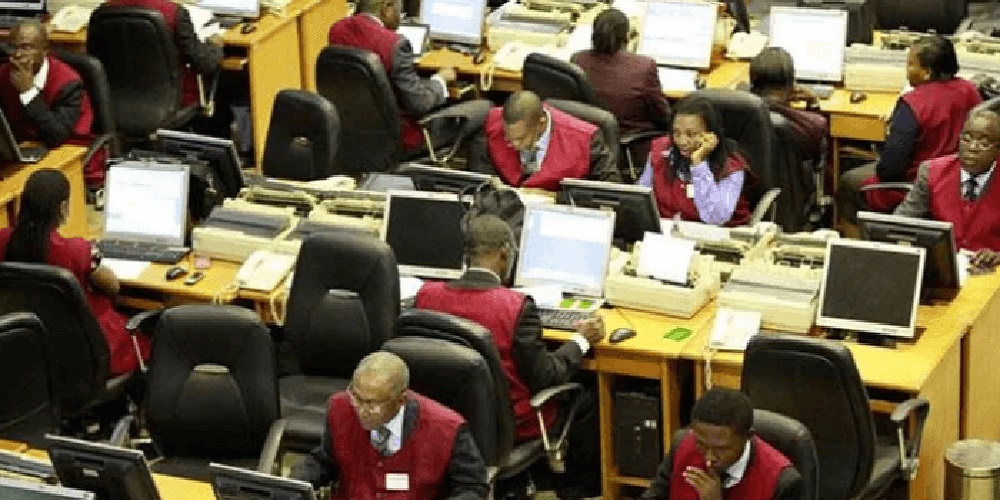
The Nigerian equities market sustained its bullish momentum on Thursday, delivering a fresh massive gains of N1.663 trillion to investors as market capitalization surged beyond the N136 trillion mark.
At the close of trading, total market value rose by 1.23 percent to N136.435 trillion, up from N134.772 trillion recorded at the start of the session.
In the same vein, the All-Share Index (ASI) advanced by 2,583.61 points, representing a 1.23 percent increase, to settle at 211,901.02, compared to 209,317.41 in the previous trading day.
The market’s Year-To-Date (YTD) return strengthened further to 36.17 percent, while sentiment remained positive as 45 stocks posted gains against 20 decliners.
Leading the gainers’ table were Trans-Nationwide Express and Guinea Insurance, both appreciating by 10 per cent to close at N5.50 and N1.21 per share, respectively. Aradel rose by 9.99 percent to N1,547.50; Ecobank Transnational gained 9.97 percent to close at N61.20, while Daar Communications climbed 9.93 percent to N1.66 per share.
On the losers’ side, Ikeja Hotel topped the chart with a 9.73 per cent decline to N33.40. WAPIC followed with an 8.77 per cent drop to N2.60, while CAP shed 8.61 per cent to close at N95 per share. International Energy Insurance and McNichols also recorded losses of 8.18 per cent and 5.82 per cent, respectively.
Trading activity, however, slowed during the session. Total volume traded declined by 17.19 percent to 584.96 million shares valued at N34.76 billion across 45,559 deals.
Zenith Bank emerged as the most actively traded stock, accounting for 61.74 million shares worth N7.60 billion, representing 10.55 per cent and 21.86 per cent of total volume and value, respectively.
The latest performance extends the market’s winning streak to four consecutive sessions, following a strong N2.28 trillion gain recorded on Wednesday.

The Nigeria Deposit Insurance Corporation (NDIC) has commenced the final phase of winding down 89 defunct Microfinance Banks (MFBs) and Primary Mortgage Banks (PMBs) across the country following their acquisition by new operators under its resolution framework, it emerged on Wednesday.
The Corporation said the move follows the earlier revocation of licences by the Central Bank of Nigeria (CBN) in May 2023, which affected 179 microfinance banks and four primary mortgage banks.
Under the Purchase and Assumption (P&A) model, according to Hawwau Gambo, the Head of Communication and Public Affairs, 89 new institutions were subsequently licensed to take over the assets and liabilities of the failed banks and have since commenced operations under new identities.
NDIC, acting as liquidator, the statement noted, will now approach various divisions of the Federal High Court to obtain formal orders dissolving the defunct entities and discharging the Corporation from its liquidation responsibilities, in line with its enabling law.
A breakdown of the affected institutions shows that Lagos accounts for the highest number, with 27 banks undergoing the process.
This is followed by Osun with seven, Anambra with six, the Federal Capital Territory (FCT) with five, while Akwa Ibom, Ogun, and Adamawa recorded four each.
Oyo, Kaduna, Edo, and Niger recorded three each.
Other states affected include Benue, Delta, Imo, and Ondo, with two each, while Abia, Ekiti, Enugu, Rivers, Plateau, Nasarawa, Kano, Kwara, Jigawa, and Katsina recorded one each.
The Corporation said the exercise aims to bring closure to the resolution process while ensuring depositors’ interests remain protected, and the financial system remains stable.
The NDIC added that the transition under the P&A arrangement has allowed continuity of banking services in affected locations, as the acquiring institutions have fully taken over operations of the defunct banks.


Nigeria’s headline inflation rate rose to 15.38% in March 2026, reflecting a modest increase from the 15.06% recorded in February.
This is according to the latest data from the National Bureau of Statistics (NBS).
The Consumer Price Index (CPI) increased to 135.4 in March 2026, reflecting a 5.4-point increase from the preceding month (130.0).
In March 2026, the headline inflation rate rose to 15.38%, up from 15.06% in February 2026 and stood 27.35% in the same month of the preceding year (March 2025).
Looking at the movement, the March 2026 headline inflation rate showed an increase of 0.32% compared to that recorded in February 2026.
However, on a month-on-month basis, the rate in March 2026 was 4.18%, which was 2.17% higher than the rate recorded in February 2026 (2.01%).
The percentage change in the average CPI for the twelve months ending March 2026 over the average for the previous twelve-month period was 20.05%, showing a 1.48% increase compared to 18.58% recorded in March 2025.
On a year-on-year basis, in March 2026, the Urban inflation rate was 14.64%. On a month-on-month basis, the Urban inflation rate was 3.16% in March 2026, up by 0.61% compared to February 2026 (2.55%).
The corresponding twelve-month average for the Urban inflation rate was 20.04% in March 2026. This was 0.06% points lower compared to the 20.10% reported in March 2025.
Rural inflation rate in March 2026 was 17.22% on a year-on-year basis.
On a month-on-month ba sis, the Rural inflation rate in March 2026 was 6.73%, up by 6.02% compared to February 2026 (0,71%).
The corresponding twelve-month average for the Rural inflation rate in March 2026 was 19.74%. This was 2.93% points higher compared to the 16.81% recorded in March 2025.
The food inflation rate in the month under review was 14.31% on a year-on-year basis and stood at 25.22% in the same month of the preceding year (March 2025).
However, on a month-on-month basis, food inflation rate in March 2026 was 4.17%, down 0.52 percentage points from February 2026 (4.69%).
The drop was attributed to the rate of change in the average prices of the following products: Yam, Ginger (Fresh), Cassava Tuber, Groundnuts (Shelled), Irish Potatoes, Avenger (Ogbono/Apon) – Dried Ungrinded, Toma toes (fresh), Cassava Flour sold loose, etc.
NBS said average annual rate of Food inflation for the twelve months ending March 2026 over the previous twelve-month average was 18.21%, which was 17.81% points lower compared with the average annual rate of change recorded in March 2025 (36.02%).
The “All items less farm produces and energy” or Core inflation, which excludes the prices of volatile agricultural produce and energy, stood at 16.21% in March 2026 on a year-on-year basis; a decline of 10.91% points when compared to the 27.12% recorded in March 2025.
On a month-on-month basis, the core inflation rate was 4.03% in March 2026, up by 3.14% points compared to Feb ruary 2026 (0.89%).
The average twelve-month annual inflation rate was 21.09% for the twelve months ending March 2026, which was 6.25% points lower than the 27.34% recorded in March 2025.
On a state level, headline inflation was highest in Bayelsa Year-on-Year with (27.37%), Sokoto (26.03%), and Bauchi (23.67%), while Osun (5.25%), Kano (9.85%), and Kaduna (10.38%) recorded the lowest rise.
On a Month-on-Month basis, however, March 2026 recorded the highest increases in Zamfara (10.77%), Bauchi (9.37%), and Sokoto (9.05%), while Lagos (1.54%), Akwa Ibom (1.80%), and Rivers (1.89%) recorded the lowest rise in the Month-on-Month inflation.
Food inflation was highest in Bayelsa (33.35%), Sokoto (28.02%), and Adamawa (21.67%), while Kano (4.29%), Oyo (4.86%), and Katsina (7.48%) recorded the slowest rise on a Year-on-Year basis.
On a Month-on-Month basis, however, March 2026 food inflation was highest in Sokoto (11.78%), Niger (8.59%), and Gombe (8.10%), while Katsina (0.09%), Ogun (0.77%), and Adamawa (1.30%) recorded the slowest rise in Food inflation on a Month-on-Month basis.

Just in: Tinubu assents 2026 Appropriation Bill, 2025 Budget Extension

BREAKING: Popular sports analystt, Okomi is dead

BREAKING: JAMB set to release first batch of 2026 UTME results today




-

 News24 hours ago
Reps Open Fresh Probe into N1.12tn Farm Scheme, Summon Insurers Over Gaps
-

 Economy12 hours ago
Nigerian stocks rally again as investors gain N1.66tn, market cap crosses N136tn
-

 News7 hours ago
Just in: Ex-Senate president, Saraki, others to face death penalty charges
-

 News12 hours ago
Senator Abdulaziz Yari Accused of Using Billions to Secure Vice Presidential Ambition
-

 News12 hours ago
I Am Ready For 2027 – President Tinubu Declares
-

 Foreign12 hours ago
Trump Says Iran Agrees To Hand Over Nuclear Dust Amid Strait of Hormuz Blockade
-
 News12 hours ago
INEC adjusts Osun governorship election campaign period
-

 News12 hours ago
ADC Reacts To Suspension Of Atiku, Lawal From Party