Foreign
Chad’s transition in jeopardy as deadline looms
With an electoral process dominated by the interim president and former ruling party, Chad’s transition is in jeopardy. With an electoral process dominated by the interim president and former ruling party, Chad’s transition is in jeopardy.

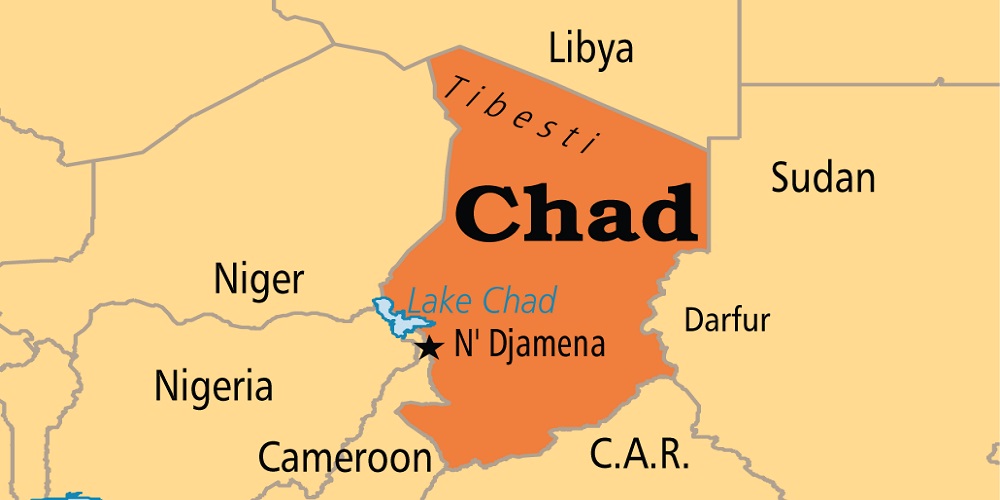
After an unconstitutional takeover in 2021, Chad’s transition to democracy is entering its final phase, with the adoption of the new constitution last December. In preparation for presidential elections before October 2024, a National Election Management Agency and Constitutional Council have been set up – but how free and fair will these polls be?
Having returned from exile, Succès Masra, leader of the strongest opposition party Les Transformateurs (The Transformers), was appointed prime minister on 1 January. His decision to join the government means the opposition’s ability to criticise the administration will be diminished.

The electoral process is dominated by the transitional president, Mahamat Déby, who was selected by the former ruling party, the Patriotic Salvation Movement (MPS), as its candidate for the presidential elections.
The law on the election agency’s powers, organisation and functioning was adopted by the National Transitional Council on 26 January. It enshrines the agency’s independence and its members’ immutability during their seven-year mandate – two principles aimed at guaranteeing impartiality.
However, the way its members are appointed is problematic. Of the 15 members, eight are chosen by the transitional president, four by the Senate president, and three by the National Transitional Council president. In the absence of a Senate, it’s up to the council president, who is the former MPS secretary-general, to appoint these four members.
The election agency chairman, Ahmed Bartchiret, is a magistrate and former president of the Supreme Court, but also a member of the former ruling party and close to Déby. He chaired the National Dialogue’s ad hoc commission, which recommended delaying the transition for two years. Most other officers and members of the election agency are also from the former MPS.
The Constitutional Council, which will be responsible for adjudicating electoral disputes, is headed by Jean-Bernard Padaré, a former minister, deputy secretary-general and spokesperson for the MPS. Seven out of the council’s nine members are affiliated with the former ruling party or allied parties.
Civil society and the opposition believe that with an electoral body controlled by the transitional president, who will likely contest the election, the dice are loaded against them from the start.
Neither of the opposition political party coalitions – the Consultation Group of Political Actors and the Republican Platform – recognise the National Transitional Council, Supreme Court, Constitutional Council, or election agency. Civil society and opposition parties – including Les Transformateurs, which now heads the government – are not represented in the election agency and Constitutional Council. To ensure total control over the upcoming polls, the MPS-transitional president team has taken the lion’s share of positions.
Government Minister and Secretary-General Ramatou Houtouin described the election agency as ‘a permanent institution, with no political nuances, whose members are formally prohibited from serving as leaders of political parties, thus reinforcing its neutrality.’
But in practice, the agency’s composition contradicts this vision and the country’s constitution. Article 238 says that ‘in carrying out its mission, the National Agency for the Management of Elections shall act with complete independence, impartiality, integrity, transparency and professionalism.’
This is reminiscent of how the national commission responsible for organising the constitutional referendum in 2023 was set up. Despite the Transition Charter guaranteeing this institution’s neutrality, it too was dominated by stakeholders close to the transitional president. Even though they were not strongly contested, the referendum results left many perplexed by both the turnout and the outcome.
Meanwhile, political dialogue between the MPS, government and opposition parties appears to be at a standstill. The Kinshasa Convention, an agreement between the transitional government and Les Transformateurs, was presented as fostering reconciliation but has been criticised by other opposition parties and civil society. They say it’s only binding on the two signatories and is a political agreement that undermines a broader discussion and consensus in Chad.
The election agency and Constitutional Council play a vital role in organising and managing voting and arbitrating any disputes that may arise. Their ability to do so independently and impartially is crucial to their success and credibility – and Chad’s peace and stability.
The current election preparations are far from ideal. Dialogue is essential for Chad to move forward. Masra, an opposition member and current prime minister, could be the perfect link between the presidency and the rest of the political class. And although the appointment of a mediator provides leverage for discussion, time is running out.
Chad’s partners who have supported the transition from the start should offer their services to bring stakeholders together, ease tensions and obtain a minimum consensus around the forthcoming elections. These include the Economic Community of Central African States, the African Union, the United Nations through the fund to support Chad’s political transition, France and the European Union. The ECCAS facilitator remains central to coordinating actions and achieving better results.
Foreign
North Korea test-fires 10 missiles as South Korea, U.S. stage war games
North Korea test-fired 10 short-range ballistic missiles into the Sea of Japan at the weekend, five days after South Korea and its U.S. allies kicked off their annual spring war games.
Seoul’s Joint Chiefs of Staff said they detected the launches at around 1:20 p.m.
“Our military maintains a firm readiness posture while closely sharing North Korean ballistic missile information with the U.S. and Japanese sides amid a heightened surveillance posture against additional launches,” Seoul’s Joint Chiefs said, per Yonhap News Agency, in a template statement.
The missiles splashed in the Sea of Japan, east of the peninsula.
For tests of ballistic missiles, Pyongyang follows common global protocols, firing them on a west-east trajectory so the Earth’s rotation grants them extra boost.
Experts say North Korea conducts test firings for two reasons. One is to gather technical data; one is to make political points.
Currently, North Korea is highly likely to be gathering data from live war. Since January, it has been firing tube and rocket artillery from Russia’s Kursk Oblast into Ukraine.
Saturday’s missile shoot followed angry rhetoric aimed at the annual “Freedom Shield” drills by Kim Yo-jong, the sister of North Korean leader Kim Jong-un. Pyongyang insists that the exercises, which Washington calls “defensive in nature,” are actually practice for an invasion.
Ms. Kim warned, in a statement in state media on Tuesday, the day following the drills’ commencement, that they could “lead to terrible consequences that are unimaginable.”
Her fortunes rose in February at the once-every-five-years Workers Party Congress, where she was promoted director of the party’s General Affairs Department.
Though the powerful Ms. Kim, who frequently pens bylined columns on inter-Korean relations, warned that Freedom Shield “will further destroy regional stability,” life in South Korea continues as usual.
The population has long been immunized to North Korean threats, and all three actions — the start of spring military drills by the two allies, followed by the North’s response in the form of barrages of rhetoric and missiles — had been predicted.
Events follow the same course virtually every year, though this spring, the drills take place against the backdrop of an ongoing Israeli-U.S. aerial campaign against Iran.
Indo-Pacific-based U.S. assets — missile interceptors in South Korea and U.S. Marines in Okinawa — are currently redeploying to the Middle East, where Iran’s will to fight remains unbroken.
The redeployments have raised quiet concerns about the U.S. ability to fight a two-front war, and come at a time when a major power shift is underway in the defense of the Korean Peninsula.
The all-domain drills encompass both computer simulations and “Warrior Shield” field exercises. Some 18,000 troops are engaged, with training running from March 9 through March 19.
While the “Allies drill-North Korea responds angrily” scenario was predictable, a new dynamic is animating the war games this year.
The Spring 2026 drills are being used to stress-test South Korea’s domestic capabilities, notably in sophisticated areas such as long-range strike, command and control, and intelligence, reconnaissance and surveillance.
The assessments, made by the U.S. side, are part of the planned conditions-based transfer of wartime operational control of South Korean troops from U.S. to South Korean command.
The Lee Jae-myung administration, which took office in summer 2025, has announced that it wants wartime “OPCON Transfer” to take place by the end of its term, 2030.
The concept has a long history, but current Seoul-Washington policy stances suggest it may, finally, happen.
OPCON transfer was first brokered by the liberal Roh Moo-hyun administration (2003-2008), which sought sovereign control of its own forces.
However, it was subsequently slow-walked by successive conservative administrations in Seoul, who feared it would greenlight reduced U.S. commitments to the peninsula.
As matters stand, Korean troops would fight under the orders of the Combined Forces Command, a joint structure led by an American four-star general, with a South Korean deputy.
Exactly how OPCON transfer — the exact conditions to be met have never been made fully public — would proceed, and what might happen to CFC if and when it does, is unclear. Whether U.S. troops would fight under Seoul’s wartime command is another concern that gives Korean conservatives the vapours.
Regardless, OPCON transfer’s stars are aligning on both sides of the Pacific.
In South Korea, the liberal Mr. Lee occupies the presidential Blue House, while his party comfortably controls the National Assembly. This leaves the conservative opposition largely impotent.
Meanwhile, the Trump administration is pressuring allies worldwide to increase defence spending and upgrade capabilities. It has made clear it wants Seoul to take an increasing share of the conventional defense burden, while sheltering Korea under the U.S. nuclear umbrella.
What is unknown is how far South Korea’s military is proceeding toward satisfying U.S.-set conditions.
“The main thing here is the conditions,” U.S. Forces Commanding General Xavier Brunson said during a webinar organized by the Korea Defense Veterans Association and the Korea-U.S. Alliance Foundation last December. “We cannot say we’re going to slide away from the conditions just so that we can get this done in time.”
Foreign
Iran’s Revolutionary Guards Launch Missile Strike On US Forces At Saudi Base
Iran’s Revolutionary Guards said late on Saturday they had launched a missile salvo at US forces stationed at a major base in Saudi Arabia’s Al-Kharj.
The Guards said the Prince Sultan Air Base was being used to equip “F-35 and F-16 fighter jets and is the storage place for fuel tankers”.
While there has been no immediate confirmation of the attack from Saudi Arabia, the kingdom’s defence ministry said earlier it intercepted six ballistic missiles headed towards Al-Kharj.
Saudi Arabia has previously said it has intercepted missiles and drones launched at the base during the ongoing Middle East war.
Riyadh is a close ally of the United States and hosts a large number of its troops. It has repeatedly been attacked by Iran, including strikes on its massive oil industry, but has so far not deployed its military against the Islamic republic.
Saudi authorities have previously condemned Iran’s attacks on its Gulf neighbours as “reprehensible”.
AFP
Foreign
Trump urges UK and other nations to send warships to Strait of Hormuz
Donald Trump has urged the UK and other nations to send warships to the Strait of Hormuz to help secure the key shipping route out of the Middle East.
The US president said he hoped China, France, Japan and South Korea would also send ships to the passage, where a number of tankers are said to have been attacked since the US and Israel mounted their war against Iran a fortnight ago.
Responding to Trump’s comments, the UK Ministry of Defence said it was discussing “a range of options to ensure the security of shipping in the region” with allies.
Tehran has said it will keep blocking the strait – the world’s busiest oil shipping channel through which about 20% of world oil supplies usually pass.
Its effective closure, as well as strikes on shipping and energy infrastructure since the war started, has led to a huge rise in global oil prices.
Trump wrote on his Truth Social platform on Saturday that “many countries” would be sending warships in conjunction with the US to help keep the strait “open and safe”.
He claimed “100% of Iran’s military capability” had already been destroyed, but that Tehran could still “send a drone or two, drop a mine, or deliver a close-range missile somewhere along, or in, this waterway”.
“Hopefully China, France, Japan, South Korea, the UK, and others, that are affected by this artificial constraint will send ships to the area so that the Hormuz Strait will no longer be a threat by a nation that has been totally decapitated.”
He added: “In the meantime, the United States will be bombing the hell out of the shoreline, and continually shooting Iranian Boats and Ships out of the water. One way or the other, we will soon get the Hormuz Strait OPEN, SAFE, and FREE!”
Trump repeated his appeal in a post later on Saturday – extending it to all “the Countries of the World that receive Oil through the Hormuz Strait” – and said the US would provide “a lot” of support to those who participated.
The president has separately threatened to target Iran’s vital oil infrastructure on Kharg Island if its leadership were to “interfere” with ships seeking to pass through the Strait of Hormuz.
He said the US had “obliterated” military targets on the small island off Iran’s coast on Friday, calling it “one of the most powerful bombing raids in the history of the Middle East”.
Iran’s military said oil and energy infrastructure belonging to firms working with the US would “immediately be destroyed” should the island’s oil infrastructure be attacked.
Tehran has been stepping up such attacks on energy targets in the Gulf, which have become a key element of its response to US and Israeli strikes. It warned on Thursday that any tanker bound for the US, Israel or its partners was a legitimate target.
The UK Maritime Trade Operations (UKMTO) said in its latest update on 12 March that 16 ships were reported to have been attacked in and around the strait since the war began on 28 February.
Currently, not even the US Navy is escorting tankers through the narrow shipping lane.
Trump’s message came a week after he said the US did not need the UK to send aircraft carriers to the region and accused Prime Minister Sir Keir Starmer of seeking to “join wars after we’ve already won”.
He also told the BBC’s US partner CBS that he “couldn’t care less” whether allies could do more to assist with the war, adding: “It’s a little bit late to be sending ships, right? A little bit late.”
He had already criticised Sir Keir for not joining the initial strikes on Iran and refusing at first to allow the US to use UK bases for its joint offensive with Israel – calling him “no Winston Churchill”.
The prime minister later approved “defensive” US action on Iranian missile sites from RAF Fairford in Gloucestershire and Diego Garcia in the Indian Ocean, saying Iran’s response had become a threat to Britain.
The UK’s first and only warship set to be present in the region – the Type 45 destroyer HMS Dragon – departed for Cyprus on Tuesday, where it will bolster RAF Akrotiri after it was hit by drone strikes.
The Royal Navy used to keep minesweepers based in Bahrain, but no longer has that capability after it withdrew HMS Middleton.
Ministers have insisted the UK built up an RAF presence in the region before the conflict, with the aim of protecting British military personnel.
Liberal Democrat leader Sir Ed Davey said on Saturday that Sir Keir must “rule out deploying British ships just because Trump tells him to”.
“Last week, Trump said he didn’t need Britain’s help because he’d already won this war. So we mustn’t let him push the UK around now. Any decision on the deployment of our armed forces should be made in the UK’s national interest and subject to a vote in Parliament.”
France’s President Emmanuel Macron has previously said he was willing to send warships to the Gulf as “purely an escort mission” – but only once the most “intense phase of the conflict” had ended.
-
News22 hours ago2027: Gov of Bauchi reportedly planning to abandon PDP for APC this week
-
News22 hours agoUK-bound 74-year-old grandad arrested at Abuja airport with 11kg cocaine in balloons+Photos
-
News22 hours agoWatch how NDLEA operatives politely educate grandpa nabbed with cocaine (Video)
-
News19 hours agoMidnight fire engulfs Jos main market destroying ten shops
-
News21 hours agoNPA wins Champions Newspaper’s “Outstanding Agency of the Year Award 2025”
-
News5 hours agoUK releases programme for President Tinubu’s State visit
-
News21 hours agoJournalists are professionals deserving Respect- IGP Disu
-
News5 hours agoPope Leo decries ‘atrocious violence’ in Iran war, urges ceasefire