Workers and the Federal Government sharply disagreed, yesterday, over how the implementation of the Steve Oronsaye report will affect jobs in the country.


While the Federal Government allayed fears of job losses in the implementation of the report, which seeks to rationalise government agencies and parastatals, workers warned that there will be massive job losses.
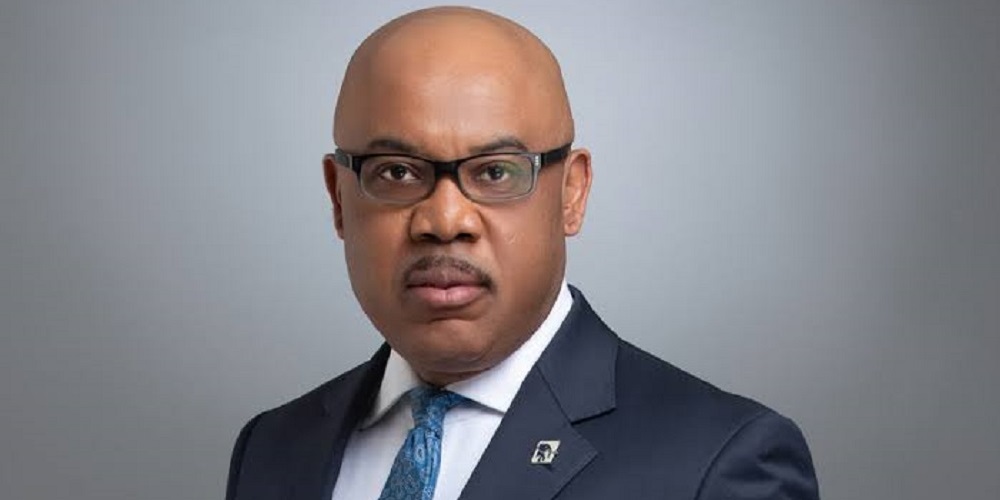
However, the government’s move got the nod of the Labour Party, LP, 2023 presidential candidate, Mr Peter Obi, who said that being in opposition did not warrant blind, and thoughtless criticism. 
Cautioning the government against hasty action, he added that if well implemented, the Steve Oronsaye report will cut the high cost of governance, and eliminate responsibilities overlap that causes ineffectiveness and inefficiency.
He also urged the government to cut waste and redirect funds to education, healthcare and poverty eradication.
Govt not out to retrench workers —Information minister
Speaking at the fourth edition of the Ministerial Press Briefing Series in Abuja yesterday, Minister of Information and National Orientation, Mohammed Idris, said: “The whole idea is that government wants to reduce cost and also improve efficiency in service delivery.
‘’It does not mean that government is out to retrench workers or throw people into the labour market.”
President Bola Tinubu had announced, on Monday, implementation of the report that will lead to merger of ministries and reduction of MDAs from 263 to 161, among others.
Idris said implementation of the report, which had been on the shelf for about 11 years, is a clear demonstration of President Tinubu’s unwavering commitment to fiscal prudence and responsible governance by championing a comprehensive review of government‘s commissions, agencies, and parastatals.
He said approval for implementation of the Oronsaye’s report after a very careful review, was to ensure that essential services are not compromised and that the needs of citizens are adequately addressed while putting the interests of the nation first and foremost.
“Through the implementation of Oronsaye’s report, President Tinubu aims to achieve significant cost savings by eliminating duplication of functions, streamlining administrative processes, and optimizing resource allocation.
‘’This proactive approach will enable government operate more efficiently while maintaining quality and delivery of services to the Nigerian people,” he said.
Benefits of Tinubu’s reforms
The minister, who said Nigerians are beginning to see benefits of reforms being spearheaded by the president in various sectors, stressed that reports from the National Bureau of Statistics, NBS, indicated that Nigeria witnessed a GDP growth of 3.46% in the fourth quarter of 2023, against 2.54% recorded in the third quarter of 2022.
He said the NBS report also stated that capital importation rose to 66% in the fourth quarter of 2023, reversing a 36% decline in the third quarter, adding that petrol importation had been reduced by 50% since withdrawal of fuel subsidy, while the Nigerian Stock Exchange All Share Index crossed the 100,000 mark – its highest ever.
He said achievements being recorded in the economy were not merely a stroke of luck but mainly due to the pragmatic reforms initiated by the President, which inspired investor confidence in the economy.
Social security unemployment programme
The minister said the President had also given a directive for the design of a social security unemployment programme to cater for unemployed graduates as well as the setting up of a social consumer credit scheme to boost the purchasing power of Nigerians, as they make adjustments, in view of “temporary economic hardship.”
He said after the review of the National Social Investment Programme, the President approved the resumption of the direct payments of N25,000 to 15 million households.
Furious Labour insists there‘ll be massive job losses
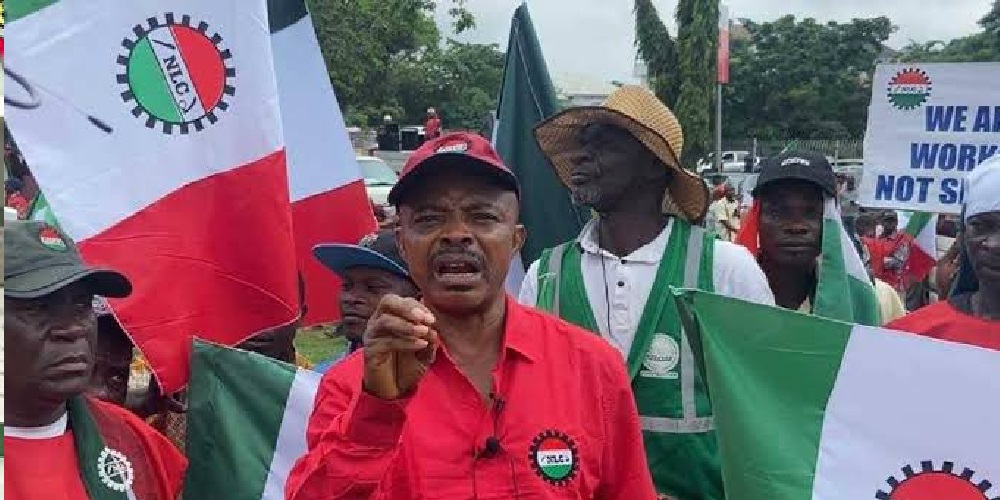
Countering the minister, organised labour expressed outrage over President Tinubu’s approval for implementation of the Oronsaye’s report on public sector reforms, saying it will lead to massive job losses, among others.
While the Nigeria Labour Congress, NLC, directed members in the public sector to furnish the national secretariat with impact analysis report focusing on the potential consequences, including job losses, changes in workload, pay/compensation and the overall impact on workers, work, and trade unions, the Trade Union Congress of Nigeria, TUC, set up a three-member committee to monitor the implementation of the report to ensure none of its members loses his or her job.
Already, the Non-Academic Staff of Educational and Associated Institutions, NASU, has called on President Tinubu to review his stance on the report because of members’ job, querying: “Why did you think the former governments of President Goodluck Jonathan and President Muhammadu Buhari refused to implement the Oronsaye’s report? You think they are cowards?”
NLC writes affiliates
NLC, in a letter to the public sector unions, titled: “Request for impact analysis of Oronsaye’s report on public sector reforms,” its Acting General Secretary, Ismail Bello, said: “As you are aware, His Excellency, Bola Tinubu, the President of the federation, recently announced the initiation of public sector reforms, with particular reference to the Oronsaye report.
“This comprehensive report outlines proposed measures aimed at restructuring and streamlining various governmental agencies and institutions with the stated goal of enhancing efficiency, effectiveness, and service delivery.
“While these reforms hold the promise of improving governance and public service delivery, it is imperative that we, as representatives of the workforce, thoroughly analyze the implications of such changes on the lives and livelihoods of our members including its possible impact on trade unions. The potential consequences, including but not limited to job losses, changes in workload, pay/compensation and the overall impact on workers, work, and trade unions, need to be carefully assessed and addressed.
“In light of this, I kindly request that your esteemed union conducts a thorough impact analysis of the Oronsaye report on public sector reforms, focusing on the following key areas:
“Job losses- Evaluate the potential impact of the proposed reforms on employment within your sector, including projections of possible job losses and the sectors most affected.
“Efficiency and effectiveness of service delivery – Assess how the proposed reforms may affect the efficiency and effectiveness of service delivery within your sector. Consider factors such as resource allocation, institutional capacity, and the ability to meet public demands and expectations.
“Workload of Staff: Examine the potential consequences of the reforms on the workload and working conditions of employees- Identify any risks of increased work pressure, burnout, or stress resulting from restructuring or downsizing measures.
“Pay/Compensation- Appraise its impact on Pay and Compensation structure to ensure that workers are not left with reduced Pay and Compensations during and after the transitions.
General Implications for Workers, Work, and Trade Unions – Analyze the broader implications of the reforms on workers’ and trade union rights, job security, collective bargaining power, and the role of trade unions in advocating for the interests of workers.”
NASU warns of massive job losses
One of the affiliates of NLC, NASU, while reacting, called on President Tinubu to review his stance on this matter, arguing that former Presidents Jonathan and Buhari had reasons for not implementing the report.
General Secretary of NASU, Peters Adeyemi, said: “Contrary to the government’s position on implementation of the Oronsaye report, it will definitely result in job losses.
“It’s yet to be seen how the government will merge institutions, scrap some, subsume some and say it won’t result in job losses. They are being economical with the truth.
“Secondly, this is a government which claims not to have resources. How will they raise money for the payment of the final entitlements of workers that may eventually be negatively affected by this action theirs?
“This government is currently confronted with how to deal with the negative impacts of fuel subsidy removal as well as gross devaluation of the naira. Why are they in a hurry to take on another action that will also negatively affect workers under the guise of reducing the cost of governance?
“There are numerous avenues to tackle the problems of high cost of governance in Nigeria. This one is definitely undesirable right now. Why did you think the former governments of President Jonathan and President Buhari refused to implement the Oronsaye report? Do you think they are cowards?
“We in NASU don’t support this pronouncement of government because of the negative consequences it will have on our members in a number of the listed institutions for scrapping, mergers etc.”
‘’Don’t forget that this government created new ministries, appointed more ministers etc. The government should take a second look at the extra ministries created and additional ministers and aides appointed before the implementation of the report.”
TUC sets 3-man c’ttee
Similarly, in a chat with Vanguard, President of TUC, Festus Osifo, said: “For us, implementation of any report that will streamline governance, and reduce costs of governance is welcome but we will do everything possible to resist any report that will lay people off jobs.
“If what they have told us is that they are streamlining governance, bringing agencies together for effectiveness, efficiency and to ensure the cost of governance, setting up different boards, maintaining the huge management structures is true, if they are reducing the overheads and all that it is welcome.
“But this morning, we (TUC) have set up a three- man committee, headed by the first deputy president who happens to be the President of the Association of Senior Civil Servants of Nigeria, ASCSN, Dr Tommy Etim. The three of them are going to follow up to ensure that even when the government is doing these mergers, none of our members will lose their jobs.
“The Oronsaye report is quite good to remove the bloated agencies as they say but since the Orosanye report was passed, many agencies have actually been created. Several other agencies have proliferated, doing the same job.
“So, they should also checkmate that. Beyond the Orosanye report, there are lots of agencies that have come on board and even this government has a bloated structure, having close to 50 ministers, lots of aides and all that.
“We also think that government both at the national and state levels because some states today, have over 50, 100, 200 advisers. Some of them will tell us that is the way they want to do empowerment and create jobs but all these increase the cost of governance.”
Scrap Senate, we don’t need bicameral legislature—SSANU
Also reacting yesterday, the Senior Staff Association of Nigerian Universities, SSANU, advised the Federal Government to scrap the Senate and leave only the House of Representatives, contending that the country doesn’t need a bicameral legislature.
SSANU President, Mohammed Ibrahim, said: “If we are talking about mergers that are beyond the Oronsaye report, the best thing to do is to merge the National Assembly. We don’t need the Senate and the House of Representatives at the same time.
“What we need is the House of Representatives because they seem to have more spread and represent more communities.
“So let us collapse the National Assembly into one body. If they like they can change the name if the name is the problem. But we don’t need a House of Reps and the Senate at the same time.
“You can see the amount of money they are gulping from the system and the economy. So, beyond the Oronsaye report, what the government needs to do is to be bold at this point. If we want to cut the cost of governance, let us collapse the National Assembly into one body. We don’t need a bicameral legislature.
Don’t implement Oronsaye report hurriedly – Obi
However, Mr Peter Obi cautioned the Federal Government to understand the workings of federal bureaucracy to effectively implement Oronsaye’s report.
The former governor of Anambra State advised the government not to rush the implementation of the report, noting that a deep understanding of the synergies between the federal and other tiers of government will be imperative as federal agencies have branches and outreaches in all 36 states.
Disclosing this on his X platform yesterday, Obi noted that in implementing Oronsaye’s report, a conscious effort must be made by the government to do away with the bogus and needless wastages of Nigeria’s scarce resources on frivolous issues and deploy such funds to the critical areas of education, health, and pulling people out of poverty.
His words: “I have received several text messages from people wanting to know if I would have implemented the Oronsaye report, which full implementation has just been directed by the President.
“In response to their questions, I would like to refer everyone to my manifesto and my response to similar questions during my campaigns.
“On October 5, 2022 at Harvard University, I was asked: ‘Will you implement the Oronsaye Report?’ and I responded in the affirmative.
“I went further to explain that implementing the report is one of the best ways to make governance efficient, cost-effective, and productive. Being in opposition does not warrant blind and thoughtless criticism.
“Whenever the government takes the right decision, we should agree and if need be, propose related or even better ideas to move the nation forward. I have always been an advocate of the three critical components of the Oronsaye report, which are: i) drastically cutting the cost of governance; ii) eliminating the overlapping of responsibilities to ensure that responsibilities are appropriately domiciled; and iii) increasing efficiency and effectiveness, which will increase productivity.
“Although the implementation of the report is long overdue, its implementation is a welcome development so long as the decision is informed by these principles. Beyond implementing the Oronsaye Report, the government should go further and cut the cost of governance across the board.
“Having found it imperative to implement the Report, the government should now do away with the bogus and needless wastage of our scarce resources on frivolous issues, and deploy such funds to the critical areas of education, health, and pulling people out of poverty.
“However, we must not rush to implement the Oronsaye Report just because those that will be directly affected are mostly civil servants. A very deep understanding of the workings of the federal bureaucracy will be required to effectively implement the report.
“Grasping the symmetries between the federal and the other tiers of government will be imperative as federal agencies have branches and outreaches in all the 36 states. We, these political leaders, should be ready to back up such implementation with our sacrifices from comfort and selfishness, for the overall development of the nation.
‘’In implementing this report, conscious effort must be made to cushion the effects of such a major overhaul on the workers, to avoid driving more people into hardship in these very challenging times.
“Also Nigerians are yet to be informed about the extant White Paper pertinent to the report’s implementation. Moreover, you cannot ask those who are likely to be affected by the downsizing to manage the process.
“Government must also show clearly the amount of resources to be saved in the implied shrinking of government. It should also indicate clearly where and how the saved resources are to be redeployed.
“More importantly, the implementation needs to be accompanied by a template to avoid a future bloating of government. By doing the right things and implementing the right policies, we will build the New Nigeria of our dreams.”