Connect with us

News

Meet Urum Eke who rejected Tinubu’s CBN appointment

Published

on

ADVERTISEMENT
Zoom Ad
ADVERTISEMENT
Zoom Ad

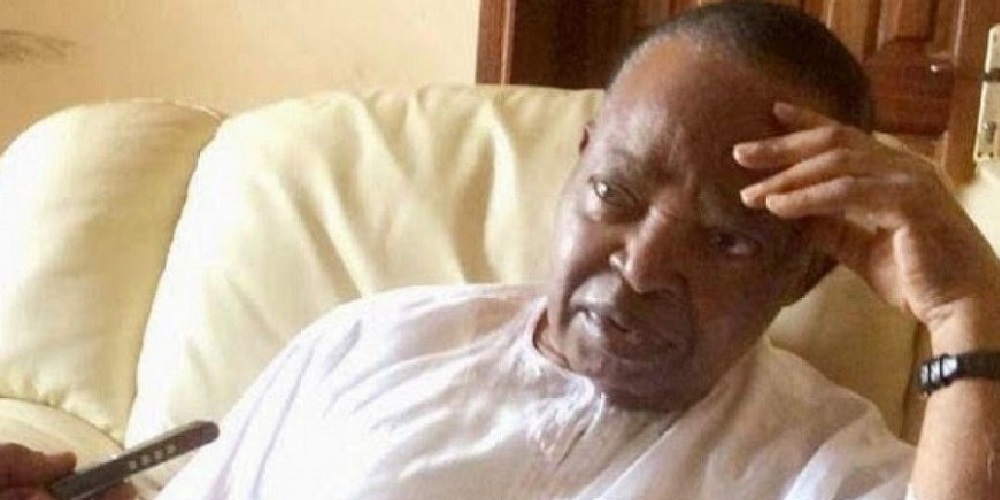
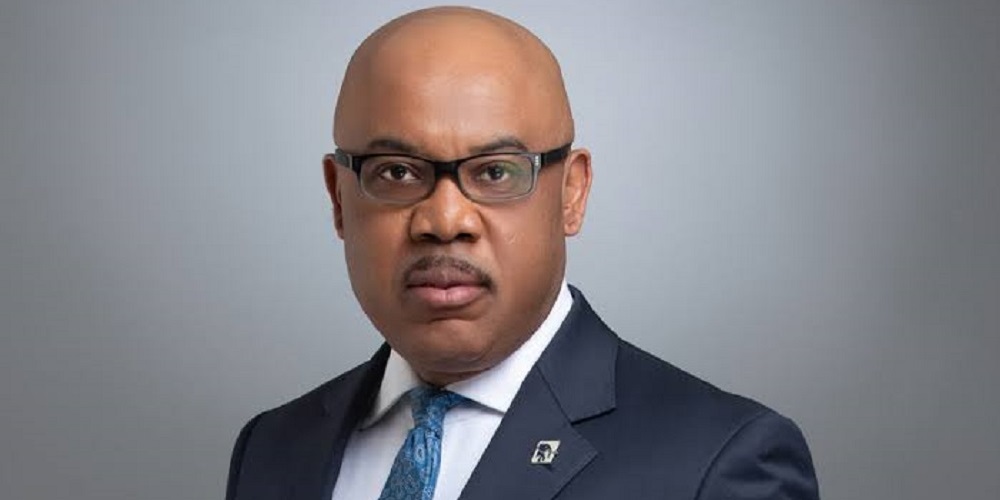
A consultant with the World Bank, Urum Eke, on Thursday, rejected President Bola Tinubu’s appointment to serve as a member of the Central Bank of Nigeria Board of Directors.


Tinubu had, on February 13, forwarded the names of Eke and four others for confirmation as members of the board for the CBN.

However, during the confirmation, the former Governor of Abia State, Senator Orji Kalu, ( APC, Abia North ) told the Senate that Eke, who is his constituent, had called him on the phone to reject the offer, noting that it would conflict with his present job as a consultant with the World Bank.

This came to the fore during the Thursday plenary when the Senate began the process for the confirmation of the nominees.

Advertisement

The Senate, however, has confirmed the appointment of four other members of the Board of Directors of the CBN – Robert Agbede; Ado Yakubu Wanka; Professor Murtala Sabo Sagagi and Mrs. Muslimat Olanike Aliyu.

In this piece, PUNCH Online highlights 13 facts about Eke:

Born on November 20, 1964, Eke attended the Comprehensive Secondary School, Aba and Government College, Umuahia, the state capital, for his West African School Certificate and Higher School Certificate respectively.

He obtained a bachelor’s degree in Political Science from the University of Lagos in 1985.

Advertisement

Afterwards, Eke earned his Master in Business Administration in Projects Management Technology from the Federal University of Technology, Owerri in 2008.

The 59-year-old is an Alumnus of the prestigious Lagos Business School and the Wharton Business School, amongst others.
Eke is a recipient of Nigeria’s National Order of Merit and National Honour of Member of the Order of the Federal Republic.

He began his career in 1986 with Deloitte Haskins & Sells International as a senior auditor till 1991.

Eke further went on to serve as an Executive Director at Diamond Bank Plc for 19 years from 1992 – 2011.

Advertisement

Eke, a consummate financial services expert, is a former Group Managing Director at First Bank of Nigeria Holdings Plc.

He also served as a Non-Executive Director on the Boards of FBN Limited and FBN Merchant Bank Limited.

In 2017, he was appointed to the board of the Nigeria Sovereign Investment Authority (Sovereign Wealth Fund) and served until 2021.

Eke is the Executive Chairman, Fairchild Group which comprises Fairchild Capital Ltd, Fairchild Base Investment Ltd, Fairchild Ventures Ltd, among others.

Advertisement

He is also the Chairman, Board of Directors of NSIA-LUTH Cancer Centre, a foremost cancer treatment centre in West Africa.

Eke has over 35 years of experience in financial services covering auditing, business assurance, consulting, amongst others.


Continue Reading
Advertisement

News

Tinubu’s economic overhaul paving way for investment and stronger trade links — Oduwole

Published

on

ADVERTISEMENT
Zoom Ad
ADVERTISEMENT
Zoom Ad

By Gloria Ikibah

The Minister of Trade and Investment, Dr Jumoke Oduwole has said that the ongoing economic reforms in Nigeria are beginning to create the conditions needed for greater capital inflows and stronger trade performance.

Speaking at a colloquium celebrating the contribution of women to industry, trade and investment on Friday at the National Assembly complex, the minister said the policy direction under President Bola Tinubu’s Renewed Hope Agenda was gradually building a more stable economic framework. The reforms, she noted, are designed to attract investment while encouraging trade expansion both within Africa and with global partners.

Naijablitznews.com reports that the event focused on how Nigeria can position itself as a leading force in intra-African commerce.

Advertisement

Oduwole explained that the government is strengthening continental integration while also pursuing targeted bilateral and international partnerships to open up new opportunities for Nigerian businesses.

She said: “As part of these efforts, the ministry has been working with several international platforms and agreements, including the U.S.–Nigeria Commercial and Investment Partnership, the UK–Nigeria Enhanced Trade and Investment Partnership, and the Comprehensive Economic Partnership Agreement with the United Arab Emirates.

“These collaborations are aimed at widening market access, drawing foreign investment and linking Nigerian firms — particularly women-led enterprises — to global supply chains, financing and new markets”.

She also highlighted a number of policy steps taken by the ministry over the past year to improve the country’s investment climate.

Advertisement

“In 2025, the government intensified its investment facilitation initiatives and strengthened support for investors already operating in the country. Nigeria’s tariff schedule under the African Continental Free Trade Area was formally gazetted, while a new air cargo export corridor was introduced to support exporters.

“Nigeria has also sought to reinforce its influence in emerging sectors, particularly the digital and creative industries, through the ratification of the AfCFTA Digital Trade Protocol — a move intended to deepen participation in the continent’s evolving digital economy”, she added.

Oduwole said the priority of the government is clear and that is “connecting global and regional demand with Nigeria’s supply capacity and the capital required to scale it. This includes expanding long-term industrial financing, strengthening value chain processing and export readiness, and ensuring that both men and women-led firms are fully positioned to scale within Africa’s emerging continental market”.

She stressed that as a leading voice in Africa’s trade policy landscape, Nigeria is playing an active role in coordinating positions with African partners and engaging key global stakeholders to help shape the global trading agenda ahead of the Fourteenth WTO Ministerial Conference (MC14) in Yaoundé, Cameroon, in two weeks.

Advertisement

The Minister further stated that the African Continental Free Trade Area has created a remarkable opportunity for all Nigerian and African businesses to grow across borders.

“The real question now is how we ensure that the capital required to support that expansion is mobilised and structured at the scale the moment demands”, she questioned.

According to her, the Africa Continental Free Trade Agreement connects about 1.3 billion people with approximately $3.4 trillion in GDP into a single market, creating one of the largest integrated economic zones in the world, adding that the scale of its economic impact will ultimately depend on the businesses capable of operating within those markets.

“There are approximately only 345 companies generating more than $1 billion in annual revenues across Africa today. For a continent with more than 200 million businesses, this number reflects just how much room there is to grow this base of globally competitive

Advertisement

“Firms, stressing that achieving that scale requires the full productive capacity of our economies, including women, who already play a central role in Africa’s economic activity”, she stated.

Oduwole explained that under the Renewed Hope Agenda of President Tinubu, Nigeria is building a $1 trillion economy by 2030, anchored on stronger industrial capacity, expanded exports and deeper integration into regional and global markets.

“No country can realistically reach that level of economic scale while leaving half of its entrepreneurial talent and productive capacity under-capitalised. Ensuring that women-led firms can access the capital required to grow therefore strengthens the very foundation of Nigeria’s economic expansion.

“Across Africa, women are active participants across trade, services, agriculture, manufacturing and logistics. The constraint is therefore not participation. It is capital, how it is structured and how it is allocated. Last year, female founded companies received less than 10 percent of venture and growth capital deployed across Africa, while the estimated financing gap for women-owned businesses exceeds $49 billion.

Advertisement

“This gap matters because in the era of AfCFTA, access to capital will determine which firms expand across borders, which value chains deepen and which economies capture the benefits of continental trade”, Dr. Oduwole said.

She emphasised that Africa’s Leadership Policy is precisely where trade policy begins to play an important role, adding that through the African Continental Free Trade Area, the continent has adopted forward-looking frameworks including the Protocol on Digital Trade and the Protocol on Women and Youth in Trade.

The minister further revealed that the Protocol on Women and Youth in Trade is designed “to strengthen the participation of women and young entrepreneurs in African trade by expanding access to markets, improving access to finance and supporting the growth of women-owned and women-led businesses. (How we came to the MOU we will sign today).

“Its purpose is to ensure that the opportunities created by AfCFTA translate into tangible and equitable economic growth across the continent”, adding that the colloquium reflects Nigeria’s commitment to implementing this protocol and to ensuring that the continental market being built under AfCFTA is one in which businesses led by both women and men are able to grow, compete and scale”, she stated.

Advertisement

Minister of State, Trade and Investment, John Enoh said the AfCFTA is no longer a conceptual aspiration, but is operational architecture with a $3.4 trillion market of 1.4 billion people, representing the largest free trade area in the world by number of participating countries.

He however said that production, rather than markets do not create prosperity and that Trade agreements do not industrialise nations, competitive enterprises do, adding that Nigeria’s ambition under AfCFTA is not to be a passive consumer market, but to become a production hub; manufacturing, processing, innovating and exporting at scale.

According to him, manufacturing is contributing approximately 13–14% to Nigeria’s GDP while in industrialised economies, that figure is closer to 20–25%, adding that “the gap is not merely statistical. It represents unrealised factories, unrealised exports, and unrealised jobs. Closing that gap is the mandate of our new Nigeria Industrial Policy.

He said that women stand as the real engine of economic growth.

Advertisement

“As we speak about industrialisation and intra-African trade, we must confront a powerful truth that women already dominate large segments of Nigeria’s real economy. Across retail, textiles and garments, agribusiness processing, nutrition systems, and light manufacturing, women-led MSMEs are deeply embedded in value chains. There are over 8 million women-led MSMEs in Nigeria generating over $15 billion in annual revenue.

“They account for over 40% of MSME employment, yet receive less than 20% of formal MSME financing. Over 90% operate informally. Fewer than 15% access structured digital training. Less than 5% have formal governance systems. This is not a capability problem. It is a structural design problem.

“We have mentorship without capital. Finance without readiness. Markets without compliance support. If Nigeria is to lead AfCFTA, we must unlock the productive potential of women-led enterprises at scale.

“This is not a social justice conversation. It is an industrial competitiveness conversation”, the Minister said.

Advertisement

He explained that under the Nigeria Industrial Policy, we are committed to moving enterprises from informality readiness scale, from subsistence productivity export orientation and to do this effectively, our strategy must integrate four pillars, as demonstrated in leading enterprise-readiness platforms:

Minister for Women Affairs, Iman Suleiman Ibrahim said the AfCFTA is “no longer a promise, but an architecture under construction. It is a market of 1.4 billion people, a combined GDP of over three trillion US dollars, and an intra-African trade potential that economist’s project could reach 35 percent of total African trade by 2040, up from barely 16 percent today”.

She described it as one of the most ambitious trade liberalization efforts in modern history, adding that for Nigeria, the largest economy in Africa and the most populous Black nation in the world, it presents both a responsibility and an opportunity to lead, saying “however, Nigeria cannot truly lead intra-African trade if half of its economic engine remains under-utilized.

“Women are central to Nigeria’s economic life. They produce a large share of our food, dominate many segments of informal commerce, and operate thousands of micro, small, and medium-scale enterprises across the country. Yet the structures of formal trade have not always been designed with them in mind.

Advertisement

“Women account for approximately 70 percent of Nigeria’s agricultural labour force, yet they own less than 14 percent of agricultural land, access less than 10 percent of formal agricultural credit, and constitute a fraction of those registered in formal agricultural export schemes. They do the work. They bear the risk. But the system was not designed to reward them.

“According to the International Trade Centre, women-led SMEs are 70 percent more likely to reinvest revenue back into their communities, their children’s education, and local supply chains than their male counterparts. The World Bank estimates that closing the gender gap in economic participation could add 26 percent to global GDP with developing economies like Nigeria capturing a disproportionately large share of that gain”.

Head of the Civil Service of the Federation, Didi Esther Walson-Jack commended the Minister of Trade and Investment for providing this strategic platform that recognises the transformative contributions of women to economic development and regional integration, adding that across Africa, women continue to drive entrepreneurship, innovation, and enterprise development.

According to the Head of Service, the participation of women in national development has become indispensable to the realisation of the African Continental Free Trade Area and to Nigeria’s ambition of strengthening its leadership within Africa’s economic landscape.

Advertisement

She said that Nigeria’s ability to lead intra-African trade will depend not only on policy frameworks and trade facilitation mechanisms, but also on the empowerment of capable and visionary actors within the economy.

“Women constitute a significant proportion of Nigeria’s productive and entrepreneurial base, and expanding their opportunities within value chains, manufacturing, commerce, and cross-border trade will significantly enhance national competitiveness.

“Within the Federal Civil Service, we remain committed to supporting government policies and reforms that promote inclusive economic growth, strengthen institutional coordination, and create an enabling environment for businesses and investors. Through effective policy implementation, regulatory clarity, and strengthened institutional capacity, the Public Service continues to play a central role in advancing Nigeria’s economic transformation agenda”, she added..

She stressed that the colloquium therefore represents an important opportunity to deepen dialogue, share practical insights, and strengthen partnerships that will advance women’s economic participation while positioning Nigeria to take full advantage of the opportunities within Africa’s integrated market.

Advertisement
Continue Reading

News

Gunmen abduct 16 residents, four kids in FCT satellite town

Published

on

ADVERTISEMENT
Zoom Ad
ADVERTISEMENT
Zoom Ad

No fewer than 16 residents, including the wife of a local vigilante commander, her younger sister, and four children belonging to a pastor, have been abducted by gunmen during an attack on Peze community in the Byazhi area of Kubwa, Bwari Area Council of the Federal Capital Territory (FCT), Abuja.

Residents revealed on Friday that the heavily armed gunmen invaded the community on Tuesday night, operating between 9:30 p.m. and 10 p.m., moving from house to house while attempting to force their way into homes.

One resident said the attackers had earlier assembled in an uncompleted building opposite his house before launching the operation.

“They actually came to my house on Tuesday. One of my neighbours was watching them from the window. They had gathered in an uncompleted building opposite my house, so they didn’t know someone was observing them,” the resident said.

Advertisement

“They started banging on my door and moving around the house, shouting to see if anyone would react. The way they operate is that once you respond, they break the window to gain entry.”

According to the resident, the gunmen threatened to kill occupants who refused to open their doors. “They will tell you that if you don’t open the door, they will break in through the window and kill everyone inside,” he said.

The source explained that when the kidnappers could not gain entry into his house, they moved to other homes where they eventually abducted several residents.

“In total, they kidnapped 16 people,” he added.

Advertisement

Among the victims were four children belonging to a pastor in the community. The resident said the pastor was not at home when the attackers struck.

“When I later went to the pastor’s house, he told me he had stepped out briefly. Before he could return, people started informing him that kidnappers were operating in the area. When he rushed back home, he discovered that four of his children had been taken, leaving only the youngest child behind,” the source said.

The attack also affected the family of a vigilante commander who had been assisting the community in resisting kidnappers.

The source said the commander had just left his house around 10 p.m. when a neighbour called to alert him that armed men had invaded the area.

Advertisement

“He had just left his house when his neighbour called him and said the attackers had entered one of the houses nearby,” the resident said.
He explained that the commander immediately rushed to the location mentioned by the neighbour, unaware that the gunmen had already surrounded his own residence.

“He ran to the place they mentioned, not knowing they had already surrounded his house,” the source said.

According to the resident, the attackers blocked the vigilante commander on the road when he attempted to return home and opened fire.

The gunmen later stormed his house, where they abducted his wife and her younger sister, who had reportedly come to visit the family three days earlier.

Advertisement

Residents said the woman had given birth less than 40 days earlier, and the kidnappers left the newborn baby behind.

“They even ate the food she had been cooking before abducting her,” the source added.

The resident explained that security operatives later arrived at the scene, but the kidnappers had already escaped with their victims.

He added that the abductors subsequently contacted the families to demand ransom for the release of those taken.

Advertisement

Residents said the community has experienced multiple kidnapping incidents in recent weeks, including an earlier abduction on January 4 that prompted locals to organise vigilante patrols.

Community members are now calling on security agencies and authorities of the Federal Capital Territory to urgently deploy more security personnel to the area and take decisive steps to curb the growing wave of kidnappings.

As of the time of filing this report, attempts to reach SP Josephine Adeh, the FCT Police Public Relations Officer, were unsuccessful.

Advertisement
Continue Reading

News

Police nab man for selling sister’s one-month old baby for N2m

Published

on

ADVERTISEMENT
Zoom Ad
ADVERTISEMENT
Zoom Ad

The Police Command in Lagos State has nabbed a 30-year-old man who allegedly sold his sister’s one-month-old baby for N2 million.

The suspect, a resident of Igbogbo in the Ikorodu area of the state, claimed that he sold his younger sister’s baby to fund their mother’s burial.

The mother of the baby reported the incident to the police leading to the arrest of the suspect.

The Commissioner of Police in the state, Mr Olohundare Jimoh, has ordered the transfer of the case to the State Criminal Investigation Department (SCID), Panti, for further investigation.

Advertisement

Speaking with NAN on Friday in Lagos, the suspect who confessed to the act, blamed poverty for his actions.

The suspect claimed that he met the woman who bought the baby on Facebook.

“Hardship pushed me to commit the act. My sister agreed to the idea.

“I met the woman who is in need of a child on Facebook, and after negotiations, she asked me to bring the baby to Mile 2.

Advertisement

“I went to the location with my sister, where a man sent by the buyer collected the baby and the woman transferred N2 million to my account,” he said.

The suspect said he gave his sister N500,000 out the money and used the balance to organise their mother’s burial.

He said after the burial, his sister demanded the return of her baby, alleging that he used charms on her to convince her to sell the child.

“My sister later said she was not aware of the sale, and reported me to the police which led to my arrest,” he said.

Advertisement

The suspect said he did not know the buyer personally and had no information about her address, adding that her phone number had not been reachable since the purchase.

The Deputy Commissioner of Police in charge of SCID, Mr Dayo Akinbisehin, told NAN that investigations into the case were ongoing.

Akinbisehin said that the suspect would be charged to court upon conclusion of investigations.

(NAN)

Advertisement
Continue Reading

Trending

Copyright © 2024 Naija Blitz News