Connect with us

News

NIN linkage: Banks may block 70 million accounts

Published

on

ADVERTISEMENT
Zoom Ad
ADVERTISEMENT
Zoom Ad

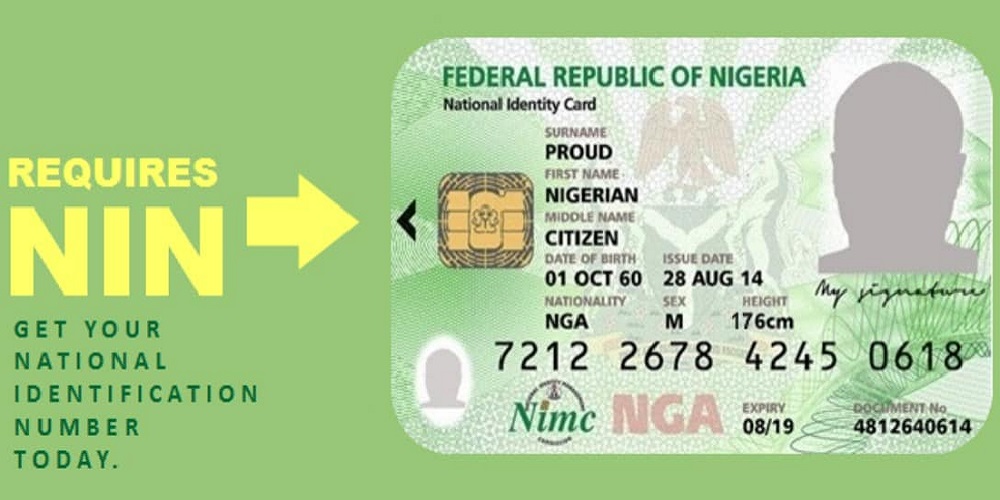
Over 70 million bank customers are at risk of losing access to their accounts when the Central Bank of Nigeria’s directive on restricting accounts without Bank Verification Numbers and National Identification Numbers goes into effect.


The CBN had on December 1, 2023, in a circular directed that a ‘Post no Debit’ restriction be placed on all bank accounts without the BVN and NIN from Friday, March 1, 2024.

‘Post No Debit’ is a term used to describe a restriction imposed by banks on specific accounts, preventing customers from making withdrawals, transfers, or any other debits from such accounts. This measure effectively freezes the funds in the account, rendering them inaccessible for the duration of the restriction.

The circular, jointly signed by the Director, Payments System Management Department, Chibuzo Efobi; and Director, Financial Policy and Regulation Department, Haruna Mustapha, read, “It is mandatory for all Tier-1 bank accounts and wallets for individuals to have BVN and/or NIN. It remains mandatory for Tiers 2 & 3 accounts and wallets for individual accounts to have BVN and NIN.

Advertisement

“For all existing Tier-1 accounts/wallets without BVN or NIN: Effective immediately, any unfunded account/wallet shall be placed on ‘Post No Debit or Credit’ until the new process is satisfied. Effective March 1, 2024, all funded accounts or wallets shall be placed on ‘Post No Debit or Credit’ and no further transactions permitted. The BVN or NIN attached to and/or associated with all accounts/wallets must be electronically revalidated by January 31, 2024.”

The circular went on to warn banks in the country that a “comprehensive BVN and NIN audit shall be conducted shortly and where breaches are identified, appropriate sanctions shall be applied.”

As the deadline approached, some banks sent out messages to their customers to regularise their accounts in line with the new CBN directive. While some asked customers to visit their physical branches, others made provisions for customers to update their accounts online.

FirstBank Nigeria in an email to customers said, “Please ensure that your Bank Verification Number and National Identification Number are linked to your account number on or before February 29, 2024.

Advertisement

“You can seamlessly update your account information with your BVN and NIN by visiting any FirstBank branch close to you. Please note that the Central Bank of Nigeria through its circular: PSM/DIR/PUB/CIR/001/053 dated December 1, 2023, has directed that effective March 1, 2024, all funded accounts without BVN shall be placed on ‘Post No Debit or Credit’ and no further transactions permitted.”

Ecobank Nigeria wrote, “Please be informed that the Central Bank of Nigeria through its circular dated December 1, 2023, has announced that all accounts without Bank Verification Number and/or the National Identity Number would not be able to carry out transactions from March 1, 2024.

“Consequently, you will be required to update your account information with your National Identification Number and Bank Verification Number if you have not done so already.” It, however, offered an online solution.

Fintech firm, OPay, also called on its customers to complete the regularisation of their accounts by linking their BVN or their NIN as mandated by the apex bank, offering them both online and offline options.

Advertisement

A Tier-1 account refers to a bank account that can be opened with minimal or no form of documentation. Such an account can be opened with a passport photograph and has a limit of N50,000 deposit and an operating balance of N200,000 and is mostly not linked to the BVN and is targeted at the unbanked population.

This space is dominated by fintech firms and there are concerns that the lax Know Your Customer requirements are loopholes that are being used to perpetuate fraud.

The National President of the Association of Mobile Money and Bank Agents in Nigeria, Sarafadeen Fasasi, who called for an extension of the deadline, said while the policy was a good move to improve banks’ KYC requirements, its implementation was worrisome.

He said, “We are all aware that it is a good policy for the system for us to have good KYC, but unfortunately, what we have a challenge with is the implementation. This is another wrong implementation. Before you give a deadline, you must have provided the access points. As of today, we have about 104 million NINs out of 200 million people expected to have NINs. So, there is a gap of about 100 million.

Advertisement

“It is the same thing with the BVN, which as of the last report was about 59.9 million out of 134 million expected bank accounts. That means we have over 70 million accounts, which will be affected.”

According to data from Statista, as of 2021, the number of active bank accounts in the country was around 133.5 million, with savings accounts making up about 120 million.

Fasasi claimed that the National Identity Management Commission lacked the capacity to deliver 100 million NINs within the required timeframe.

He said, “The question is, can the NIMC deliver the gap of about 100 million NINs within the deadline? The answer is no, so why should this drive Nigerians into another problem? For BVNs, we have a huge gap to deliver and only bank branches can enrol BVN as of today.

Advertisement

“Based on our research, about 300 local government areas out of the 774 LGAs in Nigeria have no bank branches; so, who are those who are going to provide BVN enrolment at those LGAs? It means that people are going to run into trouble.

“Also, the highest that the banks have done is 500,000 enrolment per month. We are not ready for this. Why the rush? Why not plan that every month, this is what we want to achieve based on our capacity and access points?”

He lamented that this was coming at the same time as the National Communications Commission had directed telecom companies to bar mobile lines without the NIN.

“Who is pursuing us in Nigeria in this critical period where everyone is groaning under adverse economic conditions? They want to add extra trauma; I think we need to reconsider this,” he concluded.

Advertisement

The Chairman, Consumer Rights Awareness, Advancement and Advocacy Initiative, Moses Igbrude, said the apex bank ought to assess the level of compliance before wielding the big stick.

He said, “You must check the challenges and the parties who are responsible for the NIN and BVN. What of Nigerians in the Diaspora? They should give more time for this linkage so that they will not disrupt the banking system.

“It is a multifaceted issue involving many players. What is the infrastructure required for them to work? Otherwise, they will use a legal way to disenfranchise a lot of people.”

The President, Bank Customers Association of Nigeria, Dr Uju Ogubunka, called for an extension of the deadline to enable more bank customers regularise their accounts in line with the CBN directive.

Advertisement

Ogubunka told the pres “We know that some of our members have linked their accounts with the BVN/NIN as directed by the CBN. At this point, I think it will be wise to give an extension, because the telecom network has been a bit inclement and, then of course, you talk about power; some of us were unable to charge our phones for some time because there was no power. And these things are happening almost everywhere.

“People are willing to do what they’re supposed to do, but conditions within the environment are a bit difficult. So, I will personally suggest that we consider what is happening and give some extension.”

He went on to suggest that a test run where restrictions would be placed on some affected accounts might be of help in sensitising people to the importance of the directive.

“Another thing that they can do is maybe do a test run so that people will know that it is something that can be done. Some people may not even believe that it is possible to restrict transactions. So, if you do a test run for one day or even a few hours, you announce that those who have not linked up will be unable to access their accounts temporarily, maybe for 24 hours or 12 hours, then give an extension. That should help,” Ogubunka added.

Advertisement

He stated that there had been no reports that banks had started to restrict bank accounts without the BVN and NIN.

“No one has reported that to us yet. But then, they may not know until they want to make use of the accounts. It is not as if they are using the bank accounts every minute of the day. It is only when they want to make use of it and then see that they can’t get through, that is when they have an issue. So far, we don’t have any report on that,” he said.

Multiple bankers, who spoke with journalists on condition of anonymity, said the banks had not yet started to restrict accounts without the BVN and NIN.

They said directives had been issued from their headquarters to create a seamless linking process to avoid account deactivation.

Advertisement

A bank official said, “No one is deactivating accounts yet. They have been sending emails to customers to calm down so that a more seamless linking process will be communicated to customers. They will be reached via text and email. Some people used the NIN to open or update their accounts already so they won’t need to do it again.”

On the number of possible affected customers, the official stated, “We haven’t got the affected number yet. It has to be spooled by our IT team from the backend.”

Another official confirmed the directive to assist more customers via email.

“The deadline still stands; however, not all accounts are blocked because some opened theirs with the national ID from the inception. But we will be reaching out via email and text,” the official wrote to one of our correspondents.

Advertisement

A News Agency of Nigeria report on Friday revealed that customers continued to besiege various bank branches in Lagos to meet the CBN deadline for linking BVN and NIN to their accounts.

The customers also asked the CBN to extend the deadline for them to link their BVNs and NIN with their accounts.

With the implementation of the directive, there was a significant gathering of customers at various banks as early as 8am on Friday to link their NINs with their bank accounts.

A security officer at a Guaranty Trust Bank branch in the Abule Egba area, while addressing customers who were eager to gain entry into the banking hall, said the message sent out by the bank to its customers concerning the directive was a random one.

Advertisement

He said not all customers that got the message were affected by the directive. This got the customers infuriated, as they said the bank should have sent out messages to only those affected. At another GTB branch in Egbeda, the bank advised customers to register online using specified codes displayed on the walls outside the banking hall.

However, at Polaris Bank, the crowd was not allowed to converge, and those who went into the banking hall were told by the customer service desk to produce their NIN slips.

Those without the slips were turned back. Customers who explained their mission to the bank’s security officers before entering the banking hall were told to get the slips.

Two bank employees used mini computers to do the first registration at the entrance before the security guards allowed the customers into the banking hall.

Advertisement

At Providus Bank on Nnamdi Azikiwe Road, customers were given forms and were assisted with registration simultaneously. The situation was similar at Wema Bank on Broad Street and other banks visited on Lagos Island.

Meanwhile, calls and text messages sent to the CBN spokesperson, Hakama Sidi, yielded no response as of the time of filing this report.


Continue Reading
Advertisement

News

FCTA Threatens Sanctions Against Hotels, Event Centres Hosting Illegal Groups

Published

on

ADVERTISEMENT
Zoom Ad
ADVERTISEMENT
Zoom Ad

By Gloria Ikibah

The Federal Capital Territory Administration (FCTA) has warned owners of hotels, event centres and other public facilities in Abuja against allowing their premises to be used by unlawful organisations, declaring that violators risk losing their land titles.

The warning was contained in a statement issued on Friday by Lere Olayinka, Senior Special Assistant on Public Communications and Social Media to the Minister of the FCT, Nyesom Wike.

According to the administration, land allocations within the FCT are meant strictly for lawful activities, stressing that authorities would no longer tolerate the use of public facilities for gatherings linked to illegal groups.

Advertisement

The statement read: “In view of the need to further ensure the security of lives and properties in the FCT and sustain the efforts of security agencies in this regard, usage of Event Centres, Hotels and other public buildings will now be closely monitored.

“This is aimed at ensuring that they are not used by illegal organizations for gatherings capable of disrupting the peace of the nation’s capital.”

The FCTA also directed owners and operators of such facilities to properly verify the identities and legitimacy of organisations seeking to rent their venues before approving bookings.

“Owners of these facilities are therefore urged to take cognizance of the legality of organizations seeking to use their facilities and the purpose before letting them out,” the statement added.

Advertisement

The administration further warned that political activities in the build-up to elections must only involve recognised party leadership approved by the Independent National Electoral Commission (INEC).

“For instance, in this political season, owners of Event Centres and Hotels in particular must ensure that they only deal with Independent National Electoral Commission (INEC) recognised leadership of political parties in respect of the use of their facilities, and proper records of transactions must be kept.

“Failure to comply with this directive will result to revocation of the title documents such properties,” the statement further read.

The FCTA maintained that failure to comply with the directive will attract severe consequences.

Advertisement
Continue Reading

News

Ebola Alert! FG flags 21 states on lockdown watch, Lagos, FCT, Rivers, Akwa Ibom, Borno, others in high risk zones

Published

on

ADVERTISEMENT
Zoom Ad
ADVERTISEMENT
Zoom Ad

The Nigeria Centre for Disease Control and Prevention (NCDC) has placed several states on high Ebola preparedness alert after a fresh risk assessment classified Nigeria’s chances of importing the deadly disease as high amid regional outbreaks.

Dr Jide Idris, Director-General of the NCDC said this in a Thursday statement, stressing that Nigeria had not yet recorded any confirmed Ebola Virus Disease case linked to the outbreak.

He explained that the World Health Organization’s Public Health Emergency of International Concern declaration and increasing Ebola cases in the Democratic Republic of Congo and Uganda required intensified surveillance and preparedness activities across Nigeria immediately.

Idris stated that the NCDC conducted a dynamic risk assessment to guide anticipatory and response measures, concluding that Nigeria faced a high Ebola importation risk because of international travel and regional population movement.

Advertisement

He added that uncertainty surrounding the outbreak’s magnitude and the possibility of delayed recognition were heightened because Ebola symptoms closely resembled common endemic diseases such as malaria and Lassa fever in Nigeria.

According to him, all states and the Federal Capital Territory must maintain Ebola preparedness, although readiness efforts should reflect varying importation and transmission risks identified through the NCDC’s recently developed preparedness classification system.

The agency categorised Lagos, the FCT, Rivers, Kano, Enugu, Borno, Akwa Ibom, Cross River, Taraba, and Adamawa as high-risk states because of international airports, porous borders, and active trade or travel routes.

Idris also identified Ogun, Nasarawa, Kaduna, Plateau, Kogi, Niger, Jigawa, Katsina, Bauchi, Ebonyi, Abia, and Bayelsa as moderate-risk states requiring sustained preparedness efforts against possible Ebola importation and transmission threats.

Advertisement

He said that the WHO declaration underscored the seriousness of the regional threat and highlighted the urgent need for Nigeria to strengthen preparedness measures before detecting any suspected Ebola case domestically.

The NCDC boss explained that national preparedness efforts aimed to ensure every state and the FCT could quickly detect, contain, and respond to suspected Ebola cases while protecting health workers and sustaining healthcare services.

Idris reiterated that Nigeria currently had no confirmed Ebola case linked to the outbreak but warned that increasing regional transmission significantly elevated the country’s importation risk because of population movement and extensive travel networks.

He explained that airports, seaports, porous land borders, informal crossings, trade routes, and overlapping Ebola symptoms with malaria and Lassa fever increased the likelihood of delayed recognition and possible disease spread nationally.

Advertisement

According to him, health authorities in the Democratic Republic of Congo and Uganda had reported 1,077 suspected Ebola cases and 247 deaths, while people aged between 14 and 45 years remained most affected.

He said the outbreak’s case fatality rate stood at 24.6 percent, while both regional and national Ebola risks remained high because of continuing transmission and the absence of approved vaccines for the outbreak sstrain.l

Idris stressed that no approved vaccines or specific treatments currently existed for Bundibugyo Ebola virus disease, making rapid public health interventions critical for containing infections and preventing widespread transmission across vulnerable communities.

He explained that outbreak control depended largely on early detection, prompt isolation of suspected and confirmed cases, strict infection prevention measures, effective contact tracing, safe burials, community engagement, and strong surveillance systems nationwide.

Advertisement

The NCDC Director-General disclosed that suspected Ebola cases had also been reported in India, while Canada suspended travel applications from residents of the DRC, Uganda, and South Sudan because of the outbreak situation.

He added that Uganda recently announced border closure measures, while Nigeria faced significant implications because the current Bundibugyo Ebola virus outbreak lacked licensed vaccines or approved targeted therapeutics for treatment and prevention.

According to him, existing Ebola vaccines and monoclonal antibody treatments primarily targeted the Zaire ebolavirus strain and should not be relied upon as effective countermeasures against the current Bundibugyo outbreak affecting neighbouring ccountries.l

Idris clarified that Ebola Virus Disease was not airborne, explaining that transmission occurred through direct contact with blood, body fluids, contaminated materials, or infected animals associated with symptomatic or deceased infected persons.

Advertisement

He said the Ebola incubation period ranged from two to 21 days, making recent travel and exposure history within the preceding three weeks essential when assessing any suspected infection or potential outbreak case.

According to him, early Ebola symptoms often appeared non-specific and included fever, fatigue, muscle pain, headache, sore throat, vomiting, diarrhoea, abdominal pain, rash, hiccups, unexplained bleeding, bruising, and signs of shock.

Idris warned health workers against waiting for bleeding before suspecting Ebola in patients presenting compatible symptoms alongside relevant travel or exposure histories connected to affected countries experiencing active transmission of the vvirus.l

He added that the absence of strain-specific vaccines and approved therapeutics for Bundibugyo Ebola virus disease made early, aggressive, and optimised supportive care especially important in improving patient survival and treatment outcomes significantly.

Advertisement

The NCDC boss explained that clinical management should include rapid assessment, fluid and electrolyte management, glucose monitoring, treatment of malaria or bacterial co-infections, symptom control, shock management, and humane care in isolation facilities.

He disclosed that the NCDC had activated its national Emergency Operations Centre, currently operating in alert mode while coordinating preparedness activities with relevant federal and state institutions across the country to strengthen response capacity.

According to him, state governments and Commissioners for Health must ensure immediate operational readiness across public and private health systems to effectively manage any suspected Ebola case and prevent possible widespread community transmission.

Idris emphasised that preparedness measures should prioritise early detection, immediate isolation, supportive care, infection prevention and control, safe sample handling, contact tracing readiness, referral systems, workforce protection, and adequate medical countermeasures nationwide.

Advertisement

He urged commissioners to provide leadership for coordinated Ebola readiness efforts across their respective states and the Federal Capital Territory, assuring them of continued technical guidance and national coordination support from the NCDC.

The Director-General also requested commissioners to activate state public health coordination structures for Ebola preparedness and conduct rapid risk assessments focusing on population movement, high-density settings, and facilities receiving suspected cases.

He further advised states to engage public and private healthcare providers to ensure early suspicion, safe separation of suspected cases, immediate reporting through approved channels, and identification of functional isolation or holding facilities.

Idris stressed the importance of strengthening facility readiness for screening, infection prevention, ambulance transfers, safe sample movement, decontamination, and waste management while ensuring frontline workers received adequate protection and psychosocial support during operations.

Advertisement

He also urged intensified traveller monitoring and surveillance in states with airports, seaports, transport hubs, land borders, and migrant corridors while encouraging calm public communication to discourage stigma and promote verified information sharing.

The NCDC boss directed states to maintain essential health services without disruption and submit readiness updates within seventy-two hours while immediately reporting suspected cases, high-risk exposures, unusual febrile clusters, or major preparedness gaps.

(Credit: NAN)

Advertisement
Continue Reading

News

JUST IN: Trouble looming as North Central APC Group Wants Nat’l Chairman,Yilwada to Resign 

Published

on

ADVERTISEMENT
Zoom Ad
ADVERTISEMENT
Zoom Ad

Trouble seems to be looming as the North-Central Forum of the All Progressives Congress (APC) has called on the party’s National Chairman, Prof. Nentawe Yilwatda, to resign within two weeks over allegations of irregularities and monetization of the party’s recently concluded primary elections.

The group accused the Yilwatda-led National Working Committee (NWC) of mishandling the State Assembly, National Assembly, governorship and presidential primaries, claiming that the process was manipulated in favour of preferred aspirants.

In a statement issued on Friday by the Forum’s National Chairman, Alhaji Saleh Zazzaga, the group alleged that results were altered to favour candidates loyal to party officials, while some aspirants who appeared likely to win were screened out of the contests.

According to the Forum, concerns had earlier been raised during the primaries over what it described as the “commercialization” of the exercise. It added that more than half of APC members were dissatisfied with the conduct of the elections.

Advertisement

The group insisted that members of the NWC should be held accountable for allegedly violating the party’s constitution and guidelines.

“We are issuing a two-week ultimatum to the national chairman to resign because of incompetence, violation of the party’s constitution, monetization of the just concluded party primaries and changing the results when it favoured those perceived as not in his camp,” the statement said.

The Forum further alleged that party officials manipulated outcomes of the primaries across the country using their positions within the party structure.

As part of its claims, the group pointed to controversies surrounding the APC presidential primary election results announced by the Chairman of the Presidential Primary Election Committee, former Senate President Pius Anyim.

Advertisement

Anyim had declared President Bola Tinubu winner of the presidential primary with 10,999,162 votes, while his challenger, Stanley Osifo, secured 16,503 votes.

However, the figures have since generated public debate following allegations that the numbers were inflated.

The North-Central APC Forum argued that the results did not correspond with the party’s official membership data.

“The party has eight million registered voters but when they released the result of Mr President in the presidential primary they wrote more than 10 million votes,” the statement said.

Advertisement

“The guidelines stated that only those that are registered are going to vote. So this means that, all over the country, what they did was selection of candidates, not election.”

The Forum also lamented that the controversies surrounding the primaries had weakened the ruling party, leading to defections by aggrieved members.

It cited the resignation of former Deputy Senate President Ovie Omo-Agege from the APC after losing the Delta Central senatorial primary. Omo-Agege has since joined the Nigeria Democratic Congress (NDC), where he was reportedly granted a waiver to contest the election.

The group also referenced the defection of Mustapha Bala Dawaki, a former Chief of Staff to the APC national chairman, who left the party after losing the Dawakin Kudu/Warawa Constituency return ticket in Kano State.

Advertisement

According to the Forum, Dawaki’s resignation further highlighted growing dissatisfaction within the party ranks.

The Forum warned that it would institute legal action against Yilwatda if he failed to resign before June 12, Nigeria’s Democracy Day.

“It is because of these infractions that we are asking the national chairman to resign before two weeks, or we will sue him to court,” the statement added.

The group also faulted the party leadership for allegedly deploying inexperienced officials to supervise the primaries in several states, which it said contributed to the crisis currently rocking the APC.

Advertisement
Continue Reading

Trending

Copyright © 2024 Naija Blitz News