
News
24 states can’t pay salaries without FG allocation – Budgets


- /home/naijuinz/public_html/wp-content/plugins/mvp-social-buttons/mvp-social-buttons.php on line 27
https://naijablitznews.com/wp-content/uploads/2024/03/bud.jpg&description=24 states can’t pay salaries without FG allocation – Budgets', 'pinterestShare', 'width=750,height=350'); return false;" title="Pin This Post">
- Share
- Tweet /home/naijuinz/public_html/wp-content/plugins/mvp-social-buttons/mvp-social-buttons.php on line 72
https://naijablitznews.com/wp-content/uploads/2024/03/bud.jpg&description=24 states can’t pay salaries without FG allocation – Budgets', 'pinterestShare', 'width=750,height=350'); return false;" title="Pin This Post">


At least 24 states of the federation will not be able to pay workers salaries this year without having to wait for federal allocations from the central government, findings by journalists have revealed.
Only 11 out of the 36 state governments of the federation can independently pay their workers’ salaries without depending on federal allocations, according to an analysis of the state governments’ approved budgets for the 2024 fiscal year.
The states with robust internal revenue are Lagos, Kano, Anambra, Edo, Enugu, Imo, Kaduna, Kwara, Osun, Ogun and Zamfara.
The approved budgets are also contained in Open States, a BudgIT-backed website that serves as a repository of government budget data.
While the budgets of 35 states have been made public, Rivers State budget could not be accessed neither has it also been uploaded the platform.
According to the analysis the budgets data, 24 states cannot fund salaries payments from their Internally-Generated Revenue and, as such, may have to rely on the Federal Government allocations or borrowing from banks and related institutions.
The development also means that the respective wage bills of the affected states surpassed their various IGRs, raising concerns about workers productivity and state governments’ efficiency in internal revenue generation.
The 24 states are Bayelsa, Ondo, Yobe, Sokoto, Taraba, Plateau, Oyo, Niger, Nasarawa, Kogi, Kebbi, Katsina, Jigawa, Gombe, Ekiti, Ebonyi, Borno, Benue, Bauchi, Adamawa, Akwa-Ibom, Cross River, Abia, and Delta.
The development is coming amidst clamour for wage increase by labour unions at both the federal and state levels, following the rising cost of living on the aftermath of fuel subsidy removal and unification of the foreign exchange markets by the current administration.
The Nigerian Labour Congress has consistently maintained that if inflation continues to rise, the organised labour may have no choice but to insist on a new minimum wage of N1m for Nigerian workers. The government however has rejected the demand.
In the first half of 2023, state governments borrowed about N46.17bn from three banks to pay salaries between January and June 2023. The findings were based on an analysis of the half-year 2023 financial statements of Access Bank Plc, Fidelity Bank, and Zenith Bank Plc
The press observed that the states borrowed the most from Access Bank in six months, with a record of N42.97bn loan.
This was followed by Zenith Bank (N1.78bn borrowed) and Fidelity Bank (N1.42bn borrowed) within the six-month period.
In 2023, state governors got the most FAAC allocations in at least seven years. The rise in FAAC allocations to the three tiers of government especially states followed the petrol subsidy removal and currency reforms of the current administration. The reforms have reportedly led to a 40 per cent boost in income.
Experts believe the projected revenue increase should have reduced state governments’ appetite for more borrowings.
In an interview recently, Kaduna State Governor, Uba Sani, claimed that state governments were borrowing to salaries in the past but the removal of fuel subsidies had put an end to such borrowing.
“Every governor in Nigeria is getting more money than we used to get. Before President Bola Tinubu removed the fuel subsidy, in Kaduna State, precisely in May 2023, we were borrowing to pay salaries but immediately after the subsidy removal, after paying salaries without borrowing, we had a surplus of money.”
However, despite the improved funding, no fewer than 32 states indicated plans to borrow N2.78tn from domestic and external institutions to fund their 2024 budget.
According to further analysis of the states budgets, the affected 24 states will spend N1.48tn on salaries in 2024, while they plan to make N914bn IGR. This means the states will need N566bn from either federal allocations or borrowing to complete the payment of salaries.
The breakdown of data shows that Bayelsa State with projected IGR of N23.9bn will need money to pay its workers N69.12bn this year. Ondo State with projected internal revenue of N33.6bn will also need extra money to fund its N56.76bn annual wage bill, while Yobe State will fund its N42.86bn wage bill from its projected IGR of N14.55bn and federal allocation or borrowing.
Sokoto is expected to pay N46.9bn salaries from its anticipated internal revenue of N37.1bn and partial funding from allocation/loan, while Taraba will obtain extra funding to pay its workers N54.47bn from its internal revenue of N27.8bn. Plateau with a projected revenue of N38.89bn must get federal government allocation o clear its wage bill of N52.25bn.
Also, the Oyo State will pay N132.67bn to workers after generating N92.79bn in its coffers. The state will need additional funding to complete this. Niger State with projected revenue of N61.87bn will need help to pay its civil servants N70.24bn while Nasarawa will pay its workers N54.45bn from its projected revenue of N43.3bn and another source.
Further analysis of the budget showed that states such as Kogi will pay its workers N65.07bn from its revenue of N30.23bn and federal allocation, while Kebbi will pay N37.3bn as salaries from its N17.8bn internal revenue and partial federal allocation. Katsina will spend N56.3bn on salaries from its N40bn internal revenue and federal allocation, while Jigawa will pay its workers N64.84bn from its revenue of N50.64bn and federal allocation.
Gombe must pay salaries worth N35.27bn from its anticipated revenue of N22.32bn and federal allocation. Ekiti will spend N2.78bn on salaries from its N1.5bn revenue and federal allocation. Ebonyi’s N28.16bn wage bill surpasses its revenue of N25.1bn, while Borno will pay its workers N50.28bn from its revenue of N27.5bn and federal allocation.
Furthermore, Benue State with revenue of N23.9bn will pay N56.9bn as salaries, while Bauchi must pay salaries worth N46.9bn from its anticipated revenue of N37.1bn and federal allocation; Adamawa will spend N52bn on salaries from its N26.9bn revenue and allocation; Akwa-Ibom will spend N127.8bn on salaries from its N60bn revenue and allocation while Delta with projected revenue of N110.3bn must seek assistance to pay its workers N164.3bn.
Also, Abia with a revenue of N32.14bn will pay N47.83bn as salaries while Cross Rivers with projected revenue of N34.7bn must seek assistance to pay its workers N67.75bn.
According to the budget data, the 11 states which have higher IGR will conveniently fund their combined 980.68bn wage will their internal revenue of N2.34trn
In different forums, financial experts have raised concerns about states’ spending on recurrent expenditure highlighting the need to embrace financial innovations.
A development economist, Aliyu Ilias, said many states had yet to fully develop themselves as industrialised and marketable to attract investors.
Ilias urged governors to develop an area of strength they could leverage to attract foreign investments.
He said, “Going forward, what they could do is to identify one area of strength. For instance, Bayelsa has oil and should be able to attract investments. I think it is about policy. They should give the policy a chance that would allow people to come and invest. They should also create an attraction and develop an economic summit that will make sure they showcase and attract investors.”
An economist and former Vice-Chancellor of the University of Uyo, Prof Akpan Ekpo, also stressed that, “states have to think of new ways of increasing their IGRs. If they continue borrowing to pay salaries, it is not good for the economy.”
He urged the states to increase their revenue by increasing service delivery, which will attract more revenue.
Also reacting, the Managing Director of the Centre for the Promotion of Private Enterprise, Muda Yusuf, said that the report indicated that a majority of states were not financially sustainable and were at risk of insolvency if there was no boost in investment.
He said, “This issue is a fiscal sustainability problem, showing that many states are not fiscally sustainable and need to work towards it; and that the states need to do a lot more to attract more investments to their states so that their level of dependence on the Federal Allocation Accounts Committee would reduce.
“Even as we speak, many of them are also in debt and by the time they pay salaries and service their debts, there is not much left to improve on infrastructure. It’s in the interest of the sustainability of the states for them to be more creative in generating more revenue and attracting more investment to their states so that they can generate more revenue.
“Secondly, we also need to address the issue of fiscal federalism because some of the states don’t have power over some resources in their domain and can’t bring investors into it. For instance, mining is controlled mainly by the federal government, you get permission from them and revenue is remitted to them. So we need to revisit the issue of restructuring to help states have more control over resources within their domain.
Continuing, the economist stated that the state governors should take a cue from the Federal Government to reduce its bloated staff and political appointees.
“Most of these states have heavy overhead and they have very bloated bureaucracy, political appointees and they are putting a lot of pressure on their resources, so they have to do some rationalisation on their staff, many of them don’t need more than 50 per cent of their workforce but for political reasons, they put all manner of characters on their payroll including the local government. They have to look at that and take a cue from the Federal Government on the Oronsaye report.”

By Gloria Ikibah
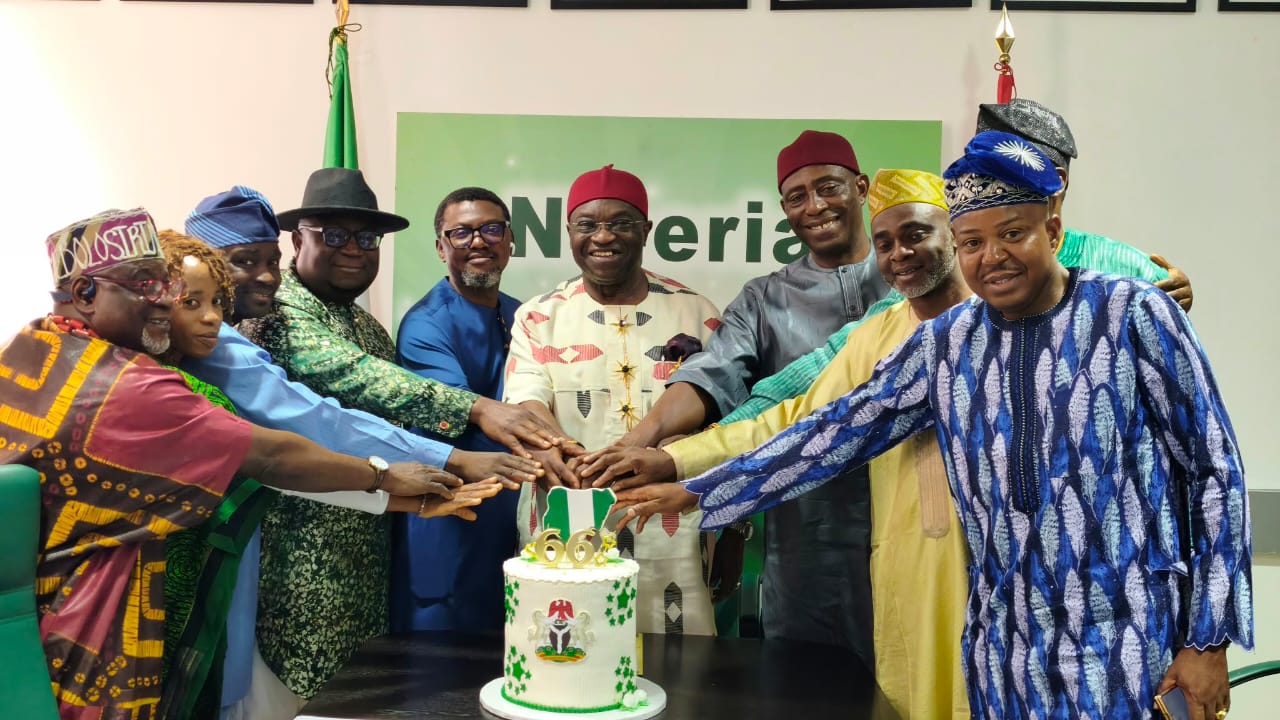
Nigeria’s Ambassador to Spain, Dr Okezie Victor Ikpeazu, has called for renewed unity, resilience and collective responsibility as the country marks its 66th Independence Anniversary.
Ikpeazu made the call in Madrid while addressing Nigerians and guests at an event organised to commemorate Nigeria’s Independence Day, saying nation-building remained a continuous process requiring the contribution of every citizen.
He congratulated President Bola Ahmed Tinubu and Nigerians, particularly members of the Nigerian community in Spain, on the anniversary.
“It is my profound honour and privilege to welcome you all to this event marking the 66th anniversary of the independence of our beloved country, Nigeria. As you are aware, on this day in 1960, our great nation proudly raised its green-white-green flag and took its rightful place among the free and sovereign nations of the world,” he said.
According to him, the anniversary provided an opportunity to reflect on Nigeria’s journey since independence and reaffirm the country’s commitment to freedom, unity, progress and dignity.
“I congratulate His Excellency, the President Bola Ahmed Tinubu, GCFR and all Nigerians, especially those residing in the Kingdom of Spain, as we celebrate our national day. Permit me to pay tribute to those who envisioned our country, our nationalists and patriots whose courage and sacrifice secured our freedom.
“Their legacy reminds us that nation-building is a continuous endeavour, which demands resilience, innovation, and collective responsibility,” Ikpeazu said.
The envoy described Nigeria as Africa’s most populous country and one of its largest economies, noting its human capital, cultural diversity and natural resources.
“Nigeria today stands as Africa’s most populous nation and one of its largest economies, a country rich in human talent, cultural diversity, and natural resources,” he added.
He also highlighted Nigeria’s democratic institutions, youthful population and contribution to peace, security and development in Africa and beyond.
Ikpeazu used the occasion to highlight the growing relationship between Nigeria and Spain, describing the bilateral ties as being anchored on mutual respect, constructive dialogue and expanding cooperation.
“This anniversary also provides an opportunity to reflect on the strong and growing bonds of friendship between Nigeria and the Kingdom of Spain. Our bilateral relations are characterised by mutual respect, constructive dialogue, and expanding cooperation in trade, investment, education, culture, and people-to-people exchanges,” he said.
He noted that Spanish companies, including GB Foods, continued to explore opportunities in Nigeria, while Nigerians living in Spain were making contributions to the country’s social and economic life.
“Spanish companies like GB Foods and others continue to find opportunities in Nigeria’s dynamic market, while Nigerians in Spain contribute meaningfully to the social and economic fabric of this great country,” he said.
Ambassador Ikpeazu said Nigeria valued Spain’s partnership and was interested in expanding cooperation in renewable energy, infrastructure, agriculture, technology and the creative industries.
He added that the Nigerian diplomatic mission would continue working to create opportunities for investment and business-to-business partnerships.
“I want to categorically affirm that we will continue to create opportunities for investment and business-to-business matchmaking to develop our country,” he stated.
He also commended Nigerians living in Spain, describing students, professionals and entrepreneurs as important links between both countries.
“To the Nigerian community here in Spain – our students, professionals and entrepreneurs — I extend special greetings. You remain our most valuable ambassadors. Your hard work, integrity, and achievements enhance the image of our nation and strengthen the bridges between our two countries,” he asserted.
He therefore urged members of the community to remain united and law-abiding while upholding the values of enterprise, innovation and resilience associated with Nigerians.
Ikpeazu said Nigeria was pursuing reforms aimed at diversifying its economy, improving governance and promoting inclusive growth under the Tinubu administration.
“Looking ahead, Nigeria under the leadership of Mr President continues to pursue reforms aimed at economic diversification, improved governance, and inclusive growth.
“We are not satisfied with the present economic realities, but we are making progress as a people. Government is determined to harness the energy of our youth, the creativity of our people, and the strength of our diversity to build a more prosperous and secure future,” he said.
He acknowledged the importance of international partnerships in achieving those objectives, particularly the continued friendship and support of Spain.
“In this endeavour, the support and friendship of partners such as Spain remain invaluable.
“Fellow Nigerians, as we raise a toast to Nigeria at 66, let us renew our pledge to work together for a nation that is peaceful, prosperous, and respected in the comity of nations,” he said.
As Nigerians celebrated 66 years of independence, Ikpeazu urged citizens to renew their commitment to building a peaceful and prosperous country.
By Gloria Ikibah
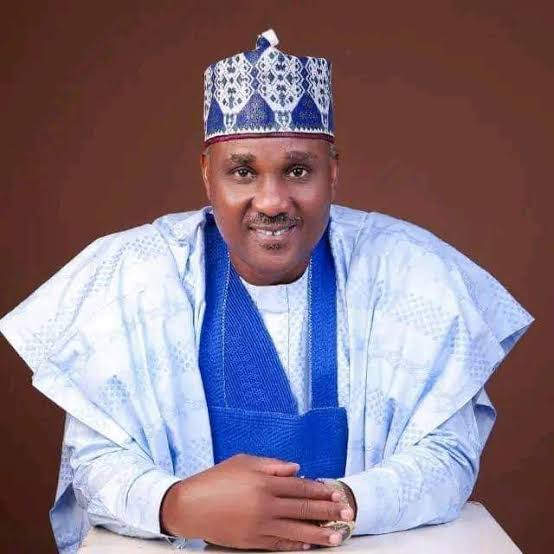
Speaker of the House of Representatives, Rt. Hon. Tajudeen Abbas, has urged Nigerians to remain hopeful about the country as Nigeria marks its Independence Anniversary, saying the nation is making progress politically, socially and economically.
In a statement issued on Thursday by his Special Adviser on Media and Publicity, Musa Abdullahi Krishi, the Speaker congratulated Nigerians on the anniversary and called for greater patriotism, peace and unity in the task of nation-building.
Abbas said Nigeria’s democratic journey had continued to mature, noting that democracy now thrives in the country, which remains the most populous Black nation in the world.
He urged Nigerians to collectively contribute to the development, growth and prosperity of the country rather than allowing political, ethnic or religious differences to undermine national unity.
Abbas also called for continued prayers and support for the administration of President Bola Ahmed Tinubu, stressing that nationhood should transcend political affiliations and ethno-religious considerations.
The Speaker said there was a need for a renewed national orientation focused on patriotism and the advancement of the country.
He urged Nigerians to love their country and remain committed to building a better future for generations to come.
Abbas wished Nigerians a happy Independence Anniversary and urged citizens to celebrate the occasion with renewed hope and commitment to Nigeria’s progress.


Some personnel of the Nigerian Armed Forces have confirmed that they have started receiving salaries reflecting the recently approved 80 per cent increase for junior military personnel under the administration of President Bola Tinubu.
“I can categorically confirm that personnels of the Nigerian Military have now started receiving their newly increased salaries as approved by President @officialABAT in August,” he wrote.
He said the salary increase was expected to boost the morale of troops deployed in operations across the country.
“Another critical factor that is expected to boost the morale of our frontline forces as we continue to win the war against insecurity,” Olusegun added.
The salary adjustment follows President Tinubu’s approval in August of increases ranging from 30 to 80 per cent for personnel of the Armed Forces.
The new salary structure took effect from September 1, 2026.
Under the approved structure, personnel from the rank of Private to Staff Sergeant are to receive an 80 per cent salary increase, while those from Warrant Officer to Colonel are to receive a 50 per cent increase.
Officers above the rank of Colonel, including Brigadier-General, Major-General, Lieutenant-General and General, are to receive a 30 per cent increase.
About 250,000 military personnel are expected to benefit from the new salary package.
The Presidency had said the adjustment would increase the annual salary bill for the Armed Forces from ₦660 billion to ₦924 billion.
Tinubu, while announcing the approval, said members of the military deserved greater support because of their role in confronting banditry, kidnapping and terrorism across the country.
“The men and women who help to keep us safe in our homes must be supported and appreciated in the course of their duties to our nation,” he said in a statement issued by his Special Adviser on Information and Strategy, Bayo Onanuga, on August 4.
The President also said his administration would continue to prioritise the welfare of troops while providing the Armed Forces with weapons and technological tools required for military operations.
The implementation of the salary increase comes as Nigerian troops remain deployed in various operations against insurgency, banditry, kidnapping and other security threats across the country.
This recent increment followed exclusive reports done by SaharaReporters which revealed the struggles of the solders amid poor pay.
For instance, in September 2025, some personnel of the Nigerian Army cried out over the nonpayment of their allowances and poor salaries and called for a review from the President Bola Tinubu-led government.
According to the soldiers, attempts to complain have been met with threats by the army authorities.
They also called for a review of the allowances to reflect the current economic realities of the country.
Soldiers serving in the Nigerian Army have lamented the poor salaries of junior personnel in the country.
The soldiers while speaking to SaharaReporters accused the Nigerian government of failing to improve welfare package for military officers as a gesture to show appreciation for their efforts in securing the country.
The soldiers, who spoke to SaharaReporters on Thursday morning, said the new salaries began reflecting in their accounts on Wednesday evening.
According to them, personnel from the rank of Private to Staff Sergeant are receiving the approved 80 per cent increase.
A Private, who previously earned about ₦103,000, now receives approximately ₦190,000, while a Lance Corporal whose previous salary was about ₦110,000 now receives approximately ₦202,000, according to the soldiers.
“Private soldiers ₦190k. Lance Corporal ₦202k, go on like that. It is exactly the 80 per cent as they promised,” one of the soldiers.
The development confirms an earlier announcement by Dada Olusegun, Special Assistant to President Tinubu on Social Media, who said military personnel had begun receiving the newly increased salaries.
Olusegun disclosed this in a post on X on Thursday.

Nigeria @66: Ikpeazu Urges Unity, Stronger Partnership With Spain

Independence: Nigeria Maturing Politically, Economically — Speaker Abbas

Soldiers jubilate as new salary increase reflects in September pay package


-
 News22 hours ago
2027: If President Tinubu Loses FCT, Rivers, I Will Resign As Minister — Wike(Video)
-
 News22 hours ago
141 Days in Captivity: Kwara Kidnap Victim Walks Nine Days Through Bush Before Final Escape
-
 Economy12 hours ago
STN gets green light for Universal Licence
-
 News21 hours ago
2027: I’ll Replicate Kabba-Bunu/Ijumu Achievements in Kogi West — TeeJay Yusuf
-

 News12 hours ago
Independence Day: Tinubu To Address Nigerians Today
-
 Foreign12 hours ago
Terror in the Sky: Pilot Stabs Co-Pilot, Attempts to Crash Dubai-Israel Flight