Health
Doctor shares horrifying side-effect caused by not washing penis every day
- /home/naijuinz/public_html/wp-content/plugins/mvp-social-buttons/mvp-social-buttons.php on line 27
https://naijablitznews.com/wp-content/uploads/2024/03/FB7CEF2D-604D-42E7-9CCC-76D6793CB13A-1000x600.webp&description=Doctor shares horrifying side-effect caused by not washing penis every day', 'pinterestShare', 'width=750,height=350'); return false;" title="Pin This Post">
- Share
- Tweet /home/naijuinz/public_html/wp-content/plugins/mvp-social-buttons/mvp-social-buttons.php on line 72
https://naijablitznews.com/wp-content/uploads/2024/03/FB7CEF2D-604D-42E7-9CCC-76D6793CB13A-1000x600.webp&description=Doctor shares horrifying side-effect caused by not washing penis every day', 'pinterestShare', 'width=750,height=350'); return false;" title="Pin This Post">
But it’s something many people don’t discuss and if they don’t know how to do it properly there could be horrifying consequences. That’s why one doctor, from Herefordshire, has issued a warning to blokes about what could happen if they aren’t taking care of their intimate hygiene.

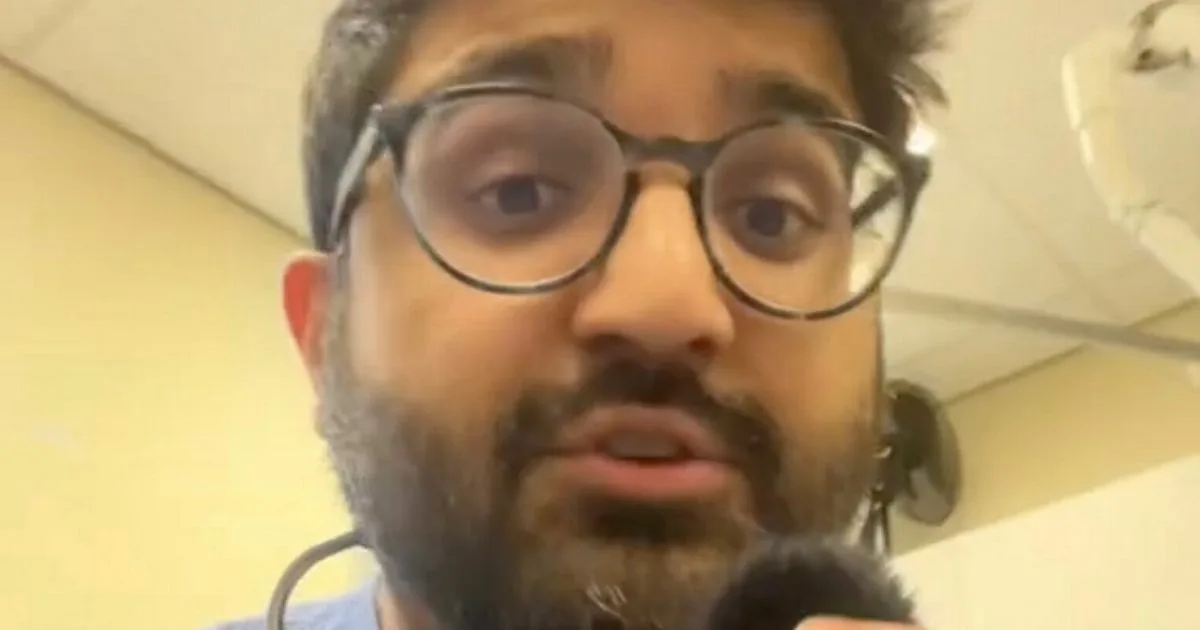
Doctor Sooj warned that if blokes don’t clean our “one-eyed trouser snake” right, they could get balanitis. The condition causes the head of the willy to swell up and get sore.
Lads may also feel pain when urinating, produce weird discharge, bleed or even have a foul smell. But the 31-year-old medic has made a video explaining how to keep our junk clean – and it’s racked up plenty of views.

In the video, he says: “Ever had an infection of your one-eyed trouser snake? It’s called balanitis and it causes the head of your penis to be red and sore.
“This applies to people both with and without a foreskin. If you have a foreskin, gently pull it back and clean under it to prevent the build-up of smegma. Then either air dry it or pat it dry with a towel.
“If moisture keeps building up under the foreskin, it just increases the risk of you developing bacterial and fungal infections. If you notice irritation, inflammation, or too much smegma book an appointment with your GP surgery.”
“I’ve seen several cases in the last few weeks and I just want to highlight the importance of good penile hygiene. Make sure you clean your willy every day with a mild, non-fragranced soap or emollient.

Health
Ebola: WHO releases additional $3.4m as death toll rises to 139
The World Health Organisation (WHO) has approved an additional $3.4 million to support emergency response efforts following the worsening Ebola outbreak in the Democratic Republic of the Congo (DRC) and Uganda, where suspected deaths have risen to 139.
WHO Director-General, Tedros Adhanom Ghebreyesus, announced on Wednesday during a media briefing in Geneva that the agency had declared the outbreak a Public Health Emergency of International Concern (PHEIC) amid growing fears of wider regional transmission.
Tedros said the declaration was made on Sunday under Article 12 of the International Health Regulations after consultations with health authorities in the DRC and Uganda, citing the need for urgent international action.
According to WHO, 51 Ebola cases have so far been confirmed in the DRC, particularly in the provinces of Ituri and North Kivu, including the cities of Bunia and Goma, while Uganda has recorded two confirmed cases in Kampala, including one death linked to travellers from the DRC.
The agency also confirmed that an American national who contracted the virus in the DRC had been transferred to Germany for treatment.
Tedros, however, warned that the outbreak was far more severe than confirmed figures indicate, with nearly 600 suspected cases and 139 suspected deaths already reported.
He said the outbreak had spread to several urban centres, while infections among health workers pointed to transmission within healthcare facilities.
The WHO chief identified insecurity, mass displacement and intense population movement in mining communities within eastern DRC as major factors heightening the risk of regional spread.
He noted that over 100,000 people had been displaced in Ituri Province following escalating violence since late 2025.
Tedros also expressed concern that the outbreak involves the Bundibugyo strain of Ebola, for which no approved vaccines or therapeutics currently exist.
“In light of all these risks, I decided it was urgent to act immediately to prevent more deaths and mobilise an effective international response,” he said.
He commended the governments of the DRC and Uganda for their cooperation, particularly Uganda’s decision to postpone the annual Martyrs’ Day celebrations, which typically attract millions of participants.
WHO said the additional $3.4 million approved from its Contingency Fund for Emergencies brings the organisation’s total emergency support funding for the outbreak to $3.9 million.
The agency added that response teams, medical supplies and emergency support personnel had already been deployed to affected areas as efforts intensify to contain the virus.
Health
WHO declares Ebola outbreak in DR Congo, Uganda global health emergency
The World Health Organization has declared the Ebola outbreak caused by the Bundibugyo virus strain in the Democratic Republic of the Congo and Uganda a Public Health Emergency of International Concern (PHEIC).
The global health body in a statement said the decision was based on the growing risk of international spread of the disease and the absence of approved vaccines or treatments specifically targeting the Bundibugyo virus strain.
WHO Director-General said the outbreak met the criteria for a global health emergency under the International Health Regulations, although it does not yet qualify as a pandemic emergency.
As of May 16, health authorities had recorded eight laboratory-confirmed cases, 246 suspected cases and 80 suspected deaths in Ituri Province of DR Congo, affecting Bunia, Rwampara and Mongbwalu health zones. Uganda also confirmed two cases in Kampala, including one death, involving travellers from DR Congo.
WHO said unusual clusters of deaths linked to symptoms consistent with Bundibugyo virus disease had also been reported across parts of Ituri and North Kivu provinces, while at least four healthcare workers had died from suspected viral haemorrhagic fever, raising fears of hospital-based transmission.
The agency warned that the true scale of the outbreak remained unclear due to limited epidemiological data, insecurity, population displacement and weak health systems in affected communities.
According to WHO, the high positivity rate from initial laboratory samples, increasing reports of suspected cases and deaths, and the detection of cases in Kampala indicate the outbreak could be significantly larger than currently reported.
WHO noted that unlike the Ebola Zaire strain, there are currently no approved vaccines or therapeutics specifically targeting the Bundibugyo virus strain.
The organisation said neighbouring countries sharing borders with DR Congo face a high risk of further spread because of population movement, trade activities and ongoing humanitarian challenges in the region.
WHO announced plans to convene an Emergency Committee under the International Health Regulations to advise on temporary recommendations for responding countries.
The global health agency urged DR Congo and Uganda to activate emergency response mechanisms, strengthen surveillance and laboratory testing, improve infection prevention measures in hospitals and intensify contact tracing and community engagement.
WHO also advised affected countries to implement screening at airports, seaports and land borders, isolate confirmed and suspected cases, and consider postponing mass gatherings until transmission is interrupted.
The organisation, however, warned countries against closing borders or imposing travel and trade restrictions, saying such measures lack scientific basis and could worsen the spread of the disease through unmonitored routes.
WHO further urged neighbouring countries to strengthen preparedness, establish rapid response teams and improve monitoring for unexplained deaths and suspected cases.
Health
World Hypertension Day: Nigerians living with deadly BP – May&Baker warns
The Managing Director and Chief Executive Officer of May & Baker Nigeria Plc, Pharm. Patrick Ajah, on Friday raised alarm over the growing burden of hypertension in Nigeria, warning that millions of Nigerians are living with dangerously high blood pressure without knowing it.
Ajah, who spoke in Lagos during the Walk for Life 2026 organised by the company to commemorate World Hypertension Day, also lamented that rising energy costs are hurting drug prices, as the company spends N170m monthly on factory power.
The event, themed “Controlling Hypertension Together,” featured a health walk, free blood pressure and blood sugar screening, medical consultations, fitness activities, and health talks in collaboration with the Ikeja 1 NYSC Medical CDS Group and other stakeholders.
Speaking during the exercise, Ajah described hypertension as a “silent killer,” disclosing that many Nigerians discovered during previous screenings had dangerously high blood pressure levels, including readings as high as 200 over 120.
“Many Nigerians are walking the streets every day without knowing that they have hypertension,” he said.
“Some of the results we see are frightening. We have seen cases where people’s blood pressure ranges from 200 over 120, which is almost a killer.”
He said the situation was particularly alarming among low-income earners and market women who rarely go for medical checks because of rising healthcare costs.
“Most market women are very hypertensive, but they don’t check. It is getting worse because many people cannot afford hospital bills anymore,” he stated.
According to him, worsening economic hardship and stress are contributing significantly to the rising cases of hypertension across the country.
“With the condition of the country, stress levels are high, and stress increases the tendency for hypertension. The burden is a lot more than it used to be,” Ajah added.
The May & Baker boss warned that hypertension becomes more dangerous when combined with diabetes, describing both conditions as a dangerous alliance responsible for increasing cases of stroke, kidney failure, and sudden deaths.
“In medical school, we were taught that hypertension and diabetes form a dangerous alliance. When somebody is hypertensive and diabetic, it kills faster,” he said.
“That is why we don’t just check blood pressure here, we also check blood sugar.”
Ajah stressed that hypertension treatment is lifelong and warned patients against abandoning medications once their blood pressure appears stable.
“People need to understand that hypertension is not like malaria that you treat and it disappears. Once diagnosed, especially above 40, you are likely going to be on medication for life,” he explained.
“Many people stop taking their drugs once their blood pressure becomes controlled. That is dangerous.”
He urged Nigerians, especially those aged 35 and above, to regularly monitor their blood pressure and blood sugar levels, reduce salt intake, exercise regularly, and maintain a healthy lifestyle.
Ajah also lamented the rising cost of drug production in Nigeria, revealing that soaring energy costs and infrastructure challenges are affecting pharmaceutical manufacturers and ultimately increasing medicine prices.
“Before 2023, we spent about N65 million monthly on power in our factory. Right now, it is costing about N170 million every month,” he disclosed.
“So whether we like it or not, those costs will affect medicine prices.”
He, however, commended the Federal Government for approving duty-free importation of pharmaceutical raw materials, saying the policy helped manufacturers avoid additional drug price increases.
“When the executive order came, we suspended a planned price increase. It probably saved about 10 to 15 per cent on medicine costs,” he said.
Ajah further called on government to improve healthcare infrastructure, make medicines more affordable and address the worsening brain drain in the health sector.
“These days, people get to hospitals and wait for hours before seeing doctors because many doctors have left the country. Government needs to do more to encourage them to stay.”
Speaking, the Chairman of Ikeja Local Government, Comrade Akeem Olalekan Dauda, commended May & Baker for the initiative and urged stronger collaboration between private organisations and government in promoting public health.
“This is public good governance. What you are doing is part of corporate social responsibility and I encourage you to continue partnering with government so our people can enjoy more healthcare support,” Dauda said.
One of the beneficiaries, Mrs. Bose Ayo, praised the organisers after receiving free medical screening and treatment during the outreach.
“I checked my blood pressure and sugar levels and everything is fine. The doctors also attended to my cough and gave me medication,” she said.
“I pray they continue doing this for people like us who cannot afford hospital bills.”
-
News13 hours ago2027: I’m not avoiding Atiku – Peter Obi
-
News14 hours agoPopular Rap Star Dies After Battling Cancer
-
News14 hours agoEx-Gov Abubakar, Halliru Jika emerge APC, ADC guber candidates in Bauchi
-
News14 hours ago“You can’t meet El-Rufai” – ICPC bars ADC
-
Sports12 hours agoEPL: Fernandes Announced Premier League Player of the Season
-
News12 hours agoTrump Admin orders Nigerians, other green card applicants to return home for residency processing
-
News13 hours ago2027: Saraki Unveils Kawu as Kwara PDP’s guber Consensus Candidate
-
News12 hours agoDr. Olotu Akpodiete Chairs Iwhreko Primary School 3rd Annual Athletics & Send Forth Ceremony