Connect with us

Foreign

Mongolia Braces for Dust Storms: Precautions Urged Amid The Sad Climate Concerns

Published

on

ADVERTISEMENT
Zoom Ad
ADVERTISEMENT
Zoom Ad

Mongolia’s National Agency for Meteorology and Environmental Monitoring issues warning about strong winds and dust storms expected to hit southern Gobi desert provinces.


Citizens, particularly drivers and nomadic herders, urged to take precautions against potential disasters amidst wind speeds exceeding 17 meters per second.

Climate change-induced desertification cited as a major factor behind increasing frequency of dust storms, with 77 percent of Mongolia’s territory affected by land degradation.

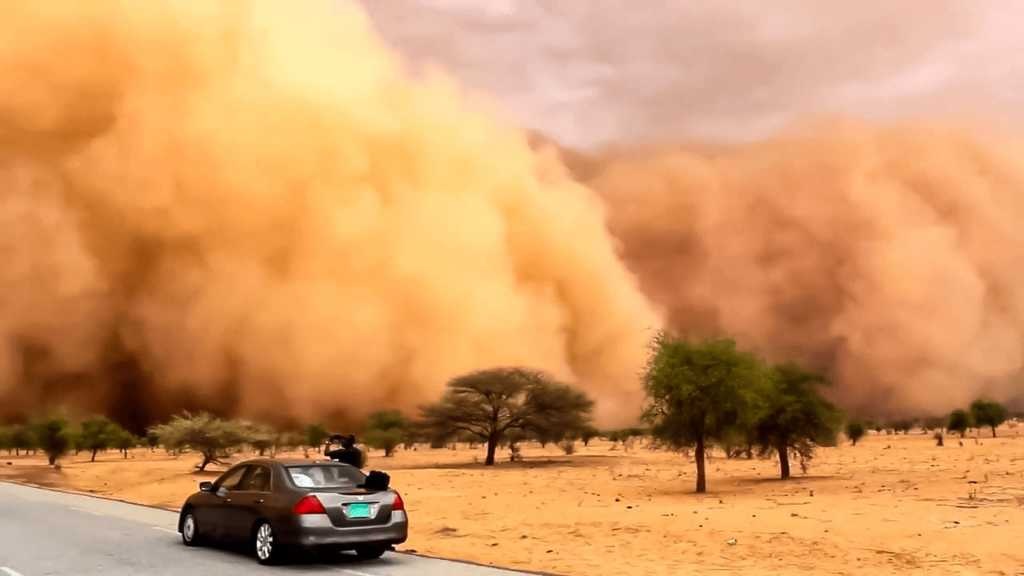
Mongolia’s National Agency for Meteorology and Environmental Monitoring has issued a stark warning, alerting citizens to brace themselves for the onslaught of strong winds and dust storms expected to sweep across the country’s southern Gobi desert provinces.

Advertisement

The forecast, spanning from Tuesday to Friday, particularly highlights regions such as Umnugovi, Dundgovi, and Dornogovi, where the impact is anticipated to be most severe.

With wind speeds projected to surpass 17 meters per second, equivalent to roughly 61 kilometers per hour, authorities are urging heightened vigilance, especially among drivers and nomadic herders.

The potential for disasters looms large in the face of such extreme weather conditions, prompting a call for proactive measures to mitigate risks and ensure the safety of all residents.

Mongolia’s rugged terrain and harsh continental climate make it particularly susceptible to the ravages of nature, with spring ushering in a season marked by strong winds, snowstorms, and the ominous threat of dust storms.

Advertisement

Climate change-induced desertification exacerbates these challenges, contributing significantly to the escalating frequency of dust storms witnessed in recent years, as highlighted by the country’s Ministry of Environment and Tourism.

The sobering reality of desertification and land degradation looms large over Mongolia, with official data revealing that a staggering 77 percent of the nation’s total territory has fallen victim to these environmental woes.

As swathes of land succumb to desertification, the repercussions reverberate throughout the country, impacting livelihoods, ecosystems, and the delicate balance of nature.

Amidst the looming threat of dust storms, Mongolia finds itself at a crossroads, grappling with the urgent need for sustainable solutions to combat climate change and preserve its natural heritage.

Advertisement

From proactive land management strategies to community-based initiatives aimed at promoting environmental stewardship, concerted efforts are underway to safeguard Mongolia’s fragile ecosystems and mitigate the adverse effects of desertification.

As the nation braces for the impending onslaught of dust storms, the call to action is clear: unity, resilience, and collective action are essential in navigating the challenges posed by climate change. By embracing a holistic approach to environmental conservation and fostering a culture of sustainability, Mongolia can forge a path towards a more resilient and vibrant future for generations to come.

Continue Reading
Advertisement

Foreign

US Will Destroy Oil Tankers If American Ships Are Attacked – Hegseth Warns Iran

Published

on

By

ADVERTISEMENT
Zoom Ad
ADVERTISEMENT
Zoom Ad

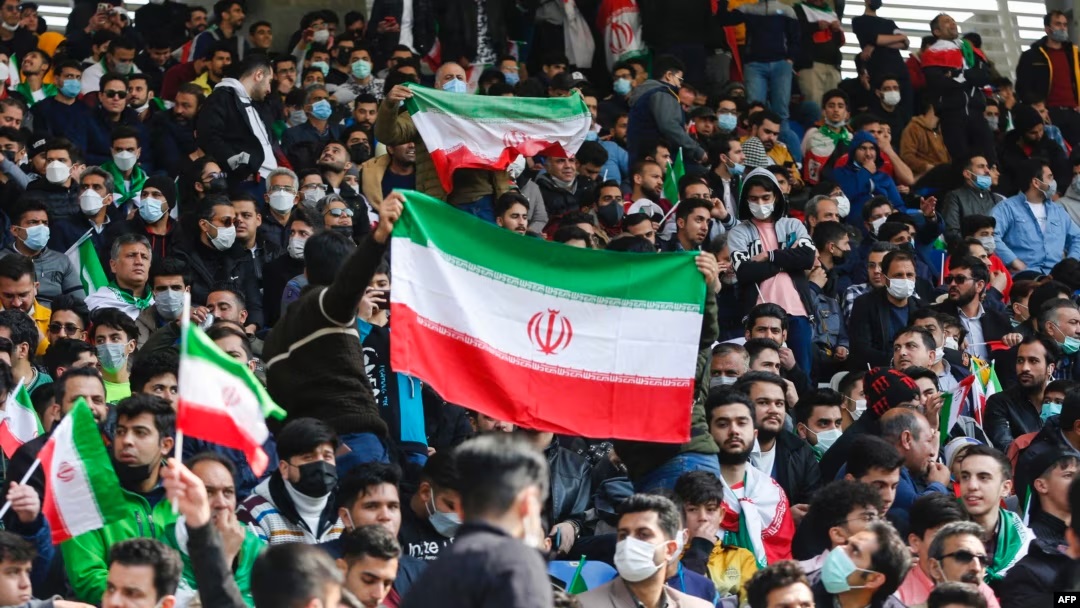
The United States has issued a fresh warning to Iran, threatening to destroy and sink Iranian oil tankers if Tehran launches further attacks against American naval vessels.

U.S. Secretary of War Pete Hegseth issued the warning on Saturday, September 5, 2026, shortly after American forces struck three Iranian oil tankers following what Washington described as ballistic-missile attacks by Iran’s Islamic Revolutionary Guard Corps (IRGC) against two U.S. Navy warships.

Hegseth, in a statement on X, said the United States would respond directly by targeting Iran’s oil fleet if American ships came under fire.

“It’s simple: if Iran shoots at U.S. ships, we will destroy (and sink) their oil tankers,” Hegseth said, adding that Iran only needed to refrain from attacking the U.S. Navy.

Advertisement

He further claimed that Iran’s oil tanker fleet was vulnerable because, according to him, Tehran lacked the naval and air capabilities necessary to protect the vessels.

“Iran’s oil tanker fleet is defenseless — Iran has no navy or air force. Our planes, ships & subs can strike them all,” Hegseth said, referring to areas under the U.S. Central Command and U.S. Indo-Pacific Command.

US strikes three Iranian tankers

The warning came after U.S. Central Command (CENTCOM) confirmed that American forces had struck three Iranian crude oil carriers.

Advertisement

CENTCOM said the action followed missile attacks by the IRGC against a U.S. aircraft carrier and a guided-missile destroyer. According to the command, both American warships successfully evaded the missiles and no U.S. personnel were injured.

The American military identified two of the vessels as M/T Downy, which was struck off Kharg Island, and M/T Stark 1, targeted near Jask.

Both vessels were described by CENTCOM as “permanently disabled.”

A third tanker, M/T Kylo, also known as Noxen, was attacked in the Gulf of Oman. CENTCOM said the crew was warned to abandon the vessel before it was destroyed.

Advertisement

The U.S. military said the tankers were connected to what it described as a multibillion-dollar “shadow network” allegedly used to finance Iran’s Revolutionary Guard and its regional allies.

US threatens wider action

The commander of U.S. Central Command, Admiral Brad Cooper, also warned that Washington would impose an even greater economic cost on Tehran if Iranian forces continued attacking American vessels.

“If you shoot at two of our ships, we will impose an even higher economic cost — taking out three of yours,” Cooper said.

Advertisement

He added that the United States would not hesitate to defend its forces and, if necessary, destroy Iran’s “limited and exposed oil fleet.”

The latest threats signal a potentially significant expansion of the maritime confrontation between Washington and Tehran, with Iranian oil shipments increasingly becoming a direct target of U.S. military pressure.

Iran condemns attacks

Iran has condemned the American strikes on its oil tankers, describing the attacks as illegal and warning that Washington and its allies would bear responsibility for the consequences of continued attacks.

Advertisement

Iranian authorities have also warned that further attacks on Iranian vessels could trigger retaliation against American interests in the region.

The escalation is particularly significant because it is unfolding around the Strait of Hormuz, one of the world’s most important energy shipping routes.

The waterway connects the Persian Gulf with the Gulf of Oman and is a critical route for global oil supplies. Continued attacks on commercial vessels could therefore have wider implications for international energy markets and global shipping.

With the United States now openly threatening to target Iran’s oil fleet in response to attacks on its Navy, the latest confrontation could mark a new and more dangerous phase in the ongoing U.S.-Iran conflict.

Advertisement
Continue Reading

Foreign

UN Backs New World Map To Correct Africa’s Distorted Size

Published

on

ADVERTISEMENT
Zoom Ad
ADVERTISEMENT
Zoom Ad


The United Nations General Assembly has overwhelmingly backed a Togo-led resolution calling for a more accurate representation of the world’s continents, particularly Africa, on global maps.

The resolution, “Correct the Map: Rebalancing Global Cartographic Representation and Promoting Equitable Representation of the World’s Regions, Particularly Africa,” was adopted on Friday, September 4, with 164 countries voting in favour, six abstaining and only the United States voting against.

The initiative promotes the gradual adoption of the Equal Earth projection, which represents the relative areas of continents more accurately than the centuries-old Mercator projection. The Mercator map, developed in 1569 primarily for navigation, significantly enlarges landmasses closer to the poles while making equatorial regions such as Africa appear disproportionately smaller.

Advertisement

Togo, which spearheaded the initiative with African Union backing, argued that maps are not merely geographical tools but also shape how societies perceive the world and their place in it.

The resolution is not legally binding and does not ban the Mercator projection, which remains useful for maritime navigation. Instead, it encourages governments, educational institutions and other users to consider more geographically accurate alternatives.

The vote also exposed differing political interpretations of the initiative. The United States was the sole country to oppose the resolution, arguing that the United Nations should concentrate on more pressing global challenges rather than what Washington characterised as an ideological agenda.

The measure nonetheless represents a significant diplomatic victory for African countries seeking to challenge longstanding distortions in the way the continent is visually represented on commonly used world maps.

Advertisement

Africa has not changed its size. The map is finally being asked to show it.

Continue Reading

Foreign

UK updates list of employers allowed to sponsor Nigerian, other foreign workers

Published

on

ADVERTISEMENT
Zoom Ad
ADVERTISEMENT
Zoom Ad


The UK Government has updated its official list of employers licensed to sponsor foreign workers, providing jobseekers with a current resource for identifying organisations that may be able to sponsor eligible workers.

The Register of Licensed Sponsors: Workers, published on GOV.UK, contains organisations authorised to sponsor workers under the UK’s Worker and Temporary Worker immigration routes.

The latest version of the register was updated on September 4, 2026, according to the UK Government.

Advertisement

The register can be useful for people outside the UK who are searching for jobs that could potentially lead to visa sponsorship, allowing them to research licensed employers before applying for vacancies.

Rather than applying to employers at random, jobseekers can use the register to identify organisations that hold a valid sponsor licence and then check whether they have suitable vacancies.

The list can help applicants to:

* Identify potential sponsoring employers

Advertisement

Research organisations before submitting applications

* Monitor companies for suitable job openings

* Make their UK job search more targeted

* Confirm whether an organisation is included on the official sponsor register

Advertisement

However, being included on the register does not mean that every job advertised by an organisation comes with visa sponsorship.

A sponsor licence means an employer is authorised to sponsor eligible workers, but whether sponsorship is offered for a particular vacancy depends on factors including the job, the applicant’s eligibility and the employer’s decision.

Jobseekers should therefore treat the register as a starting point for research rather than confirmation that sponsorship is available.

After finding an employer on the list, applicants should carefully review the specific vacancy and check the job title, responsibilities, required qualifications and experience, salary, location and eligibility conditions.

Advertisement

They should also look for any information provided by the employer about visa sponsorship and determine whether the position is eligible under the relevant immigration route.

The UK Government’s sponsor register is updated periodically, meaning people actively looking for sponsored employment should check the latest version rather than relying on older copies.

The official Register of Licensed Sponsors: Workers is available on the UK Government’s website.

For jobseekers hoping to work in the UK, using the sponsor register can make the search more focused. However, applicants should always check the individual vacancy and the latest immigration requirements before applying, as being listed as a licensed sponsor does not guarantee sponsorship for a particular job.

Advertisement
Continue Reading

Trending

Copyright © 2024 Naija Blitz News