



Connect with us

News

Lagos-Calabar highway: Telcos fear shutdown as construction threatens cables

Published

on

ADVERTISEMENT
Zoom Ad
ADVERTISEMENT
Zoom Ad

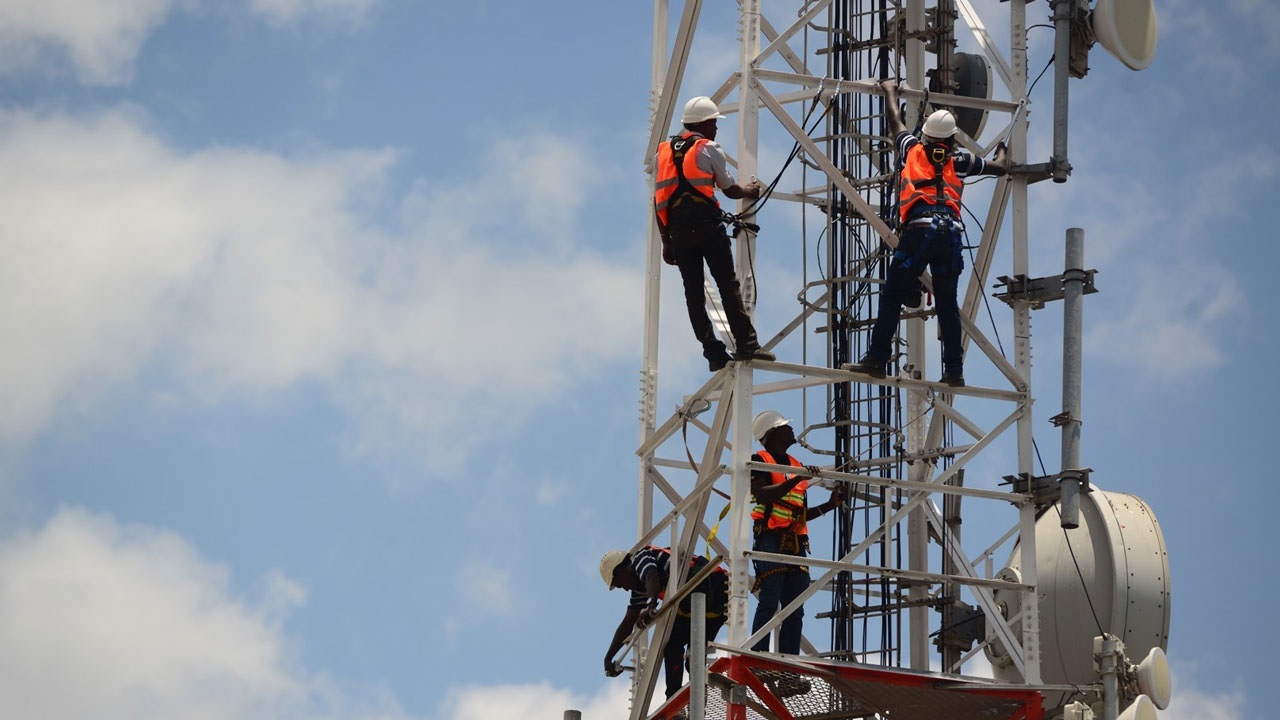
Barely 48 hours after Multichoice alerted subscribers to a three-day technical downtime, telecommunication companies have expressed concern over possible connectivity disruptions as construction advances on the 700km Lagos-Calabar Coastal Highway.

While the DStv and GOtv owner acknowledged the anticipated impact of the ongoing Lagos-Calabar construction project on their uplink facilities, telcos on Sunday expressed broader concerns emphasising the vital role of telecommunication service and the effect of possible anticipated technical disruption.

The Lagos-Calabar coastal highway corridor serves as a crucial landing point for multiple submarine cables connecting Nigeria to Europe

The cables, including the West Africa Cable System (WACS), MainOne, Glo1, ACE, and NCSCS, are vital for international communications and data transmission in the country.

Advertisement

The Federal Executive Council approved Phase One of the ambitious 700-km Lagos-Calabar coastal highway project in February, entrusting the task to Hitech Construction Company Limited.

The highway project was designed to connect Lagos to Cross River, passing through the coastal states of Ogun, Ondo, Delta, Edo Bayelsa, Rivers, and Akwa Ibom, before culminating in Cross River.

Meanwhile, the demolition of numerous properties and recreational centres in Lagos has been carried out to expedite the construction of the highway.

In light of the developments, telcos stressed the necessity of stakeholder consultations with the Ministry of Works to address potential risks and implement robust mitigation measures.

Advertisement

While dialogue with the Federal Government is yet to happen, telcos have warned Hitech Construction to exercise caution to prevent damage to critical national infrastructure.

Speaking with The PUNCH on Sunday, the Chairman of the Association of Licensed Telecom Operators of Nigeria (ALTON), Gbenga Adebayo, confirmed that the Ministry of Works had yet to engage the telcos on environmental impact assessment.

The ALTON chairman said the Ministry of Works, headed by David Umahi, had engaged some stakeholders but excluded the telecom operators.

“The Ministry of Works has not approached us, and I’m unsure if environmental impact assessments have been conducted. The route is crucial for the landing of numerous submarine cables, so caution is essential.

Advertisement

“Some members have reached out to them, urging caution. As the chairman of the industry, I can affirm that ALTON members were not consulted regarding the assessment of the undersea cable within that right of way,” he explained.

Adebayo revealed that some of its members had written to the works ministry on the matter over the need for a dialogue. He however said the body had yet to get any response.

He added that the Nigerian Communications Commission had been engaged to facilitate talks with the ministry.

“We’ve informed the Nigeria Communications Commission about this issue, and they are attempting to contact the Ministry of Works. However, I can confirm that neither we nor any of our members were contacted. This is on record. We were not included in the stakeholder consultations, and we’re concerned about the actions being taken.”

Advertisement

According to Adebayo, the Lagos-Calabar coastal highway corridor facilitates international traffic into the country, with so much risk involved if caution is not applied by the construction firm.

“There’s a significant risk involved, and I advise carefulness. Any destruction could lead to total disruption and severe economic consequences. Caution must be exercised to avoid damaging this critical economic infrastructure.”

In March, service disruption caused by cuts to the undersea cable supplying broadband Internet connectivity to Nigeria and countries in the West African sub-region forced many banks and other financial institutions, as well as telecom companies and allied firms, to scale down their operations.

Experts said the recent subsea cable cut, which disrupted connectivity in West Africa on March 14, 2024, could result in collective repair costs of about $8m for the four digital infrastructure companies affected.

Advertisement

The Chief Executive Officer of West Indian Ocean Cable Company, Chris Wood, said the four digital infrastructure companies affected could spend as much as $8m each to repair a single cable.

The affected cables include MainOne Cable, the West African Cable System, the African Coast to Europe submarine cable, and the SAT3 subsea cable systems.

Wood highlighted that each affected cable firm might need to allocate between $1m and $2m for the complete restoration of a single subsea cable, depending on the severity of the damage incurred.

The WIOCC CEO stated, “It is not a few $100,000. It is several millions of dollars, maybe $1m to $2m per cable, depending on how long it takes the ship to find the cable and repair it.

Advertisement

“Maybe slightly more than that. And those costs are borne by the cable owners themselves. It is a cost that we will factor into our businesses because these things do happen.

“I can’t say exact figures because it depends on the nature of the cuts and how long it takes to repair them, but when you look at the four systems together, it is several $1m.”

According to Wood, it will cost Africa $1bn to lay new cable that will connect from Europe, connecting multiple African countries, including Nigeria.

He noted that it would take at least 10 years to design the project and finish building, noting that the cost would be huge.

Advertisement

“So, it is not a simple thing to say, right? Let’s lay more cables because ultimately somebody has to pay that billion dollars, and eventually it is the end user. So, there has to be a commercial justification for spending that kind of money.

According to the President of the Association of Telecommunications Companies of Nigeria, Tony Emoekpere, the ongoing construction work is yet to get close to the areas where the undersea cables and fibre cables are located.

However, he said it was crucial to recognise that all submarine cables to Lagos are situated along that coastal line.

“Discussions will ensure that the ongoing construction won’t affect them, with plans in place to prevent any disruption. Nobody will allow anything to happen without precautions.

Advertisement

“I spoke with someone this week who mentioned this. Concerns will naturally arise, and ongoing interactions will address them as the risk is significant. These are sensitive issues, and measures will be taken to ensure services aren’t disrupted along that line,” he added.

A few weeks ago, ALTON and ATCON jointly issued a statement expressing worries over wilful vandalism and theft as well as other challenges affecting the growth of the sector.

They requested the protection of assets and network infrastructure and urged the federal government to pass legislation that designates telecommunications infrastructure as critical national infrastructure.

Telecommunications infrastructure undoubtedly plays a pivotal role in national security and socioeconomic growth, especially as the country currently contends with multiple security challenges that require urgent and immediate actions in response to these threats.

Advertisement

“Attacks on cell towers, fibre optic cables, and other critical assets disrupt telecommunications services and result in significant financial losses for operators,” telcos lamented.

The telecom sector has been grappling with economic challenges that have significantly increased their operating costs, a situation that has dwindled appetite for investments.

Investment in the sector decreased by 70.5 per cent to $134m in 2023 from $456.8m in the corresponding year, according to the National Bureau of Statistics.

Last week, the ALTON chairman mentioned that telcos were becoming reluctant to invest more in infrastructure as they continued to contend with a tough economic environment.

Advertisement

Adebayo stated, “If you don’t invest in a sector, you can’t talk about quality of service; you can’t talk about right pricing. The government must help, and the time is now.”

He drew a comparison with the energy sector, where a lack of investment in infrastructure had led to decrepit substations and outdated transformers, some of which are 25–30 years old.

“When the people in the energy sector came, they licenced the DisCos; they sold them those companies and all of that, and everybody thought that would solve the problem. The answer is ‘no’ because when the DisCos came, they didn’t invest in infrastructure.

“We don’t want to come to a time where the telecom sector becomes like that. We need to continue to put the right policies and regulations in place to attract investment. It is only when we attract investment that we can demand a minimum level of performance,” he emphasised.

Advertisement

Multichoice subscribers demand compensation.

Customers of DStv and GOtv have voiced their discontent and called for compensation from Multichoice, the pay-TV operator, following a scheduled three-day “technical downtime” from May 5th to 7th, 2024.

The pay-TV operator, Multichoice, stated on Friday on X (formerly Twitter) that the Lagos-Calabar highway construction project would force them to relocate from their office location between May 5 and May 7, 2024, assuring customers that disruptions would be minimised during the relocation.

It stated, “Our uplink facility will be impacted by the ongoing Lagos-Calabar coastal road construction project. As a result, we are forced to relocate. From Sunday, May 5, 2024, to Thursday, May 7, 2024, our technical team will be working tirelessly to relocate and minimise disruptions during the exercise.”

Advertisement

It added, “We’re relocating our uplink facility due to the Lagos-Calabar coastal road construction. This means you might experience some technical downtime. Thank you for bearing with us during this transition.’’

The company assured that it would soon restore its services better than ever.

However, despite the proactive statement, some customers took to social media to express concerns and demand compensation from the operator.

Adeoye Oluwafemi stated, “I hope the three days offline will be added back to our subscription. There should be no cheating this time around.’

Advertisement

Stemeldamak said, ‘I hope you people will deduct the money for this technical downtime from the payment already made.

Victor inquired, “How will you people compensate for the loss during this period of interruption? This is because you’ve never left one day for a subscriber after the subscription elapses.’

Obajimiolaleka commented, “This ought to be done during the week, knowing fully well that weekends are full of activities such as football matches.”

Chukas Dandy noted, “I guess people’s subscriptions will still be running during this period of your relocation, even though your uplink will be off signal, or is there any plan of pausing the subscription until the uplink is restored.”

Advertisement

In April, the company announced an increase in the prices of its DStv and GOtv packages, four months after its last increment.

This recent increase in the price of its packages would make it the fourth time the PayTv company will do so in three years.

The PUNCH reached out to the Head of Corporate Affairs, MultiChoice, Caroline Oghuma, for comments on customers demanding compensation.

Caroline responded by sending a note stating, “Due to the ongoing Lagos-Calabar Coastal Road construction project and the potential impact it may have on DStv and GOtv services, from Sunday, May 5, 2024, a relocation exercise of our infrastructure that enables our uplink to satellite will commence.

Advertisement

“We understand how important it is to stay connected to your favourite channels, and we are working diligently to minimise any disruptions. Our technical teams are working round the clock to implement a quick relocation of the equipment and get the channels back up as soon as possible.

“We appreciate your patience and understanding during this period, and we remain dedicated to delivering the quality service and support you expect from DStv and GOtv.”

PUNCH

Advertisement
Continue Reading
Advertisement
Click to comment

Warning: Undefined variable $user_ID in /home/naijuinz/public_html/wp-content/themes/zox-news/comments.php on line 49

You must be logged in to post a comment Login

Leave a Reply

News

SERAP presses FG over $460m CCTV project beneficiaries

Published

on

By

ADVERTISEMENT
Zoom Ad
ADVERTISEMENT
Zoom Ad

The Socio-Economic Rights and Accountability Project has urged the Minister of Finance and Coordinating Minister of the Economy, Mr Taiwo Oyedele, to immediately disclose the identities of all local contractors, subcontractors, consultants and vendors that benefited from payments made under the controversial $460m Abuja CCTV Project.

SERAP’s demand followed recent disclosures by the Federal Ministry of Finance in response to contempt proceedings initiated by the organisation over alleged non-compliance with a Federal High Court judgment delivered in May 2023.

In a letter dated May 15, 2026 and signed by the Permanent Secretary of the Federal Ministry of Finance, R.O. Omachi, the ministry stated that records from the Ministry of Police Affairs showed that “while local subcontractors may have been engaged, there is an absence of detailed subcontracting records identifying specific local companies that received funds directly from the Chinese loan.”

Reacting in a letter dated May 23, 2026, and signed by its Deputy Director, Kolawole Oluwadare, SERAP expressed concern over what it described as delayed and partial compliance with the court order.

Advertisement

“We are concerned that although the judgment was delivered in May 2023, the Ministry only released some information after we commenced contempt proceedings and served a Notice to Show Cause in January 2026,” SERAP said.

According to the organisation, “Nigerians still do not know the exact names of local contractors for the project.

“The absence of this information raises serious concerns about record-keeping, transparency and accountability, and whether the project was implemented in a manner consistent with the public interest.”

SERAP recalled that Justice Emeka Nwite of the Federal High Court, Abuja, had on May 15, 2023 ordered the Ministry of Finance to disclose the total amount paid under the $460m Abuja CCTV loan, the identities of local and Chinese contractors who received the funds, the implementation status of the project, and details relating to the N1.5bn reportedly paid for the Code of Conduct Bureau headquarters project.

Advertisement

The organisation stated that the information released so far amounted to only partial compliance with the judgment.

“The details provided amount to only partial compliance with Justice Emeka Nwite’s judgment. Key questions remain unanswered, and further clarification is needed to ensure full and effective compliance with the judgment,” SERAP stated.

It warned that failure to provide the outstanding details within 48 hours would lead to the continuation of contempt proceedings against the ministry.

“We would be grateful if the requested details are provided within 48 hours of the receipt and/or publication of this letter. If we have not heard from you by then, SERAP shall proceed with our contempt proceedings against the Federal Ministry of Finance for failure to fully and effectively comply with the judgment of the Federal High Court,” the letter added.

Advertisement

SERAP acknowledged that the ministry had provided some information regarding the Chinese loan drawdown, counterpart funding arrangements and records relating to equipment deliveries connected with the project.

However, the organisation said critical issues remained unresolved, particularly concerning 6,035 items reportedly not delivered under the project.

“There is still no explanation regarding the missing 6,035 items as part of the status of implementation of the project. It remains unclear whether the items were subsequently delivered, whether payment was made for them, whether the contractor defaulted, whether Nigeria suffered any financial loss, and whether any steps were taken to recover public funds,” SERAP said.

The organisation also questioned the operational status of the CCTV infrastructure.

Advertisement

“The ministry lists items reportedly delivered in 2013.

However, it has failed to clarify how many cameras were installed, if any; where they were installed; whether the cameras are currently operational; and whether the project delivered value for money,” it said.

SERAP stressed that the project, which was financed through public borrowing, required full transparency.

“For a project financed through public borrowing, debt Nigerians continue to repay, full transparency over all beneficiaries, foreign and domestic, is essential. Nigerians have the right to know how public funds were spent, who received them, and what was delivered in return,” the organisation stated.

Advertisement

The group further noted that compliance with court judgments was fundamental to the rule of law and democratic accountability.

“Government agencies cannot selectively comply with judicial orders or release partial information while withholding records central to public accountability,” SERAP said.

The organisation linked the demand for accountability to the prevailing insecurity across the country, particularly in Abuja.

“The urgency of full disclosure is heightened by the continuing security crisis across Nigeria, including persistent insecurity in Abuja, where the project was specifically intended to strengthen surveillance, public safety, and emergency response,” it stated.

Advertisement

According to SERAP, Nigerians deserve to know whether the massive investment in the CCTV project translated into improved security outcomes.

“Residents of the Federal Capital Territory and several states, including Benue and Oyo, continue to face abductions, violent crime and other serious threats to safety, while communities across the country grapple with widespread insecurity and loss of lives.”

“Against this backdrop, Nigerians are entitled to know whether the Abuja CCTV project was fully delivered, whether it became operational, whether the infrastructure is functional, and whether the huge public investment achieved the promised security outcomes,” the organisation said.

SERAP also disclosed details contained in the ministry’s response, including that the Federal Government received $399.5m from the Export-Import Bank of China for the National Public Security Communication System project, popularly known as the Abuja CCTV Project.

Advertisement

The ministry reportedly stated that the funds were drawn in 10 instalments between March 2011 and December 2013, while the Federal Government contributed an additional $70.5m as counterpart funding, representing 15 per cent of the total project cost of $470m.

According to SERAP, the ministry further disclosed that the naira equivalent of the counterpart funding was N10.68bn at an exchange rate of N150 to one dollar, including a one per cent Central Bank of Nigeria commission.

The organisation also noted that the principal contractor for the project was identified as ZTE Corporation of China, with payments made through the Bank of China, Shenzhen Branch.

“According to the ministry, several equipment items, including GOTA phones, data cards, PC servers, LED monitors, cables and related communications infrastructure were delivered. Inventory records show 61,970 units delivered out of 68,005 expected, leaving 6,035 units outstanding,” SERAP stated.

Advertisement

The ministry also reportedly clarified that the N1.5bn mobilisation payment for the Code of Conduct Bureau headquarters project was not part of the Chinese loan arrangement.

SERAP urged the Federal Government to fully implement the court judgment by publishing the names of all Nigerian companies, subcontractors, consultants and vendors involved in the project, disclosing the amount paid to each entity and the nature of work performed, and releasing certificates of completion alongside a detailed account of the undelivered project items.

Continue Reading

News

Coup trial: Detained officers’ wives warn against convictions without evidence

Published

on

By

ADVERTISEMENT
Zoom Ad
ADVERTISEMENT
Zoom Ad

Wives of detained military officers facing alleged coup-related charges have appealed to President Bola Tinubu to ensure fairness and transparency in the ongoing military trial, warning against the conviction of suspects without credible evidence.

The plea was contained in a letter addressed to the President on Friday and titled, “A Humble Appeal for Fairness, Transparency, and Justice in the Ongoing Military Trial.”

The correspondence from spouses of the detained officers was exclusively obtained by The PUNCH.

The signatories are Shafa’atu Ali Agbo, Fatima Dauda, Josephine Enemona, Nana Aisha, Zara Abba, Helen Sunday, Khadija Aminu, Aisha Abubakar, Aisha Yusuf, Hauwa’u Aliyu, Firdausi Ibrahim and Zuzu Igbaseimokumo.

Advertisement

In the letter, the women acknowledged Tinubu’s approval for the commencement of the military trial, describing it as “an important step toward accountability, clarity, and the pursuit of justice.”

They, however, expressed fears that the process could be tainted by bias, coercion and institutional prejudice.

“As citizens, we understand the importance of discipline within the armed forces and the sensitive responsibility placed upon the military in safeguarding national security.

“We also recognise that allegations relating to mutiny, coup plotting, or acts capable of undermining military authority are grave matters that must never be treated lightly.

Advertisement

“However, it is precisely because of the seriousness of these allegations that the process through which justice is pursued must itself remain just, transparent, impartial, and free from every appearance of prejudice,” the letter read.

The wives recalled past controversial military trials in Nigeria, saying some later became subjects of “national reflection and regret.”

It added, “From past allegations of ‘phantom coups’ to disputed dismissals and prolonged detentions of officers, many Nigerians have witnessed instances where prosecution appeared, in the eyes of the public, to drift dangerously toward persecution.”

The women also raised concerns over the prolonged detention of the accused officers and allegations of inhumane treatment.

Advertisement

According to them, reports suggesting that confessional statements may have been obtained under coercion had further heightened public anxiety over the integrity of the proceedings.

“The prolonged detention of the accused officers, the reports of inhumane treatment, and concerns that the case relies heavily on statements allegedly obtained under coercion and severe pressure have raised serious questions in the minds of many Nigerians,” the letter added.

They argued that justice must not only be done but must also be seen to be done, stressing that the credibility of the trial would depend on the fairness of the process and the independence of the tribunal.

“No individual should be condemned without credible and independently verifiable evidence.

Advertisement

“No confession extracted through fear, torture, or inhumane treatment should become the foundation upon which lives, careers, and families are destroyed. Justice loses its moral authority the moment it appears predetermined,” they wrote.

The wives urged Tinubu, as Commander-in-Chief, to ensure that the proceedings do not become “another painful chapter” in Nigeria’s history.

“We pray that under your leadership, Nigeria will continue to move toward a future where no citizen fears persecution disguised as prosecution, and where the law remains stronger than suspicion, fear, or institutional pressure,” the letter concluded.

The arrest of the indicted officers was first announced on October 4, 2025, by the then Director of Defence Information, Brig Gen Tukur Gusau, who disclosed that 16 officers were taken into custody for alleged breaches of military regulations and acts of indiscipline.

Advertisement

However, an interim investigation later suggested the existence of a clandestine network of officers allegedly coordinated by a senior Army officer, which had begun preliminary planning for a coup.

According to the report, the alleged plot involved surveillance of key national assets, including the Presidential Villa, Armed Forces Complex, Niger Barracks in Abuja and major international airports, with October 25, 2025, scheduled as the planned date for the operation.

Those reportedly in custody include Brig Gen M. A. Sadiq, Col M. A. Ma’aji, Lt Col S. Bappah, Lt Col A. A. Hayatu, Lt Col P. Dangnap, Lt Col M. Almakura, Maj A. J. Ibrahim, Maj M. M. Jiddah, Maj M. A. Usman, Maj D. Yusuf, Capt I. Bello, Capt A. A. Yusuf, Lt S. S. Felix, Lt Cdr D. B. Abdullahi, Sqn Ldr S. B. Adamu and Maj I. Dauda.

The alleged plot, according to findings, targeted senior government officials, including President Tinubu and Vice President Kashim Shettima.

Advertisement

The appeal comes barely two weeks after a Federal High Court in Abuja admitted as exhibits the extra-judicial statements of six persons standing trial over an alleged plot to overthrow the Tinubu government, as the court commenced a trial-within-trial to determine whether the statements were voluntarily made.

Justice Joyce Abdulmalik admitted the statements and video recordings during proceedings aimed at resolving objections raised by the defendants over the admissibility of the evidence.

The defendants had earlier challenged the statements, alleging that they were obtained through coercion, torture, inducement and in violation of provisions of the Administration of Criminal Justice Act and the Anti-Torture Act.

The Federal Government is prosecuting retired Maj-Gen Mohammed Ibrahim Gana; retired Navy Capt Erasmus Ochegobia Victor; police inspector Ahmed Ibrahim; Presidential Villa electrician Umoru Zekeri; Bukar Kashim Goni; and a Zaria-based Islamic cleric, Sheikh Abdulkadir Sani, on charges bordering on treason, terrorism and conspiracy to stage a coup.

Advertisement

At the previous proceedings, the court played a video recording in which Sani allegedly told investigators that he warned the suspected plotters that the coup plan “would fail” and that members of the group would eventually betray themselves.

Following objections by defence lawyers to the admissibility of the defendants’ statements, Justice Abdulmalik ordered a joint trial-within-trial to determine whether the statements were voluntarily made.

Continue Reading

News

Nigeria-Vietnam Relations Growing in Trade and Investment — Amb. Bako

Published

on

By

ADVERTISEMENT
Zoom Ad
ADVERTISEMENT
Zoom Ad

Nigeria’s pioneer Head of Mission to the Socialist Republic of Vietnam, Ambassador Sani Bako, has stated that diplomatic relations between the two post-colonial states, which began as political solidarity 50 years ago, have evolved into a partnership delivering results in trade, investment, and cultural exchange.

The partnership deepened with the establishment of resident missions. Nigeria opened its Embassy in Hanoi, the administrative capital, in 2007, and Vietnam reciprocated by opening an Embassy in Abuja in the same year.

Reflecting on the 50th anniversary of Nigeria-Vietnam relations, which took effect on 25th May 1976, Ambassador Bako noted that the volume of trade between the two countries stood at $1 billion as of 2024.

“Vietnam currently exports electronics, garments, textiles, and other consumer goods to Nigeria, while importing crude oil, cashew nuts, and several raw materials,” he said. “Interestingly, the trade balance favours Nigeria.”

Advertisement

He stressed that the time has come for economic ties between both countries to evolve into a partnership that would lead to technology transfer, manufacturing, and agricultural investment. He added that Vietnam has expertise in modern agriculture that Nigeria could leverage.

Ambassador Bako, who is the Chairman of the Nigeria-Vietnam Trade and Cultural Association (NVETCA), added that the association is facilitating private sector engagement to deliver visible partnerships in farming, manufacturing, and other ventures that will strengthen economic ties in the near future.

He recalled that President Bola Ahmed Tinubu, in a recent meeting with Vietnamese Ambassador Bui Quoc Hung, emphasized that Nigeria is open for business with Vietnam. “Vietnam is a partner we want to grow with,” the President stressed.

Ambassador Bako also noted that Ambassador Hung has called on Nigeria to address lingering visa obstacles affecting officials and business travelers. He pointed out that a 2019 visa waiver agreement reached by both countries has not been fully implemented, adding that resolving this would be critical to sustaining momentum in bilateral relations.

Advertisement
Continue Reading

Trending

Copyright © 2024 Naija Blitz News