Connect with us

News

Suit Challenging Marriage Of Orphaned Girls Not Yet Withdrawn, Says Minister

Published

on

ADVERTISEMENT
Zoom Ad
ADVERTISEMENT
Zoom Ad

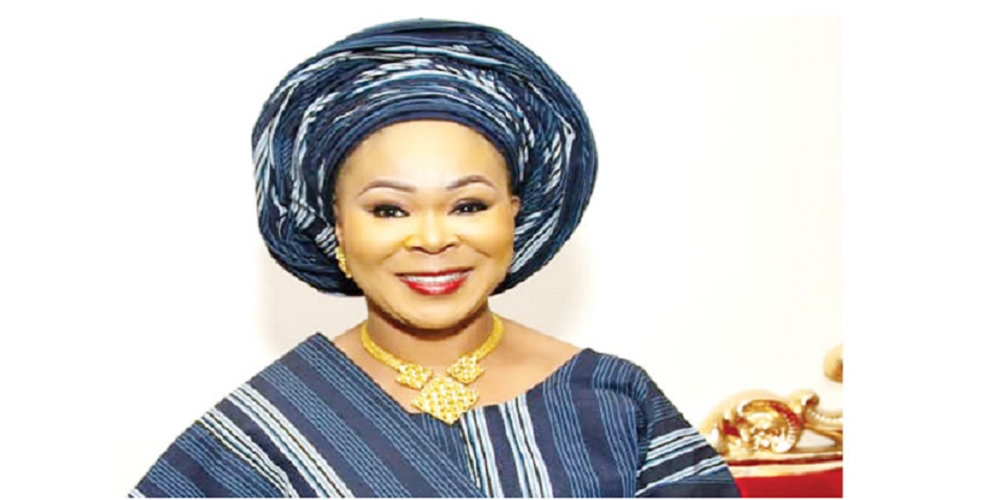
The Minister of Women Affairs Uju Kennedy-Ohanenye says the lawsuit challenging the proposed mass marriage of 100 orphaned girls in Niger State has not been withdrawn.


“The case is not yet withdrawn. I want to make that clear. How do I withdraw a case in a day?” the minister said on Friday’s edition of Channels Television’s Politics Today.

“Well, before I even withdraw the case, we have to go back to court and then tell the court that we have settled. We are withdrawing the case. Do you understand?

“How can I go and withdraw? We are still trying to organise ourselves on how to partner well and get this problem sorted.”

Advertisement

Her comment followed the Niger State House of Assembly Speaker Abdulmalik Sarkindaji’s proposed mass marriage of 100 orphaned girls in his constituency.

The move got a pushback from several quarters, prompting the minister to file a suit challenging the proposed marriage. Following the backlash, Sarkindaji said he was discontinuing with the plans.

Although the duo met on Friday to explore options to resolve the issue the minister explained that, “I filed a motion ex parte. I equally filled a motion on notice. Why did I do that before I met with my brothers and we decided to make peace?

“I filed it because, by the time motion ex parte expires, they must have gotten their seven days to file their response.

Advertisement

“But if I didn’t get the motion ex parte, the wedding could go on before they would be able to file and the whole thing must have been overtaken by events.”

Determined to give the orphaned girls a better life, Mrs Uju says the ladies will be empowered.

“Those that have finished secondary school, they could enter an open university while they’re doing their businesses or we would get a job for them while they’re doing their business when they’re going to school,” she said.

“Then those that have not finished secondary school will go back to school and finish. This is something that will be applicable to them: going to an open university and equally having something to do. Like this PoS, those that have finished secondary school and are both 18, we could allow them to start earning money while they are going to school.”
Advertisement
Continue Reading
Advertisement
Click to comment

Warning: Undefined variable $user_ID in /home/naijuinz/public_html/wp-content/themes/zox-news/comments.php on line 49

You must be logged in to post a comment Login

Leave a Reply

News

2027: Politicians can go to jail, pay fine of N5m  for threatening, incite people -INEC

Published

on

By

ADVERTISEMENT
Zoom Ad
ADVERTISEMENT
Zoom Ad

The Independent National Electoral Commission (INEC) has warned politicians and political parties against using abusive, intemperate or inflammatory language during campaigns ahead of the 2027 general election.

The Commission said offenders risk heavy fines and imprisonment under the Electoral Act 2026, as threats against voters, opponents and dissenting residents have increased in recent weeks.

INEC Chief Press Secretary/Media Adviser to the Chairman, Adedayo Oketola, disclosed this in a telephone interview with Vanguard on Sunday.

Oketola said campaign rhetoric becomes electoral intimidation when it goes beyond partisan debate or policy criticism and involves coercion, hate speech, threats of violence or language capable of provoking hostility.

Advertisement

He cited Section 96 of the Electoral Act 2026, which prohibits campaign language likely to injure religious, ethnic, tribal or sectional sentiments or provoke violent reactions.

According to him, threats of physical harm, economic reprisals or social ostracisation intended to force or suppress voters’ support also amount to intimidation.

Oketola said INEC was empowered to monitor campaigns and enforce compliance with the Code of Conduct for Political Parties, although it was not a security agency.

“Beyond inter-agency security coordination, INEC is statutorily empowered to monitor political campaigns and enforce compliance with the Code of Conduct for Political Parties,” he said, adding that the Commission could issue queries and sanction non-compliant parties within its administrative powers.

Advertisement

He said Section 96(7) prescribes a maximum fine of ₦5 million or 12 months’ imprisonment for candidates convicted of the offences.

Political parties face a ₦10 million fine for a first offence and ₦2 million for each subsequent offence, he added.

Oketola also urged security agencies, the media, traditional rulers and religious leaders to help curb inflammatory political rhetoric.

“The Nigeria Police Force and other security agencies have a clear duty to prevent the breakdown of law and order during political campaigns,” he said.

Advertisement

He added: “Political campaigns should be platforms of competing ideas, not theatres of war.”

Recently, the Chairman of Gwandu Local Government Area of Kebbi State, Alhaji Atiku Ahmad Mandiya, threatened violence against political opponents ahead of the 2027 general elections.

Mandiya made the threat in a viral video showing him addressing a political gathering in Kebbi State.

In the video, the local government chairman called on his supporters to ensure that at least one person was stationed at every polling unit to “protect” the interests of the All Progressives Congress (APC).

Advertisement

Mandiya also appeared to encourage his supporters to confront anyone who criticised Kebbi State Governor, Nasir Idris, while promising to secure the release of anyone arrested in connection with such confrontations.

“We should get at least one person to stand at each polling unit that will protect our interests,” Mandiya said.

“Anybody who comes to say anything against Kaura should be dealt with. I will bail the person [who dealt with the governor’s political opponent] out, if arrested.”

“Kaura” is a name by which Governor Idris is popularly known.

Advertisement

Mandiya’s statement also came amid growing concerns over political rhetoric and threats by members and supporters of the ruling APC ahead of the 2027 elections.

Similar allegations of threats and incitement have also emerged in other parts of the country.

Ahead of the Osun State governorship election, Senator representing Osun East Senatorial District, Francis Fadahunsi, was captured in a video obtained by SaharaReporters allegedly threatening members of the Accord Party.

Fadahunsi, an APC chieftain in Osun State, reportedly told party supporters in Ilesa to attack and kill Accord Party members seen in the area before the election.

Advertisement

“If we hear of Accord Party again in Ilesa here for the election coming up on Saturday, you can record me and say it anywhere,” he said.

“So we are here now to tell you that till the day of the election, if we see any Accord Party members, we’ll kill them.

“We cannot be watching.”

He also threatened chiefs accused of supporting the Accord Party, warning that those who allowed themselves to be used by the opposition would face consequences.

Advertisement
Continue Reading

News

“I’ll Crash Petrol, Cooking Gas, And Jet Fuel To ₦200 In 12 Months!” – SDP’s Adewole Adebayo Drops 2027 Presidential Bombshell

Published

on

By

ADVERTISEMENT
Zoom Ad
ADVERTISEMENT
Zoom Ad

In a bold political move that is set to send shockwaves through Nigeria’s political landscape, Prince Adewole Adebayo, the 2027 presidential candidate of the Social Democratic Party (SDP), has vowed to crash the price of premium motor spirit (petrol), cooking gas, and aviation fuel (Jet A1) to an unprecedented ₦200 per litre [1] within his first 12 months in office.

Speaking during an explosive personality interview with the News Agency of Nigeria (NAN) in Abuja, Adebayo declared that the current hyper-inflation choking Nigerian households is a result of a lack of political will, rather than economic impossibility.

Dismissing the narrative that Nigeria’s energy crisis cannot be solved overnight, Adebayo laid out a fiery, three-pronged strategy aimed at dismantling the nation’s reliance on foreign fuel imports:

Adebayo strictly rejected arguments that Nigeria’s moribund state-owned refineries are “too old” to work. He pointed out that several highly productive refineries in the United States have been running smoothly for over a century due to meticulous maintenance.

Advertisement

His blueprint guarantees a frictionless, highly supportive regulatory environment designed to let private modular refineries scale up and flood the local market with cheaper product.

By locking down local refining capabilities, his administration aims to completely eliminate the shipping, landing, and foreign exchange costs that keep pump prices painfully high.

“It is a deliberate policy choice,” Adebayo insisted, positioning himself as the leader ready to break the cycle of energy poverty. As the race to 2027 heats up, this ambitious economic pledge is bound to take center stage in the national debate.

Advertisement
Continue Reading

News

Nigeria accompanies Koroma home after two-year political exile

Published

on

By

ADVERTISEMENT
Zoom Ad
ADVERTISEMENT
Zoom Ad

Nigeria has helped bring to an end one of West Africa’s most delicate political sagas, facilitating the return of former Sierra Leone President Ernest Bai Koroma to Freetown after more than two years in Nigeria following a failed coup attempt and treason charges against him.

Koroma arrived in Sierra Leone on Sunday accompanied by Nigeria’s Minister of Foreign Affairs, Ambassador Bianca Odumegwu-Ojukwu, and former Nigerian President Olusegun Obasanjo, in a return that Nigeria described as the culmination of sustained diplomatic and confidence-building efforts.

The development marks a major turning point in a politically sensitive episode that had tested Sierra Leone’s democratic institutions, strained relations between the government and the opposition and placed Nigeria at the centre of efforts to prevent the dispute from escalating.

Odumegwu-Ojukwu, who travelled to Freetown on the instruction of President Bola Tinubu, said Nigeria’s role was aimed at helping create the conditions for peace, political understanding and national reconciliation.

Advertisement

She said Koroma’s relocation to Nigeria in January 2024 followed engagements involving the Economic Community of West African States (ECOWAS), which sought to defuse tensions in Sierra Leone and promote a peaceful political environment.

“His conduct throughout this period reflected restraint, statesmanship, and commitment to a peaceful outcome,” the minister said.

The former president’s return follows the Sierra Leonean government’s decision in July 2026 to drop treason-related charges brought against him in connection with the November 2023 failed coup attempt.

Koroma’s departure from Sierra Leone in January 2024 came against the backdrop of one of the country’s most serious political crises since the end of its civil war.

Advertisement

On November 26, 2023, armed men attacked military facilities and a major prison in Freetown, freeing thousands of inmates and killing members of the security forces.

The government subsequently arrested scores of suspects and accused them of involvement in an attempt to overthrow President Julius Maada Bio’s administration.

Koroma, who had served as president from 2007 to 2018, was subsequently charged with treason and other offences over alleged involvement in the events.

He denied involvement, while his lawyers described the allegations as politically motivated.

Advertisement

Amid the escalating political tension, a Sierra Leonean court permitted Koroma to travel to Nigeria on medical grounds.

He left for Nigeria on January 19, 2024, initially under an arrangement understood to be temporary.

What was initially expected to be a short medical stay, however, stretched into more than two years.

Nigeria subsequently became the setting for diplomatic efforts aimed at preventing the former president’s case from becoming a wider source of political instability in Sierra Leone.

Advertisement

The Federal Government said the prolonged engagement involving Nigeria, ECOWAS and Sierra Leonean stakeholders gradually helped create an environment in which dialogue became possible.

Nigeria’s role was particularly significant because of its longstanding influence in West African diplomacy and its historical involvement in Sierra Leone’s peace and security affairs.

The Nigerian-led ECOMOG intervention in the 1990s had played a decisive role during Sierra Leone’s civil war, when the country was engulfed by conflict.

Against that historical background, Abuja’s decision to host Koroma carried considerable regional diplomatic weight.

Advertisement

The latest intervention also comes at a time when ECOWAS itself has faced serious challenges in maintaining political stability and democratic order across West Africa, following a series of military coups and growing divisions within the regional bloc.

For Nigeria, therefore, the Koroma episode provided another opportunity to deploy diplomacy rather than coercion in resolving a politically sensitive dispute involving a neighbouring West African state.

Koroma’s return is particularly important because he remains an influential figure within Sierra Leone’s opposition All People’s Congress (APC), despite leaving office eight years ago.

His presidency, which lasted from 2007 to 2018, preceded Bio’s rise to power. Political tensions between the ruling Sierra Leone People’s Party and the APC have remained a defining feature of the country’s recent political landscape.

Advertisement

The 2023 presidential election, which returned Bio to office for a second term, was disputed by the opposition, further deepening political divisions.

The subsequent coup attempt and the prosecution of opposition-linked figures intensified concerns about the country’s political stability.

Against this background, Koroma’s return carries significance beyond the personal fortunes of the former president.

It removes one of the most contentious issues hanging over the relationship between Sierra Leone’s government and the opposition and potentially opens additional space for political dialogue.

Advertisement

Odumegwu-Ojukwu expressed appreciation to President Bio, Koroma and the people of Sierra Leone for their cooperation, saying Nigeria remained committed to regional harmony, constitutional order and democratic stability.

She expressed confidence that Koroma’s return would contribute to reconciliation and peace in Sierra Leone.

Koroma’s return closes a remarkable chapter that began with his departure from Sierra Leone under the shadow of treason allegations and ended with his escorted return as a former head of state following the withdrawal of those charges.

His return was also publicly welcomed by former Nigerian President Goodluck Jonathan, who said Nigeria had provided Koroma with friendship, support and solidarity during his stay and had worked quietly with others to encourage dialogue that would facilitate his safe return.

Advertisement

For Sierra Leone, the development could provide an opportunity to move beyond the political tensions that have dominated much of the post-2023 period.

For Nigeria, it offers another demonstration of Abuja’s traditional role as a diplomatic heavyweight in West Africa—using dialogue, personal relationships and regional mechanisms to help resolve a crisis before it becomes a wider threat to peace.

Koroma’s journey home, therefore, is not merely the return of a former president.

It is the culmination of a delicate regional diplomatic process and a potentially important step in Sierra Leone’s search for political reconciliation, stability and democratic consolidation.

Advertisement
Continue Reading

Trending

Copyright © 2024 Naija Blitz News