Connect with us

Foreign

What next for Iran after President Raisi’s death?

Published

on

ADVERTISEMENT
Zoom Ad
ADVERTISEMENT
Zoom Ad

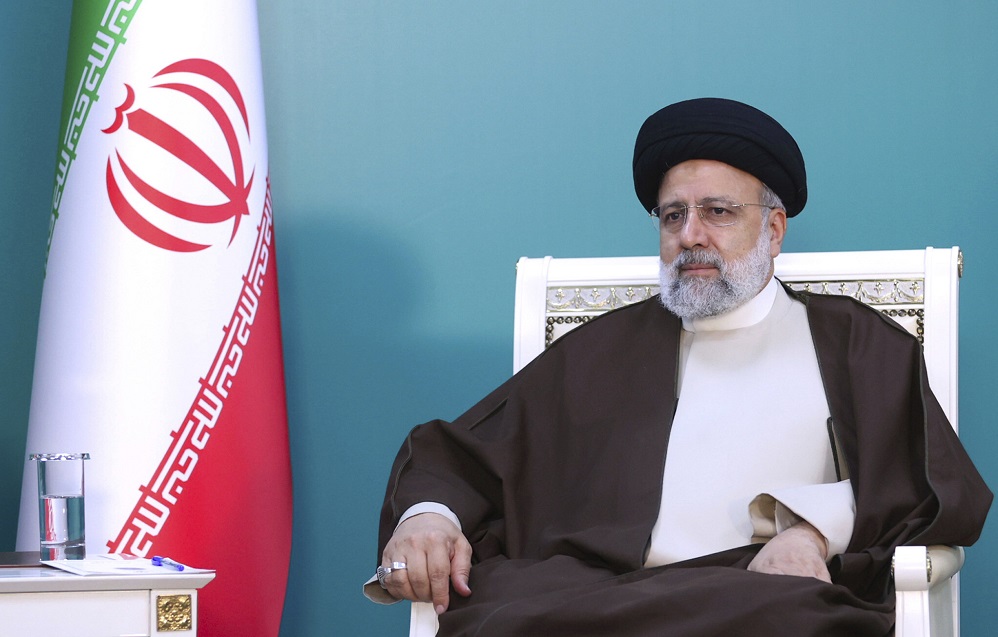
Ebrahim Raisi stood close to the pinnacle of power in the Islamic Republic and was widely tipped to rise to its very top.


A dramatic turn dealt him a different hand.

His death in a helicopter crash on Sunday has upended the growing speculation over who will eventually replace the 85-year-old Supreme leader, Ayatollah Ali Khamenei, whose own health has long been the focus of intense interest.

The tragic fate of Iran’s hardline president is not expected to disrupt the direction of Iranian policy or jolt the Islamic Republic in any consequential way.

Advertisement

But it will test a system where conservative hardliners now dominate all branches of power, both elected and unelected.

“The system will make a massive show of his death and stick to constitutional procedures to show functionality, while it seeks a new recruit who can maintain conservative unity and loyalty to Khamenei,” observes Dr Sanam Vakil, director of the Middle East and North Africa programme at the Chatham House think tank.

Raisi’s opponents will hail the exit of a former prosecutor accused of a decisive role in the mass execution of political prisoners in the 1980s which he denied; they will hope the end of his rule hastens the end of this regime.

For Iran’s ruling conservatives, the state funeral will be an occasion freighted with emotion; it will also be an opportunity to start sending their signals of continuity.

Advertisement

They know the world is watching.

“For 40 some years, in Western narratives, Iran was supposed to collapse and fall apart,” Professor Mohammed Marandi of Tehran University told the BBC.

“But somehow, miraculously, it’s still here and I predict it will still be here in years to come.”

Another critical position which must be filled is the seat held by this middle-ranking cleric on the Assembly of Experts, the body empowered to choose the new supreme leader, when that far more consequential transition comes.

Advertisement

“Raisi was a potential successor because, like Khamenei himself when he became supreme leader, he was relatively young, very loyal, an ideologue committed to the system who has name recognition,” says Dr Vakil of this opaque process of selection, where a number of names are seen to be in the running including the Supreme Leader’s son Mojtaba Khamenei.

Even before Raisi’s death was officially confirmed, the Ayatollah conveyed in a post on X that “the Iranian people should not worry, there will be no disruption in the country’s affairs.”

The more immediate political challenge will be staging early presidential elections.

Power has been transferred to Vice-President Mohammad Mokhber; new elections must be held within 50 days.

Advertisement

This appeal to voters will come just months after March’s parliamentary elections revealed a record low turnout in a country which once prided itself on strong enthusiastic participation in this exercise.

Recent elections, including the contest in 2021 which brought Raisi to the presidency, were also marked by the systematic exclusion of moderate and pro-reform rivals by the oversight body.

“Early presidential elections could provide Khamenei and the upper echelons of the state with an opportunity to reverse that trajectory to give voters a way back into the political process,” says Mohammad Ali Shabani, editor of London-based news website Amwaj.media.

“But, unfortunately, so far we have seen no indications of the state being ready and willing to take such a step.”

Advertisement

But, even within Raisi’s ranks, there appears to be no obvious successor.

“There are different camps within this conservative group, including individuals who are more hardline and others regarded as more pragmatic,” points out Hamidreza Azizi, a visiting fellow at SWP, the Berlin-based think tank.

He believes this will intensify the current jockeying for position within the new parliament and at local levels.

Whoever assumes Raisi’s mantle inherits a forbidding agenda and limited levers of power.

Advertisement

Ultimate decision-making authority in the Islamic Republic lies with the Supreme Leader.

Foreign policy, especially in the region, is the preserve of the Islamic Revolution Guard Corps (IRGC) who wield growing power.

The president didn’t call the shots months ago when Iran confronted unprecedented tensions with its arch-enemy Israel over the devastating Israel Gaza war.

It triggered a dangerous tit-for-tat and set alarm bells ringing in many capitals, most of all Tehran, over the potential for an even riskier escalatory spiral.

Advertisement

But as he presided over day-to-day business, Iranians struggled to cope with deepening financial hardship linked to crippling international sanctions as well as mismanagement and corruption.

Inflation soared to more than 40%; the rial currency plunged in value.

On his watch, the Islamic Republic was also shaken by an extraordinary wave of protests sparked by the death in custody in September 2022 of 22-year-old Mahsa Amini who was detained by morality police for allegedly violating Iran’s strict dress code.

Weeks before the unrest, Raisi had ordered a tightening of Iran’s “hijab and chastity law” which obligated women to behave and dress modestly including wearing a headscarf.

Advertisement

Iran to ‘deal decisively’ with mounting protests
But the protests spearheaded by a young generation of women, lashing out against a raft of restrictions imposed on their lives, mainly focused their fury on the real sources of power, the Supreme Leader and the system itself.

Human rights groups say hundreds were killed in the crackdown and thousands detained.

“Having been elected with the lowest recorded turnout in presidential elections in Iranian history, Raisi did not have the popular mandate of his predecessor Rouhani,“ says Shabani in reference to the reformist leader Hassan Rouhani whose initial popularity was partly fuelled by the 2015 landmark nuclear deal which fell apart when President Trump unilaterally pulled the US out three years later.

Indirect talks between President Biden’s administration and Raisi’s team made little progress.

Advertisement

“He avoided much of the ire which was directed at Rouhani by opponents of the Islamic Republic, partly because he was simply seen as less influential and effectual,” explains Shabani.

The helicopter crash also took the life of Iran’s Foreign Minister Hossein Amir-Abdollahian who played an active role in trying to present Tehran’s case to the world and find ways to ease the punishing impact of sanctions.

During the urgent diplomacy around the Israel-Gaza war, he was the voice on the phone and the face at meetings with Iran’s allies, as well as with Arab and Western foreign ministers anxious to calm and contain tensions.

“He was a useful channel to pass messages,” commented a senior Western diplomatic source. “But it tended to be quite formulaic since power did not lie in the foreign ministry.”

Advertisement

“The sudden death of a president is normally a consequential event but, despite being seen as a potential Supreme Leader, he lacked political support and any clear political vision,” maintains analyst Esfandyar Batmanghelidj, CEO of the Bourse and Bazaar think tank. “But the political operators who got him elected will adjust and advance without him.”
Continue Reading
Advertisement
Click to comment

You must be logged in to post a comment Login

Leave a Reply

Foreign

Trump Says Iran Agrees To Hand Over Nuclear Dust Amid Strait of Hormuz Blockade

Published

on

By

ADVERTISEMENT
Zoom Ad
ADVERTISEMENT
Zoom Ad

United States President Donald Trump has claimed that Iran has agreed to hand over its remaining stockpile of enriched uranium and abandon ambitions for a nuclear weapon, describing negotiations as being on the verge of a major breakthrough.

Speaking to reporters at the White House on Thursday before departing for Las Vegas, Trump said: “We’re very close to making a deal with Iran. We had to make sure that Iran never gets a nuclear weapon… They’ve totally agreed to that. They’ve agreed to almost everything.”

He added that Iran had consented to return its enriched uranium, which he has repeatedly called “nuclear dust”, material believed to be buried deep underground following earlier U.S. and Israeli strikes on Iranian nuclear facilities.

“They’ve agreed to give us back the nuclear dust,” Trump stated. He also suggested that the next round of talks could take place over the weekend and expressed uncertainty about whether the current fragile ceasefire would need extension.

Advertisement

The comments come amid efforts to end six weeks of conflict in the Middle East that has disrupted global energy supplies and raised fears over the Strait of Hormuz, a vital chokepoint for oil exports.

However, Iran has not publicly confirmed Trump’s assertions. Multiple reports indicate that Tehran has previously pushed back against similar claims, describing them as exaggerated.

Recent direct talks in Islamabad on April 11-12 collapsed without agreement, with core disputes remaining over the future of uranium enrichment inside Iran and the removal of existing stockpiles.

The White House has been discussing a possible second round of negotiations in Pakistan, with officials expressing optimism.

Advertisement

A U.S. naval blockade of Iranian ports remains in place, adding pressure on Tehran.

Analysts caution that any final deal would require strict verification mechanisms, especially given the deeply buried nature of the material in question.

For Nigeria and other oil-producing nations, progress toward de-escalation could help stabilise crude prices, which have spiked due to fears of prolonged disruption in the Strait of Hormuz.

A lasting agreement might also open the door for sanctions relief on Iran, potentially shifting global energy dynamics.

Advertisement

Trump has maintained that preventing Iran from acquiring nuclear weapons is a non-negotiable red line, while offering the prospect of broader regional stability in return for Iranian concessions.

No immediate reaction from Iranian officials was available as of press time. Further developments are expected in the coming days as diplomatic channels continue.

Continue Reading

Foreign

Second Tragedy in Two Days: Student Gunman Kills Four at Middle School

Published

on

By

ADVERTISEMENT
Zoom Ad
ADVERTISEMENT
Zoom Ad

A devastating shooting at a middle school in southeastern Turkey on Wednesday has left at least four people dead and 20 others wounded. The incident, which occurred in the province of Kahramanmaras, marks a harrowing second day of educational violence in the region, an anomaly in a country where school shootings are exceedingly rare.

The local governor, Mukerrem Unluer, confirmed to reporters that the fatalities included three pupils and one teacher. The perpetrator, identified as an eighth-grade student at the school, also died during the attack.

According to Governor Unluer, the assailant, typically aged 13 or 14 arrived at the institution concealing an arsenal within his backpack. The weapons, which authorities believe belonged to his father, a retired police officer, included five firearms and seven ammunition magazines.

“An eighth-grade student entered two classrooms occupied by fifth-grade students and opened fire indiscriminately,” Governor Unluer stated. The victims in the fifth grade are generally between the ages of 10 and 11.

Advertisement

The Governor further disclosed that four of the wounded are currently in critical condition and are undergoing emergency surgery.

Television footage from the site depicted a harrowing scene as police cordoned off the school gates while frantic crowds gathered nearby. Ambulances were seen transporting at least two victims from the premises as emergency services worked to stabilise the survivors.

The Justice Minister, Akin Gurlek, announced via the social media platform X that a formal investigation has been launched into the circumstances surrounding the massacre. Authorities are expected to scrutinise how the minor gained access to his father’s service weapons.

This tragedy follows a similar incident on Tuesday in the neighbouring province of Sanliurfa, where a former student opened fire at a school, wounding 16 individuals including staff and pupils before taking his own life.

Advertisement

The back-to-back attacks have sent shockwaves through the Turkish nation, prompting urgent discussions regarding firearm security and the safety of academic environments.

Continue Reading

Foreign

Magyar slams Orbán for shunning Hungarians, calls Russia ‘security risk’

Published

on

By

ADVERTISEMENT
Zoom Ad
ADVERTISEMENT
Zoom Ad

Prime Minister of Hungary Péter Magyar on Monday scolded Viktor Orbán for not paying attention to the problems affecting Hungarians while focusing on issues in other countries.

In a speech after the electoral victory, Magyar assured his administration would refrain from interfering in the domestic affairs of other nations, urging foreign governments to do the same.

The prime minister noted that Orbán played a five-dimensional chess game, saying the attitude was probably one of the reasons for his defeat at the polls.

According to Magyar, his predecessor often talked about Ukraine, Russia, Iran, the Iranian Shah, the Iranian Ayatollah, and the United States presidential election.

Advertisement

“If he had been woken from his sleep, he would have said that he won the US presidential election, not Donald Trump,” the PM mocked.

Magyar criticized the Kremlin and advised Europe to prepare to protect itself. “The Russian state is a security risk,” he declared, recalling Hungary “felt the Russian bear before.”

The leader vowed his government will do “everything for diversification” of Hungary and Russia, but clarified that Budapest will not “decouple” relations with Moscow.

The PM, however, expressed opposition to Ukraine’s accelerated accession to the EU: “It is absolutely absurd for a country at war to be admitted to the European Union.”

Advertisement

Magyar also said he will not initiate a phone conversation with President Donald Trump and President Vladimir Putin but will respond if the leaders or their officials reach out.

Russian Foreign Minister Sergey Lavrov on Monday declined a detailed response to Magyar’s comment that he will not engage in negotiations with Russia

“We are ready to build relations with the new government,” the diplomat told reporters. “Much will depend on how it defines and pursues its national interests.”

Advertisement
Continue Reading

Trending

Copyright © 2024 Naija Blitz News