On 24 April, Nigeria’s Senate President Godswill Akpabio, during the National Summit on Justice 2024 held in Abuja, recalled his frustrations in trying to secure the release of a serving senator from detention.


Konbowei Benso, who represents Bayelsa Central Senatorial District, was remanded in prison in March by a judge in Abuja after the lawmaker was arraigned for alleged forgery.
“The senator (Mr Benson) was there (in prison) for many days. If I have an opportunity, I will use this case as part of our (justice sector) reform. The rich also cry if Nigeria fails to reform its justice system,” Mr Akpabio, who was a minister and governor of oil-rich Akwa Ibom State, said. 
Mr Benson, despite his privileged status, spent about a week in detention because of his inability to immediately meet his bail conditions. The process is difficult owing to the bottlenecks in Nigeria’s criminal justice system. The result of this is that Nigeria’s detention facilities are filled with many indigent defendants awaiting trial with no respite in sight.
Mr Akpabio’s lamentation, limited in scope as it was, signals that all is not well with Nigeria’s justice system.
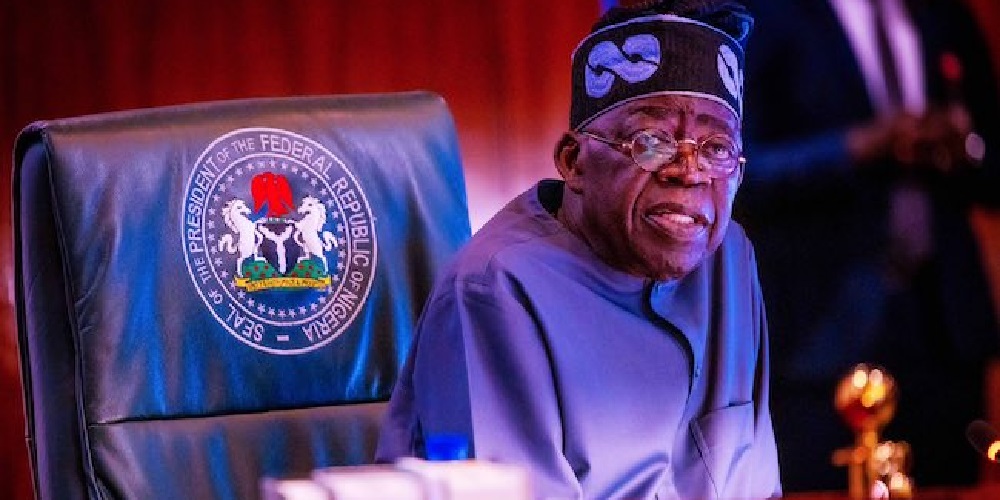
President Bola Tinubu took office on 29 May as Nigeria’s fifth democratically-elected president since the return of civil rule in 1999, after running a campaign promising to uphold the rule of law and human rights.
“We will ensure that our nation’s legal framework is appropriate for the type of society we seek to build – a society that is fair and which provides enforceable rights to all Nigerians,” his manifesto read in part.
It further pledged that a Tinubu government “will operate on the premise that the rule of law is paramount” without giving details of how to make a difference in a country with a long history of egregious human rights violations under successive military and civilian administrations.
Inefficient justice system
Now a year in the saddle, the Tinubu-led government falters in upholding human rights and the rule of law in Nigeria.
While the problem of “long delays in hearing” and determination of cases is caused by multiple factors across the justice system, “poor coordination among the different actors in the sector and lack of effective legal aid to help the poor access justice” remain as major obstacles to a functional justice system, the President of the Nigerian Bar Association (NBA), Yakubu Maikyau, said at the recent justice summit in Abuja.
Mr Tinubu and the Chief Justice of Nigeria (CJN) acknowledged in their separate remarks at the summit that many Nigerians lack access to justice.
CJN Olukayode Ariwoola
“Access to justice remains a distant reality for far too many Nigerians,” Mr Ariwoola said.
Undoubtedly, Nigeria has made progress with the enactment of legislations such as the Administration of Criminal Justice Act 2015, the Nigeria Correctional Service Acts 2019, and the Nigerian Police Act 2020, but “there are still challenges ahead in achieving a justice system that works in the interest of Nigerians,” Mr Maikyau, a Senior Advocate of Nigeria (SAN), noted.
Like former Nigerian presidents who pledged to transform the country’s justice system for better service delivery, Mr Tinubu’s promise to deliver a legal framework “appropriate for the type of society we seek to build – a society that is fair and which provides enforceable rights to all Nigerians,” cannot be said to have started after one year in office as president.
“The present challenge is to translate these statements of commitment to tangible outcomes for all Nigerians…every aspect of the infrastructure of our justice system requires fundamental rethinking and retooling,” Mr Maikyau said.
Rule of law still tottering
The Tinubu administration, through the Attorney-General of the Federation, Lateef Fagbemi, tried to cut off from the poor human rights profile of the past administration of then-President Muhammadu Buhari, by terminating treasonable felony charges it filed against civil rights activist and Sahara Reporters publisher, Omoyele Sowore.
But by that time, Mr Tinubu’s democratic credentials had already been called into question.
His administration’s arbitrary arrests of former Governor of the Central Bank of Nigeria (CBN) Godwin Emefiele, the chairperson of the Economic and Financial Crimes Commission (EFCC), Abdulrasheed Bawa, were early indicators of what was ahead.
In breach of the provision of section 35 of Nigeria’s constitution, the pair were detained for months by the State Security Service (SSS) in Abuja.
Subsequent events also showed that the administration has yet to adopt the rule of law as a non-negotiable policy.
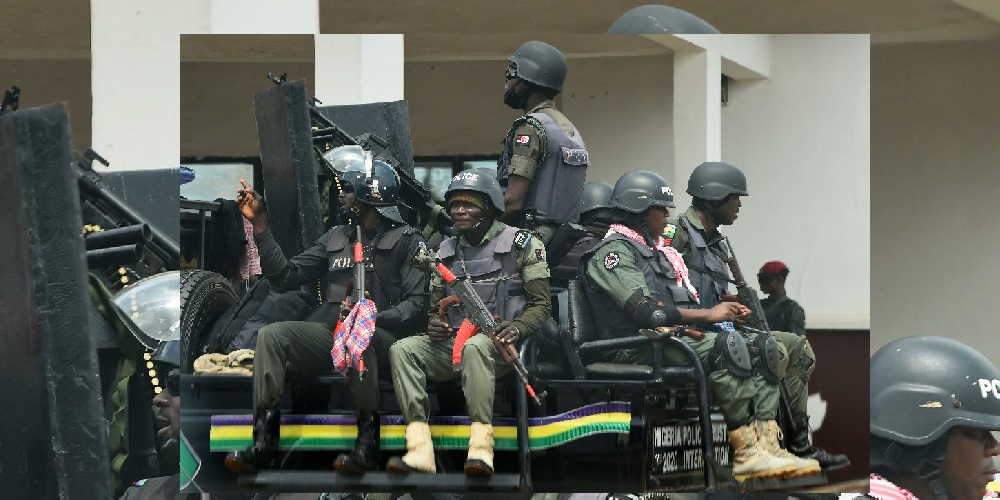
On his watch in the last year, law enforcement agencies and the military routinely engage in arbitrary arrests, detention and torture of civilians and in extreme cases, extrajudicial killings, while the courts are clogged with thousands of cases with less than a thousand judges adjudicating on them.
Riding on an amended Cybercrime Act, under the Tinubu administration, at least eight Nigerian journalists have been arrested and jailed, the US-based Committee to Protection Journalists (CPJ) said. CPJ, a nonprofit organisation, promotes press freedom across the globe.
The figure for the total number of press freedom violations by state actors is even higher, according to the Press Attack Tracker of the Centre for Journalism Innovation and Development. There have been 37 such incidents since Mr Tinubu assumed office with 23 of them happening in the last five months.
Two recent incidents highlight that there has been no improvement in press freedom in the country.
Segun Olatunji and Daniel Ojukwu, both Lagos-based journalists in southwestern Nigeria, were abducted by state authorities – military and police, respectively – over reports they authored.
Messrs Olatunji and Ojukwu were ferried from Lagos to Abuja, Nigeria’s capital, and held at separate times for almost two weeks before they regained their freedoms owing to sustained pressure from journalists and civil society organisations.
Mr Olatunji who worked at an online news outlet, FirstNews, was abducted by soldiers from his home in Lagos before he was handcuffed, blindfolded and thrown into the dungeon in Abuja.
Although Mr Olatunji has since resigned from FirstNews following the newspaper’s retraction of the offensive article which was against President Tinubu’s Chief of Staff, Femi Gbajabiamila, the Gestapo manner his rights were trampled upon reminds Nigerians of the jackboot era of military dictatorship.
Upon his release, he described the military as operating like bandits who abduct people from their homes only to dump the captives on a road after payment of ransom.
As Nigeria was preparing to join the rest of the world in commemorating the International Press Freedom Day on 4 May, Mr Ojukwu was abducted by the Intelligence Response Team (IRT) of the Inspector General of Police. He was detained at the State Criminal Investigation Department (SCID), Panti in Lagos for some days before he was flown to Abuja.
For a couple of days, the whereabouts of Mr Ojukwu who works at the Foundation for Investigative Journalism (FIJ) were unknown.
Fisayo Soyombo, founder of FIJ, an online newspaper, in a series of social media posts, said Mr Ojukwu was abducted by the police in breach of his fundamental rights as a journalist.
“Just so nobody is in doubt, what has happened to FIJ Nigeria reporter Ojukwu Justin Daniel is an abduction and not an arrest,” Mr Soyombo, an award-winning Investigative journalist, wrote.
Mr Soyombo said the “police cannot be acting like bandits” in a stable democracy where journalists’ responsibilities have statutory backing.
But the police have insisted they acted right after releasing Mr Ojukwu from a nine-day detention on 10 May. The police said their action was “lawful”, saying it was backed by a warrant of arrest from a magistrate court. The explanation has attracted similar condemnation from many Nigerians on X.
The Cybercrimes Act on which the police based their crackdown on journalists was amended recently by the National Assembly, expunging some of the provisions aimed at stifling Nigeria’s media space.
A major aspect of the law, section 24 which codifies the crime of “cyberstalking,” has been deployed relentlessly to hound journalists and human rights activists.
Before the amendments of the legislation last February, Section 24 criminalised the use of a computer in sending messages considered “grossly offensive, pornographic or of an indecent, obscene or menacing character.”
Despite the amendments, Omoyele Sowore, a pro-democracy activist and former presidential candidate, said the police have continued to use the law to harass and cower journalists and human rights campaigners in Nigeria. .
Acknowledging the abuses that might have occurred in the application of Section 24 of the Cybercrimes Act, a veteran journalist and human rights advocate, Richard Akinnola, referenced the arrest of Chioma Okoli by the police on account of reviewing a product on social media.
He recalled President Tinubu’s somewhat cordial relationship with the human rights community during the latter’s days as governor of Lagos.
Mr Akinnola, however, noted that the president cannot be absolved of the recent clampdown on journalist Olatunji by the Defence Intelligence Agency.
Nigeria ranks among the worst in press freedom
Reporters Without Borders (RSF) in its latest World Press Freedom Index ranked Nigeria as one of the most dangerous West African countries for journalists.
RSF is a global nonprofit organisation that defends the rights of people to have access to free and reliable information.
Data on the 2024 World Press Freedom Index by RSF ranks Nigeria 112th out of 180 countries where journalists are routinely monitored, attacked and arbitrarily arrested.
The 2024 ranking is an improvement over the 123rd place Nigeria occupied in 2023, but the RSF maintained that the “level of governmental interference in the news media in Nigeria is significant.” Major indices of the ranking were based on political, legislative, economic, social and security issues.
“It can involve pressure, harassment of journalists and media outlets, and even censorship. This interference is even stronger during electoral campaigns. Addressing political issues in a balanced way can also be difficult, depending on the media outlet’s owner. To a large extent, government officials have a say in the appointment and dismissal of media officials, whether in the public or private sector,” RFS said in the report.
Despite the pervading atmosphere of harassment and gross rights violations of journalists, the Attorney-General of the Federation and Minister of Justice, Mr Fagbemi, told the United Nations Human Rights Council in Geneva that “Nigeria remains one of the safest countries for journalists to ply their trade.”
Presenting the Universal Periodic Review (UPR) of Nigeria in Geneva, Switzerland in January, Mr Fagbemi cited the Nigerian constitution which empowers journalists to hold the government accountable to the people, saying journalists go about their duties with any form of intimidation. The UPR is a unique mechanism of the Human Rights Council that calls for each UN Member State to undergo a peer review of its human rights records every four and a half years.
[premium times]