Connect with us

News

State Police under Governors who can’t pay Minimum Wage recipe for disaster

Published

on

ADVERTISEMENT
Zoom Ad
ADVERTISEMENT
Zoom Ad

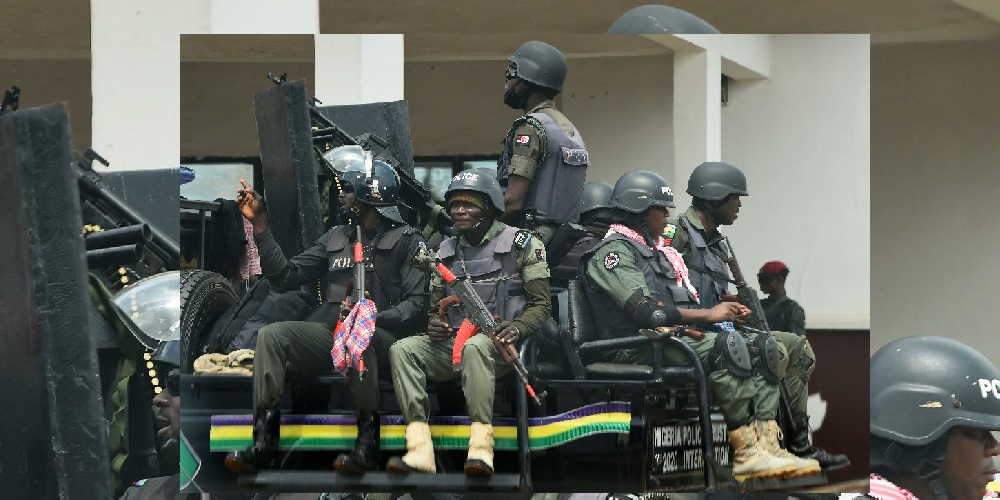
The proposal to establish State Police forces under the control of Governors poses significant risks to the security and well-being of Nigerians. Governors have a history of abusing their power, and controlling state police would only exacerbate this issue.


As seen in the past, governors have prevented local governments from functioning properly, manipulated state assemblies and the judiciary, and used federal police as an instrument of oppression.

The Nation reports, it is disingenuous for Governors to request state policing when they claim they cannot pay the 60K minimum wage. How do they intend to fund state police forces?

This request connotes sinister motives, aiming to intimidate and subjugate the people. Instead, governors should allow Local Government Councils to work autonomously, fulfilling their statutory responsibilities with FAAC funding, as designed by the constitution. It is high time governors stop depriving LGAs of their rightful funds and let them function as the third tier of government.

Advertisement

I agree with the submission and sentiment of those who want state-by- state discretionary wage hikes rather than the current uniform system being used, nonetheless, we must recognise the fact that it will spell doom for states to intend to pay their state policing structures different wages if such is granted. The wage disparity could cause chaos, engender corruption, and create bigger security issues in the society than we currently have.

Implementing state-controlled police forces without adequate checks and balances would lead to a surge in intimidation and oppression of political opponents. The scarcity of essential equipment, inadequate manpower, and operational challenges facing the Nigeria Police Force would only be exacerbated by decentralizing policing responsibilities to state governments. It is crucial that we prioritize the safety and security of all Nigerians by ensuring that law enforcement powers are not concentrated in the hands of state governors.

Nigerian emperor-ish Governors have consistently demonstrated a desire for control and oppression, opposing LGA autonomy, State Assembly autonomy, State judiciary autonomy, and wage increments for workers. Their request for state police control is a thinly veiled attempt to intimidate and subjugate the people.

I am urging Mr President to, as a matter of principle and love for the downtrodden, refuse their entreaties and prioritize the well-being and security of Nigerians by denying governors control over state police forces.

Advertisement
Continue Reading
Advertisement
Click to comment

You must be logged in to post a comment Login

Leave a Reply

News

AltBank Targets Autism Diagnosis Crisis with Nationwide Awareness Drive

Published

on

ADVERTISEMENT
Zoom Ad
ADVERTISEMENT
Zoom Ad

By Gloria Ikibah

A major shortfall in autism diagnosis across Nigeria has left hundreds of thousands of children without access to early support, raising concerns about long-term impacts on families and the country’s healthcare system.

In response to the growing gap, The Alternative Bank has unveiled a nationwide campaign aimed at improving awareness, early detection and access to care.

The initiative, themed “It’s How You Show Up”, is being delivered in collaboration with Private Sector Health Alliance of Nigeria, Sterling One Foundation and Eliakim Foundation.

Advertisement

Despite estimates suggesting that more than 600,000 children in Nigeria may be on the autism spectrum, limited infrastructure and specialist care mean that most cases go undiagnosed. Many children are only identified at around the age of seven, missing the crucial early years when intervention is most effective. The situation is compounded by a shortage of trained professionals, with fewer than 200 psychiatrists serving a population exceeding 200 million.

The campaign is designed to tackle these systemic challenges through a combination of public awareness efforts, specialised training for caregivers, and expanded access to clinical screenings. Organisers say the screenings will help families move more quickly from suspicion to diagnosis, while also linking them to appropriate medical and educational support.

A key feature of the initiative is a policy-focused roundtable scheduled for 24 April in Lagos, where healthcare experts, government officials and private sector leaders will examine how autism screening can be integrated into Nigeria’s primary healthcare system. Discussions will also explore sustainable funding options to support children and families after diagnosis.

The campaign reflects increasing recognition of the need for coordinated action to close the diagnosis gap and strengthen long-term support for neurodiverse children across the country.

Advertisement

Group Executive at The Alternative Bank, Dr Jekwu Ozoemene, said: “We do not see inclusion as a seasonal task but as a vital part of a healthy society.

“Through this initiative, we are not just talking about support, we are delivering it. By tracking the results of these screenings and interventions, we can build a real system that helps the autism community and strengthens the nation”.
The ‘It’s How You Show Up’ campaign is part of the commitment by AltBank to social impact investment and inclusive finance. Individuals, caregivers, and organisations interested in the screening programme or the stakeholder roundtable can visit altbank.ng/autism26 for more information.

Continue Reading

News

Video: Isoko people protest over lack of power vow to block political campaigns

Published

on

ADVERTISEMENT
Zoom Ad
ADVERTISEMENT
Zoom Ad

Isoko people in a trending video have vowed to block campaign moves if light is not restored in Isoko Nation.

Both local government areas have been in darkness for years.

In a sighted video Isoko people brandishing various placards bearing graffiti declaring that if power is not restored there will be no political campaigns in 2027.

Watch:

Advertisement

Continue Reading

News

Telcos to Credit Users for Service Failures Under Tougher NCC Rules

Published

on

ADVERTISEMENT
Zoom Ad
ADVERTISEMENT
Zoom Ad

By Gloria Ikibah

Nigeria’s telecoms regulator has directed network operators to compensate subscribers with airtime where poor service delivery has been confirmed, signalling a firmer stance on consumer protection.

The Nigerian Communications Commission (NCC) said the move forms part of a strengthened enforcement regime aimed at improving network performance and holding operators accountable for persistent shortcomings.

The Executive Vice Chairman, Dr Aminu Maida, outlined the development at a media briefing in Abuja on Thursday, where he detailed fresh compliance measures being rolled out across the sector.

Advertisement

Under the new approach, operators will be required to provide airtime credits to affected customers in areas where they have failed to meet the commission’s minimum quality standards. The obligation rests entirely on the service providers, rather than the regulator.

The commission said it is now relying on more precise monitoring tools that track network performance at local government level. This allows regulators to identify specific locations and timeframes where service quality falls below expectations, rather than relying on broad or general complaints.

Maida said the targeted system will make enforcement more effective, ensuring that compensation is tied directly to verified lapses in service delivery.

The directive covers network failures recorded between November 2025 and January 2026 across several operators, marking one of the most concrete steps yet by the regulator to address ongoing consumer frustrations in the telecoms sector.

Advertisement

“Eligible subscribers will receive airtime credits with notifications explaining the cause and value of the compensation,” he said.

He added that notifications would improve transparency and help users understand why compensation was applied to their accounts.

Maida noted the commission has significantly strengthened its monitoring systems to capture real-time, location-specific service performance data.

“These systems ensure enforcement reflects actual user experience rather than generalised industry averages,” he said, highlighting improved regulatory precision.

Advertisement

He added that operators are required to implement the compensation directly, while the NCC provides oversight to ensure compliance.

“Independent checks will confirm that affected subscribers are properly credited,” he said, noting sanctions for non-compliance may follow.

Maida said the initiative formed part of broader reforms aimed at improving accountability and service standards within the telecommunications sector.

“Operators failing to meet obligations will face stricter enforcement measures,” he warned, signalling tougher regulatory action ahead.

Advertisement

He stressed that improving service quality required both sustained infrastructure investment and stronger operational discipline by network providers.

“Service providers must maintain performance standards consistently across all regions, including underserved and rural areas,” he said.

Maida reiterated the NCC’s commitment to balancing consumer protection with industry sustainability and long-term sector growth.

“Operators must take responsibility for the quality of experience delivered to subscribers,” he said, urging greater corporate accountability.

Advertisement

He added that the commission remained committed to ensuring Nigerians received value for money spent on telecom services nationwide.

“Persistent poor service quality is no longer acceptable under current regulatory direction,” he said, emphasising zero tolerance for continued lapses.

Continue Reading

Trending

Copyright © 2024 Naija Blitz News