Connect with us

Economy

Currency outside banks declined to N3.61tn in April

Published

on

ADVERTISEMENT
Zoom Ad
ADVERTISEMENT
Zoom Ad

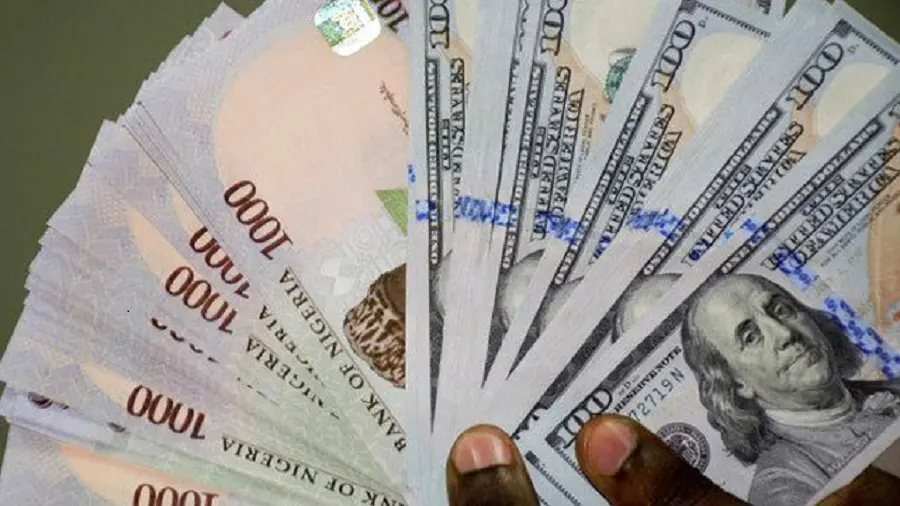
Latest data from the Central Bank of Nigeria has indicated that currency outside of bank vaults declined by 0.62 per cent to N3.61tn in April from N3.63tn in the previous month.


This bucks the pattern of steady increase observed since the beginning of the year.

Despite the decline, over 90 per cent of the currency in circulation was still outside bank vaults.

As of April, the currency in circulation stood at N3.92tn, higher than N3.87tn in March.

Advertisement

The currency in circulation has been increasing month-on-month despite the CBN monetary policy tightening, which has seen the benchmark interest rate set at 26.65 per cent.

Also, the latest money and credit statistics data from the CBN showed that Nigeria’s money supply rose to a historic high of N96.97tn in April 2024, reflecting year-on-year growth of 73 per cent from N56.05tn in the same period of the previous year.

On a month-on-month basis, it was a five per cent increase from the previous decline recorded in March at N92.33tn.

This growth comes in the face of the Monetary Policy Committee’s hawkish stance aimed at controlling inflation.

Advertisement

In their statements, one of the members of the Monetary Policy Committee of the CBN at the March meeting, Muhammad Abdullahi, posited that the apex bank had identified high currency outside banks as one of the monetary drivers of the country’s inflation.

He said, “From available data, prices of domestic food items remain the major driver of headline inflation because of supply shortages and high cost of logistics and distribution.

“While this cannot be directly influenced using monetary policy tools, the bank’s response to the drivers of headline inflation is targeted at addressing identified monetary drivers such as money supply growth, exchange rate depreciation and Currency-Outside-Banks, the combined impact of which will dampen inflationary pressure significantly.”


Advertisement
Continue Reading
Advertisement
Click to comment

Warning: Undefined variable $user_ID in /home/naijuinz/public_html/wp-content/themes/zox-news/comments.php on line 49

You must be logged in to post a comment Login

Leave a Reply

Economy

Naira depreciates to N1,397/$ in parallel market

Published

on

By

ADVERTISEMENT
Zoom Ad
ADVERTISEMENT
Zoom Ad

The naira on Friday depreciated to N1,397 per dollar in the parallel market from N1,390 per dollar on Thursday.

Likewise, the naira depreciated to N1,365 per dollar in the Nigerian Foreign Exchange Market, NFEM.

Data from the Central Bank of Nigeria, CBN, showed that the indicative exchange rate for the market rose to N1,365 per dollar from N1,359.75 per dollar on Thursday, reflecting N5.25 depreciation for the naira.

Consequently, the margin between the parallel and official markets widened to N32 per dollar from N30.25 per dollar on Thursday.

Advertisement

The turnover in the interbank foreign exchange market recorded its fourth daily decline by 42.5 per cent to $73.6 million from $128.2 million on Thursday.

This week, the naira strengthened by N1 per dollar in the official market, with turnover in the interbank foreign exchange market climbing to N683.2 million, representing a 76.7 per cent rise compared to N386.54 million recorded the previous week.

However, the local currency weakened in the parallel by N2 against the greenback.

Advertisement
Continue Reading

Economy

See Dollar to Naira exchange rate today, June 5, 2026

Published

on

ADVERTISEMENT
Zoom Ad
ADVERTISEMENT
Zoom Ad

The Nigerian naira maintained a relatively stable performance against the United States dollar at both the official and parallel foreign exchange markets as traders monitored liquidity conditions and demand pressures.

Data from the Central Bank of Nigeria’s Nigerian Foreign Exchange Market (NFEM) showed the naira trading around ₦1,361 to the dollar, reflecting a largely steady trend compared to recent sessions. The most recent NFEM rate published by the apex bank stood at approximately ₦1,361.05/$, while trading during the week remained within the ₦1,359–₦1,365 range.

Market data from recent official trading sessions also indicated that the naira had strengthened modestly in early June, supported by improved foreign exchange supply and sustained interventions aimed at enhancing market liquidity.

At the parallel market, commonly referred to as the black market, the dollar traded at between ₦1,390 and ₦1,405 on Friday, depending on location and transaction size. Several market trackers reported buying rates around ₦1,380–₦1,395 and selling rates between ₦1,393 and ₦1,405 per dollar.

Advertisement

The gap between the official and parallel market rates remained relatively narrow compared with previous months, reflecting ongoing efforts to improve transparency and liquidity in the foreign exchange market.

Currency dealers said market participants continue to watch foreign portfolio inflows, crude oil earnings, and Central Bank policies, all of which remain key factors influencing the naira’s direction in the coming weeks.

As of June 5, 2026, the dollar exchanged at about ₦1,361 in the official NFEM market, while parallel market transactions ranged from approximately ₦1,390 to ₦1,405 per dollar.

Advertisement
Continue Reading

Economy

Nigeria Tops Global Crypto Transfer Rankings as Adoption Hits 40%

Published

on

By

ADVERTISEMENT
Zoom Ad
ADVERTISEMENT
Zoom Ad

Nigeria has emerged as the world’s leading market for cryptocurrency transfers, with adoption reaching about 40 per cent of the population, underscoring the growing role of digital assets in addressing foreign exchange constraints, inflationary pressures and cross-border payment challenges.

The development highlights how millions of Nigerians are increasingly turning to cryptocurrencies and stablecoins as alternatives to conventional financial channels amid persistent economic uncertainties and difficulties accessing foreign currency.

According to industry data, Nigeria now ranks among the most active cryptocurrency markets globally, with digital assets becoming a mainstream tool for remittances, savings, payments and international transfers.

The country’s growing influence in the digital asset ecosystem comes despite years of regulatory uncertainty and crackdowns on some cryptocurrency platforms. Yet, market activity has remained resilient, driven largely by retail users seeking faster and cheaper alternatives to traditional financial services.

Advertisement

Meanwhile, data from blockchain analytics firm Chainalysis shows that Nigeria recorded approximately $59 billion in cryptocurrency transactions between July 2023 and June 2024, placing it among the world’s largest crypto markets.

Around 85 per cent of those transactions were valued below $1 million, indicating strong participation by individuals and small businesses rather than institutional investors.

Analysts say the trend reflects broader economic realities, including the depreciation of the naira, high inflation and rising demand for efficient cross-border payment solutions.

Industry operators argue that cryptocurrencies are increasingly being used for practical purposes rather than speculation.

Advertisement

Chief Operating Officer and co-founder of Busha, Moyo Sodipo, said users are beginning to recognise the everyday utility of digital assets.

“People are starting to see the real-world utility of cryptocurrency, especially in day-to-day transactions,” he said.

He further noted that crypto is increasingly being used for bill payments, mobile airtime purchases and retail transactions.

Stablecoins which are pegged to major currencies such as the US dollar, have emerged as a key driver of adoption. Chainalysis estimates that stablecoins account for roughly 40 per cent of Nigeria’s crypto inflows, making the country the largest stablecoin market in Sub-Saharan Africa.

Advertisement

The growing use of stablecoins has been linked to persistent foreign exchange shortages and the need by businesses and individuals to preserve value in the face of currency volatility.

Chief Executive Officer of Yellow Card, Chris Maurice, said stablecoins provide businesses with access to dollar-denominated assets when conventional channels are constrained.

“About 70 per cent of African countries are facing an FX shortage, and businesses are struggling to get access to the dollars they need to operate,” Maurice said.

Prior to retail payments, digital assets are also becoming increasingly important for remittances and cross-border trade. Industry stakeholders say cryptocurrency-based transfers offer faster settlement times and lower transaction costs compared to traditional channels.

Advertisement

The surge in adoption comes as Nigeria gradually moves towards a more structured regulatory framework for digital assets. The country has shifted from an era of restrictions to one focused on licensing and oversight, with authorities seeking to balance innovation with consumer protection.

Experts believe that regulatory clarity, combined with growing digital literacy and widespread smartphone adoption, could further accelerate cryptocurrency usage across the country.

However, they also caution that issues relating to consumer protection, fraud prevention, taxation and market stability will remain critical as the sector continues to expand.

For policymakers, Nigeria’s leadership in global crypto transfers presents both an opportunity and a challenge: harnessing innovation to deepen financial inclusion while ensuring adequate safeguards in an increasingly digital financial system.

Advertisement
Continue Reading

Trending

Copyright © 2024 Naija Blitz News