The National Assembly has resolved to ensure that states, local governments, and the Organised Private Sector stop defaulting in the payment of the approved minimum wage


The National Assembly may even consider seizing allocations of states and local governments that fail to comply with the new minimum wage, says a source who spoke anonymously with Saturday PUNCH, because he was not authorised to speak on the matter.
This is as the National Assembly announced plans to include a clause that will provide clear sanctions for defaulters of the new minimum wage bill that will be passed after receiving the Wage Award Bill from President Bola Tinubu. 
This was made known by the Senate spokesperson, Yemi Adaramodu, who explained that lawmakers would expedite the passage of the Wage Award Bill once President Tinubu sent it
He also hinted that the President would send the bill after the National Assembly resumed from the Sallah recess on July 2.
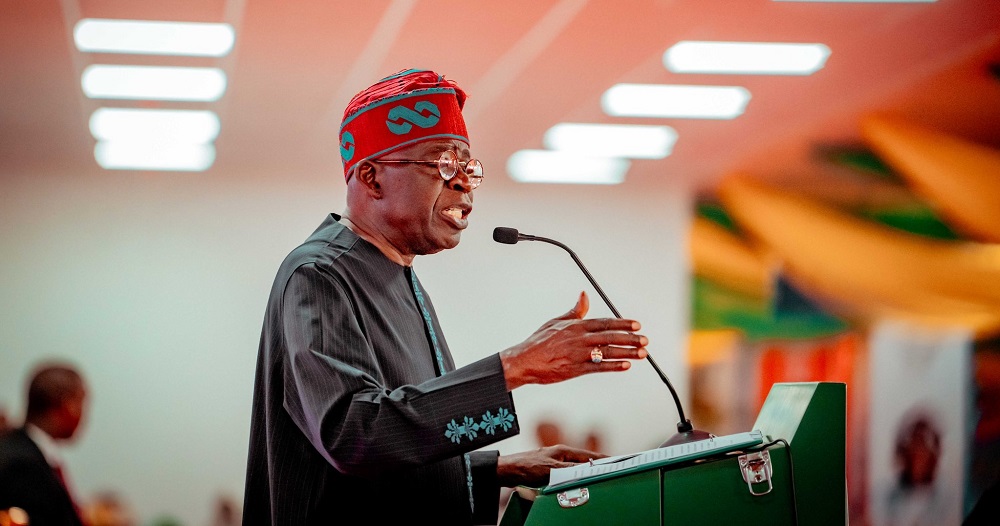
In his Democracy Day broadcast on Wednesday, the President had promised to forward a bill on the new minimum wage to the National Assembly soon.
The Federal Government and labour unions have been at odds over the new minimum wage, with union leaders demanding N250,000. Meanwhile, the Federal Government and the OPS countered with an offer of N62,000, while state governors maintained that they could not sustain a minimum wage higher than N60,000.
Labour unions have repeatedly dismissed the government’s offer, labelling it a “starvation wage”.
The Assistant General Secretary of the NLC, Chris Onyeka, stated that Organised Labour would not accept the latest offer of N62,000 or the N100,000 proposal suggested by some individuals and economists.
Expressing concern over the labour leaders’ demands and the potential economic repercussions, the Minister of Information and National Orientation, Mohammed Idris, stated on Wednesday that the N250,000 minimum wage proposal could destabilise the economy, lead to mass layoffs, and jeopardise the welfare of Nigerians.
Despite labour’s firm stance on the N250,000 minimum wage, the President emphasised that the government would pay workers what it could afford.
Addressing concerns about compliance, especially given that some states still pay the old N18,000 minimum wage, while others comply with the current N30,000, Adaramodu assured that the new bill will be “watertight”.
He added, “We will ensure it is strictly adhered to as law. The bill will include provisions for sanctions against non-compliance.”
“We are going to produce a watertight bill that we are proposing for the President to sign to ensure that it is strictly adhered to as law. For now, let’s not speculate on the details that the Federal Government will include in the bill to be submitted to the National Assembly.
“But, when it comes, whatever is there and whatever is not, we will ensure that it’s watertight and obeyed by all,” Adaramodu emphasised.
He added, “When we talk about the minimum wage, is it just about the Federal Government? It seems like it’s a fight between the Federal Government and labour. That’s the way everybody is looking at it. We keep mentioning the Federal Government, President Tinubu, and labour. We don’t even talk about the Organised Private Sector or the sub-nationals. The NLC, which recognises the workers in the organised private sector and the sub-nationals, needs to advocate for them.”
“The issue of some states still paying N18,000, though I don’t know because I don’t suspect that to be happening. If some states are paying that, what have the labour unions in those states done to ensure compliance with the N30,000 minimum wage? We need to ask them too. But, like I said, the National Assembly will make this law seriously watertight, with sanctions for non-compliance, whether at the state, sub-national, or organised private sector level,” Adaramodu stated.
The Senate spokesperson added that if such measures were not taken in the past, the 10th Assembly would ensure sanctions for defaulters of the newly agreed minimum wage. “That’s how it’s going to be done this time around. But the labour centres also need to protect the welfare of their members, not only with the Federal Government,” Adaramodu reiterated.
Speaking on the possibility of sanctioning state governors, Adaramodu noted that the National Assembly makes laws for the entire country. “The National Assembly makes laws for Nigeria, not just for President Tinubu,” he stated.
When asked about the specific sanctions to expect, the Senate spokesperson said it would be premature to give a definitive answer before the President sends the bill.
When the executive bill comes and we sit in the chamber during plenary, there will be opinions. The bill, when passed, will progress to the public hearing stage where we will invite not only legislators but also organised labour to contribute to making the law. When that time comes, we will decide on the appropriate sanctions for non-compliance, because we believe that the committee meeting to arrive at an acceptable minimum wage for Nigerian workers includes all necessary stakeholders, including the government, organised labour, and the organised private sector. Whatever result they come up with, we’ll make it law, and nobody will come and speak ambiguously,” he explained.
However, Adaramodu emphasised the urgency and commitment to ensuring Nigerian workers received an improved wage package. “If the bill is presented right after Sallah, we will handle it with lightning speed. It will be passed, because it benefits Nigerian workers,” the legislator affirmed.
Addressing concerns about the timeline for the bill’s passage, the legislator stressed the efficiency of the legislative process. “Even if it is possible within 30 minutes, we will do that. The bill will go through all necessary stages, but we aim to avoid any unnecessary delays,” he said.
Adaramodu added, “So, it depends on the content of the bill, because it will go through the necessary stages of passage. We are not going to sit down and just say the Bill has been passed.
“Once the bill gets to us at the National Assembly, we will go through the processes without delay and make sure that Nigerian workers get their due.”
Reps ready to pass wage bill
Buttressing the words of his colleague, House Minority Leader, Kingsley Chinda, said the Green Chamber was eager to pass the bill along with their colleagues in the Senate.
He said, “We can confirm as a House that the President made the above comment during his visit to parliament.
“I wish to also confirm that we are eager to receive the Supplementary Appropriation Bill and will do justice to it in line with the 10th Assembly’s Legislative Agenda.”
“This is in tandem with our resolve as Parliament to continue carrying out actions that will promote the unity, peace, and development of Nigeria,” he added.
However, Chinda stated, “The economy is biting harder, and the wage doesn’t cover anything. The take-home can hardly take any worker home.
“We don’t need a minimum wage but a living wage. Consider the costs of rent, transport, medical care, and education in fixing workers’ wages.”
Enforcing sanctions requires political will
Speaking with Saturday PUNCH, the National Treasurer of the Nigerian Labour Congress, Hakeem Ambali, called for the political will to enforce sanctions against states, local governments, and members of the Organised Private Sector not complying with minimum wage laws.
He noted that the National Assembly’s move was not new, adding that the former Minimum Wage Act also contained clauses for sanctions, even though they were not strong enough to deter defaulters.
“Such clauses have always been in the bill. This will not be the first time that they will be included in the bill. But, the political will to enforce that caveat really matters, though the provision was not strong in the last minimum wage act. If the Senate can do the needful and also oversee the implementation, it will be the best thing for Nigerian workers,” Ambali stated.
Regarding sanctioning defaulters, he said, “Any sanction proposed should be strong enough to deter them from disobeying that law.
“For the state governments that haven’t fully complied with the N30,000 minimum wage payment,” he said, “All of those in that category have been identified by Labour, and some of them have started approving the new minimum wage. That shows that it is all about the inability or deliberate refusal to pay due to a lack of priority for workers. Sadly, they are doing themselves harm because workers are the engine rooms that drive development. A happy and well-motivated worker is a very good asset to productivity and development.
“I believe there is no governor or local government chairman in Nigeria who cannot pay the minimum wage if we set our priorities right and desire true productivity in the country.
“We have not seen any new proposal. We expect Mr President to also engage Labour directly, so that we will have an amicable solution in the best interest of the country. The engagement does not need to take time. When there are two positions on the ground, we expect that there must be a way to harmonise the positions.”
Fayemi seeks decentralised negotiations
Meanwhile, former Governor of Ekiti State, Kayode Fayemi, reiterated the need for decentralised minimum wage negotiations. He emphasised the importance of allowing states to conduct their own wage negotiations with labour unions, separate from the Federal Government.
Fayemi, who is also a former Chairman of the Nigerian Governors Forum, stated this during an interview on Channels Television’s Politics Today programme, which aired on Friday night.
Fayemi stated, “The position of the Nigerian Governors Forum when I was chairman of the forum, and I believe even till this recent negotiation, is that we should decentralise minimum wage negotiations and allow states to have their negotiations with their labour unions, while the federal government conducts its own negotiation, because the circumstances are not equal.”
Highlighting the disparity in resources accruing to states, Fayemi said, “The Governor of Lagos State should not be earning the same salary as the Governor of Ekiti State. He has more resources, but we all go by rank. And, the N600,000 that I earned in Ekiti is what Governor Sanwo-Olu earns in Lagos.
“I don’t believe that we’re being realistic. This should be decentralised,” he added.
‘NASS should not concentrate on sanctions’
Speaking with Saturday PUNCH on the matter, the Director-General of the Nigeria Employers’ Consultative Association, Adewale-Smatt Oyerinde, said it was not the responsibility of the National Assembly to propose or introduce new clauses on sanctions, noting that the already existing National Minimum Wage Bill contained provisions for violations and enforcement.
He added that as it would be easier for the private sector to comply with the new minimum wage, the National Assembly should instead build an enabling system and environment that would make it easier for states and local government councils to enforce it.
He said, “It is not the responsibility of the Senate to say they will impose sanctions. They cannot impose sanctions. It is an anomaly, a demonstration of ignorance. The National Minimum Wage Bill itself has provisions for violations and enforcement. Those provisions are already in the Bill that has been agreed by the tripartite. The Bill for the national minimum wage as it is in 2019 is comprehensive enough and addresses every issue. If an employee is aggrieved, there is a process that has been established for them to seek redress. So, sensationalising the minimum wage is just creating problems.
See, this is a labour bill issue that has already captured the basis of penalties. It is a tripartite bill, and I think it is high time we started getting this thing correctly. It is a tripartite bill that the government, labour and workers have agreed upon. Some of these things are already captured. They are just sensationalising it. Most times, they commit these errors as if they can legislate compliance. If they legislate compliance and there is no instrument to carry out effective monitoring, then you just make the law for making sake. When they agreed on N30,000, some governors were still paying N5,000 or N20,000. The machinery for enforcement in the states is where the issue is. It is easier for the private sector to comply, but at the state and local government levels, what is the machinery that they put in place to enforce it?
“What the National Assembly should address is how to build a system around compliance. If we don’t create an environment that makes compliance easy, we will just be running helter-skelter. They should create an environment that will make it easy for local governments and the states to pay it. It is greater than an environment that already made my business profitable. If tax collection is so efficient or effective, they should not evade the principle of fairness, because that is why some people try to evade and cut corners with tax.”
Need for public hearing
Speaking with Saturday PUNCH, a professor of law at the University of Port Harcourt, Rivers State, Edward Bristol-Alagbariya, said the National Assembly cannot pass the executive bill on minimum wage without a public hearing to get inputs from the people, and even Organised Labour, that represent the workers.
He noted that arbitrarily passing the executive bill into law without a public hearing was inappropriate.
He said, “Labour represents the people. And, whenever you want to make an Act in the National Assembly, there is supposed to be a public hearing. The people have to appear and participate in the process of making laws. That is how citizens participate in their own governance. But if the citizens have not participated and you come up with a bill, then the National Assembly is not supposed to enact a law in vacuum. They are expected to look at the concerns of the citizens and what they want, because the lawmakers are the peoples’ representatives.”
Also reacting, a professor of Employment Relations and Labour Studies at the University of Lagos, Akeem Akinwale, said the ongoing controversy between the government and the Organised Labour was simply a political affair.
He said what the Organised Labour should be clamouring for was price control and reduction in the high inflation slashing the peoples’ purchasing power, as well as a drastic cut in the humongous salaries of public office holders in the country.
“What is happening is purely political. The tripartite committee comprises government representatives, employers’ representatives, and the Organised Labour. The reason President Tinubu made the statement is because the government representatives and employers’ representatives had agreed that they were not going beyond N62,000. Labour has not agreed with that proposal, but out of the three groups, two have agreed. So, I think it is on the strength of this that the Federal Government wants to go ahead to legislate on the new minimum wage.”