Economy
EU tariffs on Chinese-made electric vehicles stifle free trade
- /home/naijuinz/public_html/wp-content/plugins/mvp-social-buttons/mvp-social-buttons.php on line 27
https://naijablitznews.com/wp-content/uploads/2024/06/China-made-electric-vehicles.jpg&description=EU tariffs on Chinese-made electric vehicles stifle free trade', 'pinterestShare', 'width=750,height=350'); return false;" title="Pin This Post">
- Share
- Tweet /home/naijuinz/public_html/wp-content/plugins/mvp-social-buttons/mvp-social-buttons.php on line 72
https://naijablitznews.com/wp-content/uploads/2024/06/China-made-electric-vehicles.jpg&description=EU tariffs on Chinese-made electric vehicles stifle free trade', 'pinterestShare', 'width=750,height=350'); return false;" title="Pin This Post">
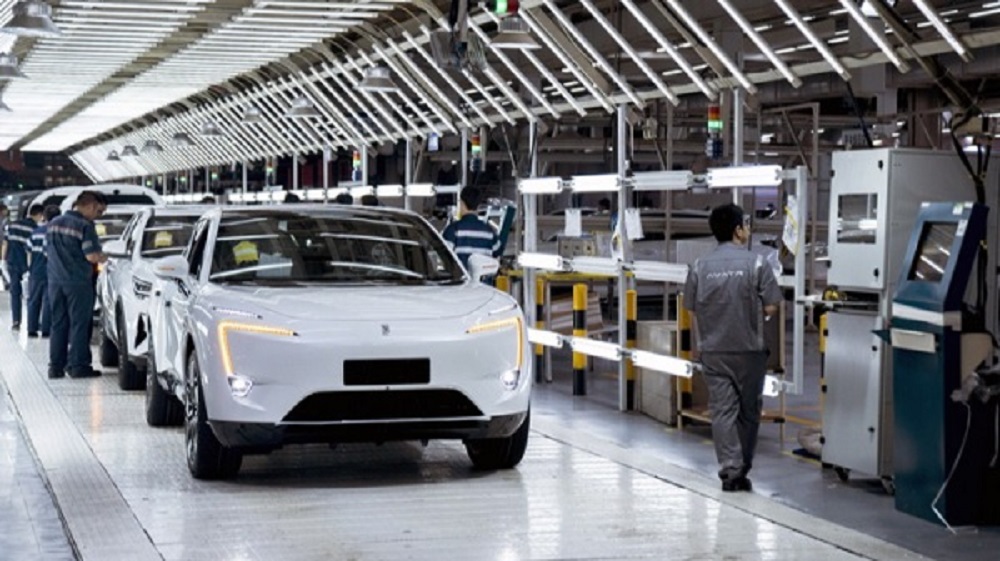
The European Commission on June 12 announced additional tariffs of up to 38.1 percent on China-made electric vehicles (EVs) for what it claims to be an action to safeguard industries and jobs inside the European bloc.

Expected to take effect by July, three leading Chinese EV manufacturers BYD, Geely and SAIC face tariffs of 17.4 percent, 20 percent and 38.1 percent, respectively – the Commission says other companies that cooperate with the investigation would face a tariff of 21 percent while 38.1 percent import duties will be apportioned to non-cooperating companies.
With the EU currently charging a 10 percent levy on all car imports, the new tariffs, a blot on the already tense China-EU trade relationship further threatens economic activity, especially for the bloc considered to be one of the most outward-oriented economies and the world’s single-largest market area.

Considering China’s status as the world’s largest automobile market, the EU’s latest move not only exacerbates the plight of the bloc’s EV sector which is grappling with declining domestic demand but also impedes China-EU trade. A recent study by the Kiel Institute for the World Economy shows a 20 percent tariff on Chinese EVs could lead to a whopping $3.8 billion drop in the bloc’s EV imports, representing almost 25 percent of the current value of its trade.
With trade and investment serving as the cornerstone of China-EU relations, cooperation in this area has widened and deepened since China joined the World Trade Organization (WTO) in 2001 – providing enormous benefits. In fact, bilateral trade has supported growth in various industries and fostered job creation across China, Europe and beyond.
Recent data shows China and the EU, which account for over a third of global GDP, are two of the biggest trading partners in the world. With China-EU exports accounting for more than a third of world trade, the two economic powerhouses trade goods over $800 billion annually with each other.
While telecom equipment is China’s leading export to the EU, the bloc’s number one exports to China are cars. For EU enterprises, particularly those in the automobile sector, access to China, the world’s most competitive and largest EV market, is increasingly important – not only because the market is lucrative but also healthy competition fosters innovation and improves product quality.
However, the EU’s latest move, which follows in the footsteps of the recent hefty tariff hikes imposed on Chinese EVs by the U.S., threatens the interest of EU enterprises. While the EU justifies these protectionist measures as an attempt to safeguard industries and jobs inside the bloc, it’s likely the move may yield the desired outcome especially in the short term, but, in the long run, the tariff hikes will ultimately erode EU enterprises’ competitiveness in the EV sector on the global market.
Home to by far the world’s top filer of patent applications – including patents relating to EV charging and battery swapping, China’s rapid growth in recent years coupled with its strong supply chain has not only fostered innovation and high-end manufacturing in the country’s EV sector but also increasingly attracts foreign enterprises including European companies – and some have established industry collaborations in China.
By establishing and strengthening cooperation with domestic players in the Chinese EV sector, European companies are able to spur innovation, continuously improve product quality at reduced cost and meet constantly changing consumer demands at home and abroad – highlighting the benefits of free trade.
In a recent example, leaders of Spotlight Automotive, German auto giant BMW’s 50-50 EV venture with Great Wall Motor – China’s largest sport-utility vehicle maker, announced in April this year that the venture is designing and building new models it hopes to sell to customers worldwide including Europe and Southeast Asia.
However, the company has indicated it will not operate in markets that impose hefty tariffs on made-in-China cars. Jason Zhang, director of governance and public relations at Spotlight said “except for markets that levy unreasonably high tariffs (on Chinese-made EVs), Spotlight is designing and building cars for customers all over the world.”
Apparently, just like in the case of Spotlight, several other industry collaborations between Chinese EV enterprises and their European counterparts could face daunting challenges as a result of the EU’s latest move to impose tariffs on Chinese-made EVs.
In Europe, the tariffs hike on Chinese-made EVs presents another blow to the bloc’s struggling EV sector. According to Ernst & Young (EY) Mobility Lens Forecaster published in June this year, Europe’s EV sales are slowing as a result of reductions in EV incentives, lack of affordable EV models and consumer concerns about insufficient chargers. Conversely, China remains on course for growth with EVs expected to account for more than 50 percent of all sales by 2030 – two years faster than previously suggested by forecasts.
Clearly, both parties could have benefited enormously if the EU had opted for win-win cooperation rather than impose new tariffs on Chinese-made EVs.
Economy
Oyedele Delivers ₦39.63bn Lifeline to 24,814 Pensioners as PTAD Clears Long-Standing DBS Liabilities

L:R: Director General of PTAD, Mrs Tolulope Odunaiya in a warm handshake with the Minister of Finance, Mr Taiwo Oyedele in Abuja.
The Honourable Minister of Finance and Coordinating Minister of the Economy, Mr. Taiwo Oyedele, has reaffirmed his commitment to improving the welfare of Nigerian pensioners with the successful disbursement of ₦39.63 billion to 24,814 eligible Defined Benefit Scheme (DBS) pensioners, ending years of anxious waiting for thousands of retirees.
Working under the supervision of the Federal Ministry of Finance, the Pension Transitional Arrangement Directorate (PTAD) carried out the payments following the Minister’s directive to prioritise the settlement of verified pension liabilities, bringing relief to beneficiaries across the country.
Mr. Oyedele said the payment reflects the administration’s determination to ensure that retired public servants receive the benefits they earned through decades of dedicated service.
“A nation that values service must also honour those who gave their productive years in its service. This payment is about people, not just figures. It is about restoring confidence, rewarding sacrifice and giving thousands of pensioners and their families the reassurance that they have not been forgotten.”
The Minister explained that the disbursement covered three categories of outstanding pension obligations that had accumulated over the years.
According to him, PTAD paid ₦25,053,703,604.12 to clear the outstanding 35-month pension liability owed to 9,675 eligible Defined Benefit Scheme pensioners of the defunct NITEL/MTEL.
The Directorate also disbursed ₦9,481,886,576.53, representing the initial 50 per cent payment of the Back End Computation (BEC) arrears due to 3,959 eligible PHCN Defined Benefit Scheme pensioners.
In addition, PTAD paid ₦5,094,784,054.27, representing the outstanding 50 per cent balance of the 10.66 per cent and 12.95 per cent pension increment arrears due to 11,180 eligible Defined Benefit Scheme pensioners of the defunct Assurance Bank, NICON Insurance, NITEL and People’s Bank of Nigeria.
For many of the beneficiaries, the payments mark the end of years of uncertainty. They provide the means to meet pressing family needs, pay medical bills, support loved ones and enjoy retirement with greater peace of mind.
Mr. Oyedele said government remains mindful of the real lives behind every pension payment.
“Behind every approved payment is a retiree who served this country faithfully, a family that has waited patiently and a story that deserves a positive ending. We will continue to support measures that improve the lives of our senior citizens while maintaining fiscal discipline and accountability.”
The Minister commended the management and staff of PTAD for the prompt implementation of the directive, describing the successful disbursement as evidence of what can be achieved when institutions work together in the public interest.
“PTAD has demonstrated professionalism in implementing this exercise. The Ministry will continue to provide the policy direction and support required to strengthen pension administration and ensure that verified obligations are settled as resources become available.”
The Director-General of PTAD, Mrs. Tolulope Odunaiya, said the Directorate remained focused on delivering efficient pension administration and expressed appreciation to the Honourable Minister for his leadership and support, which made the release and prompt disbursement of the funds possible.
The latest payment represents another important step in the Federal Government’s efforts to improve the welfare of retirees and ensure that public institutions deliver meaningful outcomes for Nigerians under President Bola Ahmed Tinubu’s Renewed Hope Agenda.
Economy
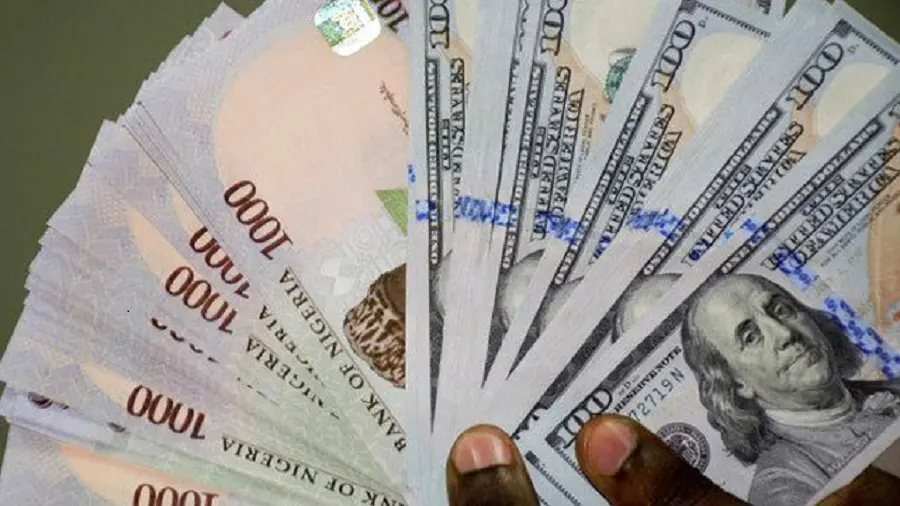
See Black Market Dollar To Naira Exchange Rate Today 3rd July 2026
The Black Market Dollar-to-Naira Exchange Rate for 3rd July 2026 Can Be Accessed Below.
NOTE: The exchange rate changes hourly. It depends on the volume of dollars available and the Demand. This means…you can buy or sell 1 dollar at a certain rate, and the price can change (high or low) within hours.
The official naira black market exchange rate in Nigeria today, including the Black Market rates, Bureau De Change (BDC), and CBN rates.
Please note that the exchange rate is subject to hourly fluctuations influenced by the supply and demand of dollars in the market.
What’s the dollar to naira black market today, 3rd July 2026?
The exchange rate for a dollar to naira at Lagos Parallel Market (Black Market) players sell a dollar for ₦1408 and buy at ₦1396 on Friday, 3rd July, 2026, according to sources at Bureau De Change (BDC).
Please note that the Central Bank of Nigeria (CBN) does not recognize the parallel market (black market), as it has directed individuals who want to engage in Forex to approach their respective banks.
Dollar to Naira Black Market Rate Today
Dollar to Naira (USD to NGN) Black Market Exchange Rate Today
Selling Rate ₦1408
Buying Rate ₦1396
Dollar to Naira CBN Rate Today
Dollar to Naira (USD to NGN) CBN Rate Today
Highest Rate ₦1373
Lowest Rate ₦1360
Economy
See Black Market Dollar To Naira Exchange Rate Today 1st July 2026
The Black Market Dollar-to-Naira Exchange Rate for 1st July 2026 Can Be Accessed Below.
NOTE: The exchange rate changes hourly. It depends on the volume of dollars available and the Demand. This means…you can buy or sell 1 dollar at a certain rate, and the price can change (high or low) within hours.
The official naira black market exchange rate in Nigeria today, including the Black Market rates, Bureau De Change (BDC), and CBN rates.
Please note that the exchange rate is subject to hourly fluctuations influenced by the supply and demand of dollars in the market.
What’s the dollar to naira black market today, 1st July 2026?
The exchange rate for a dollar to naira at Lagos Parallel Market (Black Market) players sell a dollar for ₦1400 and buy at ₦1390 on Wednesday, 1st July, 2026, according to sources at Bureau De Change (BDC).
Please note that the Central Bank of Nigeria (CBN) does not recognize the parallel market (black market), as it has directed individuals who want to engage in Forex to approach their respective banks.
Dollar to Naira Black Market Rate Today
Dollar to Naira (USD to NGN) Black Market Exchange Rate Today
Selling Rate ₦1400
Buying Rate ₦1390
Dollar to Naira CBN Rate Today
Dollar to Naira (USD to NGN) CBN Rate Today
Highest Rate ₦1385
Lowest Rate ₦1376
-
News18 hours agoSouth Africa snubs compensation for Nigerians who abandoned property after anti-migrants protests
-
News18 hours agoCourt Orders Final Forfeiture Of Ex-Minister’s Abuja Apartment, Seizes Four More Properties
-
Sports18 hours agoArgentina luckily escape as they manageably survive tiny Cape Verde scare after extra time
-
News18 hours agoDespite FG’s denial, documents show the accountant-general’s office posted foreign affairs officials to PFIPC
-
Metro18 hours agoZamfara Woman, Two Children Regain Freedom After One Month in Bandits’ Captivity
-
Metro18 hours agoEdo Police Arrest Fake Medical Doctor, 44 Other Suspects
-
News18 hours agoHow Yahoo boys stole judge’s N7.2m child’s school fees overnight — EFCC chair
-
News18 hours ago2027: INEC extends nationwide Continuous Voter Registration, introduces full online registration

Warning: Undefined variable $user_ID in /home/naijuinz/public_html/wp-content/themes/zox-news/comments.php on line 49
You must be logged in to post a comment Login