Your Excellency


Bola Ahmed Tinubu, GCFR
President and Commander in Chief of the Armed Forces of the Federal Republic of Nigeria 
The Visitor
Ahmadu Bello University
Zaria
Sir,
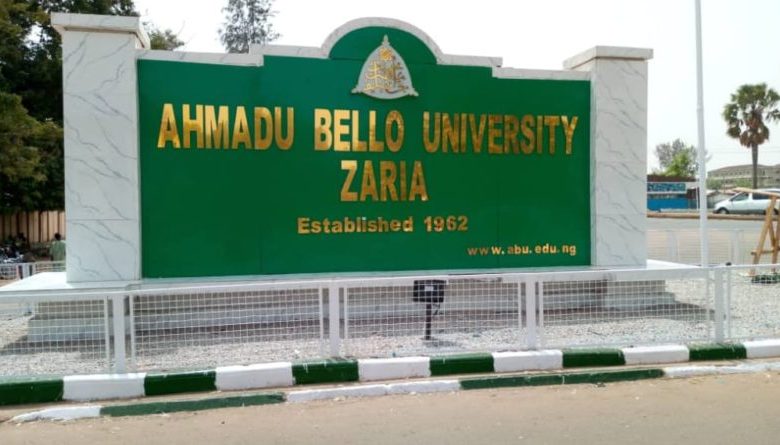
AN OPEN LETTER TO THE VISITOR, PRESIDENT BOLA AHMED TINUBU, GCFR, OVER THE LOOMING ENERGY CRISIS IN AHMADU BELLO UNIVERSITY, ZARIA
We, the undersigned Nigerian citizens and academic staff of Ahmadu Bello University (ABU), Zaria, wish to forward a complaint over the debilitating energy crisis bedeviling Ahmadu Bello University – given the centrality of electricity supply to university operations – and seek your intervention for its resolution. We take this action out of the conviction that, as the President of the Federal Republic of Nigeria and Visitor to the University, Your Excellency is in a position to mediate over the matter especially because the crisis aggravated with the recent high increase in electricity tariff in the country, which ABU in particular, and Nigerian Public Universities in general, cannot afford due to their weak financial position resulting from chronic underfunding.
We also seek Your Excellency’s intervention because even where hard economic realities dictate recourse to commercialization of utilities, educational institutions should be safeguarded from the burden of meeting market-induced pricing, especially where their capacity to do so is highly constrained. As educational institutions of high value to public good, universities should be shielded from the extremities of commercialization.
The Ahmadu Bello University is a first-generation university established by Law [Cap A. 14 of the Federal Laws; The Universities Miscellaneous Provisions (Amendment) Act 2003].
Your Excellency, history and the Nigerian people will bear witness that for over sixty years ABU has served as a major organic driver and facilitator of national development through the production of quality and functional knowledge with sound moral content and the generation of skilled manpower through men and women of all races, nations, gender and creed for all sectors of the society, economy and culture at the national, continental and global levels. The University also attained eminence through its strong support of liberation struggles in Africa and beyond.
You are aware, Sir, that higher education is the backbone of any modern nation state and the marker of its performance, achievements, cultural standards, level of civilization and the prestige it commands in the comity of nations. It was Adam Smith who said that the true wealth of a nation is not gold or silver or a positive balance of trade, but rather its productive citizenry – its human capital in form of skills, knowledge and creativity.
Your Excellency, in today’s knowledge-based world, the Ahmadu Bello University, like other Nigerian universities, can exist, function, and execute its mandate only if such critical enablers of modern university – basic infrastructure for teaching, learning and research, including ICT[1]based substructure, quality manpower, unrestricted energy supply, and high-level funding, are firmly in place. For a developing nation that is yet to build a solid industrial base, the University is a significant national resource that requires the priority attention of government.
As an experienced public figure, Your Excellency knows that in the current knowledge, science and technology driven world, the acquisition of education is the minimal condition for survival and this makes education a basic need. The provision of basic needs to citizens or creating the conditions that enable citizens to meet their basic needs is a fundamental responsibility of government, a sign of good governance and for developing nations a sine qua non of governance.
Yet, it is common knowledge that the economics of education financing is unique, because it is not directly subject to the laws of supply and demand. Researches here in ABU, as elsewhere, have since established the truism that higher education, and indeed education in all its forms, is very expensive in its capital requirements, and exceptionally so in its recurrent expenditure, though very slow, but sure, in yielding returns.
The aforementioned facts imply that wise countries deploy today’s resources for the purposes of tackling the problems of tomorrow and answering the questions of today and of the future.
This is done through massive commitment of national social, financial and human capital. In this regard, no self-respecting nation will justify its education in pure economic terms or by the use of the profit motif argument. Sadly, the commodification of education has been the bane of the policies of successive Nigerian governments, especially since the imposition of the Structural Adjustment Programme (SAP) in 1986. This trend has steadily negated the utilitarian value of education and demeaned its significance as a necessity in the current competitive world order and our deplorable level of underdevelopment.
Your Excellency, it is our candid view that your government has embraced the neo-liberal, market-oriented reform agenda with uncritical zeal and haste in spite of the high level of stagnation of our economy, the progressive decline of the purchasing power of the national currency, depressed wages, widespread indigence and poverty, stagflation and general insecurity. For educational institutions, other manifest corollaries of these policies include decay, in teaching, learning and research infrastructure, dysfunctional municipal systems and ruinous energy crisis characterized by inadequate supply of electricity coupled with the crippling effects of unsustainable high costs of electricity and of energy in general.
Furthermore, the constant threats, and the actual brazen acts of disconnection of the universities from the national grid by the DISCOs pose an existential peril that the universities live with on daily basis now. The last time, Your Excellency, the DISCO here, in a fit of corporate impunity, disconnected the ABU, the system was left brutally traumatized, injured and paralyzed. The losses were beyond recount. A young doctoral scholar in the sciences, for instance, lost over 1000 painstakingly but systematically sampled bovine cardiac tissue research specimens.
Many other scholars and students had thousands of carefully cultured microbial samples in their laboratories wiped out. More than a thousand households had their precious little foodstuff destroyed. The ABU campuses, during the over one month of imposed total darkness, became desolate; staff, students and families lived like hunter-gatherers, scavenging for firewood and water from bushes, dirty wells and streams under heightened susceptibility to waterborne epidemies.
It is beyond dispute that Nigerian universities are not, by any law, statute, or ethical or socio[1]economic definition, profit-making or revenue-generating outfits. They are, however, now rendered unviable and unable to fend for themselves the potential for imminent collapse from mere electricity bills – and this being only one of the many fundamental concerns. Ahmadu Bello University, for instance, with an average total annual budgetary overhead grant of N150 million only, now requires an astounding but unaffordable N3.6 billion (monthly average of N300 million) to settle its annual electricity bill, at the cost of N206/kWh per unit of the so[1]called band A. For a university that requires about 7megaWatts of electricity, in addition to providing other energy costs per month, the financial implication is far beyond its capacity.
Your Excellency, even if the market-oriented principle of ‘cost-sharing’ between government and parents/wards is a viable option, the inability of the University to mobilize adequate financial and material support entails that it transfers the huge cost to students by hiking up fees and charges. If the N3.6 billion were to be transferred to the University’s 50,000 students, the current municipal charges alone will have to be hiked up by at least a rate of 500%.
Not only is this sum impossible to pay by virtually all students but it also negates the position of your government on the matter. You would recall, Sir, that at its inception, your government expressly forbade the Senates and Councils of Federal universities to hike up registration fees for the poor, beleaguered Nigerian students and their parents. Some of us hailed your government then as having the courage to acknowledge the suffering of the Nigerian parents and their wards. In any event, student charges are specifically meant to offset the cost of services in the learning and living campus environment and cannot be used to cover for these energy costs which justly belong to overhead grants that government should but has not, ironically, been responsible for.
Your Excellency, the Nigerian society, its developmental agendas and such of their key enablers as education, industrialization and national integration are in deep crisis and the country has reached a decision point that require critical and somber rethinking by the people and the nation, with you, as the leader. It is imperative that we decide if we truly want to have national public universities and the quality of universities that we want. But the one decision we cannot make at this existential moment is one of logical impossibility and delusion; that is, of having universities but not having to adequately fund or support them to thrive.
We need not remind Your Excellency, however, that the Constitution of the Federal Republic of Nigeria, that you swore to uphold, had defined education, in unequivocal terms, as a public good, thus, prioritizing investment in public education is a cardinal constitutional objective.
In view of the foregoing, Your Excellency, we urge you, as the Visitor to all Federal Universities and the Head of State and Federal Government, to take an urgent and decisive action by making the Federal Government bear the cost of electricity supply as a form of overhead grant to all the Federal Universities in the country. Alternatively, Your Excellency, the Federal Government, as PART OWNER – with 49% stake in GENCOs and DISCOs and continually investing more in them – as well as being the guarantor of social balance and social security in the land, could direct the DISCOs to provide unrestricted supply of electricity to all Nigerian universities in return for some tax credits. On the other hand, Your Excellency, the government could also charge the DISCOs to create a new dedicated social tariff band with lower rates that universities can afford given their present funding realities.
We are convinced, Your Excellency, that your government could accomplish this with all the necessary exigency. This will not only not hurt any sector of the economy, society or national life but that it will constitute an important first step and a signal that your government can and will address the myriads of problems in our tertiary institutions.
With regards,
Cc:ABU, academic staff, Open letter, Bola Tinubu, Looming energy crisis’
The President, Senate of the Federal Republic of Nigeria
The Speaker, House of Representatives of the Federal Republic of Nigeria
Chairmen, Senate & House Committees on Tertiary Institutions
The National Security Adviser
The Hon Minister, FMOE
His Eminence, the Sultan of Sokoto, Alhaji Saad Abubakar III
His Highness, the Emir of Zazzau, Ambassador Ahmed Nuhu Bamalli
The President Inter-Religious Council of Nigeria
The Chancellor, ABU, Zaria
The Chairman & Members, ABU Governing Council
The Chairman, Committee of Pro Chancellors of Nigerian Universities
The Vice Chancellor, ABU, Zaria
The Chairman, Committee of Vice Chancellors of Nigerian Universities
The President, NLC
The President, TUC
The President, ASUU
The President, SSANU
The President, NAAT
The President, NASU
The President, NANS
This story’s headline has been updated to reflect that only professors are involved in the letter, not the academic staff