
News
Students Loan: NANS Gives 48hrs Ultimatum To Institutions To Upload Details



By Kayode Sanni-Arewa
The National Association of Nigerian Students has given a 48-hour ultimatum to higher institutions that have not yet uploaded students’ data onto the Nigeria Education Loan Fund board portal.
Lucky Emonefe, President of the National Association of Nigerian Students, stated in a release that they received this information from NELFUND.
He mentioned that NELFUND management had set a deadline of July 12, 2024, for the submission of student data.
““If these institutions fail to provide this information on the NELFUND portal within the next 48 hours, we will be compelled to implement our action plans against them,” he warned.
Emonefe further expressed NANS’ disappointment, noting that it reflects a lack of commitment and urgency among the remaining state higher institutions in Nigeria.
“NELFUND was established to provide interest-free loans to students in need, and it is disheartening to see that some institutions are not leveraging this valuable opportunity for their students
“We urge the management of these institutions to prioritise the uploading of students’ data on the loan board portal before the deadline. Education is a fundamental right, and every student deserves access to financial support to advance their studies.
“NANS will closely monitor the situation and urge all remaining institutions to promptly ensure that all students can benefit from this loan scheme. We will not tolerate any student being denied access to education due to administrative negligence.”


Founder of Coscharis Group, Dr. Cosmas Maduka, has alleged that a former governor of Plateau State once asked his company to inflate the invoice for vehicles supplied to the state government.
Maduka claimed that vehicles valued at about N40 million were expected to be invoiced at N80 million as part of the transaction.
The businessman raised questions about the alleged practice, asking whether any senator or member of the House of Representatives had ever approached his company to purchase vehicles under similar circumstances.
Maduka’s comments have renewed concerns about transparency and accountability in public procurement, particularly in government vehicle purchases and other high-value contracts.
However, the allegation remains a claim by Maduka and has not been independently established. The identity of the former Plateau State governor involved was not stated in the account, and the former governor’s response to the allegation was not immediately available.
If substantiated, such an arrangement could raise serious questions about procurement procedures, pricing and the management of public funds.
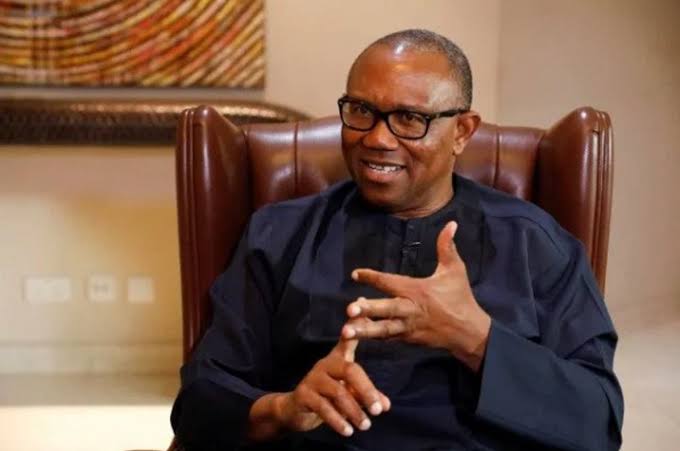
Former Anambra State Governor and presidential candidate of the Nigeria Democratic Congress (NDC), Peter Obi, has dismissed claims that he left the state with outstanding debt when he handed over power in 2014.
Obi said he left more than $150 million in investments for the state, arguing that the funds were sufficient to offset the $123.77 million debt recently attributed to his administration.
He made the statement on Thursday during an interview with Arise News, while responding to claims by the Anambra State Government that his administration left behind loans and other liabilities.
The state Commissioner for Information and Value Reorientation, Law Mefor, had alleged that Obi left $123.77 million in debt at the end of his tenure.
Mefor said the funds were obtained to finance projects covering malaria control, education, healthcare, erosion management, community development and value-chain development.
But Obi disputed the characterization of the funds as loans obtained by his administration from commercial banks.
“I told you these are not loans. I didn’t go to the bank,” Obi said.
He explained that the dollar-denominated portion of the state’s savings and investments in various bonds stood at more than $150 million when he left office.
According to him, the investments generated about $10 million annually for Anambra State.
Obi argued that even if the $123.7 million debt figure were accepted, the funds he left behind would have been sufficient to repay the alleged debt while preserving the state’s capital.
“As at the time I left office, the dollar components of my savings invested in various bonds were over $150 million, which gives Anambra State guaranteed income of about $10 million yearly,” he said.
“Let me assume the worst-case scenario — which is false — that there was $123.7 million owed as of the time I left. I left over $150 million that was earning about $10 million.
“If they just kept the money that I left and were using the income to pay the loan, they would have finished paying it now, with the capital of $150 million still remaining, and still giving Anambra State $10 million annually.”
The former governor likened the situation to inheriting an asset alongside an obligation, arguing that it would be misleading to describe the inheritance simply as a debt.
“Assuming your father left you an inheritance of $100 million, and suddenly somebody comes up and says your father is owing $10 million, are you going to go to the market and say your father left you with debts? You would be unfair,” he said.
Obi also distinguished between conventional borrowing and concessionary financing or support provided through multilateral institutions.
He said some of the funds were facilitated through collaboration between the Federal Government and the World Bank, with Anambra, Ekiti and Bauchi selected for support because of their performance in education.
“They selected Anambra, Ekiti and Bauchi because these three states were doing well in education and said, ‘Why don’t we give them concessionary multilateral support to help them do better?’” Obi said.
“It was a decision made by the Federal Government and the World Bank to give support.”
Obi maintained that, regardless of how the liabilities were classified, the financial resources he left behind were sufficient to cover the alleged debt.
The competing claims have renewed debate over the nature of the obligations inherited by successive administrations in Anambra and the financial position of the state at the end of Obi’s tenure in 2014.
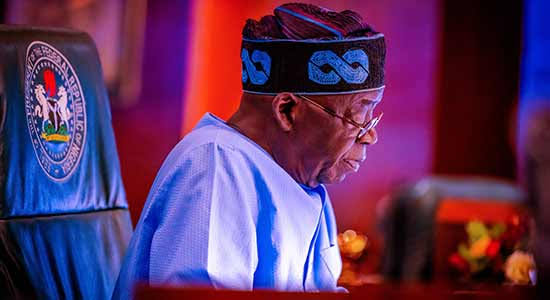
An energy policy expert, Izielen Agbon, has alleged that the Federal Government is planning to sell a controlling stake in the Nigerian National Petroleum Company Limited (NNPCL) to private investors after the 2027 general elections.
Agbon made the allegation during a webinar organised by the Alliance on Surviving COVID-19 and Beyond (ASCAB), chaired by human rights lawyer Femi Falana (SAN), on the theme, “Working-Class Solutions to PMS Price Increases and Fuel Subsidy Removal.”
According to him, discussions about selling NNPCL shares date back to 2023, with the alleged plan involving a reduction of government ownership to about 35 per cent.
“The Tinubu government is planning to sell the shares of NNPCL immediately after the election,” Agbon said.
He alleged that the proposed transaction would see private investors acquire the majority of the company’s shares, leaving the Federal Government with a minority interest.
“They are going to sell it so that the government will only own 35 per cent of the shares of NNPCL,” he said.
Agbon said the proposed structure was similar to the ownership model of Nigeria LNG Limited (NLNG), where the Nigerian government holds a minority stake alongside international oil companies.
Tinubu had announced NNPCL listing.
The allegation comes amid the Federal Government’s publicly stated plans to reform and eventually list NNPCL on the capital market.
President Bola Tinubu said in August 2026 that NNPCL would be reformed and listed on the Nigerian Exchange. The Nigerian Exchange Group also confirmed that the President had expressed commitment to listing the company as part of efforts to deepen Nigeria’s capital market and attract long-term investment.
However, the public announcement of a possible listing does not, by itself, establish Agbon’s allegation that the government intends to reduce its ownership to 35 per cent after the 2027 election.
NNPCL became a limited liability company under the Petroleum Industry Act (PIA) in 2022. Its 2024 financial statements describe the company as having taken over the assets and liabilities of the former NNPC and the Nigerian government’s interests in joint-venture assets.
Agbon warns against private control
Agbon argued that transferring majority ownership of NNPCL to private investors would amount to privatising an institution responsible for managing major national petroleum interests.
“Immediately, we sell the shares of NNPCL to our cronies,” he alleged. “And when you get the shares of NNPCL in private hands, what they have done is to just privatise the resources of the nation.”
He argued that the implications would extend beyond ownership of shares because of NNPCL’s role in Nigeria’s petroleum industry.
“If you control NNPCL and the law says NNPCL is the one in charge of all our government resources, then you actually have access to our government resources,” Agbon said.
He further warned that such a development could eventually result in the privatisation of assets associated with the company, including oil-producing interests and refineries.
The PIA, however, established NNPCL as a commercial entity operating under company law, with the government retaining its ownership interest. NNPCL’s own corporate documents describe the company as responsible for petroleum exploration, production, refining, transportation and product marketing.
Falana backs call for scrutiny
Falana, who chaired the webinar, said the alleged plan should become an issue for public debate ahead of the 2027 elections.
“The information you have just given us about the plan, about the secret plan to sell the shares of NNPC; they have been toying with it, but I think we also must make it part of the campaign,” Falana said.
He also challenged the comparison with NLNG, noting that Nigeria holds a 49 per cent stake in the company while international oil companies hold the remaining 51 per cent.
Falana raised concerns over the management and remittance of dividends generated from Nigeria’s interest in NLNG, alleging that billions of dollars had not been fully remitted into the Federation Account.
He cited figures of about $49 billion in NLNG dividends, claiming that approximately $22 billion had gone to the Federal Government.
NEITI has historically published data on NLNG-related revenues and government receipts, including detailed records of dividends. Its broader mandate is to promote transparency and accountability in Nigeria’s extractive sector.
2027 election issue
Agbon called on Nigerians and political actors to make the future ownership of NNPCL part of the 2027 election debate, alongside issues such as petrol prices and workers’ wages.
“There is a need for us to stop and use this opportunity, not only to fight to sell lower petrol prices, but to fight them to increase minimum wage, and to fight them to say you cannot sell the shares of NNPCL,” he said.
He maintained that Nigeria’s petroleum assets should remain under public ownership, arguing that elected governments have a limited mandate and should not dispose of major national assets without broad public scrutiny.
“That is the inheritance of the citizens of Nigeria as a nation. It’s not for sale,” Agbon said. “People are just elected to be leaders for four years, at maximum eight years. You cannot sell the whole house because you’ve been elected to serve the people for eight years.”
The allegation comes as the Tinubu administration continues its broader restructuring of NNPCL and the petroleum sector. In 2026, the Presidency also announced measures aimed at repositioning NNPCL as a fully commercial operator while safeguarding the Federation’s interests.
Note: Agbon’s claim that the government plans to sell a majority stake to private investors after the 2027 election remains an allegation.
The publicly documented position is that Tinubu supports reforming and listing NNPCL on the capital market; the specific 35 per cent government ownership figure and alleged post-2027 timetable were not established by the official sources reviewed.

Ex-Plateau Governor Wanted N40m Vehicle Invoice Doubled to N80m, Coscharis Founder Alleges

Obi: I Left Over $150m in Anambra, Enough to Offset Alleged $123.7m Debt

Tinubu Plans NNPCL Share Sale After 2027 Election, Energy Expert Alleges


-

 Foreign16 hours ago
Sad! 27 Killed, 26 Injured in Two South Africa Mass Shootings as Police Hunt Gunmen
-

 Entertainment16 hours ago
BREAKING: Nollywood Actor Rykardo Agbor Survives Ghastly Car Crash in Ibadan
-

 News16 hours ago
Tinubu Shifts Return Date Again, Now Expected Back Tuesday
-

 News3 hours ago
2027: Elections must never be treated as do-or-die affairs – INEC Chair, Amupitan appeals to Emir of Zazzau
-
 News9 hours ago
NECO 2026: Kano beats Lagos, Oyo, emerges best-performing state
-

 Metro9 hours ago
Terrorists abduct newlywed couple, four others in Kwara
You must be logged in to post a comment Login