News
Dangote supports NUPRC on domestic crude supply guidelines

- /home/naijuinz/public_html/wp-content/plugins/mvp-social-buttons/mvp-social-buttons.php on line 27
https://naijablitznews.com/wp-content/uploads/2024/07/Screenshot_20240718-130106-520x600.png&description=Dangote supports NUPRC on domestic crude supply guidelines', 'pinterestShare', 'width=750,height=350'); return false;" title="Pin This Post">
- Share
- Tweet /home/naijuinz/public_html/wp-content/plugins/mvp-social-buttons/mvp-social-buttons.php on line 72
https://naijablitznews.com/wp-content/uploads/2024/07/Screenshot_20240718-130106-520x600.png&description=Dangote supports NUPRC on domestic crude supply guidelines', 'pinterestShare', 'width=750,height=350'); return false;" title="Pin This Post">


By Kayode Sanni-Arewa
THE Management of Dangote Industries Limited (DIL), have commended the Nigerian Upstream Petroleum Regulatory Commission (NUPRC), for its various interventions in the oil company’s crude supply requests from International Oil Companies (IOCs), and for publishing the Domestic Crude Supply Obligation (DCSO) guidelines to enshrine transparency in the oil industry.
Vice President, Oil & Gas, Dangote Industries Limited, Mr. DVG Edwin however said: “If the Domestic Crude Supply Obligation (DCSO) guidelines are diligently implemented, this will ensure that we deal directly with the companies producing the crude oil in Nigeria as stipulated by the PIA.”
Edwin insisted that IOCs operating in Nigeria have consistently frustrated the company’s requests for locally produced crude as feedstock for its refining process.
He highlighted that when cargoes are offered to the oil company by the trading arms, it is sometimes at $2-$4 (per barrel) premium above the official price set by NUPRC.
“As an example, we paid $96.23 per barrel for a cargo of Bonga crude grade in April (excluding transport). The price consisted of $90.15 dated Brent price + $5.08 NNPC premium (NSP) + $1 trader premium. In the same month, we were able to buy WTI at a dated Brent price of $90.15 + $0.93 trader premium including transport. When NNPC subsequently lowered its premium based on market feedback that it was too high, some traders then started asking us for a premium of up to $4m over and above the NSP for a cargo of Bonny Light.
“Data on platforms like Platts and Argus shows that the price offered to us is way higher than the market prices tracked by these platforms. We recently had to escalate this to NUPRC”, Edwin said adding we asked the regulator to take a second look at the crude pricing.
Edwin’s response came against the background of a statement by the Chief Executive Officer of NUPRC, Gbenga Komolafe, who in an interview on ARISE News TV said that “it is ‘erroneous’ for one to say that the International Oil Companies (IOCs) are refusing to make crude oil available to domestic refiners, as the Petroleum Industry Act (PIA) has a stipulation that calls for a willing buyer-willing seller relationship.”
Edwin noted that, “The NUPRC has been very supportive to the Dangote Refinery as they have intervened several times to help us secure crude supply. However, the NUPRC Chief Executive was probably misquoted by some people hence his statement that IOCs did not refuse to sell to us. To set the records straight, we would like to recap the facts below.
“Aside from Nigerian National Petroleum Corporation Limited (NNPCL), to date we have only purchased crude directly from only one other local producer (Sapetro). All other producers refer us to their international trading arms.
“These international trading arms are non-value adding middlemen who sit abroad and earn margin from crude being produced and consumed in Nigeria. They are not bound by Nigerian laws and do not pay tax in Nigeria on the unjustifiable margin they earn.
“The trading arm of one of the IOCs refused to sell to us directly and asked us to find a middleman who will buy from them and then sell to us at a margin. We dialogued with them for 9 months and in the end, we had to escalate to NUPRC who helped resolve the situation,” Edwin stated.
According to him, “When we entered the market to purchase our crude requirement for August, the international trading arms told us that they had entered their Nigerian cargoes into a Pertamina (the Indonesia National Oil Company) tender, and we had to wait for the tender to conclude to see what is still available.
“This is not the first time. In many cases, particular crude grades we wish to buy are sold to Indian or other Asian refiners even before the cargoes are formally allocated in the curtailment meeting chaired by NUPRC.
“However, we would like to urge NUPRC to take a second look at the issue of pricing. NUPRC has severally asserted that transactions should be on willing seller/willing buyer basis. The challenge however is that market liquidity (many sellers/many buyers in the market at the same time) is a precondition for this. Where a refinery needs a particular crude grade loading at a particular time then there is typically only one participant on either side of the market.
“It is to avoid the problem of price gouging in an illiquid market that the domestic gas supply obligation specifies volume obligation per producer and a formula for transparently determining pricing. The fact that the domestic crude supply obligation as defined in the PIA has gaps is no reason for wisdom not to prevail”, Edwin stated.


The Nigerian National Petroleum Company Limited (NNPCL) has announced a N66 per litre discount on petrol purchases at its retail outlets nationwide to mark Nigeria’s 66th Independence Anniversary.
The offer, which runs from October 1 to 7, 2026, comes less than 24 hours after the state-owned oil company reduced its petrol pump price to N1,370 per litre.
NNPCL announced the promotional offer in a notice posted on its official X account on Thursday, urging Nigerians to take advantage of the temporary price reduction.
According to the company, customers will enjoy a N66 discount on every litre of Premium Motor Spirit (PMS) purchased at participating NNPC Retail stations, provided they make payments through its mobile application.
“N66 off every litre of PMS at NNPC Retail today till 7 October. Pay with the app at any participating station. T&Cs apply,” the company stated.
The latest offer follows a fresh round of petrol price adjustments triggered by a reduction in the gantry price of petrol by the Dangote Refinery.
On Wednesday, NNPCL filling stations in Abuja and neighbouring areas reduced their pump price by N25, bringing the cost of petrol down to N1,370 per litre.
The adjustment came after the Dangote Refinery lowered its gantry price to N1,325 per litre, prompting changes in retail prices across parts of the country.
Similarly, MRS filling stations in Abuja had earlier reduced their petrol pump price to N1,370 per litre.
With the latest price cuts and promotional offer, motorists in Abuja and surrounding areas can now access petrol at varying prices, with pump rates previously ranging between N1,370 and N1,450 per litre.
The NNPCL discount is expected to provide additional relief to motorists during the week-long Independence Day promotion, although customers must use the company’s mobile app and patronise participating outlets to qualify.

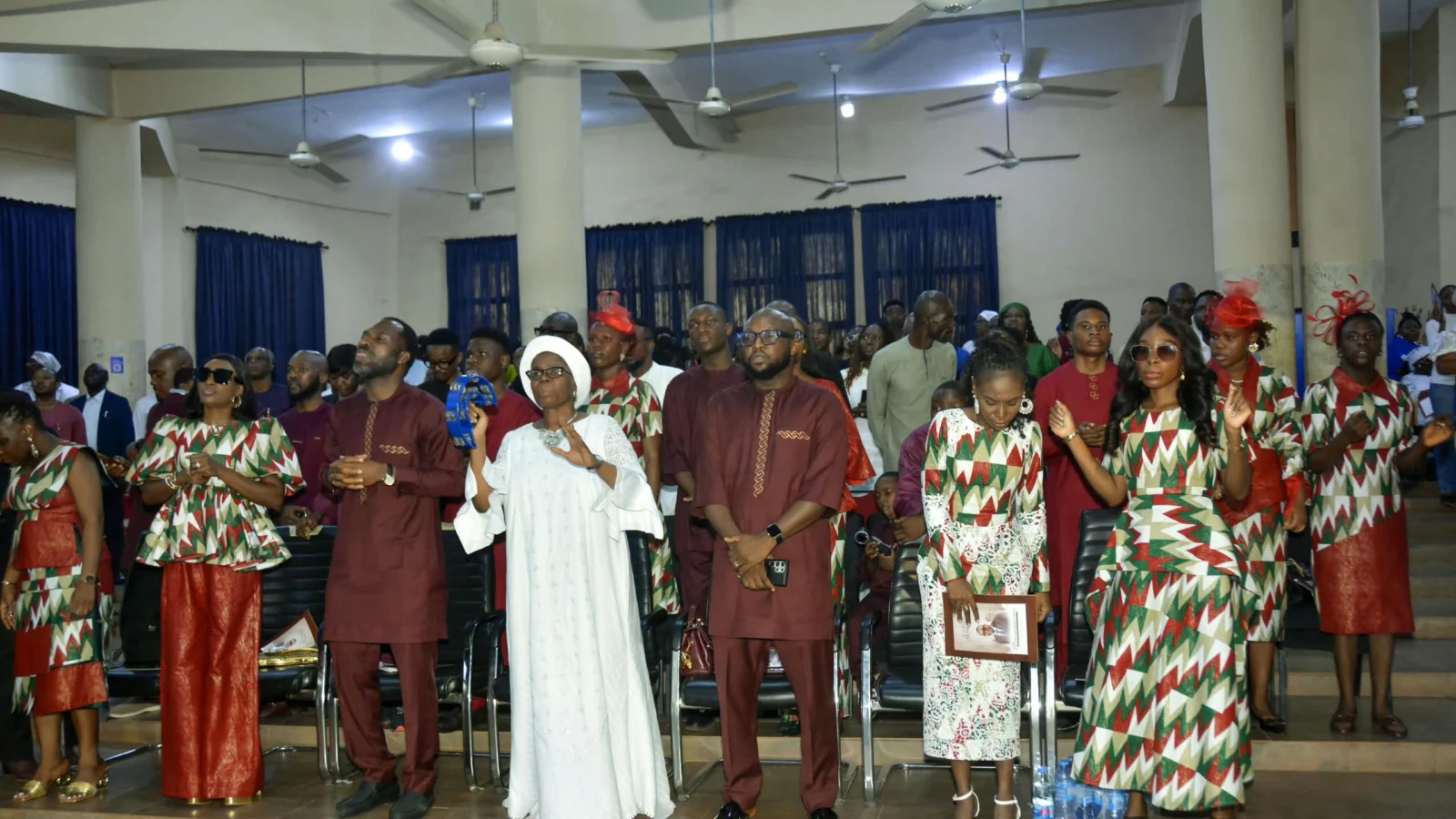
National figures, religious leaders, and grieving family members gathered in Abuja on Wednesday to begin funeral rites for Rev. Dr. William Okoye, who passed away aged 74.
The founding General Overseer of All Christians Fellowship Mission (ACFM) Worldwide was honoured during a solemn Lying in State and Service of Songs at the Church’s Maitama headquarters.
Former Information Minister Prof. Jerry Gana paid emotional tribute to the late Cleric, highlighting his unwavering devotion to the Christian gospel and his profound influence on national governance.

”He was never ashamed of the Gospel because for him it is the power of God for salvation.
“He proclaimed it very clearly, firmly, and convincingly,” Gana said.
Gana recalled working alongside Okoye as a spiritual advisor under the presidential administrations of Olusegun Obasanjo and Goodluck Jonathan, emphasising his absolute fearlessness before leaders.
”Every morning at 6 a.m., he would pick me for prayer with the president. He was ready to speak truth to power. Nigeria has lost a giant,” Gana added.
Emeritus Archbishop of Abuja, John Cardinal Onaiyekan, reflected fondly on Okoye’s pioneering role during the early days of the Federal Capital Territory’s development.
”When he started here to gather people in Abuja to pray on Sundays, there were no churches here. People in Lagos thought the new capital was not serious,” Onaiyekan recalled.
The Cardinal noted that what began as a humble fellowship grew into a massive global movement through Okoye’s vision and commitment to community building.

”What I remember him for is somebody who sees a need and does something to fill it.
“That little seed planted has now grown into a big tree,” Onaiyekan stated.
Rev. Moses Aransiola, National Director of Nigeria Prays, praised the late clergyman for prioritising moral integrity over personal gain throughout his 52-year ministry.
”He did not value material things above integrity, commitment, loyalty, and faithfulness.
“To be a pastor to two sitting presidents is a real opportunity God gave him,” he said.
Aransiola urged Nigerians to emulate Okoye’s steadfast character, noting that he lived an uncompromised life that earned him national respect.
”When everybody is chasing after compromising their lives and integrity, God brought honour to Reverend Okoye easily. It pays to live a life of legacy,” he added.
In a joint tribute, the children of Okoye remembered him not only as a renowned public minister, but as a devoted, loving, and humorous father.
”Daddy lived his faith daily. We remember a busy man who still made time for his family, took us on vacations, and filled our home with laughter,” his children shared.
They reaffirmed their commitment to upholding their father’s principle: “Labour hard, consume little, give much, and all to Christ,” while guarding the family name.
”He may not have left us great material wealth, but he left us something far more enduring: his name, his faith, his values, and his example,” they added.
The family announced that Rev. Okoye’s vision would be preserved through the William and Helen Heritage Foundation, honouring both him and his late wife, Evangelist Helen Okoye.

TheNews Agency of Nigeria (NAN)reports the events continue in Abuja with a Night of Tributes on Oct. 2 at the National Christian Centre, before moving to Agulu, Anambra State, for interment on Oct. 9.
The deceased is survived by six children, nine grandchildren, including Mr Victor Okoye, a journalist with theNews Agency of Nigeria(NAN), and the entire ACFM family.
Born in September 1951, the former Aso Villa Chapel Chaplain died on July 15, at the National Hospital in Abuja.
The Cleric will be buried on Oct. 9 in his country home, Amatutu Village, Agulu, Anaocha LGA, Anambra State, after a week-long funeral programme.(NAN)

Public sector unions under the aegis of the Joint National Public Service Negotiating Council, JNPSNC, have directed all federal, state and local government employees, including staff of ministries, departments and agencies, MDAs, nationwide, to begin a three-day warning strike from midnight today over the failure of the government to address their demands.
The council directed union officials in the federal, state and local government services to ensure total compliance with the industrial action, citing what it described as worsening economic and mental hardship being experienced by workers and other Nigerians.
Members of the JNPSNC include the Nigerian Civil Service Union (NCSU); Medical and Health Workers Union (M&HWU); Association of Senior Civil Servants of Nigeria (ASCSN); and National Association of Nigerian Nurses and Midwives (NANNM).
Others are the Amalgamated Union of Public Corporations, Civil Service Technical and Recreational Employees (AUPCTRE); Nigeria Union of Public Service, Reportorial, Secretarial, Data Processors and Allied Workers (NUPSRAW); National Union of Printing, Publishing and Paper Products Workers (NUPPPPROW); and National Union of Agriculture and Allied Employees (NUAEE).
Employees of federal and state government MDAs are also affected.
The warning strike followed the failure of the Federal Government to address demands contained in a letter dated September 21, 2026, to President Bola Tinubu by the national leadership of the JNPSNC.
The council explained that the action was necessary to press home its concerns over the hardship confronting workers and vulnerable Nigerians.
The council had also, on September 29, threatened a three-day warning strike should its demands for the petrol price to be cut to N500 a litre, a wage award and other measures to cushion the hardship in the country not be met or addressed by President Tinubu during his Independence Anniversary Address to the nation on October 1.
The JNPSNC leadership is disappointed that President Tinubu, in his Independence Anniversary Address, did not heed the demand for the pump price of petrol to be slashed to N500, from the current N1,400 to N2,000 per litre, depending on the location, or announce immediate measures to ameliorate the socioeconomic hardship caused by government policies.
The directive to proceed on the warning strike is contained in a circular by JNPSNC’s National Secretary (Trade Union side), Olowoyo Gbenga, dated October 1, 2026, to the national presidents and general secretaries, state chairmen and secretaries of affiliate unions to the JNPSNC, titled “Declaration of three (3) day Warning Strike; action with immediate effect”.
The circular reads: “Please, recall the position of the National leadership of Joint National Public Service Negotiating Council that if Mr President of the Federal Republic of Nigeria, Bola Ahmed Tinubu refuses to address our requests as contained in the letter to his exalted office (dated 21st September, 2026), the three day warning strike earlier scheduled shall commence immediately.
“Consequent upon the above, the strike shall start with effect from midnight of Friday 2nd October, 2026 to Sunday October 4th, 2026.“In the same vein, all Public Servants in the services of Federal, State and Local Governments are to join the warning strike because an injury to one is an injury to all, most especially all workers, their dependants, vulnerable and hapless Nigerians are groaning terribly under the present economic hardship.
“The economic and mental hardships are becoming unbearable and frustrating.
“The time to act and mobilise workers for the three days warning strike is now!!! Please, disseminate the information!!! Surely, there is victory for us!!!”
Expressing their frustration, one of the leaders of the JNPSNC told Vanguard newspapers: “We are deeply disappointed that the President’s Independence Anniversary address failed to address our legitimate demands for a reduction in the pump price of petrol and the introduction of concrete measures to alleviate the excruciating hardship confronting workers and other Nigerians.
“While the President acknowledged the severe suffering inflicted on citizens by government policies, it is deeply concerning that the speech offered no concrete relief or meaningful response to the urgent demands of Nigerian workers.
“In view of this failure to address these pressing concerns, our three-day warning strike will proceed as planned.”
Recall that the JNPSNC had, on September 21, written to President Tinubu, demanding that the price of petrol be slashed to N500, the immediate announcement of a wage award and the commencement of negotiations for a minimum wage of not less than N500,000 from 2027, among other demands.
In a statement on Tuesday, September 29, 2026, leaders of the JNPSNC warned that should the issues of fuel pump prices and the wage award not be addressed by September 30, especially during the Independence Anniversary Address by President Tinubu, public servants nationwide would commence a three-day warning strike beginning October 2, 2026.
The statement, issued by the National Secretary of the JNPSNC and General Secretary of the Nigeria Civil Service Union, Olowoyo Gbenga, said the September 30 deadline remained sacrosanct, stressing that the concerns of Nigerian workers could no longer be ignored.
According to him: “the three critical issues requiring urgent attention are as follows: Reduction of Fuel Price to N500 per Litre. The Federal Government should take urgent steps to bring down the price of Premium Motor Spirit (PMS) to N500 per litre.“This can be achieved through the provision of an intervention fund to address landing costs and support oil and gas operators.
“It is equally important for the Federal Government to ensure the sale of crude oil to the Dangote Refinery and operators of modular refineries at appropriate terms, in order to facilitate increased domestic refining and help bring down the price of petroleum products.
“The current price of PMS, ranging from N1,450 to N2,000 and, in some locations outside major communities and cities, as high as N2,500 per litre, is unacceptable to Nigerian workers.
“The Council maintains that the economic hardship occasioned by the high cost of fuel is placing the survival of Nigerian workers, their dependants and the general populace under severe pressure, making it increasingly difficult for Nigerians to live normal and dignified lives.
“The Federal Government should urgently approve a Wage Award for Nigerian workers to cushion the effects of the prevailing harsh economic conditions being experienced by workers, their dependants, and vulnerable Nigerians.
“The Council believes that urgent action on this demand will further enable public servants to consolidate their loyalty, commitment and productivity within the public service ecosystem.
“The Federal Government should urgently establish a Tripartite Committee to commence and facilitate negotiations for the new National Minimum Wage expected to become due in 2027.
“The Nigerian workers’ demand for the immediate constitution of the committee is informed by the need to avoid any administrative or procedural delay that could affect the implementation of the new National Minimum Wage once it is eventually negotiated and passed into law by the National Assembly.
“Consequently, the Council states that failure by the Federal Government to take the necessary steps to address these issues on or before 30th September 2026 will leave Nigerian workers with no option but to commence a three-day warning strike, with effect from Friday, 2nd October 2026, to press home their demands.
“It is imperative to state clearly that the Independence Day address of the President of the Federal Republic of Nigeria should adequately address these critical issues.
“Failure to address the concerns raised, according to the Council, will attract the displeasure of Nigerian workers and their dependants, as well as other vulnerable Nigerians who continue to bear the brunt of the prevailing economic hardship.”
NLC backs action
Already, the leadership of the Nigeria Labour Congress, NLC, has given its tacit backing to the industrial action as can be deduced from its statement to make the nation’s 66 Independence Anniversary celebrations.
In an Independence Day statement by its President, Joe Ajaero, on Wednesday, the NLC said rising petrol prices, inflation, stagnant wages, unemployment and insecurity had deepened the economic difficulties faced by workers and other Nigerians.
The labour centre said the real value of workers’ wages had been eroded by inflation, while rising transportation costs had triggered increases in the prices of food, school fees, rent and other essential goods and services.
It said petrol was selling for about N1,430 per litre or higher in major cities, with prices reportedly higher in some remote areas.
The NLC attributed the rising cost of living partly to the petrol price increase that followed the removal of subsidy in 2023, questioning the utilisation of savings from the policy.
“The real value of wages has been devoured by structural inflation. Petrol now sells at N1,430 per litre or higher in major cities and far more in remote areas.
“The surge in transportation costs drives up the prices of food, school fees, rent, and nearly every necessity of life, while nominal wages remain stagnant,” it said.
The union also criticised Nigeria’s continued dependence on imported refined petroleum products despite its status as a major oil-producing country, while calling for greater attention to domestic refining.
On its demands, the NLC urged the government to explore measures to immediately reduce petrol prices, describing transportation costs as a major channel through which inflation affects households.
Our demands are clear, just, and cannot be delayed any further. First, we demand that government seek ways to immediately reduce the price of petrol as transportation costs are the central transmission mechanism of inflation in Nigeria,” it said.
The NLC also demanded the immediate implementation of a nationwide wage award for workers in the federal, state and local governments.
It said the wage award should serve as an emergency measure to cushion the erosion of workers’ purchasing power.
The NLC further demanded implementation of tax relief measures it said were agreed upon during the October 2023 dialogue between the government and labour, noting that provisions contained in the Memorandum of Understanding had yet to be implemented.
It also called for immediate negotiations for a new national minimum wage ahead of 2027, arguing that the existing N70,000 minimum wage had been significantly eroded by inflation.
“We demand the immediate establishment of a tripartite committee to ensure that a new wage standard for 2027 is formulated and legislated before the year runs out,” it said.
The NLC called for a reduction in the cost of governance and greater transparency in the management of public resources.
It also urged the government to create more economic opportunities for young Nigerians, saying unemployment and poverty were contributing to desperation among the youth.
On insecurity, the labour union said the security situation was worsening economic conditions and exposing farmers, teachers and healthcare workers to danger in some parts of the country.
It cited a figure of nearly 2,000 deaths from violence in the first quarter of 2026, but did not identify the source of the figure in its statement.
“The NLC said insecurity, poverty, unemployment and inequality were interconnected challenges that required coordinated action.
As political activities intensify ahead of the 2027 general elections, the labour centre warned political actors against manipulating elections, intimidating voters and exploiting ethnic or religious divisions.
It said workers would make their political choices independently and assess political parties and candidates based on their policies and records.
“The Nigeria Labour Congress will, at the appropriate time, use our Workers’ Charter to make it clear which policies and candidates deserve the support of the working class.
“However, we will never accept any force treating workers’ organisations as dispensable electoral tools. Workers have the right to independent political thoughts, judgement, and choice,” it said.
Tegbe’s 24-Hour Energy Zones and the Shift From Megawatts to Money

Independence Day: NNPCL Slashes Petrol Price With N66 Discount for Nigerians

Nigeria Bids Farewell to Reverend Okoye, Ex-Aso Villa Chaplain


-

 Metro9 hours ago
Gunmen Abduct 20 Corps Members In Imo
-

 News9 hours ago
Nigeria Is Now the Worst Place To Be Born — Peter Obi
-

 News9 hours ago
If you elect me as your president in 2027, I will end election rigging in Nigeria — Atiku
-
 News9 hours ago
Nigeria at 66: ‘Tinubu made Yahoo Yahoo promise to Nigerians, he’s fake’ – Atiku
-

 Foreign9 hours ago
UK government begins freeing 5,000 prisoners due to extreme prison overcrowding
-

 News9 hours ago
Nigerian researcher Chika Onochie wins grant for male fertility study in Canada
You must be logged in to post a comment Login