News
Exploring AI to bridge digital divide
- /home/naijuinz/public_html/wp-content/plugins/mvp-social-buttons/mvp-social-buttons.php on line 27
https://naijablitznews.com/wp-content/uploads/2024/02/Sonny-Aragba-Akpore.jpg&description=Exploring AI to bridge digital divide', 'pinterestShare', 'width=750,height=350'); return false;" title="Pin This Post">
- Share
- Tweet /home/naijuinz/public_html/wp-content/plugins/mvp-social-buttons/mvp-social-buttons.php on line 72
https://naijablitznews.com/wp-content/uploads/2024/02/Sonny-Aragba-Akpore.jpg&description=Exploring AI to bridge digital divide', 'pinterestShare', 'width=750,height=350'); return false;" title="Pin This Post">
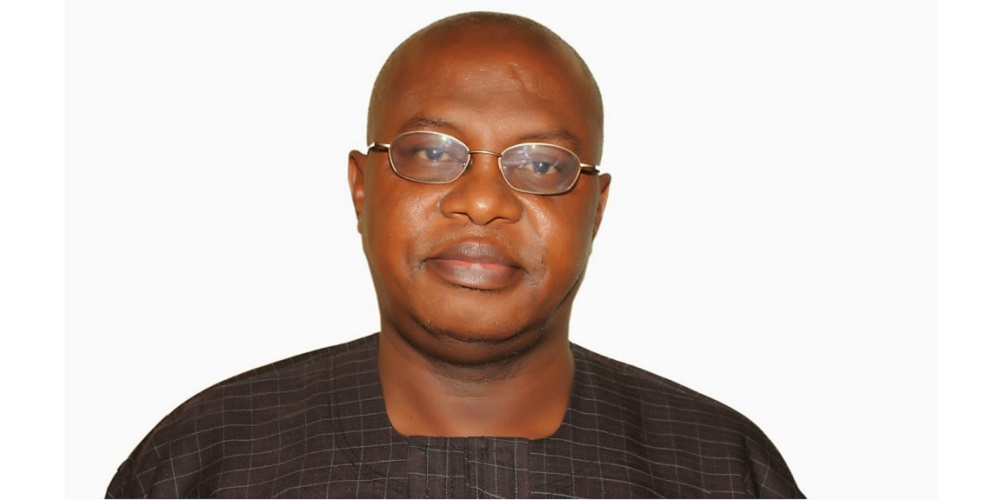
By Sonny Aragba-Akpore

As humanity grapples with the race to bridge the digital divide, global inequality remains a threat .
For instance an estimated 2.6 billion people around the world remain offline, according to the International Telecommunication Union (ITU), the UN Agency for Digital Technologies.
While overall Internet use is increasing, the benefits of access are unevenly distributed, reinforcing persistent digital divides affecting women and people in countries with lower economic development.

The elderly and people with disabilities are among other groups being left behind.
“Broadband is fundamental to ensure that everyone can benefit from digital technologies when so many people are still offline around the world,” according to ITU Secretary-General Doreen Bogdan-Martin, Co-Vice Chair of ITU Broadband Commission.
“AI and other emerging technologies can help efforts to achieve universal meaningful connectivity, and it’s our job to make sure this happens in a way that is responsible for people and the planet.”
ITU Broadband Commission recently reviewed progress on its 2025 Advocacy Targets, comprising seven objectives for action in broadband development and universal connectivity. One target for mobile broadband affordability is close to being achieved. A target for gender equality in access to broadband has been achieved for some countries, although not globally.
The Commission noted that AI and emerging technologies can drive progress on broadband and the Sustainable Development Goals (SDGs).
But balancing the promotion of AI benefits while managing the challenges is a key task for policy-makers who are “racing to catch up” to the implications of the technologies according to ITU documents.
A worried ITU boss lamented recently about the divide which she and her team think could be addressed before 2030 under the SDGs.
“With one-third of humanity still offline and women and other vulnerable groups on the wrong side of the globe’s digital divides,regulators should raise standards if this one third offline population could be accommodated in the dividends of digital services.”
She spoke at the 2024 Global Regulators Symposium (GSR-2) whose focus was on “Best Practice Guidelines that highlight the innovation, trust, and inclusivity that we need in the policy and regulatory environment,”
She told the regulators that “With change being the only certainty facing regulators and policymakers, we must work together to pursue regulatory approaches to leverage transformative technologies such as AI, promote the space economy, encourage innovation, and support climate action and the UN Sustainable Development Goals.”
The regulators who met in Kampala,Uganda endorsed a set of guidelines to maximize the benefits of transformative information and communication technologies (ICTs) at the Global Symposium for Regulators (GSR-24) which closed July 4 .
GSR 24 highlighted Africa’s National Broadband Mapping Systems project, supported by the European Commission, to help establish broadband mapping systems to foster investment and digital transformation in Africa. With a budget of EUR 15 million over four years, the project will initially benefit 11 countries: Benin, Botswana, Burundi, Côte d’Ivoire, Ethiopia, Kenya, Malawi, Nigeria, Uganda, Zambia and Zimbabwe.
The “GSR-24 Best Practice Guidelines” agreed by ICT regulators include a series of considerations for balancing innovation with regulation to create a positive impact on societies and economies from emerging technologies such as artificial intelligence (AI).
Prior to the opening of GSR-24, the Regional Regulatory Associations (RA) and Digital Regulation Network (DRN) meeting shared experiences and knowledge as well as areas for collaboration. The meeting also featured the achievements of the successful first year of the DRN, focusing on capacity building, thought leadership, and regulatory experimentation and innovation.
Key activities presented include knowledge sharing through the ITU Academy, the broadband mapping project, capacity building activities, contributions to ITU-D Study Groups, RA participation in interactive workshops and engaging on twinning experiences to learn from other Regional Regulatory Associations.
Also ahead of GSR-24, the Industry Advisory Group on Development Issues and Private Sector Chief Regulatory Officers (IAGDI-CRO) convened industry and private sector thought leaders to share experiences and proposals with regulators to address the complex regulatory and business landscape of digital ecosystems.
Apart from digital infrastructure development, implementation of regulatory ”sandboxes,” strategies to enable high-speed connectivity, participants discussed regulation of the future, including new domains such as AI, and technologies for the future.
A session of Network of Women (NoW) in ITU’s Telecommunication Development Sector at GSR-24 explored mechanisms for greater participation of women in ICT-related fields and addressed the leadership gender gap in the ICT sector.
Ms. Jessica Alupo, Vice-President of the Republic of Uganda, opened GSR-24 on July 1, on behalf of Mr. Yoweri Kaguta Museveni, President of the Republic of Uganda.
Hosted by the International Telecommunication Union (ITU), the UN Agency for Digital Technologies – the symposium brought together over 600 participants including Ministers, Heads of Regulatory Authorities, industry executives and academics to discuss pressing regulatory issues.
“We are excited that the GSR provides a platform where all thought leaders, regulators, industry players and other key ICT stakeholders converge to dialogue and set the policy and regulatory agenda that will guide the global digital industry over the near future,” according to Uganda’s Minister for ICT and National Guidance, Dr. Chris Baryomunsi.
“Best practice now calls for a coordinated and collaborative approach that is inclusive of all relevant stakeholders – if we are to achieve the impact that we all desire. We commit to align our national policies and regulatory frameworks around the well-thought-out Best Practice Guidelines that will encourage investment, innovation, and growth in the ICT sector.”
Regulators at GSR-24 noted that equal, global access to existing digital services would help countries leverage transformative technologies.
AI, for example, could help network operators conduct better planning and prevent fraud, but it also raises challenges associated with privacy, bias, job displacement, and the reliability of information.
“At GSR-24, we discussed core policy and regulatory issues to maximise the potential of digital technologies to improve lives. We addressed key topics, including new developments in the field of generative AI and robotics, building an inclusive, safe, and sustainable space economy, and required interventions in addressing climate change challenges,” according to Dr. Cosmas Luckyson Zavazava, Director of ITU’s Telecommunication Development Bureau adding “We brought the global community of regulators together to strengthen our collective capacity to navigate the fast-changing technology landscape and drive sustainable and inclusive digital transformation. We heard from young innovators and entrepreneurs and adopted action-oriented Best Practice Guidelines to help us chart the course of transformative technologies for positive impact.”
“As we navigate the transformative landscape of digital technologies, the importance of impactful regulation cannot be overstated,” according to the Chairman of GSR-24 and Executive Director of the Uganda Communications Commission (UCC), George William Nyombi Thembo. “Our shared learnings and collaborative efforts are crucial in shaping a regulatory environment that not only fosters innovation but also ensures that the benefits of technological advancements are widely shared. By recognizing the interdependencies with other sectors, we can create a cohesive framework that supports sustainable development, economic growth, and inclusivity. Together, we have the power to turn technology into a force for positive change, illuminating pathways to a brighter, more connected future.”
A session of Network of Women (NoW) in ITU’s Telecommunication Development Sector at GSR-24 explored mechanisms for greater participation of women in ICT-related fields and address the leadership gender gap in the ICT sector.
By Gloria Ikibah
The House of Representatives has commenced a comprehensive investigation into illegal mineral exploitation across Nigeria, pledging to tackle the activities of criminal networks draining the country’s vast mineral resources.
The move was the resolution at a high-level stakeholders’ workshop on extractive industry governance organised by the House Ad Hoc Committee on Mineral Exploitation, Security and Anti-Money Laundering on Monday in Abuja.
Declaring the workshop open, Speaker of the House of Representatives, Rt. Hon. Tajudeen Abbas, described the committee’s assignment as one of the most significant responsibilities before the National Assembly.
He lamented that for years, illegal operators had continued to exploit Nigeria’s mineral wealth, depriving the country of much-needed revenue and weakening its economic potential.
Abbas explained that the workshop was designed to gather credible information, evidence and practical recommendations from regulators, security agencies and operators within the extractive industry before the House considers further legislative action.
He urged participants to speak openly and contribute meaningful solutions.
According to him, “Nigeria cannot achieve economic diversification, fiscal stability or job creation if the sector that should be a second revenue pillar is bleeding from illegality and opacity.
“This is not an inquisition; it is a partnership. Withhold nothing, speak plainly and proffer solutions. The success of this intervention depends on the quality of information we receive and the sincerity of purpose we all bring to this room”.
Earlier, Chairman of the House Ad Hoc Committee on Mineral Exploitation, Security and Anti-Money Laundering, Rep. Sanni Abdulraheem, said the committee was also examining whether existing laws and regulatory institutions were strong enough to close loopholes that continue to encourage illegal mining.
He explained that the investigation will also trace the financial networks through which proceeds from illegal mining are concealed and laundered, while assessing whether security arrangements around mining communities are adequate.
Abdulraheem identified illegal mining, weak enforcement and money laundering as the major factors responsible for the disconnect.
“Nigeria is blessed. Few nations on earth carry the range and richness of mineral deposits that lie across our states—gold, lithium, tin, coal, tantalite and many more. On paper, these resources should be transforming livelihoods, funding schools and hospitals, and strengthening our national economy. Yet, for too long, a troubling gap has persisted between the wealth in our ground and the prosperity in our communities.
“That gap has a name: illegal mining, weak enforcement, and the laundering of proceeds that should belong to the Nigerian people. It is a gap filled instead by criminal networks, by revenue leakages we can no longer afford to ignore, and by security threats that have, in some of our communities, turned mineral-rich land into contested and dangerous territory”, hesaid.
The lawmaker noted that the committee had already engaged several government agencies and, where necessary, issued summons to compel cooperation.
He emphasised that the exercise was not intended to create confrontation but to ensure transparency and accountability.
“Oversight without candour achieves nothing, and reform without accurate information is guesswork dressed as policy,” he added.
Abdulraheem maintained that addressing illegal mining required collaboration among regulators, security agencies, financial intelligence institutions, state governments, traditional rulers, licensed operators and civil society organisations.
He also commended security agencies, particularly the Nigeria Security and Civil Defence Corps (NSCDC) and the Mining Marshals, for their efforts in protecting the country’s mineral resources.
According to him, “We must understand your capacity gaps honestly, so that we can recommend the support and reform you genuinely need.”
He further noted that illicit mining proceeds often pass through complex financial channels that require coordinated efforts to track and dismantle.
“Illicit proceeds do not vanish—they move through accounts, shell arrangements and cross-border channels that can be traced with the right tools and the right political will. We look to your expertise to help this Committee and the nation close those channels,” he said.
He therefore assured participants that all submissions, data and recommendations received during the workshop would form part of the committee’s final report to the House.
Also speaking at the event, the Nigeria Security and Civil Defence Corps disclosed that its Mining Marshals had arrested more than 671 suspected illegal miners across the country, with 397 already facing prosecution.
Representing the Commandant-General of the NSCDC, Ahmed Audi, the Commander of the Mining Marshals, Attah Onoja, said the Corps had dismantled several illegal mining sites, leading to improved government revenue and renewed investor confidence in the sector.
He, however, identified inadequate logistics, limited manpower, delays in the judicial process and interference from organised criminal syndicates as major obstacles to effective enforcement.
Onoja called for increased funding, improved surveillance technology and the establishment of specialised courts to handle mining-related offences more efficiently.
The workshop attracted regulators, security agencies, industry operators and other stakeholders, who pledged to support efforts aimed at sanitising Nigeria’s mining sector and ensuring that the country’s mineral resources contribute meaningfully to national development.
News
Tinubu Flags Off Tungan Madaki-Zuba Road(Photos)
… Moves to Deepen Integration of Satellite Towns into Abuja Development plan
President Bola Ahmed Tinubu on Monday, advanced his administration’s drive to integrate satellite communities into the Federal Capital Territory’s development framework with the flag-off of the construction of the access road linking Tungan Madaki to the Abuja-Kaduna Expressway through Zuba.

The President, represented by the Speaker of the House of Representatives, Rt. Hon. Tajudeen Abbas, said the project is part of the Renewed Hope Agenda aimed at ensuring that rural and suburban communities benefit from the same level of infrastructure development as residents of the city centre.
According to him, the road project formed a critical component of a broader strategy to connect communities, stimulate economic activities, improve mobility and unlock investment opportunities across the FCT.
“This project is a direct continuation of the road from the Bill Clinton Drive to Tungan Madaki Community Road which we commissioned a few weeks ago as part of the activities marking the third anniversary of the Renewed Hope Administration.
“What began as one road is now growing into a network, and that is how real development takes root,” Tinubu said.
The President noted that residents of Tungan Madaki, Zuba and neighbouring communities, many of whom are farmers, traders and students, have endured years of poor road access that hindered movement, increased transportation costs and limited economic opportunities.

He explained that the new road would provide a direct link to the Abuja-Kaduna Highway, reduce travel time, lower vehicle maintenance costs and facilitate the movement of goods and services.
“This new road will link Tungan Madaki directly to the Abuja-Kaduna Road, cutting travel time, reducing vehicle maintenance costs, and opening a faster route for people and goods.
“It will connect rural productivity to urban opportunity. When farmlands are opened, food becomes cheaper in our markets. When communities are connected, young people have more reason to build enterprises at home,” he stated.
Tinubu further stressed that infrastructure development remains central to his administration’s economic agenda, describing roads as catalysts for prosperity, security and social inclusion.
“Infrastructure is not just concrete and asphalt. It is the bridge between potential and prosperity, and that is the core of the Renewed Hope Agenda,” he added.
The President said the project would also ease traffic pressure on the Abuja city centre, provide alternative routes for commuters and strengthen the economic corridor between the FCT, Kaduna and the wider North-West region.
He noted that improved infrastructure along the axis would encourage investments in housing, healthcare, education and industrial development.
Commending the Minister of the Federal Capital Territory, Nyesom Wike, for the pace of infrastructure delivery in the capital city, Tinubu said the administration was witnessing a renewed emphasis on project completion and measurable results.
“From major highways to community access roads like this one, we are seeing a return to planning, a rejection of abandoned projects, and a focus on results that citizens can feel,” he said.
The President also directed the contractor to ensure timely completion and quality delivery of the project while engaging local labour to create employment opportunities for youths in the area.
Earlier, FCT Minister, Barr. Nyesom Wike, said the road project was in line with Tinubu’s directive that all satellite towns and area councils should be adequately connected to the city centre through modern road infrastructure.
Wike disclosed that the project emerged after the Chairman of Gwagwalada Area Council drew the administration’s attention to the need for a direct link between Zuba and Abuja to reduce travel stress on residents.
“It has been the directive of Mr. President that all communities and all satellite towns must be linked up to the city. What we are doing today is to fulfil that promise that Mr. President made to Nigerians,” Wike said.
He explained that upon completion, residents of Zuba and adjoining communities would enjoy easier access to Abuja and the Nnamdi Azikiwe International Airport without having to travel through Gwagwalada.
The minister described the project as another milestone in the FCT Administration’s efforts to open up rural communities and improve the quality of life of residents.
He expressed optimism that the contractor, China Civil Engineering Construction Corporation, CCECC, would complete the project before the end of the year.
“We are putting pressure on them to ensure that by December, by the grace of God, we will commission this road. For the people of Tungan Madaki and Zuba, this is a Christmas gift,” Wike said.
While delivering a vote of thanks, FCT Minister of State, Dr. Mariya Mahmoud, stated that the construction of the access road from Tungan Madaki to the Abuja–Kaduna Road at Zuba was another bold demonstration of the commitment of President Bola Ahmed Tinubu’s Renewed Hope Agenda and the FCT Administration’s determination to extend infrastructure and economic opportunities to underserved communities.
Mahmoud also said the road would significantly improve connectivity, stimulate commerce, attract investment, and enhance the quality of life of residents across Tungan Madaki, Zuba, and neighbouring communities.
According to the Minister, the project reflects the Federal Capital Territory Administration’s unwavering resolve to ensure that no community is left behind in the ongoing transformation of the nation’s capital.
She expressed profound appreciation to President Bola Ahmed Tinubu, for providing the visionary leadership that has continued to drive unprecedented infrastructure development across the Federal Capital Territory through the Renewed Hope Agenda.
News
Sad: Gunmen k!ll 300-level varsity student, abduct palace secretary, four others in Edo
Unidentified gunmen suspected to be kidnappers have reportedly killed a 300-level student of the Ambrose Alli University, AAU, Ekpoma and abducted five others in Edo State.
The incident happened separately on Friday, July 10, and Sunday, July 12, 2026 in Idoa and Ekpoma communities, respectively.
In the accident that happened on July 12, 2026, a student whose identity is yet to be ascertained was reportedly abducted on the night of the fateful day when the gunmen invaded his residence. A woman was also allegedly abducted by the assailants on the same day.
The killing of the student and the abduction of the woman was disclosed in Esan Political Assembly facebook page.
In the Idoa kidnapping incident, the gunmen abducted the secretary to the palace of the community alongside three children.
It was gathered that the victims were abducted on Friday morning, July 10,2026.
A source who said the secretary is his brother and the children those of his neighbours, added that the abductors have demanded for N30 million ransom.
He said the abductors threatened to kill the victims if the ransom was not paid before the end of July 13.
According to him, my brother was kidnapped on Friday morning at the Idoa community, in Esan west Local Government Area. He is the secretary of the Idoa palace. They are demanding for N30 million.
“He was kidnapped alongside other small children that were with him. His vehicle broke down on his way to the farm and he left it where it broke down.
“The next day, he came back to the place with tools and other things to repair the motor. As he was there to repair the vehicle, gunmen just came out from the bush, rounded them up and took them into the bush.
“They have made contact demanding for N30m ransom and threatened that if we did not bring the money by the end of today, they will kill them.
“The children are those of his neighbours. The children followed him to where he wanted to repair his vehicle just to give him support, and he was to bring them back home after the repair because they live together,” he said.
While appealing to government and security agencies for intervention for the rescue of the victims, he said the incident has been reported to the Police.
At the time of the report the Public Relations Officer of the Edo State Police Command, ASP Eno Ikoedem, was yet to respond to a message sent to her whatsapp.
Recall that a high-ranking chief of the community, identified as Chief Jimah Jacob Ogboi was on February 26, 2026 reportedly killed and his daughters abducted.
The gunmen were alleged to have struck in the night and instantly shot the deceased while they used machetes and other dangerous weapons on his wife.
The gunmen who were four in number, allegedly invaded the deceased house, shot him and went away with his two daughters.
Daily Post
-
News21 hours agoPolice to Arraign ‘Presidential Council’ DG Adeniyi Adeyemi Over Alleged Forgery, Impersonation
-
Metro20 hours agoTroops Kill ISWAP Cameraman In Borno, Recover Footage Of Terrorist Activities
-
News11 hours ago‘He was our bread winner’: Dad laments 28-Year-Old Lieutenant Killed in Oyo School Rescue Mission
-
Metro21 hours agoOch’Otukpo Orders Herders To Leave Otukpo Kingdom Immediately After Deadly Attack
-
Sports21 hours agoSuper Eagles Goalkeeper, Stanley Nwabali Returns To Chippa United
-
News13 hours agoNSITF promises Gambia of technical support, stronger partnership …As study tour ends in Abuja
-
News11 hours agoAfter 56 Days in Captivity, Oriire Parents Scared of Sending Rescued Kids Back to School
-
News13 hours agoDAY 24 of Projects Commissioning and Flag-Off in the FCT

Warning: Undefined variable $user_ID in /home/naijuinz/public_html/wp-content/themes/zox-news/comments.php on line 49
You must be logged in to post a comment Login