
News
*NEED TO SUPPORT MULTILEVEL OPTIONS FOR NATIONAL FUEL SUFFICIENCY*



*BY BOLAJI AFOLABI*
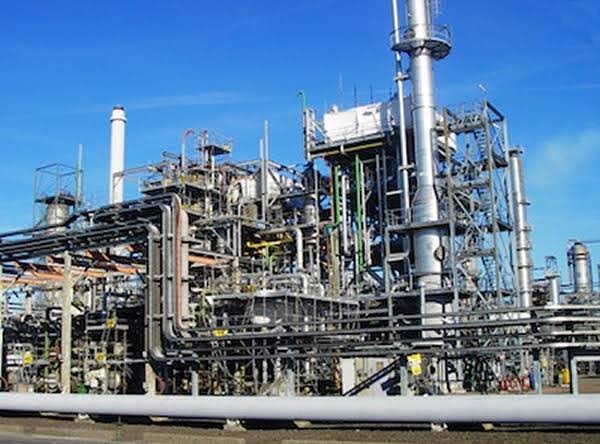
After blossoming into formidable players and conglomerates in Nigeria’s business firmament, some actors in the private sector diversified into the complex, intriguing, but superbly viable petroleum sector. With globally-acclaimed business mogul, Aliko Dangote as the head of the orchestra, these entrepreneurs appeared into the industry with gusto, fervour, and can-do-it spirit. Their financial capacities, institutional vision, and economic blueprint determined the level of their investments in the sector. Dangote and these visionaries, actually took the plunge into the uncertain oil and gas sector with minimal or zero-sum knowledge and experience. Not many industry watchers took them seriously though.
Dangote, for one, said he was serially discouraged by friends who had unpleasant experiences and who shared negative narratives about the sector. Fired by inexplicable factors, however, Dangote etal, began a silent and salient revolution geared towards transforming the sector, and ensuring national economic development. Since all of Nigeria’s four refineries became dysfunctional, the country has been importing almost all of its petroleum product requirements. Nigeria has always had four refineries, two of which are located in Port Harcourt and one each in Warri and Kaduna. Put together, all four refineries should optimally produce a total of 445,000 barrels of petroleum products daily.
A visionary Dangote who has remained a very key player in the nation’s economy for three decades now, latched on the tardiness and sloppiness of government in keeping its refineries working and conceived of a 650,000 barrels per day, ultra-modern refinery. This would surpass the maximum capacity of state-owned refineries with surpluses to service the nation’s needs. While Dangote was envisioning a mammoth, $20Billion refinery reputed to be the second largest in the world, the liberalisation of the petroleum sector encouraged smaller, more compact refineries. Modular refineries were popular in parts of the world but were novel in our own parts. In instances, these potential private investors in the petroleum sector coursed through man-made labyrinths in relevant governmental departments.
Nigerians who have been at the receiving end of serial petroleum products scarcity and arbitrary pricing were recently jolted when NNPC, through one of its agencies declared that Dangote is just about 45 percent completed! As if that was not enough, the Nigerian Midstream and Downstream Petroleum Regulatory Authority, (NMDPRA) through its chief executive officer, Farouk Ahmed, labelled preliminary products from the humongous maze of technological wizardry as “substandard!” Ahmed seemed to be spearheading a conspiracy to discredit industry-wide local petroleum production, which will naturally involve smaller players like the now popular more compact refineries. Ahmed’s unguarded comments infuriated not a few watchers of Nigeria’s economic scene. These include foreign investors who are daily bated by the federal government to look in the country’s direction.
President of the African Development Bank, (AfDB), Nigerian-born Akinwumi Adesina weighed into the fracas and cautioned state players. He admonished that the whole wide world was watching Nigeria demarket its own, while goading foreign interests to invest in Nigeria. He expressed concern to the effect that if big players like Dangote who has Africa-wide manufacturing presence can be so unfairly treated, what will be the fate of other contributors to the nation’s gross domestic product, (GDP)? The administration of President Bola Tinubu has moved in to calm the storm by calling for a truce between the “warring” camps. Heineken Lokpobri, Minister of State for Petroleum, (oil) convened and chaired a meeting of the various interests last week.
In the aftermath of the bad faith shown a mega-player like Dangote, industry watchers are calling for protection for modular refineries. At the last check, about 25 of them had been licensed by government much as not all of them are in operation. Expectedly, most of the refineries are located within the territories of oil producing states and communities in the country. They are mostly to be found therefore in: Ondo, Edo, Delta, Bayelsa, Rivers, Akwa Ibom, Cross River, Abia and Imo states. By their configurations, they are less complicated than the monstrous pipes and trunks which weave and wind in serpentine motions, around the mega refineries. They produce automotive gas oil, (AGO); household kerosene, (HHK); marine diesel oil, (MDO); high pour oil, (HFO) and naphtha.
Modular refineries have become popular in parts of the world now because they operate from as close to the wellhead of their mining sites as possible. They are not be-laboured by cross-country piping which are not only expensive but risky. Oil pipeline networks across Nigeria have serially suffered from wilful vandalism and destruction impacting the delivery of feedstock. Over time, Nigeria’s daily crude oil supplies have been atrociously abridged by the antics of miscreants. Such tampering with supply lines is minimised in the case of modular refineries. Typically, they meet the needs of their contiguous geo-locations which reduces the risks of moving inflammable products on the highways. Technocrats in the oil and gas sector may yet guide policy makers about the possibility of having modular refineries in every state in the country.
Just while avoidable bile was being vented on the recent Dangote saga, invitations have been coming from neighbouring countries intent on doing business with Nigerian moneybags. Gabonese president, Brice Oligui Nguema recently beckoned on Dangote to extend his entrepreneurial benevolence to the oil-rich country. To underscore his seriousness, Nguema promised to create a conducive environment for Dangote, whom he believes would bring enhanced industrial capacity, immense job creation, and technology transfer to the french speaking country. Elsewhere, the government of Equatorial Guinea which is also in Central Africa, is making every effort to support the Nigerian promoters of the modular refinery in the country. Elsewhere in Sao Tome and Principe, a Nigerian brand once powered the oil-rich country in the small country. These are classic confirmations of the old saying about a “prophet not recognized at home, but treasured, honoured, and beautified abroad.”
The very fact that some of these “small” African countries have a higher per capita income than the “big brother Nigeria” is the more reason our government is doomed to support local investment. Primarily, investors need assurances on policy consistency and political stability. Once these are in place, they are ready to activate their programmes and deploy their resources. We must be guided by the recent departures of certain popular brands, notably in the manufacturing and retailing sectors from our country. Such exits have been expedited in the wake of asphyxiating economic conditions, flowing over from the administration of former President Muhammadu Buhari. The bragging refrain about Nigeria as the “giant of Africa” is only plausible if our touted size translates into the overall wellbeing of our people.
Fact is Nigeria is in dire need of visible and tangible growth, and downstream, spectrum-wide transformation. Given the numerous benefits derivable from privately investments, it will be imperative that these refineries be seen as “Nigerian-projects” by government and it’s agencies. They must be supported and protected to grow and contribute towards national development. Bickerings, power-play, influence-peddling, mud-slinging are not the needs of Nigerians at the moment. The citizenry expects government to continue with every commitment to strive towards tangible improvements in their quality of lives. They want government to fight poverty. They seek practical reduction in inflation rate. They want to see a cutting down on over reliance on foreign exchange which stifles meaningful development.
*BOLAJI AFOLABI, a Development Communications Specialist, was of the Office of Public Affairs, The Presidency, Abuja*


Alhaji Ibrahim Galadima, a former Chairman of the Nigeria Football Association (NFA), died on Saturday after a prolonged illness.
His death was confirmed by former Secretary-General of the NFA, Sani Ahmed Toro.
Galadima was a prominent figure in Nigerian sports administration, having led the NFA before it was restructured into the Nigeria Football Federation (NFF).
He also served as Chairman of the Kano State Sports Council between 1981 and 1983.
Born in 1951 in Fagge, Kano, Galadima had a long-standing career in sports governance.
He was a member of the National Sports Commission and was elected Vice President of the Nigeria Olympic Committee in 1985, a position he held until 1987.
He was later reappointed as Chairman of the Kano State Sports Council and continued to play key roles at both state and national levels.
Galadima also served on the Presidential Monitoring Committee on the development of sports facilities for the 1995 FIFA World Youth Championship, which was initially scheduled to be hosted in Nigeria but later relocated due to health-related challenges.
In addition, he was a member of the Confederation of African Football (CAF) Youth Championship Organising Committee.
In 2002, he was elected Chairman of the then Nigeria Football Association, further cementing his legacy as one of the country’s influential sports administrators.
Burial arrangements will be announced later according to family sources.

Tragedy struck the Panshanu Hill stretch of the Bauchi-Jos federal highway on Friday evening as a horrific multi-vehicle collision claimed the lives of eleven persons, leaving thirty-two others with life-threatening injuries.
The victims, including women and children, were reportedly burnt beyond recognition when the vehicles involved in the crash erupted into a massive fireball upon impact.
According to a crash report released by the RS12.14
Toro Unit Command of the Federal Road Safety Corps
(FRSC), the accident occurred at approximately 6:40
PM. FRSC personnel, who arrived at the scene within ten minutes of the report, battled to rescue survivors from the mangled, smoking wreckage.
The crash involved a white MAN mini-tanker, identified as part of the Nigerian Police fleet, and a white FIAT J5 Boxer commercial bus with registration number KTU624XY.
Preliminary investigations by the FRSC identified
“dangerous driving” and the use of “worn-out tyres” as the probable causes of the carnage. The impact, which occurred on a single, unpaved carriageway, sent both vehicles off the road and triggered an immediate inferno.
A breakdown of the casualties paints a heart-wrenching picture of the disaster. Out of the 43 persons involved in the accident, 11 fatalities were recorded, comprising one male adult, three male children, five female adults, and two female children.
The 32 injured survivors, including five male children, 19 female adults, seven female children, and one male adult, were rushed to a nearby general hospital for emergency treatment.
The Bauchi State Command of the FRSC has reiterated its warning to motorists to avoid overspeeding and ensure their vehicles are in roadworthy condition, especially when navigating the treacherous bends of the Panshanu Hill.
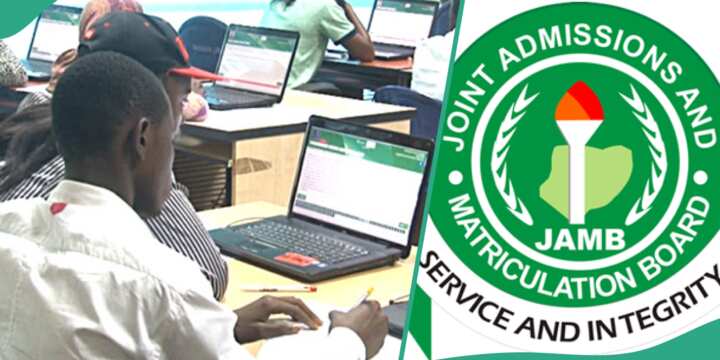
The 2026 UTME, which began on April 16, is expected to continue until April 22 across examination centres nationwide.
The Joint Admissions and Matriculation Board on Friday announced that it had released the results of 632,788 candidates who sat for the first day of the 2026 Unified Tertiary Matriculation Examination (UTME).
A statement by the JAMB spokesperson Fabian Benjamin noted that the results of candidates who sat the 2026 UTME on Thursday, 16 April 2026, have been released and are now available for viewing.
To check their results, he advised candidates to send UTMERESULT via SMS to 55019 or 66019, using the same phone number (SIM) used during registration.
He, however, said that at this stage, candidates may view their results only; printing is not yet available.
The 2026 UTME, which began on April 16, is expected to continue until April 22 across examination centres nationwide.
How To Print Your Official Result Slip
The result slip carries the candidate’s passport photograph, full scores, and details required for admission processing.
It will be made available for printing on JAMB’s e-Facility portal at efacility.jamb.gov.ng and attracts a fee of N1,500.
Once activated, candidates should follow the steps below.
– Visit efacility.jamb.gov.ng.
– Log in with your registered email address and password.
– On your dashboard, click Print Result Slip.
– Click Continue with Payment and pay the N1,500 fee.
– Select 2026 as the examination year and enter your JAMB registration number.
– Download and print the result slip.
Check Your Score Via SMS
– Make sure you have at least N50 airtime on the phone number linked to your JAMB registration.
– Send UTMERESULT to 55019.
– Your score will be delivered to you via SMS.
Other Tips
– If you have forgotten your password or email address, use the Forgot Password option on the portal or visit a JAMB office with your registration details.
– Keep multiple printed copies of your result slip, as institutions typically request it during screening and admission.
– Use only JAMB’s official websites — efacility.jamb.gov.ng or portal.jamb.gov.ng to avoid scams.
JAMB Cautioned Against Manipulation
Candidates were strongly cautioned against manipulating the SMS received from the official platform (55019/66019) to fabricate or alter scores with the intent to mislead others, including parents.
“Such actions constitute a serious criminal offence. The Board treats such misconduct with the utmost gravity.”
“Currently, two candidates and one parent are in custody for engaging in result falsification using AI and other electronic means. Any candidate found culpable will face the full consequences of the law”, JAMB warned.
The examination is ongoing, and results will continue to be released as they become available.

Sad! Ex-NFF Chairman is dead
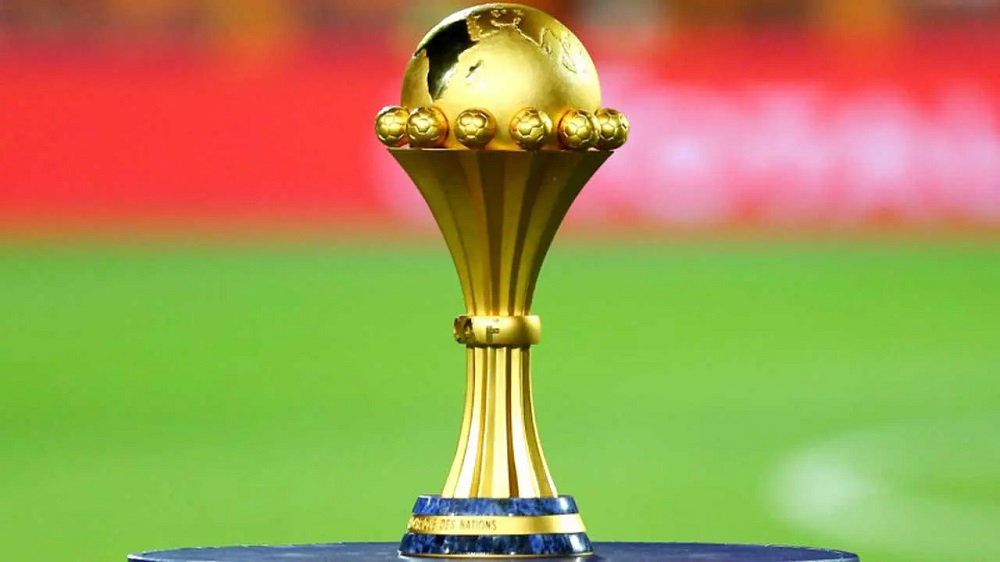
AFCON Fallout: Senegalese fans released after serving 3 months jail terms in Morocco

11 die, 32 injured in Bauchi tanker crash




-

 Politics20 hours ago
2027: Why Tinubu should be afraid — ADC
-
 Economy20 hours ago
Monetary Shake-Up! CBN Unveils New Interest Rate Benchmark
-

 News19 hours ago
Court Fixes Ruling Date In High-Profile Godwin Emefiele Trial
-
 Metro20 hours ago
Police Inspector joins robbery gang, shot dead during operation
-
 News20 hours ago
Security Operatives Arrest Seven Suspects Linked To Benue Abduction
-

 News20 hours ago
Aliko Dangote always tells me to save my money – Davido
-

 News20 hours ago
JAMB Releases First Batch of 2026 UTME Results, Warns Against Score Manipulation
-
 News12 hours ago
Expulsion: Bala, Abejide vow to battle Mark-led ADC faction to finish
You must be logged in to post a comment Login