News
Protect interest of micro-minorities in Niger-Delta – Discussants urges FG
- /home/naijuinz/public_html/wp-content/plugins/mvp-social-buttons/mvp-social-buttons.php on line 27
https://naijablitznews.com/wp-content/uploads/2024/08/hgj-1000x600.jpg&description=Protect interest of micro-minorities in Niger-Delta – Discussants urges FG', 'pinterestShare', 'width=750,height=350'); return false;" title="Pin This Post">
- Share
- Tweet /home/naijuinz/public_html/wp-content/plugins/mvp-social-buttons/mvp-social-buttons.php on line 72
https://naijablitznews.com/wp-content/uploads/2024/08/hgj-1000x600.jpg&description=Protect interest of micro-minorities in Niger-Delta – Discussants urges FG', 'pinterestShare', 'width=750,height=350'); return false;" title="Pin This Post">
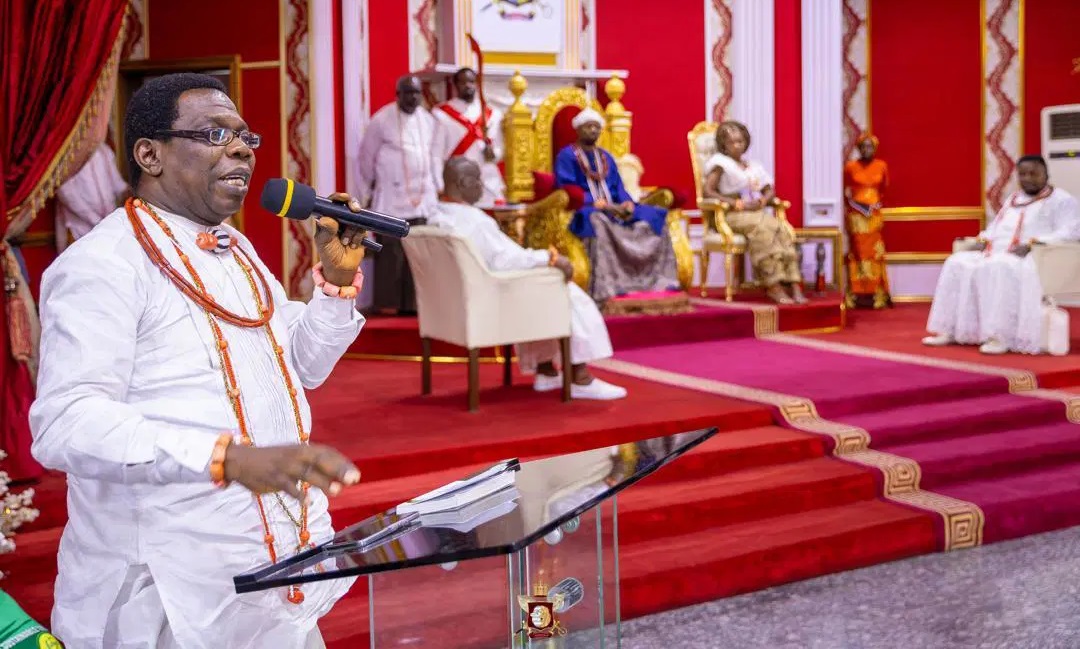
A member of discussant panel at the 3rd Coronation Anniversary Lecture of the Olu of Warri, His Imperial Majesty, Ogiamme Atuwatse III, Chief Robinson Ariyo, the Egogo (Mouthpiece) of Warri Kingdom, has urged the federal government to set up a commission to protect the interest of Micro- Minorities in the Niger Delta region.

Speaking on the Anniversary Lecture theme; “The Challenges of Ethnic Minorities Within The Nigerian State”, yesterday at the Olu’s Palace Auditorium (Aghofen), Chief Ariyo, decried the conceived oppression and marginalization of the ethnic micro minorities by the majority ethnic groups even at the sub-regional level.
He amented the present arrangement where all three ethnic nationalities would collectively agitate for dividends of democracy either in terms of infrastructures or political appointments but when such finally comes the majority ethnic groups within the region would hijack it, leaving the micro-minorities with nothing to show for it at the end of the struggle.

The Egogo of the Iwere kingdom suggested the need for the various micro-minorities to begin to come together to synergies on how to chat a common course of liberating themselves, urging the Itsekiri nation to see the Ogoni’s and other ethnic groups they shared this same status as allies, in order to protect their interest.
Ariyo, a legal practitioner also stressed the importance of proper implementation of existing laws and policies to protect the rights of micro-minorities and ensure their survival in a landscape dominated by more prominent minority groups, noting that Nigerian constitution guarantees the survival of all ethnic nationalities in any part of the country.
However, the itsekiries who occupy three local government within the region, such as the Ecules, who predominantly reside in only three local government areas, argue that the definition of “minority” has been too broad and fails to capture their unique challenges.
According to him; “within the Niger Delta, there are relative majorities who have benefitted significantly from the struggles of the so-called minorities.
“This, they argued, has led to the oppression of micro-minorities by larger minority groups, particularly when it comes to accessing benefits from initiatives such as the Niger Delta Development Commission (NDDC) and the Amnesty office”
Continuing; “The Amnesty office, established in response to the demands of the Niger Delta region, has been dominated by these larger minority groups.
“This has led to the marginalization of micro-minorities, such as the Ogoni people, who now seek to form alliances with other micro-minorities to ensure their voices are heard and their rights are recognized.
“The Itsekiri people, who are a minority within Delta State, have been systematically excluded from key positions in the state government.
“Over the past nine years, itsekiries have been absent from top executive roles, including the positions of governor, deputy governor, and key commissioner posts in Delta State
“The call to redefine “minority” is not just about semantics but about ensuring that all groups, particularly micro-minorities, receive fair representation and access to the benefits intended for marginalized communities.
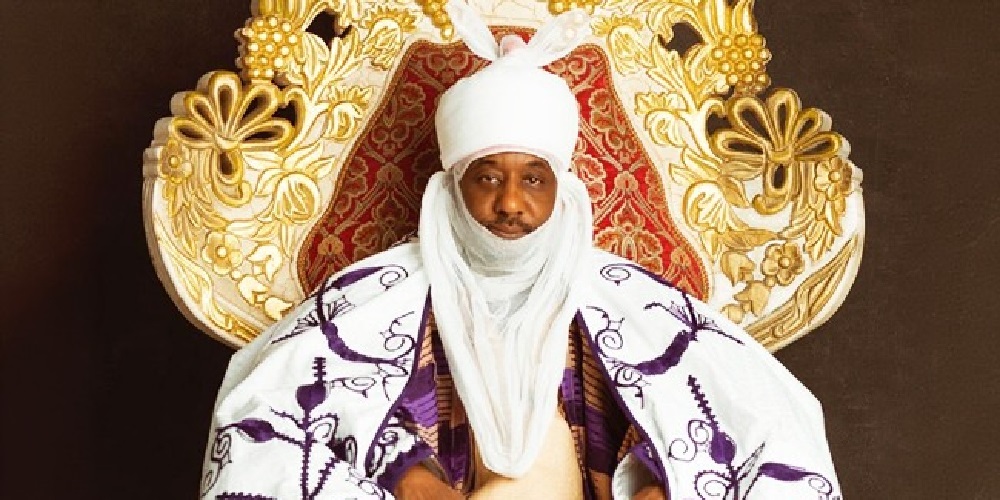
The ceremony witness Itsekiri sons and daughters in Delta State, paid homage to the Olu of Warri Kingdom, Ogiame Atuwatse III as he celebrates his third (3rd) coronation anniversary. A delegation all over itsekiri lands
The Itsekiri indigenes, who paid homage to the Revered Monarch were from Sapele, Bobi and Obonteghareda Communities.
Others are; Holy Covenant Church, Ugboegungun, Aja-Etan, Dibi Field home-based women, Itsekiri Staff of College of Education, Warri, Ugbajo-Itsekiri, delegation from Warri South Council and members of University of Benin Alumni Association, Warri chapter, also paid homage to the Monarch.
The different groups, entertained the King with elegant dance steps and Itsekiri cultural songs, paying allegiance to the King’s reign on the exalted throne.
The Olu of Warri Kingdom, HRM. Ogiame Atuwatse III, flanked by his Queen, Olori Atuwatse III, later offered prayers to his subjects, including palace chiefs, who greeted him as tradition demands.
Other panel of discussants included; Hon. Daniel Reyenieju, Sir A. S Mene, while Prof Benson Osadalor, former Acting VC Ambrose Ali University (AAU) delivered the main lecture of the day.

News
FG Scraps JSS And SSS Secondary Education System
The Federal Government has announced the discontinuation of the disarticulation policy that separated Junior Secondary Schools from Senior Secondary Schools, saying the arrangement has failed and contributed to a crisis of more than 20 million students dropping out before reaching senior secondary.
Minister of Education, Dr Tunji Alausa, disclosed this on Tuesday in Abuja at the inauguration of the UBEC Ministerial Implementation and Monitoring Committee.
He said the policy, which required JSS and SSS to operate separately both physically and administratively, has resulted in overcrowded junior secondary facilities and underutilised senior secondary schools across several states.
According to him, the policy prioritised administrative positions over students’ educational needs and has left thousands of children without access to the next level of learning.
He noted that data from states such as Kaduna and other parts of the north show overflowing JSS classrooms while senior secondary schools remain largely empty because there is one principal for JSS and another for SSS.
“We have 20 million drop out from primary school to JSS. Where are those students? And what we also noticed was that we have 80,000 public primary schools, and junior secondary school, we have just about 15,000. That ratio is one to eight.
“And if you look at the completion rate. So, it’s us as government not doing what we need to do, but the previous government might have failed in this regard, but this government will not fail. We’re fixing this. So, we need to open up as much more opportunities for students to attend these schools, primary schools infrastructure.
“This disarticulation policy has also contributed to this. We’re seeing data from, say, like Kaduna and other northern states, because you have one principal for junior secondary school and another principal for senior secondary schools. We have overflowing JSS, empty senior secondary school.
“So, I can objectively report today that this disarticulation policy has failed. We will phase it out. We can’t be creating positions because we want to create director level for people while we harm our education system. It’s not right. It’s about doing what is good for every Nigerian child.”
Alausa said the proposal to abolish the policy will be tabled for consideration at the next meeting of the National Council on Education as part of efforts to expand access and improve learning outcomes for Nigerian children.
The high-powered committee chaired by Prof. Rashid Aderinoye is to ensure that hundreds of Smart Schools, Bilingual Schools and Alternative Schools funded by the Universal Basic Education Commission are completed, handed over to states and opened for learning.
The Minister said the committee would drive implementation and monitoring to ensure the projects deliver quality education.
He lamented that although UBEC had invested heavily in the three categories of schools across the country, many projects remained unfinished, while several completed schools had yet to be handed over to state governments or integrated into their education systems.
He described the situation as a waste of public resources and a denial of learning opportunities for thousands of children.
Earlier, UBEC Executive Secretary, Aisha Garba, said the Federal Government had made significant progress in expanding access to quality basic education through its Smart Schools, Bilingual Schools and Alternative Schools initiatives.
She disclosed that 37 Smart Schools had been established across the federation, with 24 already conducting academic activities, while the remaining schools were at different stages of completion, furnishing and operational readiness.
She added that under the UBEC–Islamic Development Bank Bilingual Education Programme, 30 schools had been established in nine participating states, with three boarding schools completed and commissioned and four others awaiting commissioning.
She said the Alternative Schools Programme was also expanding access to education for out-of-school children through flexible and inclusive learning.
Garba said the newly inaugurated Ministerial Implementation and Monitoring Team would monitor project implementation, facilitate timely completion and handover of schools, resolve bottlenecks, and ensure government investments translate into fully functional schools.
Speaking on behalf of the committee, Prof. Aderinoye assured that members would discharge their responsibilities with diligence, transparency and commitment to results.
He pledged that the committee would monitor implementation across the country, address delays, and ensure investments improve access to quality education for Nigerian children.
News
Akpodiete Queries Delta Assembly’s Morality on Udu Seat, Cites Lawmakers’ Defection to APC
Ughelli– Hon. Dr. Olotu Akpodiete JP, a House of Representatives candidate hopeful under the Peoples Democratic Party, PDP, has condemned the decision of the Delta State House of Assembly to declare the Udu Constituency seat vacant.
In a statement on Tuesday, Dr. Akpodiete described the action as “undemocratic” and called on the affected lawmaker, Hon. Collins Egbetamah, to challenge it in court. He expressed confidence that the matter would be resolved in favour of Udu Constituency.
“Udu Constituency’s voice cannot be shut down in the State House of Assembly,” he said. “I believe Hon. Egbetamah will be victorious if he seeks redress through the appropriate legal channels.”
Dr. Akpodiete also questioned the moral standing of the Assembly to declare the seat vacant, noting that several lawmakers had themselves defected from the PDP to the APC last year. He urged the House to reconsider and recall its decision to ensure that Udu Constituency continues to participate fully in legislative activities.
He further appealed to constituents in Udu to remain calm, expressing hope that the seat would be restored and representation would not be interrupted.
News
Nigeria-UN Renew Push For Africa’s Growth
By Gloria Ikibah
Nigeria and the United Nations have reaffirmed their commitment to deepening cooperation on Africa’s development, democratic governance, women’s leadership and regional economic integration following high-level talks in Abuja.
The Minister of Foreign Affairs, Ambassador Bianca Odumegwu-Ojukwu, received the Regional Director for Africa at the United Nations Development Programme (UNDP), Ahunna Eziakonwa, on Monday, where both sides reviewed the long-standing partnership between Nigeria and the United Nations and explored fresh areas of collaboration.
During the meeting, Odumegwu-Ojukwu congratulated Eziakonwa on her appointment as a United Nations Assistant Secretary-General, describing the elevation as a milestone for both Nigeria and Africa.
“Your appointment is a source of pride for Nigeria and the African continent. It reflects your distinguished contributions to international development, and Nigeria remains committed to strengthening its longstanding partnership with the United Nations in advancing sustainable development, democratic governance and regional prosperity,” the minister said.
The discussions focused on democratic governance, sustainable development, regional integration and peacebuilding, while also reviewing Nigeria’s foreign policy priorities under the government’s 4-Ds framework of Development, Democracy, Demography and Diaspora.
Briefing the minister, Eziakonwa highlighted the outcome of the recently concluded regional dialogue on the implementation of the African Continental Free Trade Area, which Nigeria hosted in partnership with the UNDP.
She lauded Nigeria’s leadership in advancing regional economic integration and stressed that the country’s role remains central to the success of the continental trade agreement.
“Nigeria’s leadership in promoting regional economic integration is commendable. The country’s active participation is indispensable to the success of the AfCFTA.
“Nigeria continues to play a growing role in shaping Africa’s development agenda, and UNDP stands ready to support the Federal Government in advancing inclusive economic growth, entrepreneurship, innovation, and policies that strengthen regional value chains and intra-African trade,” Eziakonwa said.
The meeting also spotlighted efforts to expand opportunities for women and young people across the continent.
Eziakonwa outlined the achievements of the UNDP Regional Leadership Programme, which mentors promising young African women through leadership development, networking and engagement with accomplished leaders. She invited the foreign minister to serve as a mentor and speaker for future cohorts, saying her experience in public service would inspire the next generation of female leaders.
She also invited Odumegwu-Ojukwu to participate in a high-level gathering of African women leaders scheduled for August.
Responding, the minister welcomed the initiative and reaffirmed Nigeria’s support for programmes that expand women’s participation in politics and leadership while creating opportunities for young people.
“Nigeria firmly supports programmes that promote women’s political participation, leadership development and youth empowerment. Investing in the next generation of African leaders remains essential to achieving sustainable peace, democratic governance and inclusive development across the continent,” Odumegwu-Ojukwu said.
She further reaffirmed Nigeria’s commitment to working closely with the United Nations and the UNDP to accelerate the implementation of the United Nations Sustainable Development Goals and the African Union’s Agenda 2063.
Both parties also exchanged views on regional and global developments, emphasising that stronger multilateral cooperation, resilient institutions, inclusive governance and innovative partnerships remain critical to addressing Africa’s evolving development challenges.
-
News23 hours agoFEC Approves Major NYSC Reform, Introduces New Uniform, Graduation Ceremony
-
Entertainment23 hours agoSouth Africa Begins Deportation Proceedings Against Miss Universe Nigeria Chidimma Adetshina
-
Economy23 hours agoNCC earns 3rd spot in 2026 MDAs ranking
-
Sports23 hours agoBrazil Fight Back to Beat Japan 2-1 as Martinelli’s Late Winner Secures World Cup Last-16 Spot
-
Metro23 hours agoSoldier, CJTF Member Die During Rescue Of Borno NECO Candidates, Teachers – Nigerian Army Confirms
-
News15 hours agoRelief for Activist, Sowore as court grants him fresh N200m bail
-
News23 hours agoNigeria Ranked Most Generous Country in The World
-
News15 hours agoBillionaire wife Shade Okoya breaks silence following cheating allegations

Warning: Undefined variable $user_ID in /home/naijuinz/public_html/wp-content/themes/zox-news/comments.php on line 49
You must be logged in to post a comment Login