Connect with us

Foreign

2024 DNC CONVENTION: FOUR Takeaways By Kamala Harris For America, Foreign Policy And Trump

Published

on

ADVERTISEMENT
Zoom Ad
ADVERTISEMENT
Zoom Ad

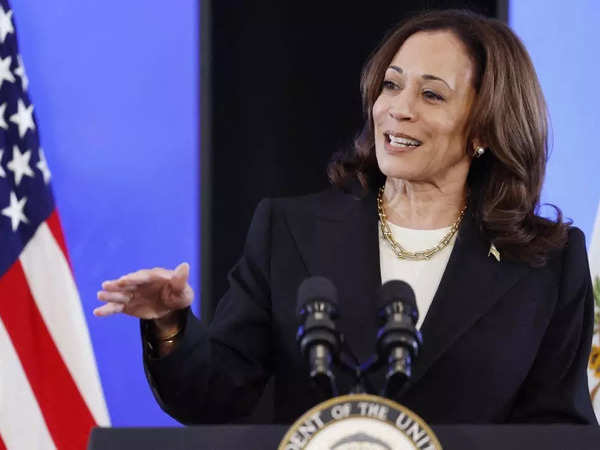
UNITED States Vice-President, Kamala Harris delivered a powerful speech in her acceptance speech of her nomination as the Presidential Candidate of the Democratic Party.


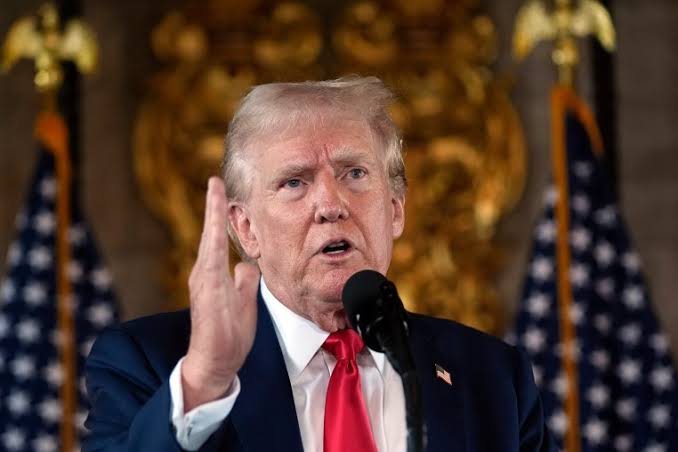
She described her strong rival in the Republican Party, former President Donald Trump In many ways,

“Trump is an unserious man, But the consequences of putting Donald Trump back in the White House are extremely serious.”

We know what a second Trump term would look like. It’s all laid out in Project 2025, written by his closest advisors. And its sum total is to pull our country back to the past. But America: We are not going back.

Advertisement

The middle class is where I come from. My mother taught us that opportunity is not available to everyone.
That’s why we will create what I call an opportunity economy, where everyone has the chance to compete and succeed.”

Here are four takeaways from her convention-closing remarks.

1. Harris promoted her middle class roots

Many Americans know who Ms Harris is, but not many know what she believes in or details of her background. First and foremost, her convention speech set out to change that.

Advertisement

She recounted her mother’s journey as an immigrant from India. She spoke about how her parents met – and how they ultimately divorced. She talked about her childhood upbringing in a working-class neighbourhood in Oakland, California.

“The middle class is where I come from,” she said. “My mother kept a strict budget. We lived within our means. Yet, we wanted for little. And she expected us to make the most of the opportunities that were available to us.”

Ms Harris also spoke of why she chose to become a lawyer – and a prosecutor. She drew a line from her early days in the courtroom to her public services as a politician.

“My entire career, I have only had one client,” she said. “The people.”

Advertisement

2. A vision for the future – with few details

Ms Harris’s speech included calls for unity and a pathway beyond the “bitterness, cynicism and divisive battles” of modern American politics.

She said that the US had a “precious, fleeting” opportunity to “chart a new path forward”. But that chart had few details.

Vague calls for unity and a path beyond partisanship are rhetoric many presidential hopefuls have used in the past.

Advertisement

When Ms Harris did turn to policy details, she spoke in generalities.

She said she will be focused on lowering the costs of “everyday needs” – including healthcare, housing and groceries. She specifically called out abortion rights – and framed it as a means of preserving freedom, which has been a recurring theme at this Democratic convention.

“America cannot truly be prosperous unless Americans are fully able to make their own decisions about their own lives, especially about matters of heart and home,” she said.

Ms Harris, in her speech, styled herself as a centre-left moderate, putting little daylight between her policies and those of her boss, the man she hopes to replace, Joe Biden.

Advertisement

“Everywhere I go, in everyone I meet, I see a nation ready to move forward,” she said. “Ready for the next step, in the incredible journey that is America.”

The exact details of that step, however, are to be determined.

3. An unchanged Gaza war message

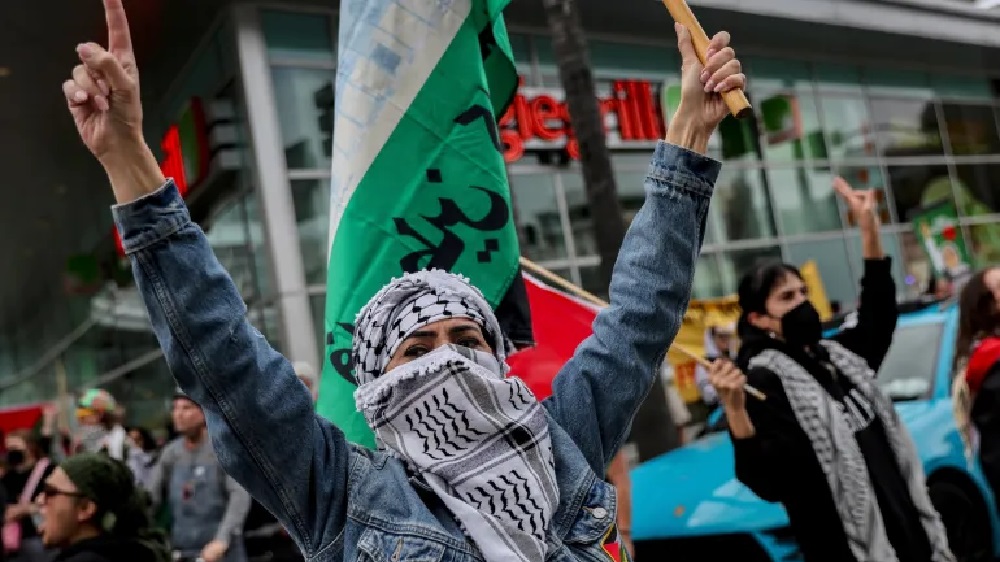
As pro-Palestinian protesters marched outside the convention, Ms Harris devoted particular attention in the foreign-policy section of her speech to the Gaza war.

Advertisement

Here, yet again, there was little difference between her rhetoric and views and those of Mr Biden – and she linked herself to the president several times.

“President Biden and I are working around the clock,” she said, “because now is the time to get a hostage deal and ceasefire done.”

She also pledged to ensure that Israel always has the ability to defend itself and took particular note of the brutality of the 7 October Hamas attack.

For a moment, it sounded like some in the crowd would jeer, but Ms Harris quickly moved on to the plight of Palestinians, saying that the scale of their suffering was “heartbreaking”.

Advertisement

That will hardly be enough to satisfy the protesters outside, however, and they could return to their homes – some in key battleground states like Michigan – convinced that a Harris presidency would be a continuation of the Biden Gaza War policies.

4. Trump is an ‘unserious man’ but serious threat

Two days ago, Michelle and Barack Obama formed a tag-team that belittled former president Donald Trump for what they characterised as his small obsessions and petty personality.

Ms Harris also took swipes at her Republican opponent, but they were pretty standard fare for Democrats – including Mr Biden – over the past few months.

Advertisement

“In many ways, Donald Trump is an unserious man,” she said. “But the consequences of putting Donald Trump back in the White House are extremely serious.”

She brought up the 6 January attack on the US Capitol by Trump supporters, and mentioned his criminal convictions.

She also hit what has become a favourite Democratic punching bag, the Heritage Foundation’s Project 2025 blueprint for a Republican presidency. Although the former president has disavowed the plan, she noted that it was written by his advisers and it sought to “pull our country back into the past”.

The future vs the past contrast has been a central theme of the Harris campaign so far, as it was in her nomination acceptance speech.

Advertisement

It’s one of the ways the vice-president has been able to draw a distinction not only from her current Republican opponent, but from the unpopular aspects of her boss, Joe Biden, who just a few weeks ago was the presumptive Democratic nominee.
Continue Reading
Advertisement
Click to comment

Warning: Undefined variable $user_ID in /home/naijuinz/public_html/wp-content/themes/zox-news/comments.php on line 49

You must be logged in to post a comment Login

Leave a Reply

Foreign

Colombia earthquake death toll jumps to 111; president declares emergency

Published

on

By

ADVERTISEMENT
Zoom Ad
ADVERTISEMENT
Zoom Ad

Colombia on Monday declared a state of emergency following a powerful earthquake that caused at least 111 deaths and flattened dozens of buildings, trapping more victims underneath.

The 7.4-magnitude quake struck western Colombia at 7:34 am (1234 GMT) and triggered a frantic search for survivors in several cities.

“The national government is maintaining all its capacities deployed to protect lives, assist affected communities and deliver aid to every area that needs it,” President Abelardo de la Espriella stated from Bogota.

The leader appointed just three days ago reported 111 deaths, 87 people injured and over 1,000 buildings were damaged.

Advertisement

The quake’s epicenter was in Colombia’s coastal Choco region at a depth of 100 kilometers (60 miles). Authorities in the impoverished area reported 12 deaths.

The nearby city of Pereira was one of the worst-hit areas, with local authorities earlier announcing that at least 40 people had died in the Risaralda region of which it is the provincial capital.

The quake crumpled a tower of a beloved cathedral in the city of Manizales, an AFP journalist observed.

“A great many buildings” in the city sustained damage, said administrative worker Jaime Zuluaga, 50. “Traffic is paralyzed and people don’t want to go back to their homes for fear of an aftershock.”

Advertisement

– ‘Missing people’ –

At least 20 buildings crumbled in Colombia’s third-largest city, Cali, trapping people beneath the debris, Mayor Alejandro Eder said.

Choco’s governor warned of serious damage in the provincial capital Quibdo, where videos showed more buildings reduced to rubble.

“We are all devastated,” Quibdo community leader Luis Gregorio Moreno told AFP.

Advertisement

“At this moment there are reported deaths, dozens of wounded, but what there are most of are missing people,” he said.

Ecuador, Panama and Venezuela also felt the early-morning quake, which prompted building evacuations in the Colombian capital, Bogota.

Still wearing their pajamas, crowds of people rushed out into the street upon feeling the tremor, AFP reporters saw.

“The quake was very, very strong,” said content creator Valeria Polo, 29, in the capital, where only minimal damage was recorded.

Advertisement

Six small airports in western Colombia suspended operations, the civil aeronautics agency said, and the soccer governing body postponed upcoming football matches.

Washington is “closely monitoring the large earthquake that struck Colombia and stands ready to support the people of Colombia,” US Secretary of State Marco Rubio wrote on X.

European Union chief Ursula von der Leyen said the EU was “ready to provide more support” to the South American country.

“We have already mobilised Copernicus, our satellite service, to help with rescue operations,” she wrote on social media.

Advertisement

Israel, Mexico, Ecuador and France also offered assistance.

Latin America is already reeling from two disastrous quakes that struck Venezuela in June, killing more than 6,000 people and causing widespread destruction.

AFP

Advertisement
Continue Reading

Foreign

Iran demands war damages compensation for reopening Strait of Hormuz

Published

on

ADVERTISEMENT
Zoom Ad
ADVERTISEMENT
Zoom Ad


Iran on Saturday gives conditions for the reopening of the Strait of Hormuz, including compensation for war damages, complicating a potential deal to open the waterway essential to the world economy.

Tehran has imposed an effective blockade of the strait since the United States and Israel struck Iran in late February, and wants to charge tolls for passage, attacking ships it accuses of attempting to circumvent its preferred route.

Continued attacks in the strait, which was free to transit before the war, led to the collapse of an April ceasefire. Mediators have since urged both sides to return to the terms of a June memorandum.

Advertisement

Iranian Foreign Minister Abbas Araghchi said discussions with Oman over transit and management of the strait were “approaching the final stages”, but added the reopening of Hormuz “is subject to other conditions and compensation for the violation” of the June agreement.

Security chief Mohammad Bagher Zolghadr on Saturday laid out a list of demands for reopening the strait, including an end to the “war and aggression against Iran and its allies in Lebanon, Palestine, Yemen, and Iraq”.

He also demanded the lifting of a parallel US naval blockade of Iran, the end of sanctions, the release of frozen assets and compensation for wartime damage, according to remarks reported by Tasnim news agency.

Iran’s Revolutionary Guards, meanwhile, said Hormuz’s reopening had “nothing to do with the negotiations between Iran and Oman”, adding that the “enemy is forced to accept Iran’s conditions for the opening of the strait”.

Advertisement

The comments came as transit through Hormuz has dropped significantly, with Iran targeting ships it accuses of skirting its preferred route through Iranian waters.

The United Arab Emirates’ foreign ministry on Saturday condemned what it called a “hostile Iranian attack that targeted a tanker belonging to ADNOC (Abu Dhabi National Oil Company) with a missile while it was transiting the Strait of Hormuz, without causing casualties”.

Later on Saturday, the United Kingdom Maritime Trade Operations (UKMTO) said a ship was hit by a projectile off Oman in the Strait of Hormuz, causing a fire that was extinguished but no casualties. It was unclear whether they were referring to the same ship.

On Friday, ADNOC had put out a statement saying that since the start of the war, 15 of its vessels had been attacked in Hormuz, “including three vessels this week alone”.

Advertisement

Oman’s foreign ministry on Saturday condemned “repeated attacks on vessels transiting the Strait of Hormuz”, without naming Iran.

It also said that “ongoing negotiations regarding navigation arrangements in the Strait of Hormuz are proceeding in a positive and constructive atmosphere”, and urged against any actions that might jeopardise the progress.

The previous Iran-US deal — meant to serve as a jumping-off point for negotiations on a permanent settlement — had said Iran and Oman would hash out future arrangements for the strait in discussion with other Gulf countries and “in line with the applicable international law”.

International law generally forbids tolling in such waterways.

Advertisement

Security agreement

Turkey’s foreign minister said Saturday he expected Egypt to join a joint defence agreement between Turkey, Saudi Arabia and Pakistan designed to stabilize the region, calling the country a “natural partner on all issues”.

“I believe that at the next stage Egypt will also be among us in the alliance. We already act toward one another as if we were alliance members,” Foreign Minister Hakan Fidan said in an interview.

A drone struck US assets at an Egyptian port on the Mediterranean last month, marking the first drone attack on Egyptian territory since the outbreak of the Iran war.

Advertisement

Fidan said the agreement does not target a specific country.

“There is no common threat that we have put in writing,” he said, according to the news agency.

Pakistan’s foreign ministry said Friday the pact meant an attack on any member would be regarded as an attack on all, adding it was “intended to strengthen collective deterrence”.


Advertisement

AFP

Continue Reading

Foreign

Spain imposes border checks on Italy over migrant dispute

Published

on

By

ADVERTISEMENT
Zoom Ad
ADVERTISEMENT
Zoom Ad

Spain on Saturday started border checks on travellers arriving from Italy, responding to similar measures Rome imposed following an unprecedented migrant rush into the Spanish north African enclave of Ceuta.

“I don’t see a lot of the word ‘diplomacy’ used in these decisions, not by the Italian government, nor by the Spanish government,” said one 36-year-old Italian tourist, Maria Celeste Grillo, who had just flown into Madrid.

She said she had not seen any added checks as she stepped off the plane, but found their implementation “sad”.

Spain announced Friday it would proceed with the heightened controls, citing “persistent irregular migration pressure” facing Italy — deepening a row between the EU partners and NATO allies.

Advertisement

Spain’s left-wing government has complained that Italy’s hard-right government on July 31 unfairly imposed one month of border checks on travellers from Spain — suspending the EU’s Schengen Area visa-free travel arrangements — because of the Ceuta influx.

More than 70,000 migrants had crossed from Morocco into the Ceuta enclave on July 30 and 31, though almost all of them subsequently returned to Morocco within 48 hours.

The inflow alarmed European nations, especially right-wing ones urging tougher rules on irregular migrants. However, rules for Ceuta mean migrants cannot travel onward to continental Europe without passing another layer of border checks.

Spain’s interior ministry said the new checks on incoming travellers from Italy would apply until September 7.

Advertisement

AFP

Continue Reading

Trending

Copyright © 2024 Naija Blitz News