
News
FG Moves To Disconnect 50 Million Unlinked SIMs Next Month


- /home/naijuinz/public_html/wp-content/plugins/mvp-social-buttons/mvp-social-buttons.php on line 27
https://naijablitznews.com/wp-content/uploads/2024/03/images-34.jpeg&description=FG Moves To Disconnect 50 Million Unlinked SIMs Next Month', 'pinterestShare', 'width=750,height=350'); return false;" title="Pin This Post">
- Share
- Tweet /home/naijuinz/public_html/wp-content/plugins/mvp-social-buttons/mvp-social-buttons.php on line 72
https://naijablitznews.com/wp-content/uploads/2024/03/images-34.jpeg&description=FG Moves To Disconnect 50 Million Unlinked SIMs Next Month', 'pinterestShare', 'width=750,height=350'); return false;" title="Pin This Post">


While the insecurity situation in some parts of the country has festered in the last seven years and has led to increased banditry, terrorism and frauds across boards, the Federal Government will from September 15, 2024 block all Subscriber Identification Modules (SIMs) not linked to National Identity Numbers, NIN.
The FG made this announcement through the Nigerian Communications Commission (NCC) yesterday in a statement, where it informed that it has pegged the final deadline date for the linkage of SIMs to NINs to September 14.
This final deadline date is coming amid a rise in the activities of criminals, who still use SIMs, and NINs to perpetrate their criminal activities. The SIM-NIN linkage exercise ab initio, according to the government was to help in addressing criminality, including kidnappers, bandits, and fraudsters, among others. But the extent of success cannot be ascertained.
Indeed, NCC in the statement signed by the Director of Public Affairs, Reuben Mouka, to announce the deadline, said Nigeria has made significant progress in the Federal Government’s 2020 policy to link all SIMs to NINs.
The telecoms regulator disclosed that to date, over 153 million SIMs have been successfully linked to a NIN, reflecting an impressive compliance rate of 96 per cent, a substantial increase from 69.7 per cent in January 2024.
Though the NCC claimed that there has been 96 per cent complaint for the linkage, The Guardian checks showed that over 50 million SIMs may be blocked by September if not linked, especially because of the multi-SIMMING nature of Nigerians and use of different devices that are SIM dependent.
As of Q1, 2024, the NCC puts active mobile subscriptions in the country at 219 million and in the statement of yesterday, about 153 million SIMs have been linked, meaning that some 50 million risk disconnection by mid-September. It must also be stated that between the second quarter and now, some lines must have been registered and linked, which would make the exposed SIMs hover between 50 million and 55 million.
It should be noted that under the NIN-SIM linkage policy, an individual is allowed to register a maximum of four SIM cards per network operator. This is exclusive of SIMS that the individual may wish to use in Internet of Things (IoT) devices such as wearable, trackers, among others.
NCC said as the country approaches the final phase of this critical process, it seeks the continued cooperation of all Nigerians to achieve 100 per cent compliance.
The telecoms regulator said the complete linkage of all SIM cards to NINs is essential for enhancing the trust and security of the digital economy.
“By verifying all mobile users, this policy strengthens confidence in digital transactions, reduces the risk of fraud and cybercrime, and supports greater participation in e-commerce, digital banking, and mobile money services. This, in turn, promotes financial inclusion and drives economic growth,” it stated.
NCC revealed that through collaboration with the Office of the National Security Adviser (ONSA) and the National Identity Management Commission (NIMC), it uncovered alarming cases where individuals possessed an unusually high number of SIM cards—some exceeding 100,000.
The Commission said it remained committed to working with se
NewsFG Moves To Disconnect 50 Million Unlinked SIMs Next Month
ByVreportersPublished on August 29, 2024
While the insecurity situation in some parts 3the country has festered in the last seven years and has led to increased banditry, terrorism and frauds across boards, the Federal Government will from September 15, 2024 block all Subscriber Identification Modules (SIMs) not linked to National Identity Numbers, NIN.
The FG made this announcement through the Nigerian Communications Commission (NCC) yesterday in a statement, where it informed that it has pegged the final deadline date for the linkage of SIMs to NINs to September 14.
This final deadline date is coming amid a rise in the activities of criminals, who still use SIMs, and NINs to perpetrate their criminal activities. The SIM-NIN linkage exercise ab initio, according to the government was to help in addressing criminality, including kidnappers, bandits, and fraudsters, among others. But the extent of success cannot be ascertained.
Indeed, NCC in the statement signed by the Director of Public Affairs, Reuben Mouka, to announce the deadline, said Nigeria has made significant progress in the Federal Government’s 2020 policy to link all SIMs to NINs.
The telecoms regulator disclosed that to date, over 153 million SIMs have been successfully linked to a NIN, reflecting an impressive compliance rate of 96 per cent, a substantial increase from 69.7 per cent in January 2024.
Though the NCC claimed that there has been 96 per cent complaint for the linkage, The Guardian checks showed that over 50 million SIMs may be blocked by September if not linked, especially because of the multi-SIMMING nature of Nigerians and use of different devices that are SIM dependent.
As of Q1, 2024, the NCC puts active mobile subscriptions in the country at 219 million and in the statement of yesterday, about 153 million SIMs have been linked, meaning that some 50 million risk disconnection by mid-September. It must also be stated that between the second quarter and now, some lines must have been registered and linked, which would make the exposed SIMs hover between 50 million and 55 million.
It should be noted that under the NIN-SIM linkage policy, an individual is allowed to register a maximum of four SIM cards per network operator. This is exclusive of SIMS that the individual may wish to use in Internet of Things (IoT) devices such as wearable, trackers, among others.
NCC said as the country approaches the final phase of this critical process, it seeks the continued cooperation of all Nigerians to achieve 100 per cent compliance.
The telecoms regulator said the complete linkage of all SIM cards to NINs is essential for enhancing the trust and security of the digital economy.
“By verifying all mobile users, this policy strengthens confidence in digital transactions, reduces the risk of fraud and cybercrime, and supports greater participation in e-commerce, digital banking, and mobile money services. This, in turn, promotes financial inclusion and drives economic growth,” it stated.
NCC revealed that through collaboration with the Office of the National Security Adviser (ONSA) and the National Identity Management Commission (NIMC), it uncovered alarming cases where individuals possessed an unusually high number of SIM cards—some exceeding 100,000.
The Commission said it remained committed to working with security agencies and other stakeholders to crack down on the sale of pre-registered SIMs, thereby safeguarding national security and ensuring the integrity of mobile numbers in Nigeria.
“To ensure full compliance with the NIN-SIM linkage policy, the NCC has directed all Mobile Network Operators (MNOs) to complete the mandatory verification and linkage of SIMs to NINs by September 14, 2024.
“Effective September 15, 2024, the Commission expects that no SIM operating in Nigeria will be without a valid NIN,” it stated. NCC urged all members of the public, who have not yet completed their NIN-SIM linkage, or who have faced issues due to verification mismatches, to visit their service providers promptly to update their details before the deadline. Alternatively, the approved self-service portals are available for this purpose.
The Commission also reminded the public that the sale and purchase of pre-registered SIMs are criminal offences punishable by imprisonment and fines.
“We encourage citizens to report any such activities to the Commission via our toll-free line (622) or through our social media platforms,” it stated.
Indeed, the acclaimed success of the NIN-SIM linkage has been questioned as regards the extent to which the initiative has helped the country to curb the rising menace of kidnapping, banditry, cyber fraud and the rest in the country.
It is worrisome that despite the sacrifices made by Nigerians to get their SIM registered and linked to NIN, crime levels refused to abate in the country.
At the commencement of the linkage exercise in 2020, the then Minister of Communications and Digital Economy, Prof. Isah Pantami, claimed that the process would enable Nigeria to tackle the growing insecurity in the country, but four years after, insecurity has festered.
Bandits have become more emboldened, kidnapping harmless Nigerians at every slightest opportunity, subsequently smiling to banks after every successful operation without traces, despite the NIN-SIM initiatives.
According to checks, from January and July 2024, no fewer than 2,140 people were kidnapped. An SBM Intelligence report on Nigeria’s security crisis reveals alarming statistics for 2024, showing, 3,277 people kidnapped in 135 mass abduction incidents, resulting in 125 deaths. The North West and North Central regions were hardest hit, with 2,719 kidnappings combined.
It also showed that families of 62 victims, representing 2.89 per cent of the total abductees, paid the sum of N389 million as ransom to secure their release from the kidnappers.
Over the seven months, gunmen reportedly kidnapped 193 people in January, 101 in February, 543 in March, 112 in April, 977 in May, 97 in June, and 117 in July, totaling 2,140.
Guardian









● Institutions directed to Constitute Laureate Committees as Nigeria Begins Search for its Finest Academic Research
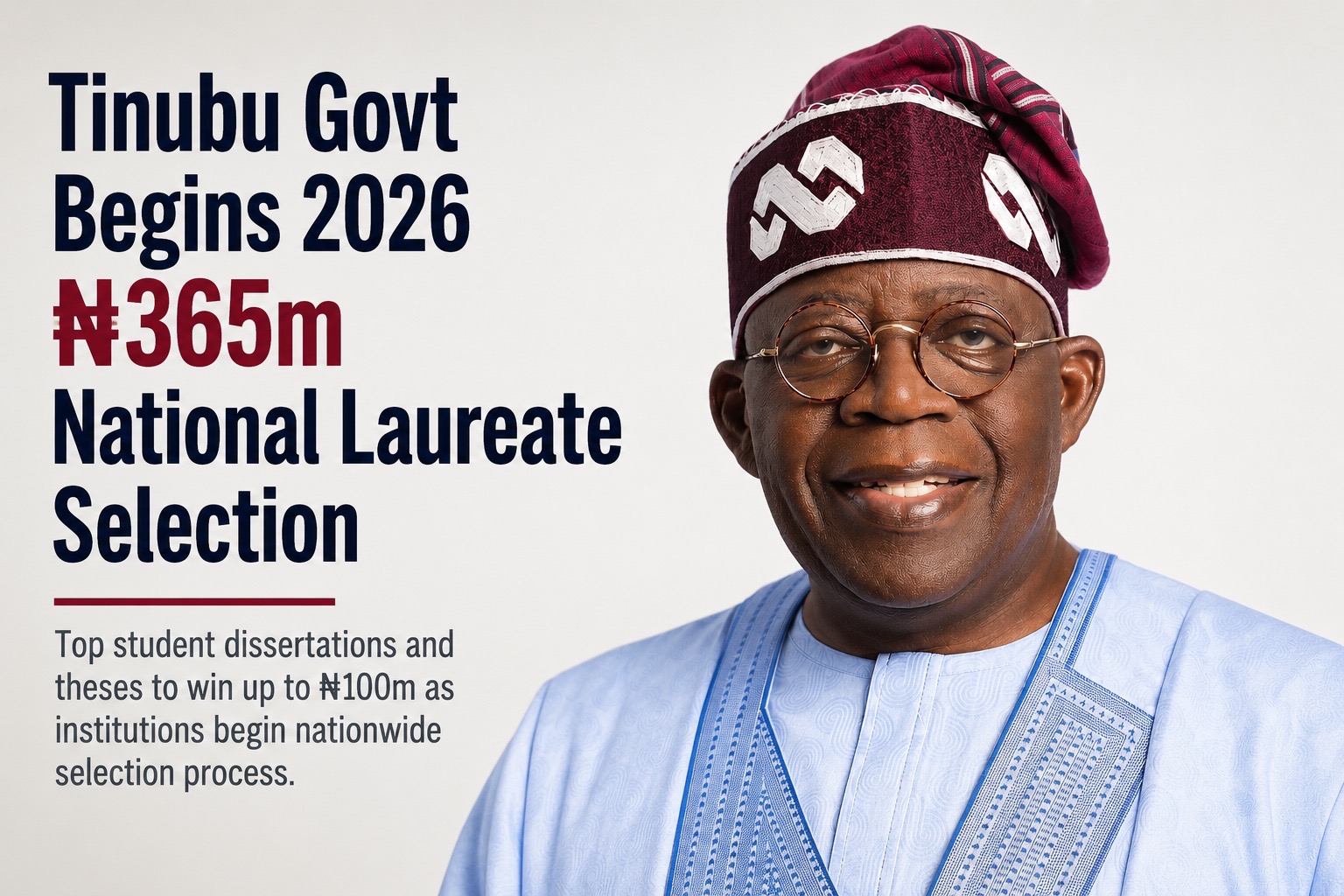
The Tertiary Institutions National Laureate Committee has formally announced the commencement of the 2026 National Laureate Programme, marking the inaugural edition of what is expected to become Nigeria’s foremost national platform for recognising outstanding student academic research, innovation and scholarly excellence across tertiary institutions.
The launch of the Programme signals a major milestone in the Federal Government’s commitment to promoting research excellence, strengthening the nation’s knowledge economy and placing scholarship at the centre of Nigeria’s development agenda.
The National Laureate Programme, inaugurated by the Federal Government under the leadership of the Honourable Minister of Education, Dr Tunji Alausa, CON, is designed to identify, evaluate, celebrate and reward exceptional undergraduate dissertations, master’s theses and doctoral research produced in accredited Nigerian tertiary institutions.
Supported by an annual research prize fund of ₦365 million, the Programme ranks among Nigeria’s most prestigious academic recognition initiatives and reflects the Federal Government’s determination to encourage original research, innovation and solutions capable of addressing national and global challenges.
Beyond recognising academic excellence, the Prize is intended to strengthen Nigeria’s research ecosystem by promoting innovation, encouraging the commercialisation of research outputs, supporting industrial development, inspiring future researchers and establishing scholarship as a strategic national asset.
As part of the commencement of the 2026 edition, all accredited universities, polytechnics, colleges of education, monotechnics, military institutions and other eligible tertiary institutions are requested to immediately commence internal preparations for participation.
Every eligible institution is expected to constitute an Institutional Laureate Selection Committee made up of experienced academics with proven research records, unquestionable integrity and the capacity to conduct objective evaluations in accordance with the approved National Laureate Programme framework.
Institutions are also required to formally submit the names and designations of the Chairman, Secretary and members of the Committee, after which the Committee will coordinate the institution’s participation in the Programme.
Following the institutional evaluation process, each participating institution is expected to nominate up to eighteen outstanding research works, comprising six undergraduate dissertations, six master’s theses, and six doctoral theses in the case of universities, or their equivalents for polytechnics, monotechnics, colleges of education, and other tertiary institutions, drawn from the six approved thematic areas, such as Agriculture, Teaching Innovation, Medicine and Health Sciences, Engineering, Science, and Technology, Law, Arts and Social Sciences.
The Programme offers Star Prizes of ₦35 million for the undergraduate category, ₦50 million for the master’s category, and ₦100 million for the doctoral category.
In addition, 15 Thematic Laureate Awards, valued at ₦12 million each, will be presented to other outstanding winners.
Institutions are reminded that every nominated research work must first be formally submitted as required under the National Policy for the Nigeria Education Repository and Databank (NERD) and assigned a valid National Document Number (NDN) before it can be considered for the National Laureate Programme.
This requirement reinforces the Federal Government’s commitment to research integrity, proper documentation and the preservation of Nigeria’s academic output within the national knowledge infrastructure.
The Committee further reminds participating institutions that the National Laureate Programme operates a rigorous three-tier evaluation system, comprising Institutional, Regional, also referred to as Zonal, and National assessments.
This multi-layered process has been designed to guarantee transparency, fairness, objectivity and merit in the selection of the country’s finest academic research.
Institutions are therefore encouraged to conduct their internal assessments with the highest standards of professionalism and impartiality, recognising that only the very best research works will progress through the successive stages of evaluation.
The management of every participating institution is responsible for constituting its Institutional Laureate Selection Committee in accordance with the approved guidelines. Once constituted, the institution’s approved NERD Focal Officer (NFO) is required to designate the Committee members through NFO dashboard on NERD.
This formal designation grants authorised members secure access to make entries, evaluate submissions and digitally manage the institution’s participation on the national Laureate Dashboard throughout the Programme.
The National Laureate Committee also calls on Nigerian professional bodies and associations to play an active role in safeguarding the integrity of the Programme by nominating distinguished scholars and subject experts for appointment into the Regional Laureate Selection Committees across the six geopolitical zones of the Federation.
Professional bodies representing agriculture, science, engineering and technology, medicine, law, arts and social sciences, teaching, and related disciplines are encouraged to submit nominations of suitably qualified experts with established records of scholarship, peer review, integrity and professional leadership.
Those appointed will participate in the independent regional evaluation of research submissions before the national assessment. All nominations will undergo rigorous screening based on merit, experience, integrity, diversity and conflict of interest requirements to ensure that the Programme maintains the highest standards of credibility and academic excellence.
Institutions and professional bodies are advised to conclude the selection of committee members and subject matter experts by 15 August 2026 while the submission of institutional entries will continue until the 31st of August 2026.
It noted that submissions would include mandatory digital transmission as provided in the guideline on the National Laureate portal.
Describing the Programme as a landmark national investment in intellectual capital, the Chairman of the National Laureate Committee, Emeritus Professor Abubakar S. Sambo (OON), said the National Laureate Programme was designed to elevate academic excellence to national prominence, encourage world-class research, inspire innovation and recognise scholars whose work has the potential to transform lives, industries and the future of Nigeria.
He encouraged every eligible institution and every relevant professional association to participate actively in ensuring the success of the inaugural edition of the Programme.
Further information, including detailed guidelines, committee manuals and application procedures, is available on the National Laureate Programme website at www.nationalaureate.ng.
Additional guidance may also be obtained through the Committee Guide and the Application Guide available on the website.
Issued by:
Ita Ekpenyong
Spokesperson
National Laureate Committee
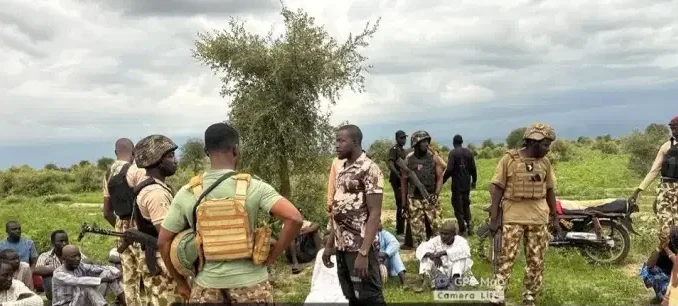
Troops of the Nigerian Army have, in the last 24 hours, rescued 34 kidnap victims, apprehended suspected ISWAP informants and recovered arms and ammunition in coordinated operations nationwide.
This is contained in an operational report made available to the News Agency of Nigeria (NAN) on Sunday.
The report said that troops of Operation HADIN KAI rescued 31 kidnap victims from terrorists along the Buratai-Kamuya road in Biu Local Government Area of Borno.
It said the rescue followed a swift response after troops of 135 Special Forces Battalion detected ISWAP/JAS terrorists abducting civilians from four vehicles through CCTV surveillance.
According to the report, troops immediately deployed a quick reaction force, engaged the terrorists and forced them to abandon the victims and flee, with one motorcycle left behind.
“In another operation, troops of 145 Battalion conducted a fighting patrol to the Turoh general area of Damasak in Mobbar Local Government Area.
“The terrorists reportedly fled on sighting the troops, leaving behind two motorcycles and illicit drugs recovered during exploitation of the area.
“Also, troops of 232 Battalion Tactical apprehended a suspected ISWAP informant at Garaha Market in Hong Local Government Area of Adamawa,” it said.
In the North-West, the report revealed that troops of Operation FANSAN YAMMA engaged terrorists moving with rustled cattle in Tsafe Local Government Area of Zamfara.
It added that the troops’ superior firepower forced the terrorists to withdraw in disarray during the encounter.
The report also revealed that troops of Operation MESA rescued a kidnapped woman and her two children along the old Obajana-Jakura-Tajimi road in Lokoja Local Government Area of Kogi.
According to the report, preliminary investigation revealed that the victims were abducted on July 29 from a Ruga settlement in the Gada-Biyu area of the same local government.
“In Plateau State, troops of Operation Enduring Peace responded to reports of an attack on a herder in Bassa Local Government Area.
“The assailants had fled before the troops arrived, while the deceased and recovered cattle were handed over to the victim’s family,” it added.
In the South-East, the report said the troops of Operation UDO KA recorded a major breakthrough with the arrest of three suspected terrorists linked to the ambush of troops in Imo on May 4.
It added that the operation, conducted in Delta and Imo states, followed intelligence obtained from earlier arrested suspects.
According to the report, troops recovered four AK-47 rifles, one FN rifle, a pistol, 11 AK-47 magazines, two FN magazines, 239 rounds of assorted ammunition, a fragmentation jacket and other military items from terrorist camps.
“The recovered weapons included rifles earlier carted away during the May ambush on troops, while further exploitation led to the discovery of another terrorist camp containing additional arms and ammunition,” it said.
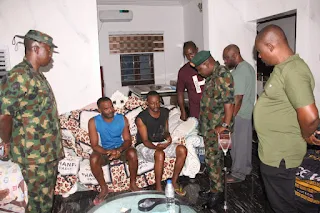
A joint military task force has rescued a senior Nigerian Army officer, Lt. Col. Ofor Amobi, and a civilian, Mr. Ikechukwu Onwuanra, after an intensive 10-day search-and-rescue operation across forests and communities in Enugu State.
This was contained in a military operational report made available to the News Agency of Nigeria (NAN) on Saturday, August 1, 2026 in Abuja.
The breakthrough came in the early hours of Saturday following sustained operations by troops of Sector 1, Operation UDO KA (OPUK).
The search mission involved personnel of the 82 Division Garrison, 103 Battalion (Rear), the Nigerian Navy Special Boat Service (NN SBS), and the 197 Special Forces Battalion, operating under the leadership of the Commander, 82 Division Garrison, with support from the Air Component.
According to the report, between 6:00 p.m. on July 31 and 6:00 a.m. on August 1, the joint troops continued search operations using actionable intelligence across Inyi, Awlaw and Akpugo-Eze forests and adjoining communities in Oji River Local Government Area of Enugu State.News
At about 2:00 a.m., the Divisional Police Officer (DPO) of Inyi Division alerted the troops to the suspected location of the kidnapped victims.
The troops immediately mobilised and launched a fighting patrol into the area, where they discovered Lt. Col. Amobi and Mr. Onwuanra abandoned at the edge of a forest. The civilian was found with a gunshot wound.
The victims were successfully rescued and evacuated to Inyi before being moved to the 82 Division Medical Hospital for medical treatment and comprehensive evaluation.
During preliminary debriefing, the victims disclosed that they had been blindfolded shortly after their abduction and transported to an unknown location.
They said they were later abandoned in a forest around the Enugu–Anambra border as the kidnappers came under sustained operational pressure.
The military attributed the successful rescue to the relentless pressure mounted by the joint force, supported by the Air Component, which maintained continuous dominance of the suspected hideouts and denied the abductors freedom of movement throughout the 10-day operation.
The sustained search-and-rescue mission ultimately forced the kidnappers to abandon the captives and flee.
Further investigations and follow-up operations are ongoing to identify, track and apprehend those responsible for the abduction.

Popular Hausa political praise singer dies at 47

Tinubu government begins 2026 Tertiary Institutions National Laureate Programme

Troops rescue 34 abductees, nab ISWAP informant, recover arms




-

 Entertainment22 hours ago
Why I Don’t Want Any Of My Children To Make Music – Davido
-

 Metro22 hours ago
Just in: Fire guts Federal Mortgage Bank HQ in Abuja
-

 Economy22 hours ago
Cooking Gas Price Reduces, See New Amount Per KG
-
 News22 hours ago
Why I Need To Go Beg God — Ex-JAMB Registrar
-

 News22 hours ago
Police probe video of officers attacking gold seller in Lagos
-
 Metro22 hours ago
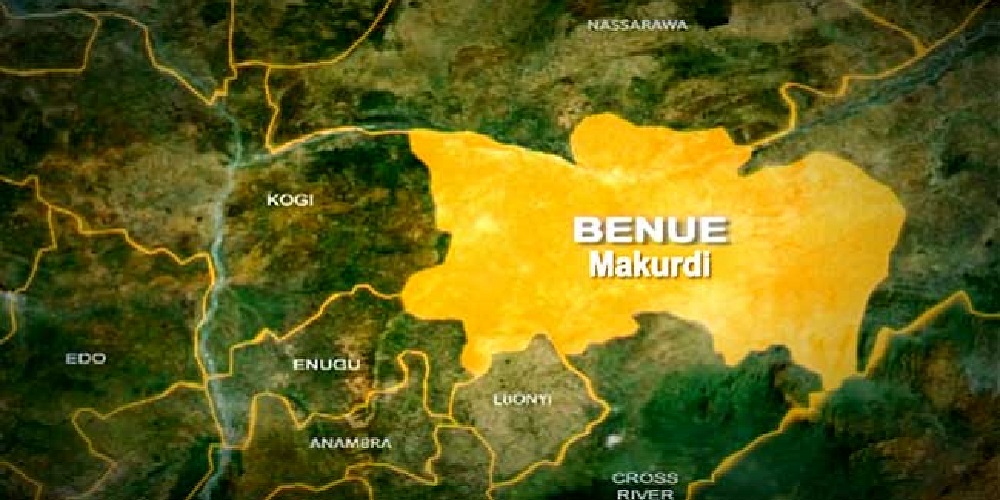
Kidnapped Benue Seminarian Escapes From Abductors
-

 News22 hours ago
ABU lecturer dies in road crash
-
 Foreign21 hours ago
IS Fighters Overrun Two Niger Military Bases, 38 Soldiers Confirmed Dead
Warning: Undefined variable $user_ID in /home/naijuinz/public_html/wp-content/themes/zox-news/comments.php on line 49
You must be logged in to post a comment Login