
News
ECOWAS panel calls for residence permit abolition

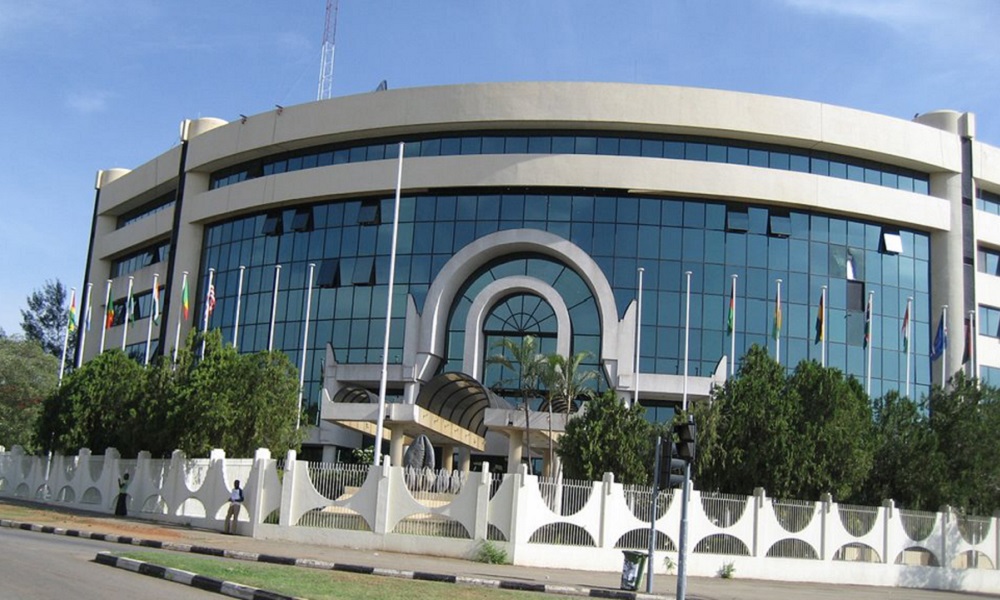


A joint committee of the Economic Community of West African States has called for the abolition of the residence permit system, which they argue is obstructing the free movement of citizens across the region.
The joint committee made this call on Thursday to member states and the ECOWAS Commission in their draft report at the end of their delocalised sittings in Banjul, The Gambia.
The joint committee, which includes representatives from Social Affairs, Gender and Women Empowerment, Legal Affairs and Human Rights, Political Affairs, Peace, Security, and Trade Customs, stated that the residence permit system, initially introduced under the ECOWAS Treaty of 1975, no longer serves its intended purpose.
The system, known as the ECOWAS Residence Permit or Residence Card, was designed to allow citizens to reside in another member state for extended periods for business, employment, or personal reasons.
However, the committee now argues that the permit system contradicts the fundamental ECOWAS objective of promoting economic integration and cooperation, particularly the protocol on free movement.
“The issuance of residence permits should be completely abolished in the region in conformity with the Community Text,” the report stated, pending approval by the ECOWAS Parliament’s plenary.
The committee’s report also pointed out widespread non-implementation of the ECOWAS free movement protocols at borders within West Africa.
In response, they have called for robust sensitisation campaigns to educate both citizens and government officials on these regional agreements.
They also recommended that all Immigration and Customs officers receive training on the relevant Community Texts, with special attention to border posts.
“The Free Movement Protocol should be made available to all Immigration Officers, especially at the border posts.
“All training programmes of Immigration and Customs officials should include training on the relevant Community Texts,” the draft report said.
Further, the committee demanded the deployment of officials at border posts to monitor, document, and report instances of extortion and other malpractices.
Additionally, they urged the ECOWAS Commission to ensure full compliance with the implementation of signed Community Texts by member states, particularly the ECOWAS Biometric Identification Card.
“Ensure that all signed Community Texts by Heads of State and Government are implemented by their Member states.
“Ensure the full compliance of member states in the implementation of the ECOWAS Biometric Identification Card,” it urged the ECOWAS Commission.
The committee’s recommendations followed a series of consultations held earlier in the week, including a town hall meeting with stakeholders and an interactive session with border officials from The Gambia and Senegal.

News
Boko Haram Faction Selects 68 Women From Over 400 Captives For Distribution Among Fighters –Borno Group
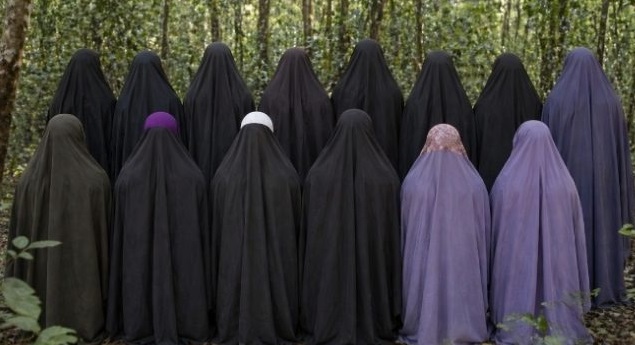
A faction of Boko Haram, officially known as Jama’atu Ahlis Sunna Lidda’awati wal-Jihad (JAS), has reportedly selected 68 women from a group of 416 abducted victims, with plans to distribute them among its members.
The alarming disclosure was made on Thursday by the President of the Borno South Youth Alliance (BOSYA), Samaila Ibrahim Kaigama, who told SaharaReporters that he was directly contacted by one of the insurgents detailing their next line of action amid what they described as government inaction.
According to Kaigama, the contact occurred around 8:00 PM on April 23, when individuals identifying themselves as members of JAS reached out regarding the abducted Ngoshe victims.
“During the communication, they claimed that they have selected 68 women out of the reported 416 captives and intend to distribute them among their members, similar to previous abduction cases,” Kaigama said.
He added that the insurgents issued a threat, indicating that some of the captives could be harmed or killed based on their internal selection process.
The terrorists also indicated that between 50 and 60 individuals could be targeted for execution.
The development has heightened concerns over the fate of hundreds of women, children, and other vulnerable individuals still held by the insurgents in Borno State.
Kaigama described the situation as a grave humanitarian emergency, urging immediate intervention from Nigeria’s security architecture, including the National Security Adviser (NSA), the Department of State Services (DSS), and military authorities.
“Given the seriousness of these claims and the immediate danger to innocent lives, we strongly believe that all relevant security agencies should urgently become involved,” he said.
He called on authorities to deploy all lawful means to gather intelligence, verify the threats, and secure the safe release of the captives.
“This is beyond politics. This is a humanitarian emergency involving innocent citizens whose lives may depend on urgent intervention,” Kaigama stressed.
The BOSYA president reaffirmed the group’s commitment to advocating for the safe return of all abducted Southern Borno indigenes through lawful and peaceful means.
However, on Thursday, Daily Trust reported that at least 12 of the victims had reportedly escaped captivity following a military offensive on the insurgents’ hideout.
Out of the 416 abducted persons, 404 are still believed to be in captivity.
A community source from Pulka said the escapees, 10 men and two women, regained freedom amid the chaos triggered by the bombardment.
Kaigama also confirmed the development, noting that the victims escaped on Wednesday and were safe.

More than 16,000 workers are set to lose their jobs at Meta and Microsoft as both companies ramp up spending on artificial intelligence and continue cost-cutting measures.
According to CNBC, Meta, the parent company of Instagram and WhatsApp, said it would lay off about 8,000 employees, representing around 10 per cent of its workforce, as it seeks efficiency savings while increasing investment in AI.
The company also said about 6,000 vacant positions would remain unfilled.
Meta had earlier told investors that its spending would top $160 billion during 2026, up from just under $120 billion last year.
The social media giant is competing with rivals to hire AI experts while also facing huge costs for data centres needed to power the technology.
Microsoft, meanwhile, said it was offering a voluntary redundancy programme that the Associated Press reported would affect about 8,750 workers within its core United States workforce.
That figure represents about 7 per cent of the company’s total staff.
CNBC had earlier reported that the scheme would be rolled out early next month.
The broadcaster said workers were informed in a memo from Microsoft chief people officer Amy Coleman.
“Our hope is that this program gives those eligible the choice to take that next step on their own terms, with generous company support,” she wrote.
The latest announcements continue a wave of job cuts across major US technology firms as investment in artificial intelligence accelerates.
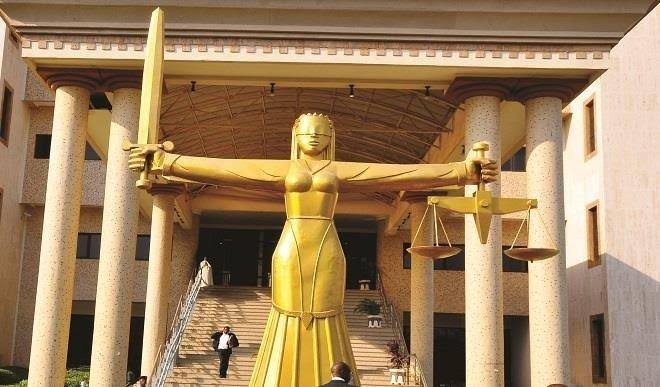
A federal high court in Abuja has ruled that the Nigeria Police Force and the Federal Road Safety Corps (FRSC) cannot impose fines on motorists over third-party motor insurance without a court order.
Hauwa Yilwa, presiding judge, delivered the judgment in a suit filed by Deji Adeyanju, the activist and lawyer, against the inspector-general of police (IGP), the attorney-general of the federation (AGF), and the FRSC.
The case, marked FHC/ABJ/CS/291/2025, sought clarification of the powers of law enforcement agencies to enforce compliance with motor vehicle insurance laws.
In her ruling, Yilwa drew a distinction between enforcement and sanctioning powers, holding that while the police and the FRSC can check compliance, they do not have the authority to penalise offenders without recourse to the court.
Marvin Omorogbe, counsel to the applicant, said the court affirmed that both agencies can enforce the law but cannot impose fines.
“The police and the road safety may enforce compliance but outrightly lack the powers to impose fines on third parties or vehicle owners,” he said.
“The court went further to restrain the IGP, the police force and all their officers, including the FRSC, from imposing fines on motor vehicle users or Nigerian citizens.”
The suit was initiated through an originating summons, invoking provisions of the Motor Vehicles (Third Party Insurance) Act, the Insurance Act, and the FRSC (Establishment) Act.
Adeyanju had asked the court to determine whether the police could enforce third-party insurance, impose fines, and whether such enforcement infringes on constitutional rights.
Speaking to journalists after the judgment, he said the decision addressed the core issue raised in the suit.
“The sole reason why we came to court is because we wanted the court to make a positive declaration that the police and the road safety do not have the right to impose fines on any Nigerian over motor vehicle insurance. And we have succeeded,” Adeyanju said.
He added that the ruling would help curb what he described as arbitrary fines imposed on motorists.
On the other hand, Victor Okoye, counsel to the defendants, said the judgment was only partly favourable and indicated plans to challenge it at the court of appeal.
Okoye argued that the suit was incompetent and that the court lacked jurisdiction to entertain it, noting that the matter ought not to have been commenced by originating summons.
“We envisage that we will likely challenge the proceedings at the court of appeal to determine if the court ought to have determined a case where the originating summons is incompetent,” he said.
He also maintained that the suit was improperly constituted, adding that the IGP was sued instead of the Nigeria Police Force as a legal entity.
Despite the objections, the court proceeded to deliver judgment.
Okoye, however, acknowledged that the ruling affirmed the powers of both the police and the FRSC to stop and verify compliance with third-party insurance requirements.

How I was diagnosed with prostrate cancer — Netanyahu

Boko Haram Faction Selects 68 Women From Over 400 Captives For Distribution Among Fighters –Borno Group

Meta Platforms, Microsoft Announce Over 16,000 Job Cuts As AI Spending Surges




-
 Metro24 hours ago
Two Injured as Police Foil Kidnapping Plot in Ibadan
-

 News24 hours ago
Tight Security as Court Arraigns Suspects Over Jos Killings
-

 News24 hours ago
Tinubu Unveils ₦25 Trillion Pension Fund to Strengthen Workers’ Retirement Security
-

 News24 hours ago
$516m loan request: Tinubu’s borrowing bonanza mortgaging Nigeria’s future
-

 Sports17 hours ago
Ex-Super Eagles striker, Emeramo is dead
-

 News24 hours ago
ISWAP commander, 24 others killed as troops repel Kukareta attack in Borno
-
 Politics24 hours ago
APC shifts presidential primary to May 23, 2026, releases revised 2027 election timetable
-
 News17 hours ago
Military set to try suspected coup plotters, set up General Court-Martial
You must be logged in to post a comment Login