
News
Radio Regulations and Global Spectrum management




By Sonny Aragba-Akpore.
From January 1, 2025, a new radio regulation management takes root among the 193-member nations of the International Telecommunications Union (ITU)
This is a fall out of the 2024 resolutions of the ITU Radio Regulations,a result of a four-year process after four weeks of negotiations during the World Radiocommunication Conference (WRC-23), hosted 2023 in Dubai, United Arab Emirates.
The International Telecommunication Union (ITU) released on August 28,2024 an updated version of the Radio Regulations, the international treaty governing the global use of radio-frequency spectrum and satellite orbits.
The ITU Radio Regulations govern the global use of radio-frequency spectrum and satellite orbits for all radio services, systems and applications, including fixed and mobile broadband, satellite systems, sound and TV broadcasting, radionavigation, meteorological monitoring and prediction, space research and Earth exploration, amateur radio services and other topics.
“The 2024 edition of the Radio Regulations marks a significant milestone in the world of technology,” according to ITU Secretary-General Doreen Bogdan-Martin. “As technological progress advances and the demand for spectrum grows, the international treaty continues to evolve to accommodate new radiocommunication services and applications, minimize interference between services, and ensure equitable access to this essential resource.”
The treaty serves as the cornerstone of international radio frequency management, ensuring that spectrum allocations keep pace with the rapidly evolving technological landscape and meet the needs of modern communication systems.
The Radio Regulations are a four-volume treaty of more than 2,000 pages. The treaty establishes the rights and obligations of ITU’s 193 member states and now covers more than 40 different radiocommunication services, spanning frequencies from 8.3 kilohertz (kHz) to 3000 gigahertz (GHz).
The ITU Radio Regulations facilitate equitable access to and rational use of the radio-frequency spectrum and geostationary satellite orbits, both globally shared and limited natural resources; support the efficient and effective operation of all radiocommunication services; and, as necessary, facilitate the introduction and regulation of new radiocommunication services and technologies.
The international coordination mechanisms enshrined in the ITU-managed treaty promote its objective to ensure the availability of the frequencies provided for distress and safety communications and help prevent or resolve cases of harmful interference between the radio services of different administrations.
The 2024 Radio Regulations are available in all six UN official languages These are Arabic, Chinese, English, French, Russian and Spanish.
The correct interpretation and translation of these six languages, in both spoken and written form, is very important to the work of the Organization, because this enables clear and concise communication on issues of global importance.
The ITU said the Radio Regulations documents also available on electronic versions that can be downloaded free of charge while Print and DVD versions will be available for purchase in the coming weeks.
Treaty provisions also direct how radio equipment and systems must operate to ensure efficient and effective coexistence among various services worldwide and anywhere in space, optimizing the usage of today’s increasingly crowded airwaves.
The 2024 Radio Regulations identify new spectrum resources to support technological innovation, deepen global connectivity, increase access to and equitable use of space-based radio resources, and enhance safety at sea, in the air, and on land.
“The updated Radio Regulations is the result of hard-won agreements reached at WRC-23 and a testament to the unwavering spirit of cooperation and compromise among all of our members to negotiate timely changes to the international treaty,” said Mario Maniewicz, Director of the ITU Radiocommunication Bureau. “The updated treaty provides a framework for national spectrum management that aligns with international standards and guarantees the stable, predictable regulatory environment that is essential for the development of innovative radiocommunication services for all.”
Global regulation of the radio spectrum began with the signing of the first International Radio Telegraph Convention in Berlin on November 3,1906 after 30 states came together and agreed on key maritime communications and safety provisions and established “SOS” as a globally recognized distress signal.
The Radio Regulations, Edition of 2024, contains the complete texts of the Radio Regulations adopted by the World Radiocommunication Conference of 1995 (WRC-95) and reviewed by the subsequent World Radiocommunication Conferences: WRC-97 (Geneva, 1997), WRC-2000 (Istanbul, 2000), WRC-03 (Geneva, 2003), WRC-07 (Geneva, 2007), WRC-12 (Geneva, 2012), WRC-15 (Geneva, 2015), WRC-19 (Sharm el-Sheik, 2019) and WRC-23 (Dubai, 2023).
World radiocommunication conferences (WRC) are held every three to four years.
It is the job of WRC to review, and, if necessary, revise the Radio Regulations, the international treaty governing the use of the radio-frequency spectrum and the geostationary-satellite and non-geostationary-satellite orbits. Revisions are made on the basis of an agenda determined by the ITU Council, which takes into account recommendations made by previous world radiocommunication conferences.
The general scope of the agenda of world radiocommunication conferences is established four to six years in advance, with the final agenda set by the ITU Council two years before the conference, with the concurrence of a majority of Member States.
Under the terms of the ITU Constitution, a WRC can:revise the Radio Regulations and any associated Frequency assignment and allotment Plans; address any radiocommunication matter of worldwide character; instruct the Radio Regulations Board and the Radiocommunication Bureau, and review their activities; determine Questions for study by the Radiocommunication Assembly and its Study Groups in preparation for future Radiocommunication Conferences.
On the basis of contributions from administrations, the Radiocommunication Study Groups, and other sources is captured in Article 19 of the Convention (Geneva, 1992)) concerning the regulatory, technical, operational and procedural matters to be considered by World and Regional Radiocommunication Conferences, the Conference Preparatory Meeting (CPM) shall prepare a consolidated report to be used in support of the work of such conferences.


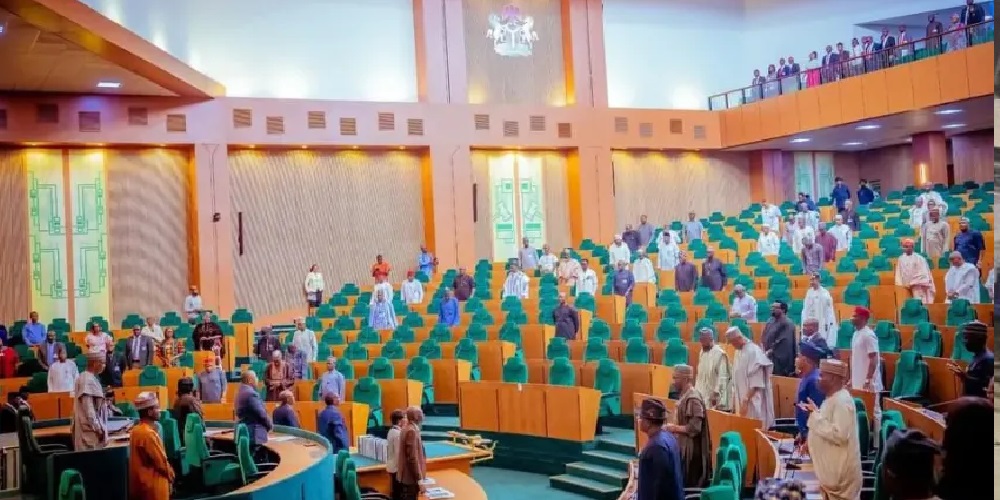
Party realignments in the House of Representatives gathered further pace as more lawmakers crossed over to rival platforms, underscoring intensifying political manoeuvres ahead of the 2027 elections.
During plenary, presided over by the Speaker, a fresh batch of six members from the New Nigeria Peoples Party and the Peoples Democratic Party formally defected to the All Progressives Congress and the African Democratic Congress.
The shift was particularly notable within the Kano caucus, where four NNPP lawmakers abandoned their party to align with the ADC, signalling a significant shake-up in the state’s political configuration.
The latest movement adds to an already growing trend of defections within the lower chamber, as legislators continue to reposition themselves amid evolving alliances and internal party tensions.
Speaker Abbas read the letter of resignation from the NNPP lawmakers, which noted “persistent leadership crisis in the NNPP resulting in internal divisions,” as reason for aligning with the ADC.
“I find it imperative to align with a platform that guarantees inclusion and I hereby notify the House of my intention to join the African Democratic Congress,” the letter read in part.
Still in Kano, three members of of the NNPP, Rep. Umar Zakari, Rep. Umar Datti and Rep. Abdulhakeem Ado resigned their membership from the NNPP and joined the ADC, citing protracted leadership crises both at the sub-national and national levels.
In Zamfara State, Rep. Ahmadu Kabiru, member representing Gusau/Tsafe Federal Constituency stated his resignation from the PDP “with immediate effect due to irreconciliable differences.”
He therefore announced his decision to join the APC, pleading his readiness to “align with the transformatory policies of the President as contained in the Renewed Hope Agenda.”
Also defecting from the PDP to APC is Rep. Chinedu Martins, member representing Ahiazu/Ezinihitte/Mbaise Federal Constituency of Imo State.
The lawmaker from Imo State confirmed that his switch to the APC had been concluded at ward level as far back as March 2026.
Following the steady stream of defections in recent months, the APC continues to dominate the House with a commanding 282 members. The PDP trails significantly with 30 seats, while the ADC has emerged as a growing force with 24 lawmakers.
Other parties hold smaller blocs, with the Labour Party at 10 seats, APGA with five, and the Accord Party controlling four. The Action Peoples Party and the Social Democratic Party each have two members, leaving the NNPP with just a single seat in the chamber.


President Bola Tinubu has approved a fresh set of appointments across critical institutions in Nigeria’s education sector, reinforcing leadership in examination bodies, technical education, and national library services.
The appointments were confirmed in an official statement issued by the Presidency on Wednesday.
New and Renewed Appointments
Among those appointed is Modupe Adeola Adelabu, who will serve as Chairman of the Governing Board of the National Examinations Council.
Ibrahim Dantani Wushishi has been retained as Registrar and Chief Executive of NECO, ensuring continuity in the management of the national examination body.
In the technical education space, Babatunde Salako has been appointed Chairman of the Governing Board of the National Board for Technical Education.
Meanwhile, Idris Bugaje has been reappointed as Executive Secretary of NBTE for a second and final five-year term.
Polytechnic and Library Leadership
The President also approved the appointment of Bongfa Binfa as Rector of the Federal Polytechnic, N’yak-Shendam in Plateau State, where he will serve a five-year tenure.
Additionally, Chinwe Veronica Anunobi has had her tenure renewed as Director-General/Chief Executive of the National Library of Nigeria for a final five-year term.
Focus on Continuity and Stability
The mix of fresh appointments and renewals suggests a strategy aimed at maintaining stability while strengthening leadership across key education agencies.
Observers say such decisions are critical to sustaining reforms, improving institutional performance, and ensuring continuity in policy implementation within the sector.
The Supreme Court has reserved its judgment regarding an appeal filed by the Peoples Democratic Party (PDP) to reinstate its national convention, which was previously nullified by the Court of Appeal.
The convention in question took place on November 15 and 16, 2025, at the Lekan Salami Stadium in Ibadan, Oyo State.
A five-member panel of Justices, led by Justice Lawal Garba, announced that a date for the final ruling would be communicated to all parties involved.
This decision followed the adoption of written briefs by legal representatives for and against the appeal.
The Tanimu Turaki-led faction of the PDP is urging the apex court to set aside the lower court’s decision, which invalidated the Ibadan convention.
The faction maintains that the dispute is an “internal party affair, which is not justiciable,” and argues that all necessary legal procedures were followed during the event.
However, previous rulings from the Federal High Court and the Court of Appeal favored aggrieved members, barring the Independent National Electoral Commission (INEC) from recognizing the convention’s outcomes and restricting access to the party’s national secretariat.
The legal trouble began in October 2025, when Justice James Omotosho of the Federal High Court stopped the convention from proceeding.
The judge ruled that the party had failed to conduct valid state congresses as required by the 1999 Constitution, INEC guidelines, and the PDP’s own constitution, stating that the party must comply with “relevant statutory provisions including the Electoral Act and Regulations and Guidelines for Political Parties (2022).”
A second major blow came from Justice Peter Lifu, who ordered the party to halt the convention after a suit was filed by former Jigawa State Governor, Sule Lamido.
Lamido alleged he was unfairly excluded from the chairmanship race. Justice Lifu noted:“The evidence before the court established that Lamido was unjustly denied the opportunity to obtain a nomination form to contest the position of national chairman of the party, in violation of the PDP constitution and its internal regulations.”
On November 14, 2025—just one day before the event—Justice Lifu issued a final order restraining the party from moving forward, holding that the PDP had failed to “afford a former governor of Jigawa State, Sule Lamido the opportunity to prepare and contest as a chairmanship candidate.”
With the Supreme Court now set to have the final say, the PDP remains in a state of legal uncertainty as it awaits the verdict that will determine the legitimacy of its current national leadership.

Defections Deepen as NNPP, PDP Lawmakers Switch Sides in Reps

BREAKING: Tinubu endorses six new appointments in education sector

PDP leadership tussle: Supreme Court takes major position




-

 News9 hours ago
How Tinubu Sacked Finance Minister Wale Edun Weeks After Hon. Alex Mascot Exposed ‘Missing’ N1.15tr
-

 News22 hours ago
US Lawmaker Accuses Tinubu’s Minister Of Bribery To Cover Up Genocide Report
-

 News9 hours ago
Yul Edochie Under Attack Over Disparaging Post Against Peter Obi
-

 News9 hours ago
Okowa Accuses Ned Nwoko of Misleading Anioma People Over State Creation Proposal
-

 Entertainment9 hours ago
Davido Bags Political Appointment
-

 News23 hours ago
Saudi Arabia seeks partnership with FCT on green city, security, economy
-

 Health9 hours ago
Cross River reports outbreak of Covid-19, activates response centre
-
 News22 hours ago
Tinubu approves minor cabinet reshuffle, sacks Edun, Dangiwa
You must be logged in to post a comment Login