Connect with us

News

Gov Alia hands over truck of palliatives ‘diverted’ by Reps member to EFCC, ICPC

Published

on

ADVERTISEMENT
Zoom Ad
ADVERTISEMENT
Zoom Ad

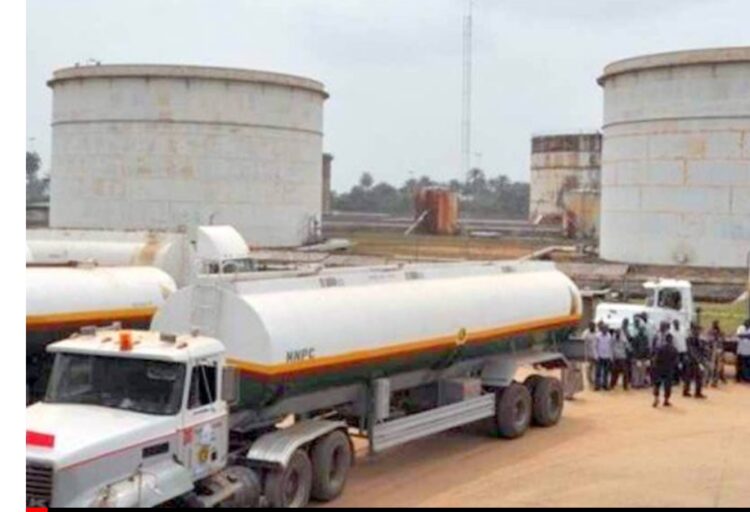
A consignment of palliatives believed to have been diverted has been sent to the Economic and Financial Crimes Commission (EFCC) and the Independent Corrupt Practices and Other Offences Commission (ICPC) by Benue State Governor Hyacinth Alia.


The items were seized on the instruction of the governor while they were being offloaded into a private residence in Makurdi, the state capital.

According a statement by Chief Press Secretary to the governor Mr. Tersoo Kula, investigation showed that the materials were picked from a National Emergency Management Agency (NEMA) warehouse in Jos, for transmission to the Benue State Emergency Management Agency (SEMA) for onward delivery to Kwande local government.

Governor Alia urged the anti-graft agencies to thoroughly investigate the circumstance of the release of the materials and the diversion into a private house.

Advertisement

The governor, who spoke to NEMA headquarters upon his return from the UK, where he attended MUTUK, expressed displeasure over the discoveries of some hidden facts regarding the matter.

In a letter from NEMA headquarters the agency specified that the state government should pay for the expenses of lifting the materials in Jos, and that the materials should be taken to the state by NEMA and handed over to SEMA.

Governor Alia, who discovered that some of the trucks conveying other materials such as mattresses were still missing, requested anti-graft agencies to liaise with a three-man committee from the state and conduct a thorough investigation to uncover other details.

It was also discovered that the materials were to be distributed directly to the affected persons by officials from the Agency’s North Central Zonal Office in collaboration with the Benue State Emergency Management Agency team.

Advertisement

Governor Alia called on the Acting Executive Secretary of SEMA, Sir James Iorpuu, officers of the EFCC, and others to monitor the situation and ensure that due process was followed and that the materials were distributed to the rightful people.

He thanked President Bola Ahmed Tinubu for having Benue people at heart, and called on National Assembly members to consider the conditions of vulnerable people in their state and ensure that they provide for their constituents whatever the federal government gives.
Continue Reading
Advertisement
Click to comment

You must be logged in to post a comment Login

Leave a Reply

News

ISWAP attacks military base in Borno, kill five soldiers

Published

on

By

ADVERTISEMENT
Zoom Ad
ADVERTISEMENT
Zoom Ad

Five Nigerian soldiers were reportedly killed on Friday, April 17, 2026, when suspected fighters of the Islamic State West Africa Province (ISWAP) attacked a military base in Mussa village, Borno State.

According to militia sources who spoke to AFP, the insurgents stormed the base before being repelled by troops. Following the attack, clashes were also reported in nearby Leho village.

However, the Armed Forces of Nigeria (AFN) have recorded significant operational successes across multiple theatres of operation between April 10 and 16, 2026, as troops sustained coordinated offensives against Boko Haram, ISWAP, JAS, violent extremist groups, kidnappers, and secessionist armed elements nationwide.

According to a statement issued by the Directorate of Defence Media Operations, the operations led to the arrest of several suspects, rescue of kidnapped victims, interception of terrorist logistics supplies, and neutralisation of armed criminals in ongoing efforts to create a safer and more secure environment across the country.

Advertisement

Troops of Operation HADIN KAI in the North East also maintained sustained pressure on insurgent networks across Borno, Yobe, and Adamawa States, recording multiple arrests and seizures.

In Gubio Local Government Area of Borno State, a suspect who confessed to supplying Premium Motor Spirit (PMS) to terrorists for about 10 years was arrested, with 60 litres of fuel, a mobile phone, and cash recovered.

In Adamawa State, 20 suspects were apprehended during raids on criminal hideouts in Mubi North, with items including electronics, cash totaling over ₦2.1 million, and other materials recovered.

In Yobe State, troops arrested three suspected informants linked to monitoring troop movements.

Advertisement

However, the Nigerian military had also in recent times suffered set backs in the fight against insurgency in the North East. Nigeria Tourism Guide

Suspected fighters of Islamic State West Africa Province (ISWAP) had last week attacked a military formation, killing a colonel, I.A. Mohammed, and other soldiers.

Also Brigadier General Oseni Omoh Braimah and 6 soldiers paid the supreme price early in a coordinated attacks by suspected members of the Islamic State of West Africa Province (ISWAP) on military formations in Benisheikh, Kaga Local Government Area, as well as Ngamdu and Pulka town in the Gwoza LGA of Borno state.

Advertisement
Continue Reading

News

Nigerian oil governance, Contracts: ‘I was a rubber stamp, Diezani tells UK Court

Published

on

By

ADVERTISEMENT
Zoom Ad
ADVERTISEMENT
Zoom Ad

Former Nigerian Petroleum Minister Diezani Alison-Madueke told a UK court that her role in approving oil contracts was largely routine, stating that major decisions were already taken before documents reached her desk.

Speaking at Southwark Crown Court in London, she explained that the structure of Nigeria’s oil sector meant she had limited direct control, as key operations were handled by the leadership of the Nigerian National Petroleum Corporation (NNPC).

“The system was already in motion before files came to me,” she said, adding that the size and complexity of the industry made it difficult for a minister to oversee everything directly.

She said she rarely declined contract approvals because they had already passed through detailed technical and regulatory checks.
“I was, in many instances, a rubber stamp in the process,” she said.

Advertisement

Diezani also recounted a 2014 incident in which she discovered a questionable crude oil deal allegedly linked to businessman Igho Sanomi. She said the matter came to light following a whistleblower report, prompting her to cancel the arrangement.

However, she told the court that powerful individuals opposed her decision and escalated complaints to then President Goodluck Jonathan.

On allegations that $20 billion in oil revenue went missing, she disagreed with former Central Bank Governor Lamido Sanusi, insisting the reports were inaccurate.

“There were no missing funds as widely reported,” she said, explaining that audits and legislative reviews later showed the money was tied to subsidy payments and operational costs.

Advertisement

She acknowledged serious challenges in the fuel subsidy system, including multiple claims by some marketers, but said reforms were introduced to reduce fraud.

According to her, these efforts came with risks. She said she faced security threats, including the kidnapping of family members, which she linked to her attempts to challenge powerful interests in the sector.

She also said politicians and business figures frequently pressured her office for preferential treatment in oil allocations.
“I declined requests that did not follow due process,” she said.

Addressing questions about her personal finances, Diezani said she used Nigerian bank cards even during foreign trips, in line with rules preventing public officials from holding foreign accounts.

Advertisement

She added that the cards sometimes failed abroad, forcing others to temporarily cover expenses.

The court also examined records of her official trips between 2011 and 2015.
She said she usually travelled with about 30 officials, including aides, security personnel, and protocol staff.
“All movements were documented and archived in ministry records,” she said, noting that both commercial and chartered flights were used depending on official requirements.

Despite the allegations against her, Diezani insisted her time in office focused on increasing local participation in the oil sector and improving transparency, saying she has been unfairly portrayed.

She is currently on trial alongside Olatimbo Ayinde and Doye Agama on five counts related to bribery.

Advertisement

All the defendants have pleaded not guilty, and the case is ongoing in London.

Continue Reading

News

Army raises alarm over low South-East recruitment

Published

on

By

ADVERTISEMENT
Zoom Ad
ADVERTISEMENT
Zoom Ad

Brig.-Gen. Uche Nnabuihe has raised concern over low enlistment from the South-East, revealing Anambra recorded only 117 applications out of 38,000 nationwide.

Nnabuihe led an Army delegation to sensitise youths in Awka, noting the figure was recorded on April 7, before a nationwide awareness campaign began.

He said the exercise aimed to encourage more youths from Anambra and the South-East to join the 91 Regular Recruits Intake before the May 27 deadline.

“We observed with concern that out of 38,000 applications received nationwide, only 117 came from Anambra as of April 7.

Advertisement

“This sensitisation is to correct that imbalance and encourage our youths to take advantage of opportunities in the Nigerian Army,” he said.

Nnabuihe urged eligible youths to apply, noting the Army offers a structured career path and opportunities for national service.

Lt.-Col. Ogbemudia Osawe, member of the sensitisation delegation, said training infrastructure had expanded, with new institutions in Abakaliki and Osogbo to accommodate incoming recruits.

Osawe listed benefits, including career progression, regular pay, continuous military education, specialised training, and exposure to diverse cultures.

Advertisement

He added personnel enjoy welfare packages, free medical care for families, pensions, gratuities, and opportunities for international assignments.

The Permanent Secretary, Anambra Ministry of Youths, Ifeatu Emodi, commended the initiative, describing military enlistment as crucial for South-East youths.

Emodi said declining interest among youths stemmed from misconceptions and misinformation about the Army.

Traditional ruler, Igwe Michael Okeke-Uche of Enugwu-Agidi, praised the Army’s welfare structure and urged youths to enlist for better regional representation.

Advertisement

The sensitisation held at the Ministry of Youths in Awka, attracting a cross-section of young people.

Continue Reading

Trending

Copyright © 2024 Naija Blitz News