
News
FG moves to allow payment in Naira to NIMASA, NPA



By Kayode Sanni-Arewa
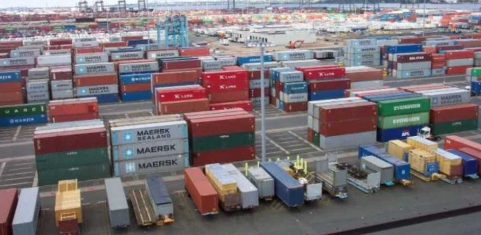
The federal government is proposing the collection of charges, fines and others, by the Nigerian Maritime Administration and Safety Agency (NIMASA) and the Nigerian Port Authority (NPA), be in naira rather than in foreign currencies.
Bayo Onanuga, special adviser to the president on information and strategy, spoke on Wednesday during a press briefing at the state house in Abuja.
According to Onanuga, the proposal is part of the economic stabilisation bills (ESBs) to be presented by President Bola Tinubu to the national assembly.
On Monday, the federal executive council (FEC) approved the economic stabilisation bills seeking amendment of tax policies.
Onanuga said the plan is part of an effort from the federal government to prioritise the use of naira and reduce pressure on the foreign exchange (FX) market.
“The second one has to do with the operating laws guiding NIMASA and Nigerian Port Authority (NPA). The amendment under that in the economic stabilisation bills is that all their fees, charges, levies, fines and other monies accruing to them and payable to those agencies will now be paid in naira at the applicable exchange rate,” Onanuga said.
“Hitherto, those agencies were charging in dollars but now collect it in naira. This government wants to put a lot of emphasis on our national currency instead of everything being dollarised in our economy.”
Since the unification of the naira on June 14, the country’s currency has significantly deteriorated, depreciating from N471.67 per dollar to N1667.42/$ in the official market as of Wednesday.
As part of its effort to reduce demand for dollars, the federal government said on October 1, it would commence the sale of crude oil in naira to the Dangote refinery and other local refineries.



By Gloria Ikibah
An agro specialist has said Nigeria’s vast natural wealth should place it among the world’s most prosperous nations, rather than struggling economically.
Speaking at a press briefing in Abuja, Segun Alabi, Managing Director of Davidollar Farms Limited, outlined the company’s ambition to reposition agriculture as a driver of real economic value, moving beyond basic farming into full-scale industrial production.
He argued that Africa must rethink its economic model and break away from what he described as a cycle of exporting raw materials while importing finished goods at higher costs.
“And how the V-dollar is leading the change. Because the only thing that is constant in life is change. Today I stand before you not just as a business leader, but as a voice for continent that has given so much to the world, yet received so little in return. Africa is rich, Nigeria is so rich, yet our people are struggling. And the question is so simple.
“And what is the question? How can a continent so blessed remain economically constrained for decades? We have exported our wealth in its raw form. We grow the crops, we harvest the fruits, we ship them out. And then we import them back, processed, packed, and priced higher.
“We export raw material, we import finished products, we export jobs, we import unemployment. This is not just an economic issue. It is a structural problem affecting our future.
“Every pineapple exported raw is a missed opportunity, missed job, missed revenue, missed industrial growth. We are not poor because we lack resources. We are poor because we are not capturing the value”.
Alabi illustrated his point using pineapple production, noting the sharp difference in value between raw and processed products.
“And if I have to come back to Nigeria, let’s say between three thousand to four thousand Naira. But when this same pineapple process into juice concentrate, dried fruit, pharmaceutical-grade brumelain, or pineapple briquette, which is renewable energy. That same pineapple that is being sold for three dollars or five dollars in a global language, or three thousand to five thousand in Naira language.
“This same pineapple would go for five times or ten times when the value is being added. Now, imagine at this, when it is being scaled. This is not farming.
“This is industrial wealth creation. The solution, this is why we founded Davidolla Nigeria Limited, not as a farm, not as a land business, but as a fully integrated agro-industrial platform. Our mission is so clear”, he added.
The Agro boss maintained that the future of Nigeria’s agricultural sector lies in value addition, processing and industrialisation, rather than the continued export of raw produce.
He said that the Farms has built large-scale pineapple production, developed processing capacity and exports high-value products to global markets.
According to him, Africa builds industrial strength.
“We are creating a system where farmers can earn more. Investors can gain returns. Nigeria earns foreign exchange.
“We are moving from agriculture as a survivor, because that is the holding deal. What are we moving into? We are moving into agriculture as an industry.
,”Why does this matter to Nigeria, and not just Nigeria, but to Africa at large? If we get this straight, we create thousands of jobs. We increase good GDP significantly. We reduce import dependency.
“We attract foreign investment. We reduce migration pressure on the youth, which is called Jaipur syndrome. This is not just a business.
“To our government leaders, we need policies that support agro-processing infrastructure, export facilitation, and access to finance”, Alabi said.
He therefore called for support companies like Davidolla and other indigenous agri-companies in Nigeria.
He also called on local and global investors to invest in agriculture.
“You are not just supporting them alone. You are not just supporting business, but you are supporting economic transformation and a movement.
“To Nigerians in the UK, in Canada, in Asia, in America, in Europe, to all the Africans in the diaspora, the future of agriculture is not in raw production. It is a value chain processing and export. Davidolla offers an opportunity to be part of a scaling agro-industrial platform, high growth export business, a solution to Africa’s economic challenge. This is not just investment. This is a participation in movement. Nigeria is the giant of Africa.
“Investing in Nigeria or in Africa is investing in an economy that has a future, and the future is now.
“The time has come to stop exporting our future, to stop exporting our job, and to stop exporting our wealth. The time has come to process, to produce, and to prosper. Davidolla is not just a company.
“It is a symbol of what is possible. Artificial means execution, and this is AI. And when I’m talking about AI, I’m not talking about artificial intelligence, but I’m talking about agricultural intelligence.
“Africa is not poor. Africa has simply been exporting its wealth in a raw form. The future belongs to those who process it.
“It is high time to join forces together, and build Nigeria, and build Africa of our dreams. Long live Africa. Long live Nigeria”, he added.
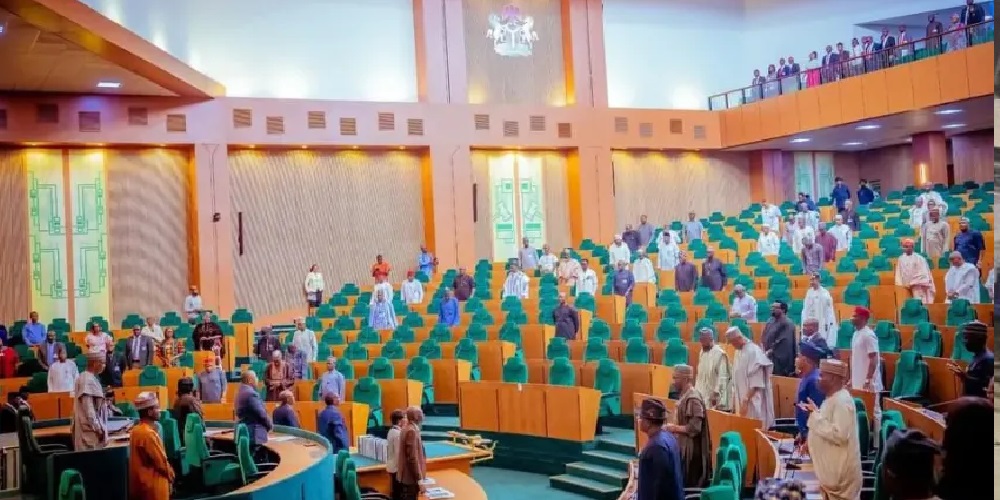
Party realignments in the House of Representatives gathered further pace as more lawmakers crossed over to rival platforms, underscoring intensifying political manoeuvres ahead of the 2027 elections.
During plenary, presided over by the Speaker, a fresh batch of six members from the New Nigeria Peoples Party and the Peoples Democratic Party formally defected to the All Progressives Congress and the African Democratic Congress.
The shift was particularly notable within the Kano caucus, where four NNPP lawmakers abandoned their party to align with the ADC, signalling a significant shake-up in the state’s political configuration.
The latest movement adds to an already growing trend of defections within the lower chamber, as legislators continue to reposition themselves amid evolving alliances and internal party tensions.
Speaker Abbas read the letter of resignation from the NNPP lawmakers, which noted “persistent leadership crisis in the NNPP resulting in internal divisions,” as reason for aligning with the ADC.
“I find it imperative to align with a platform that guarantees inclusion and I hereby notify the House of my intention to join the African Democratic Congress,” the letter read in part.
Still in Kano, three members of of the NNPP, Rep. Umar Zakari, Rep. Umar Datti and Rep. Abdulhakeem Ado resigned their membership from the NNPP and joined the ADC, citing protracted leadership crises both at the sub-national and national levels.
In Zamfara State, Rep. Ahmadu Kabiru, member representing Gusau/Tsafe Federal Constituency stated his resignation from the PDP “with immediate effect due to irreconciliable differences.”
He therefore announced his decision to join the APC, pleading his readiness to “align with the transformatory policies of the President as contained in the Renewed Hope Agenda.”
Also defecting from the PDP to APC is Rep. Chinedu Martins, member representing Ahiazu/Ezinihitte/Mbaise Federal Constituency of Imo State.
The lawmaker from Imo State confirmed that his switch to the APC had been concluded at ward level as far back as March 2026.
Following the steady stream of defections in recent months, the APC continues to dominate the House with a commanding 282 members. The PDP trails significantly with 30 seats, while the ADC has emerged as a growing force with 24 lawmakers.
Other parties hold smaller blocs, with the Labour Party at 10 seats, APGA with five, and the Accord Party controlling four. The Action Peoples Party and the Social Democratic Party each have two members, leaving the NNPP with just a single seat in the chamber.


President Bola Tinubu has approved a fresh set of appointments across critical institutions in Nigeria’s education sector, reinforcing leadership in examination bodies, technical education, and national library services.
The appointments were confirmed in an official statement issued by the Presidency on Wednesday.
New and Renewed Appointments
Among those appointed is Modupe Adeola Adelabu, who will serve as Chairman of the Governing Board of the National Examinations Council.
Ibrahim Dantani Wushishi has been retained as Registrar and Chief Executive of NECO, ensuring continuity in the management of the national examination body.
In the technical education space, Babatunde Salako has been appointed Chairman of the Governing Board of the National Board for Technical Education.
Meanwhile, Idris Bugaje has been reappointed as Executive Secretary of NBTE for a second and final five-year term.
Polytechnic and Library Leadership
The President also approved the appointment of Bongfa Binfa as Rector of the Federal Polytechnic, N’yak-Shendam in Plateau State, where he will serve a five-year tenure.
Additionally, Chinwe Veronica Anunobi has had her tenure renewed as Director-General/Chief Executive of the National Library of Nigeria for a final five-year term.
Focus on Continuity and Stability
The mix of fresh appointments and renewals suggests a strategy aimed at maintaining stability while strengthening leadership across key education agencies.
Observers say such decisions are critical to sustaining reforms, improving institutional performance, and ensuring continuity in policy implementation within the sector.

“Nigeria Too Blessed to Be Poor” — Agro Firm Boss Pushes Value-Driven Farming Revolution

Defections Deepen as NNPP, PDP Lawmakers Switch Sides in Reps

BREAKING: Tinubu endorses six new appointments in education sector




-

 News9 hours ago
How Tinubu Sacked Finance Minister Wale Edun Weeks After Hon. Alex Mascot Exposed ‘Missing’ N1.15tr
-

 News23 hours ago
US Lawmaker Accuses Tinubu’s Minister Of Bribery To Cover Up Genocide Report
-

 News9 hours ago
Yul Edochie Under Attack Over Disparaging Post Against Peter Obi
-
 News9 hours ago
Okowa Accuses Ned Nwoko of Misleading Anioma People Over State Creation Proposal
-

 Health9 hours ago
Cross River reports outbreak of Covid-19, activates response centre
-

 Entertainment9 hours ago
Davido Bags Political Appointment
-
 News23 hours ago
Saudi Arabia seeks partnership with FCT on green city, security, economy
-

 Foreign9 hours ago
Trump Extends Ceasefire To Give Iran More Time To Negotiate
You must be logged in to post a comment Login