Connect with us

News

Full Text of Tinubu’s 64th Independence Broadcast, Oct 1, 2024

Published

on

ADVERTISEMENT
Zoom Ad
ADVERTISEMENT
Zoom Ad
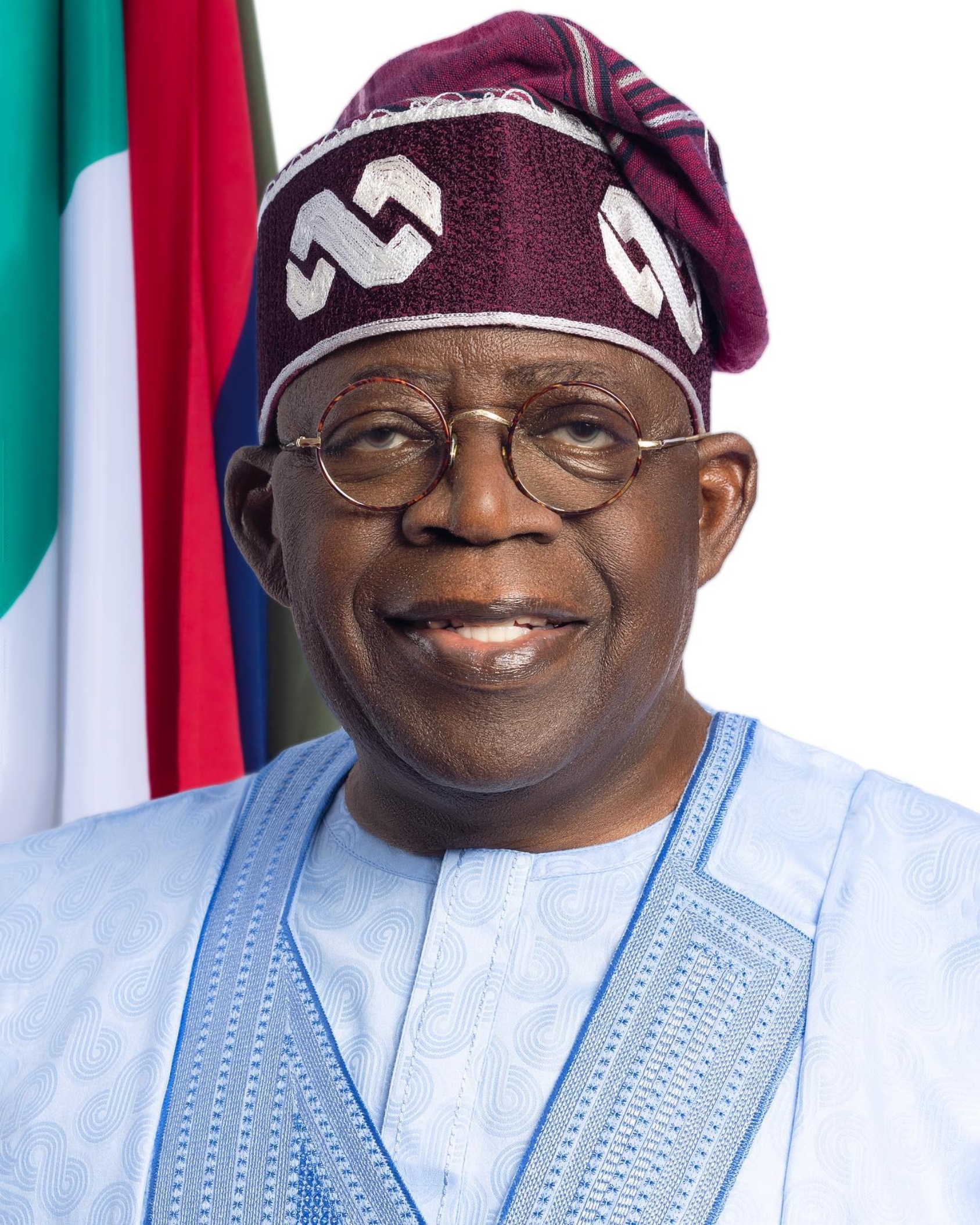
TEXT OF NATIONAL BROADCAST BY PRESIDENT BOLA AHMED TINUBU ON THE 64TH INDEPENDENCE ANNIVERSARY OF THE FEDERAL REPUBLIC OF NIGERIA OCTOBER 1, 2024
Fellow Nigerians, as I address you today, I am deeply aware of the struggles many of you face in these challenging times. Our administration knows that many of you struggle with rising living costs and the search for meaningful employment. I want to assure you that your voices are heard.
As your President, I assure you that we are committed to finding sustainable solutions to alleviate the suffering of our citizens. Once again, I plead for your patience as the reforms we are implementing show positive signs, and we are beginning to see light at the end of the tunnel.
Exactly 64 years ago, our founding fathers chose democracy as a form of government and launched the dream of a great country that would lead the rest of Africa out of poverty, ignorance, and underdevelopment, a beacon of hope to the rest of Africa and the world.
Over six decades later, we can look back, and Nigerians worldwide can see how well we have succeeded in realising the lofty dreams of our founding fathers.
The world is witnessing and benefiting from the can-do spirit of the Nigerian people, our massive intellectual capacity, and our enterprise and industry in all vocations, from arts to science, technology to infrastructure. The dreams that our founding fathers envisaged are still a work in progress. Every day, we put our hands on the plough, determined to do a better job of it.
While it is tempting to focus on what has been left undone and where we have stumbled as a nation, we must never lose sight of how far we have come in forging and holding our country together.
Since independence, our nation has survived many crises and upheavals that led to the dissolution and disintegration of many other nations worldwide. Six years after independence, our country descended into a political crisis that led to a bitter and avoidable civil war. Since returning from the brink of that darkest moment, we have learned to embrace our diversity and manage our differences better as we continue to work towards engendering a more perfect union.
Despite the many challenges that buffeted our country, we remain a strong, united, and viable sovereign nation.
Dear compatriots, our independence anniversary gives us another chance to reflect on how far we have gone in our journey to nation-building and to renew our commitment to building a better nation that will serve present and future generations of Nigerians.
While we celebrate the progress we have made as a people in the last sixty-four years, we must also recognise some of our missed opportunities and mistakes of the past. If we are to become one of the greatest nations on earth, as God has destined us to be, our mistakes must not be allowed to follow us into the future.
My administration took over the leadership of our country 16 months ago at a critical juncture. The economy faced many headwinds, and our physical security was highly impaired. We found ourselves at a dizzying crossroads, where we must choose between two paths: reform for progress and prosperity or carry on business-as-usual and collapse. We decided to reform our political economy and defence architecture.
On the security front, I am happy to announce to you, my compatriots, that our administration is winning the war on terror and banditry. Our target is to eliminate all the threats of Boko Haram, banditry, kidnapping for ransom, and the scourge of all forms of violent extremism. Within one year, our government has eliminated Boko Haram and bandit commanders faster than ever. As of the last count, over 300 Boko Haram and bandit commanders have been eliminated by our gallant troops in the Northeast, Northwest, and some other parts of the country.
We have restored peace to hundreds of communities in the North, and thousands of our people have been able to return home. It is an unfinished business, which our security agencies are committed to ending as quickly as possible. As soon as we can restore peace to many communities in the troubled parts of the North, our farmers can return to their farms. We expect to see a leap in food production and a downward spiral in food costs. I promise you, we shall not falter on this.
Our government has been responding to the recent natural disasters, particularly the flooding in parts of the country. After Vice President Kashim Shettima visited Maiduguri, I also visited to assure our people that this federal government will always stand with our people in their times of trouble. At the last meeting of the Federal Executive Council, we approved a Disaster Relief Fund to mobilise private and public sector funds to help us respond faster to emergencies.
Our government has also ordered integrity tests of all our dams in the country to avert future disasters.
The economy is undergoing the necessary reforms and retooling to serve us better and more sustainably. If we do not correct the fiscal misalignments that led to the current economic downturn, our country will face an uncertain future and the peril of unimaginable consequences.
Thanks to the reforms, our country attracted foreign direct investments worth more than $30 billion in the last year.
Fellow compatriots, our administration is committed to free enterprise, free entry, and free exit in investments while maintaining the sanctity and efficacy of our regulatory processes. This principle guides the divestment transactions in our upstream petroleum sector, where we are committed to changing the fortune positively. As such, the ExxonMobil Seplat divestment will receive ministerial approval in a matter of days, having been concluded by the regulator, NUPRC, in line with the Petroleum Industry Act, PIA. This was done in the same manner as other qualified divestments approved in the sector.
The move will create vibrancy and increase oil and gas production, positively impacting our economy.
The more disciplined approach adopted by the Central Bank to monetary policy management has ensured stability and predictability in our foreign exchange market. We inherited a reserve of over $33 billion 16 months ago. Since then, we have paid back the inherited forex backlog of $7 billion. We have cleared the ways and means debt of over N30 trillion. We have reduced the debt service ratio from 97 per cent to 68 per cent. Despite all these, we have managed to keep our foreign reserve at $37 billion. We continue to meet all our obligations and pay our bills.
We are moving ahead with our fiscal policy reforms. To stimulate our productive capacity and create more jobs and prosperity, the Federal Executive Council approved the Economic Stabilisation Bills, which will now be transmitted to the National Assembly. These transformative bills will make our business environment more friendly, stimulate investment and reduce the tax burden on businesses and workers once they are passed into law.
As part of our efforts to re-engineer our political economy, we are resolute in our determination to implement the Supreme Court judgment on the financial autonomy of local governments.
The central concern of our people today is the high cost of living, especially food costs. This concern is shared by many around the globe as prices and the cost of living continue to rise worldwide.
My fellow Nigerians, be assured that we are implementing many measures to reduce the cost of living here at home.
I commend the Governors particularly, in Kebbi, Niger, Jigawa, Kwara, Nasarawa, and the Southwest Governors that have embraced our agricultural production programme. I urge other states to join the Federal Government in investing in mechanised farming. We are playing our part by supplying fertilizer and making tractors and other farm equipment available. Last week, the Federal Executive Council approved establishing a local assembly plant for 2000 John Deere tractors, combine harvesters, disc riders, bottom ploughs and other farm equipment. The plant has a completion time of six months.
Our energy transition programme is on course. We are expanding the adoption of the Presidential Initiative on Compressed Natural Gas for mass transit with private sector players. The Federal Government is ready to assist the thirty-six States and FCT in acquiring CNG buses for cheaper public transportation.
Fellow Nigerians, while we are working to stabilise the economy and secure the country, we also seek to foster national unity and build social harmony and cohesion. Our economy can only thrive when there is peace.
As we work to overcome the challenges of the day, we remain mindful of the next generation as we seek to galvanize their creative energy towards a better future. We lead today with the future we wish to bequeath to our children in focus, recognizing that we cannot design a future that belongs to them without making them its architects.
Considering this, I am pleased to announce the gathering of a National Youth Conference. This conference will be a platform to address the diverse challenges and opportunities confronting our young people, who constitute more than 60 per cent of our population. It will provoke meaningful dialogue and empower our young people to participate actively in nation-building. By ensuring that their voices are heard in shaping the policies that impact their lives, we are creating a pathway for a brighter tomorrow.
The 30-day Confab will unite young people  nationwide to collaboratively develop solutions to issues such as education, employment, innovation, security, and social justice. The modalities of this Confab and selection of delegates will be designed in close consultation with our young people through their representatives. Through this confab, it will be our job as leaders to ensure that their aspirations are at the heart of the conference’s deliberations. The government will thoroughly consider and implement the recommendations and outcomes from this forum as we remain resolute in our mission to build a more inclusive, prosperous, and united Nigeria.
Our government is implementing several other youth-centric programmes to give our young people an advantage in the rapidly changing world. We are implementing, amongst others, the 3 million Technical Talents programme (3MTT) of the Ministry of Communications, Innovation and Digital Economy, aimed at building Nigeria’s technical talent backbone.
We have also enthusiastically implemented the Nigerian Education Loan Fund (NELFUND), which provides cheap loans to our students to pursue their tertiary educational dreams. In addition, later this month, we shall launch The Renewed Hope Labour Employment and Empowerment Programme (LEEP). It is conceived as a comprehensive suite of interventions at job creation by the Federal Ministry of Labour and Employment that is aimed at facilitating the creation of 2.5 million jobs, directly and indirectly, on an annual incremental basis whilst simultaneously ensuring the welfare and safety of workers across the country.
As is the tradition, the government will soon announce all the beneficiaries of our national honours for 2024.
The Senate President and the Chief Justice of the Federation have been conferred with the honour of the Grand Commander of the Order of the Niger (GCON). The deputy Senate President and Speaker of the House of Representatives have the honour of Commander of the Order of the Federal Republic (CFR), while the deputy speaker of the House has been awarded Commander of the Order of Niger (CON) .
Fellow Nigerians, better days are ahead of us. The challenges of the moment must always make us believe in ourselves. We are Nigerians—resilient and tenacious. We always prevail and rise above our circumstances.
I urge you to believe in our nation’s promise. The road ahead may be challenging, but we will forge a path toward a brighter future with your support. Together, we will cultivate a Nigeria that reflects the aspirations of all its citizens, a nation that resonates with pride, dignity, and shared success.
As agents of change, we can shape our destiny and build a brighter future by ourselves, for ourselves and for future generations.
Please join our administration in this journey towards a brighter future. Let us work together to build a greater Nigeria where every citizen can access opportunities and every child can grow up with hope and promise.
May God continue to bless our nation and keep members of our armed forces safe.
Happy Independence anniversary, my fellow Nigerians!
-President Bola Ahmed Tinubu

Continue Reading
Advertisement
Click to comment

Warning: Undefined variable $user_ID in /home/naijuinz/public_html/wp-content/themes/zox-news/comments.php on line 49

You must be logged in to post a comment Login

Leave a Reply

News

Dogara Urges National Assembly to Harness Civil Society in Fight for Accountability

Published

on

ADVERTISEMENT
Zoom Ad
ADVERTISEMENT
Zoom Ad

By Gloria Ikibah

Former Speaker of the House of Representatives, Rt. Hon. Yakubu Dogara, has urged the National Assembly to forge stronger partnerships with civil society organisations (CSOs), saying effective legislative oversight is essential if government spending and public policies are to deliver real benefits to Nigerians.

Dogara made the appeal on Tuesday during the National Assembly Open Week in Abuja, where lawmakers, development partners, civil society groups and the media gathered to examine ways of strengthening transparency, accountability and public participation in governance.

Reflecting on Nigeria’s 25 years of uninterrupted democracy, the former Speaker said many citizens were still waiting to enjoy the full dividends of democratic governance despite the huge sums approved by parliament over the years.

Advertisement

He questioned why there remained a wide gap between what the National Assembly appropriates and what ultimately reaches ordinary Nigerians, describing the disconnect as one of the country’s biggest governance failures.

“The essence of oversight is to ensure that every kobo appropriated by the National Assembly is spent for the purpose for which it was approved and that Nigerians receive value for public funds,” he said.

Dogara stressed that legislative oversight should not be reduced to routine committee visits or the production of official reports, arguing that its real purpose is to expose corruption, inefficiency, waste and poor governance.

He commended the leadership of the House of Representatives under Speaker Tajudeen Abbas and Deputy Speaker Benjamin Kalu for introducing the National Assembly Open Week, describing it as an important step towards making parliament more accessible and accountable.

Advertisement

According to him, the initiative provides citizens, civil society organisations and the media with an opportunity to engage lawmakers directly, ask difficult questions and make meaningful contributions to the legislative process.

Dogara maintained that democratic institutions become stronger when they willingly open themselves to public scrutiny instead of operating behind closed doors.

He warned that legislative oversight loses its value when it becomes a ceremonial exercise rather than a genuine mechanism for ensuring government programmes are implemented as approved and in the public interest.

The former Speaker argued that civil society organisations should be regarded as partners in governance rather than critics standing on the sidelines.

Advertisement

He said many CSOs possess technical expertise, grassroots knowledge and field-based evidence that can strengthen the oversight work of parliament.

Describing civil society groups as the “eyes and ears” of the legislature, Dogara said they play an indispensable role in tracking constituency projects, monitoring public spending and identifying failures in service delivery.

Recalling his time as Speaker, he said he deliberately encouraged civil society participation during budget defence sessions despite resistance from some lawmakers who were uncomfortable with increased public scrutiny.

According to him, institutions that resist openness ultimately undermine public confidence in democratic governance.

Advertisement

Dogara identified the persistent gap between budget approvals and project execution as one of Nigeria’s greatest accountability challenges, arguing that the problem lies less with the availability of funds than with weak monitoring and enforcement.

He therefore urged lawmakers to devote as much attention to monitoring budget implementation as they do to passing appropriation bills, insisting that the work of parliament should not end once a budget is approved.

The former Speaker also called on the Executive to cooperate fully with legislative oversight by embracing transparency and providing timely access to information required for effective scrutiny.

He encouraged civil society organisations to support the National Assembly with credible data, verified evidence and properly documented findings capable of influencing policy and prompting corrective action where necessary.

Advertisement

Dogara further advocated institutionalising collaboration between parliament and civil society beyond annual events such as the Open Week, saying sustained engagement would strengthen oversight, improve accountability and deepen public trust in democratic institutions.

He concluded that democracy can only thrive where transparency, accountability and constructive criticism are embraced, urging lawmakers, parliamentary staff, civil society organisations and citizens to work together to ensure government policies, budgets and development projects translate into meaningful improvements in the lives of Nigerians.

Continue Reading

News

Presidency, National Assembly Renew Alliance on Reforms as Abbas Defends 10th NASS Record

Published

on

ADVERTISEMENT
Zoom Ad
ADVERTISEMENT
Zoom Ad

By Gloria Ikibah

The Presidency has reaffirmed its commitment to working closely with the National Assembly to advance security, economic recovery and good governance, insisting that cooperation between both arms of government is essential to delivering the Renewed Hope Agenda.

The assurance came on Tuesday as the House of Representatives opened its National Assembly Open Week in Abuja, an initiative aimed at showcasing the work of parliament and strengthening public engagement under the theme, “Three Years of the 10th National Assembly: Advancing Transparency, Inclusion and Reform.”

Representing President Bola Tinubu, the Chief of Staff, Rt. Hon. Femi Gbajabiamila, said Nigerians expect government institutions to work together in the national interest, while stressing that the Open Week should serve as more than a ceremonial event.

Advertisement

He said: “An Open Week must be more than the ceremonial opening of the gates of Parliament. It should be an invitation to scrutiny, dialogue and partnership.

“Citizens should be able to follow how laws are made, understand how public resources are appropriated and see how legislative oversight protects the national interest.

“Equally, the legislature must continue to hear from young Nigerians, women, persons with disabilities, civil society, the private sector, professional bodies and communities across the federation.”

Gbajabiamila praised the leadership of the National Assembly, led by Senate President  Godswill Akpabio and Speaker of the House, Tajudeen Abbas, for reforms undertaken since the inauguration of the 10th Assembly.

Advertisement

He emphasised that collaboration between the Executive and Legislature strengthens, rather than weakens, democracy.

“While the Executive and the Legislature are separate arms of government, they share one ultimate mandate which is to improve the lives of the Nigerian people. Constructive cooperation does not diminish legislative independence, nor does robust debate amount to institutional conflict. Our democracy is strengthened when both arms engage with mutual respect, constitutional fidelity and a clear focus on results.

“As we reflect on the first three years of the 10th Assembly, I encourage us to look beyond the record of activities to the measure of impact: laws that solve real problems; budgets that translate into visible development; oversight that improves performance; and representation that renews citizens’ confidence in government.

“The Presidency remains committed to a productive relationship with the National Assembly in pursuit of security, economic renewal, social justice and shared prosperity under the Renewed Hope Agenda. Nigerians expect their institutions to work together.

Advertisement

“I congratulate the 10th National Assembly and all partners who have made this Open Week possible. May this gathering deepen public trust, strengthen democratic accountability and remind us all that public office is, above all, a public trust”, he added.

In his keynote address, Speaker Abbas Tajudeen defended the performance of the House over the past three years, revealing that lawmakers had processed 2,747 bills, with 363 passed by the National Assembly and 72 already signed into law by President Tinubu.

He said the figures represented the most productive legislative record since the return to democratic rule in 1999.

He said: “These were not lines upon a page but measurable and lasting change. Those figures represent the highest for any Assembly since 1999.”

Advertisement

According to the Speaker, one of the landmark laws guarantees interest-free student loans, while others have overhauled revenue administration and created regional development commissions.

“One of those laws now offers young people interest-free student loans, so that no Nigerian student is turned away from a lecture hall for want of means.

“Another has reformed how the nation raises and shares its revenue. Others have created commissions to carry development into every region of the Federation.

“The landmark statutes are only part of our work: more than 800 citizens have petitioned this House, and we have already brought hundreds of those matters to resolution. That, in my estimation, is this House at its most faithful.

Advertisement

“Where we have served the nation well, the Scorecard records it. Where we have fallen short, it records that also. At our inauguration in 2023, we asked to be measured against our own promises, and we meant it”, Abbas added,

The Speaker described the Open Week as an opportunity for direct engagement between parliament and the public.

“This week was designed not as a lecture but as a national conversation, and at every table, a place has been reserved for the citizen.”
The Speaker also defended the Assembly’s support for the Tinubu administration’s economic reforms, saying parliament had provided the legal framework required to implement key policies.

“President Bola Tinubu asked us to accept a difficult but necessary course of reforms. They reached into the very foundations of our economy, into how it is financed, how our currency is valued, and how our common revenue is shared and invested in our people.

Advertisement

“Every policy of the Executive still had to become law, to pass through appropriation, and to withstand legislative scrutiny. That is the indispensable work this House has performed.

“We laid the legal foundation for the tax reforms that will render our revenue fairer for generations to come.

“We enacted budgets directing resources toward infrastructure, toward power, and toward the human capital upon which all else depends.

“We gave statutory force to the reform of student financing. The President furnished the vision; the National Assembly furnished the laws that render the vision enforceable. That is the true measure of legislative support, and it is worth far more than applause”, he stated.

Advertisement

On security, Abbas maintained that progress was being made despite continuing challenges.

“Nothing tests a government, or a parliament, so severely as the safety of the citizen.

“Let me speak plainly: our security forces are gaining ground, and we will not rest until every Nigerian is safe.”

The Speaker also dismissed claims that the National Assembly merely rubber-stamps Executive proposals.

Advertisement

“Some assume, in good faith, that when a President signs a Bill quickly, then the legislature is a rubber-stamp. That is not how the work is done.

“Swift assent is usually the reward of months of committee work, completed long before the cameras arrive.

“Even the Congress of the United States has, in urgent moments, passed sweeping legislation in a single day, and no serious observer called it surrender.

“Speed built on hard preparation is the mark of a Parliament that is working, not one that has stopped thinking.”
He urged Nigerians to become more involved in the legislative process.
“My appeal to the citizen who observes us today is therefore a simple one: draw closer. Acquaint yourself with the true workings of your Parliament.

Advertisement

“Read a Bill before you pass judgement upon it. Submit your memoranda when we call for them. We take your submissions seriously and consider your input in amending laws”, he added.

Senate President Godswill Akpabio said the National Assembly remained focused on supporting government through legislation and budget approvals that improve the economy.

“I also insist that any sort of finance or those running our economy also take care of our contractors across the board so that money will be released to the society for things to function”, he said.

He also praised President Tinubu’s relationship with the legislature.

Advertisement

“He has visited us more times than any president. Whether it is June 12th or whether it is time of budget, he comes here in person and always very excited.

Executive Director of the Policy and Legal Advocacy Centre (PLAC), Clement Nwankwo, acknowledged the Assembly’s progress in areas including constitutional amendment, electoral reform and citizen engagement, but challenged lawmakers to strengthen oversight of the Executive.

“The Legislature is at its strongest not when it agrees with the Executive, but when it faithfully discharges its constitutional duty to scrutinise executive action, protect public resources and ensure that government remains accountable to the people”, he said.

Nwankwo urged lawmakers to conclude the constitutional review process, strengthen Nigeria’s electoral laws, pass the Special Seats Bill for Women, deepen transparency and ensure oversight delivers measurable benefits for citizens.

Advertisement

Former Speaker Aminu Masari commended the Open Week initiative, describing it as evidence that the House was living up to its reputation as the “People’s House.”

Emeritus Archbishop of the Catholic Archdiocese of Abuja, John Cardinal Onaiyekan, reminded lawmakers that their legitimacy comes from the electorate and urged them to place the interests of Nigerians above every other consideration.

Executive Secretary of the National Assembly Library, Hon. Henry Nwawuba, said the Open Week reflects parliament’s commitment to openness and accountability, while noting that it coincides with the second anniversary of the National Assembly Library, established by President Tinubu to preserve Nigeria’s legislative history and improve public access to parliamentary information.

Advertisement
Continue Reading

News

Reps Reopen State Police Debate, Drop Earlier Bill for Tinubu’s Executive Proposal

Published

on

ADVERTISEMENT
Zoom Ad
ADVERTISEMENT
Zoom Ad

By Gloria Ikibah

The House of Representatives on Tuesday rescinded its earlier resolution on the proposed constitutional amendment to establish state police, paving the way for fresh consideration of an Executive Bill transmitted by President Bola Tinubu.

Lawmakers unanimously voted to withdraw the earlier version of the legislation before immediately giving the President’s proposal a second reading, signalling a fresh phase in the long-running effort to create a constitutional framework for state policing.

The decision followed the adoption of a motion moved by the Chairman of the House Committee on Rules and Business, Rep. Francis Waive (APC, Delta), during plenary.

Advertisement

Waive said the motion was brought pursuant to Order Nine, Rule 6 of the Standing Orders of the House of Representatives.

He reminded members that the House had, on Thursday, 11 June 2026, approved amendments to several sections of the Constitution relating to the establishment of State Police Services.

According to him, the affected provisions include Sections 34, 35, 39, 42, 84, 89, 129, 153, 197, Chapter VI Part III, Sections 214, 215 and 216, as well as the Second and Third Schedules to the Constitution.

Waive also recalled that on 9 July, the House constituted a 12-member Conference Committee to harmonise its position with that of the Senate on the proposed legislation.

Advertisement

He, however, said fresh developments had made it necessary for lawmakers to revisit the bill.

He said: “New facts have emerged regarding the provisions of the Bill, which necessitate a critical review and reconsideration of its clauses to align with national security structure.

“Cognizant of the need to rescind the decision of the House on the passage of the bill and the constitution of the Conference Committee on the Establishment of State Police Services.”

When Speaker Abbas Tajudeen put the motion to a voice vote, members unanimously supported the proposal, effectively withdrawing the House’s earlier decision on the bill.

Advertisement

Shortly afterwards, the House considered an Executive Bill transmitted by President Bola Tinubu seeking to amend the Constitution to establish a constitutional framework for State Police Services.

The proposed legislation passed second reading after a letter from the President was read on the floor by the Speaker.

In the letter, Tinubu said the Executive Bill builds on the extensive legislative work already carried out by the House while introducing additional safeguards to strengthen the proposed policing framework.

According to the President, the amendments are designed to ensure that the creation of a dual policing system can respond more effectively to Nigeria’s changing security landscape.

Advertisement

“The proposed legislation is a critical component of our administration’s strategy to reorganise Nigeria’s security architecture to better protect our citizens, and I am confident that the House of Representatives will act quickly to consider and pass this bill.

“While I look forward to expeditious consideration of this submission by the House of Representatives, please accept, Rt. Honourable Speaker, the assurances of my consideration and best regards”, Tinubu stated.

Continue Reading

Trending

Copyright © 2024 Naija Blitz News