
News
NCC, Starlink tariff feud rattles telecom industry

- /home/naijuinz/public_html/wp-content/plugins/mvp-social-buttons/mvp-social-buttons.php on line 27
https://naijablitznews.com/wp-content/uploads/2024/02/Sonny-Aragba-Akpore.jpg&description=NCC, Starlink tariff feud rattles telecom industry', 'pinterestShare', 'width=750,height=350'); return false;" title="Pin This Post">
- Share
- Tweet /home/naijuinz/public_html/wp-content/plugins/mvp-social-buttons/mvp-social-buttons.php on line 72
https://naijablitznews.com/wp-content/uploads/2024/02/Sonny-Aragba-Akpore.jpg&description=NCC, Starlink tariff feud rattles telecom industry', 'pinterestShare', 'width=750,height=350'); return false;" title="Pin This Post">


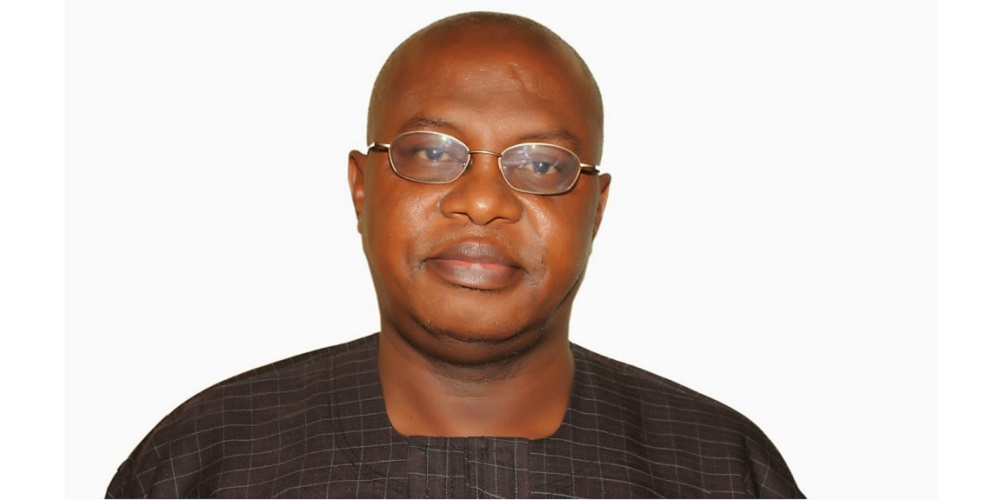
By Sonny Aragba-Akpore
An imminent feud is underway between telecommunications regulator, Nigerian Communications Commission (NCC) on one hand and Starlink and Mobile Network Operators ( MNOS) on the other.
On October 1, 2024 ,Starlink, an internet service provider (ISP) via satellite owned by Elon Musk, the world’s richest man, announced an increase in its monthly subscription prices in Nigeria.
The company, blaming inflation, increased its standard package for residential housing, monthly subscription to N75,000, from N38,000 per month — an increase of 97.37 percent.
The price for the mobile-regional roaming unlimited is now N167,000 while that of the mobile-global roaming service is N717,000.
The cost of the Starlink hardware was also increased from N440,000 to N590,000.
Sensing industry backlash, the Nigerian Communications Commission (NCC) came out with a statement on Tuesday, October 8,2024 saying Starlink had contravened sections 108 and 111 of the Nigerian Communications Act 2003 by unilaterally increasing tariffs without approval.
“The decision by Starlink to unilaterally review its subscription packages upwards did not receive the approval of the Nigerian Communications Commission (NCC),” NCC,s said in an initial original statement adding that “We were surprised that the company jumped the gun by announcing price changes after filing a request to the Commission seeking approval for price adjustment for which the Commission was yet to communicate a decision.”
“The action of the company appears to be a contravention of Sections 108 and 111 of the Nigerian Communications Act (NCA) 2003, and Starlink’s Licence Conditions regarding tariffs.
“The Commission will, therefore, take appropriate enforcement measures against any action by a licensee that is capable of eroding the regulatory stability of the telecommunications industry.”
NCC statement said it was “surprised” when the company announced the price changes.
It said Starlink had filed a request with the commission for a price adjustment, but the regulator was yet to give approval adding that the commission would take enforcement measures against the satellite company.
The NCC said Starlink contravened section 108 of the NCA 2003 which gives the NCC authority to regulate telecom tariffs, stating that no licensee can impose charges for services without obtaining tariff approval from the commission.
Section 111 of the Act empowers the telecoms regulator to impose financial penalties on any licensee that exceeds approved tariffs, regardless of other legal provisions.
“Notwithstanding any other provision of this Act, the commission shall prescribe and enforce appropriate financial penalties upon any holder of an individual licence who exceeds the tariff rates duly approved by the commission for the provision of any of its services,” the Act reads.
Mobile Network Operators (MNOS) in Nigeria have been agitating for tariff hikes based on rising inflation and several economic headwinds including high cost of diesel, rising cost of doing business, high foreign exchange rates among others saying their services were overdue for price increments as they have not raised rates in the last 11 years.
Strangely, a few hours after the NCC statement on Starlink, and in what appeared to be a face-saving move, the NCC came out with another statement to withdraw the earlier one saying “it was sent in error “.
It is however not clear if the regulator has capitulated on its laws and guidelines because industry players who have clamored for tariff raise for so long citing economic headwinds and high foreign exchange including spiraling cost of doing business are worried that should the NCC keep mum over the Starlink unilateral tariff hike, then Mobile Network Operators (MNOs) May resort to self help.
Although no reason was given for the withdrawal of that statement, analysts think the commission may have been complacent as a result of regulatory inactivities especially now that there is a lull in the industry due to dwindling fortunes of operators some of whom have declared losses due to the economic downturn.
Industry players frown at what is happening and have begun to criticize the NCC against the backdrop of the regulator’s unyielding stance on the clamor for an increase in tariffs by local telecom operators, especially in the last two years whereas, Starlink, an internet service provider that entered the market officially in January 2023,has been allegedly allowed to increase its tariffs by almost 100%.
An analyst quoted a major industry player as saying “Starlink only beams its satellite in Nigeria and acquired an ISP licence from the NCC to offer its service in the country. It currently has zero investment in the country.
“Many of us started since the liberalization of the telecom sector, putting in all our resources to deploy more infrastructure to get more Nigerians connected despite the various challenges in the operating environment.
“We have been appealing to the Commission to allow us to implement a tariff review for years now, but it said it had to carry out a cost-based study before any decision could be made. We are still waiting for the result of that study. Now, allowing Starlink to implement price increase in the same market shows the regulator’s double standard.”
The NCC may have lost steam over its regulatory oversight and demonstrate lack of capacity especially in addressing the issue of tariff increases by local players.
The operators believe the Commission simply woke up from its slumbers by announcing a statement it could not sustain let alone justify.
“This is certainly not the NCC of our founding fathers “ one veteran player who would rather be addressed as one of the “ancestors “ of the industry lamented.
Starlink came with disruptive technologies that are already making a world of difference for consumers and we looked on as if nothing was happening. The company came prepared.
It obtained six licenses from the NCC and got various permits and approvals to flag off the business of internet services via satellite and equally signed Memorandum of Understanding (MoU) and distribution agreements with Nigerian companies including, Technology Distribution Africa (TD),a big distributor of major technology brands and promoted by a restless technology czar ,Leo Stan Ekeh.
Starlink didn’t stop there ,it has decided to take services to even the unserved and under served communities in Nigeria and parts of Africa for which TD boasts it’s ready for the long haul partnership.
Space Exploration Technology Corporation (Space X ) owners of Starlink got six licenses in a roll from the NCC and is expected to deploy nearly $30b over time for the Nigerian operations alone.
The government is excited that with the entry of Starlink,it may achieve 70% broadband connectivity by 2025 as enshrined in the National Broadband Plan (NBP) 2020–2025.
But is the government just desperate to achieve this at the expense of low purchasing powers of subscribers? Time will tell.
Starlink,s six licenses include that for ISP, Gateway Service Provider, international Data Access (IDA),Sales and Installation Major, Gateway Earth Station and Very Small Aperture Terminal (VSAT) thus making it a mega player and a big threat to other players in the industry.
Starlink officially announced its presence in Nigeria in January 2023. The company, which initially quoted its prices in dollars at $600 for the hardware and $43 for the subscription, changed to naira upon its official announcement.
SpaceX’s Starlink satellite internet service has more than four million global subscribers, achieving rapid growth despite mounting competition.
SpaceX confirmed the news recently after company President Gwynne Shotwell hinted earlier that the service would reach the mark within days. This represents a remarkable achievement for Starlink, which only crossed three million subscribers in May, highlighting the company’s accelerating growth in the satellite internet market.
Since its beta launch in October 2020, Starlink has rapidly scaled, growing from one million subscribers by December 2022, to two million by September 2023, and now four million just months later. The service operates through a vast constellation of nearly 6,000 satellites, providing satellite internet to users in almost 100 countries, including expanding into previously underserved regions like Africa and the Pacific islands. Starlink’s rapid growth reflects both its market dominance and the rising demand for satellite internet services, which offer coverage in areas lacking traditional broadband infrastructure.
While cable cuts remain a nightmare,Starlink’s boasts of bridging the gap, with its potential impact extending far beyond addressing temporary outages. These include reaching Underserved Areas where Traditional ISPs often struggle to reach remote regions due to the high cost of infrastructure deployment.
Starlink’s satellite-based approach can effectively bridge this gap, offering high-speed internet access to previously underserved communities by unlocking educational and economic opportunities for millions of Nigerians currently excluded from the digital world.
Starlink boosts Business Continuity by avoiding Frequent internet disruptions that can be detrimental to businesses, especially those reliant on online operations.
Starlink claims to be reliable with independent internet access that can provide much-needed resilience, ensuring business continuity even during cable outages.
The recent cable cuts hampered online learning and remote work arrangements. Starlink’s stable internet connection may have facilitated smoother online learning experiences for students and enable seamless remote work for professionals across the country.


Ahead of today’s guber poll, the Police has deployed some of its security dogs to Osun state to ensure seurity is not breeched during and after the election.
The police dogs have been prepared to assist security personnel in detecting and confronting potential threats from violent criminals.

The Speaker of the Osun State House of Assembly, Hon. Adewale Egbedun, has reportedly been placed under house arrest, with unidentified security operatives in police uniforms surrounding his residence in Osun State.
According to reports, the security personnel arrived at the Speaker’s residence in more than 10 black Hilux vehicles and allegedly cordoned off the premises.
The Imole Campaign Council said it attempted to contact senior police officers and the Police Situation Room to obtain clarification on the development but was unable to reach them.
It also urged security agencies and political actors to ensure that the electoral process remains peaceful and free from intimidation, fear or interference.
The council called on residents and all stakeholders to remain calm, obey the law and await an official explanation from the relevant authorities.
As of the time of filing this report, there had been no official explanation from the police or other security agencies regarding the reported operation at the Speaker’s residence.

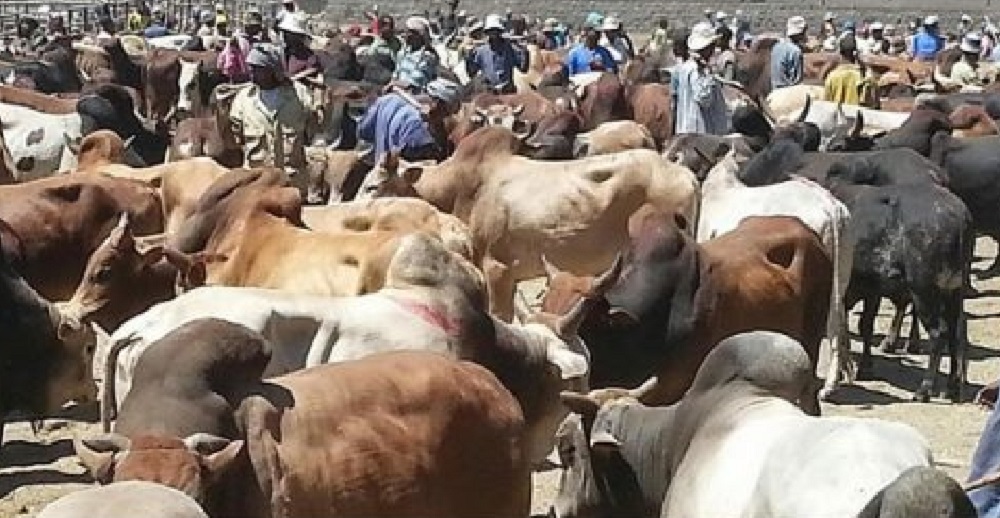
The Federal Government has earmarked about 33,000 hectares of land in the Federal Capital Territory (FCT) for livestock settlements as part of efforts to curb cattle movement within Abuja and shift livestock production to a more settled, commercially viable system.
Minister of Livestock Development, Idi Mukhtar Maiha, disclosed this on Friday in Abuja during a ministerial press briefing, fielding questions from journalists.
Maiha said the land, captured in the Abuja Master Plan and located outside the city centre, would provide designated areas where livestock could be raised under improved conditions without competing for space with residents in densely populated parts of the capital.
He said the initiative is part of the Federal Government’s broader livestock transformation programme, focusing on settled production, improved animal genetics, better husbandry practices, and the establishment of Livestock Development Centres across the country.
“The city is not designed to co-mingle livestock with people,” Maiha said.
He explained that livestock owners would still be free to conduct their businesses within the city, while their animals would be kept in designated production areas where adequate feed, water, veterinary services, and other facilities would be provided.
The minister said the Federal Government was already engaging the FCT Administration to rehabilitate existing livestock facilities, including the Cow Grazing Reserve, Karshi, Piko, and Kore.
He said improvements had commenced at the Cow Grazing Reserve, where three boreholes and a digital weather station had been provided to enhance livestock production and management.
Maiha added that discussions were ongoing with the FCT authorities to rehabilitate other facilities and integrate them into the government’s proposed settled livestock production system.
The minister said the government was determined to address the practice of moving livestock over long distances in search of pasture and water, describing the system as economically inefficient and detrimental to animal productivity.
According to him, animals that continuously trek long distances expend energy that should ordinarily contribute to weight gain, milk production and other productive purposes.
He described cattle subjected to such movements as “athletes”, stressing that the extensive production system was partly responsible for Nigeria’s low livestock productivity.
Maiha said animals were not roaming for the sake of movement but because the existing production system compelled livestock owners to search continuously for feed and water.
He said the government’s preferred model would keep animals within designated production areas where they could access feed, water, veterinary care, breeding services and other essential inputs.
The minister noted that the approach would not only increase meat and milk production but also reduce waste and some of the social and economic challenges associated with uncontrolled livestock movement.
Maiha also identified low genetic potential and poor animal husbandry practices as major constraints on Nigeria’s ability to meet growing demand for meat, milk and eggs.
He said indigenous livestock breeds were not necessarily inferior but had not undergone the systematic genetic improvement required to substantially increase their productivity.
According to him, some indigenous cattle require several years to reach marketable weight, whereas genetically improved breeds can achieve considerably higher weights in a shorter period.
He also highlighted the disparity in milk production, noting that many indigenous cows produce between 1.2 and two litres of milk daily, compared with significantly higher yields obtainable from improved dairy breeds.
“The rate of growth matters a lot. Serviceability matters a lot,” Maiha said.
He said genetic improvement, better feeding and modern animal husbandry would therefore be critical components of the Federal Government’s livestock development programme.
Maiha said the creation of the Federal Ministry of Livestock Development in July 2024 had begun to trigger institutional reforms at the state level.
Only three states, he said, had dedicated ministries or agencies responsible for livestock when the ministry was established, but the number has since increased to 20 states.
He said this development would strengthen collaboration between federal and state governments in implementing livestock policies and attracting investment into the sector.
The minister, however, cautioned that transforming a sector that had operated largely through traditional systems for decades would take time.
“It’s a gradual process,” he said, adding that the impact of the reforms should not be assessed solely on immediate outcomes.
Under the emerging framework, the Federal Government would provide policy direction, technical and animal health standards, traceability systems, data infrastructure, investor facilitation and regulatory coordination.
State governments would be expected to provide suitable land and local infrastructure, undertake community engagement and security coordination, and mobilise livestock producers.
Private investors and producer organisations would, in turn, finance and operate commercial activities across livestock value chains.
Maiha said the proposed Livestock Development Centres would serve as commercially oriented production clusters rather than government-owned farms.
The centres are expected to accommodate investments in breeding, feed and fodder production, cattle finishing, dairy production and chilling, sheep and goat fattening, poultry production, pig breeding, feedlots, modern abattoirs and meat processing.
Other opportunities include cold-chain facilities, logistics, biogas and organic fertiliser production, and hides, skins and leather processing.
He said states would be encouraged to develop livestock industries based on their comparative advantages, available feed and water resources, agro-ecological conditions, producer populations, and market demand, rather than adopting a uniform model.
For cattle and dairy production, investment opportunities would include irrigated fodder, hay and silage production, feedlots, breeding and artificial insemination, milk collection and chilling, abattoirs and meat packaging.
The poultry value chain would encompass hatcheries, breeder farms, feed mills, broiler and layer clusters, vaccination and laboratory services, egg grading and packaging, processing and cold-chain facilities.
Similar investment opportunities would be developed for sheep and goats, pigs and micro-livestock, including rabbits, grass cutters, snails and bees.
Maiha said the reforms were aligned with the National Livestock Growth Acceleration Strategy (NL-GAS), which seeks to raise the livestock sector’s contribution to the Nigerian economy from about $32 billion to at least $74 billion by 2035.
The minister said the reforms would also reduce the economic and security risks associated with transporting live animals over long distances from major livestock-producing areas to consumer markets.
He noted that although a significant proportion of the country’s livestock population is concentrated in the North, major markets are located elsewhere, resulting in animals travelling more than 1,000 kilometres.
Maiha said developing livestock production, processing and marketing infrastructure across states would reduce dependence on long-distance movement of live animals.
He said the combination of settled livestock production, improved genetics, adequate feed and water, animal health services, processing infrastructure and private-sector investment would enable Nigeria to produce more meat, milk and eggs while creating jobs and strengthening rural economies.
Meanwhile, the National Veterinary Research Institute (NVRI), Vom, presented awards to Maiha and the Permanent Secretary of the Ministry, Dr Chinyere Ijomah Akujobi, in recognition of their contributions to developing the livestock sector.
The Executive Director and Chief Executive Officer of NVRI, Dr Yakubu Gunya Dashe, presented the awards alongside institute officials.
The institute recognised Maiha for service delivery, while Akujobi was honoured for her leadership and supportive role in advancing the ministry’s mandate.
The recognition highlighted the importance of collaboration among government institutions, veterinary research organisations, livestock producers and private investors in building a modern and productive livestock industry.

Osun decides: Ahead today’s poll, police dogs deployed to combat thugs

Just in: Security operatives take over Osun Assembly Speaker residence

SAD! Professor’s lifeless body found in London apartment days after receiving sack letter




-

 News6 hours ago
US missionary kidnapped in Niger released after nine months in captivity
-

 News6 hours ago
Adeleke camp condemns release of APC Assembly candidate allegedly found with gun
-
 News24 hours ago
Philippine Envoy Urges Nigeria to Strengthen Gender Laws, Institutionalise Equality
-

 News6 hours ago
ASUU decries unpaid 2022 salaries, demands education review
-

 News6 hours ago
2027: Atiku asks court to disqualify Tinubu over names, certificate controversy
-

 News6 hours ago
Court remands ex-NBA chairman in DSS custody
-

 News6 hours ago
Osun 2026: Davido fires back at critics, says ‘I’ll be on ground before 7am’
-

 News16 hours ago
Osun 2026: Davido Raises Alarm Over Ebonyi REC’s Presence, Alleges Plot to Rig Election
Warning: Undefined variable $user_ID in /home/naijuinz/public_html/wp-content/themes/zox-news/comments.php on line 49
You must be logged in to post a comment Login