Connect with us

News

Angry presidency says The Guardian trying to incite Nigerians

Published

on

ADVERTISEMENT
Zoom Ad
ADVERTISEMENT
Zoom Ad

The Presidency on Saturday faulted The Guardian newspaper’s lead story of Oct. 25, which had the title: “Calls for military intervention: misery, harsh policies driving Nigerians to desperate choices.”


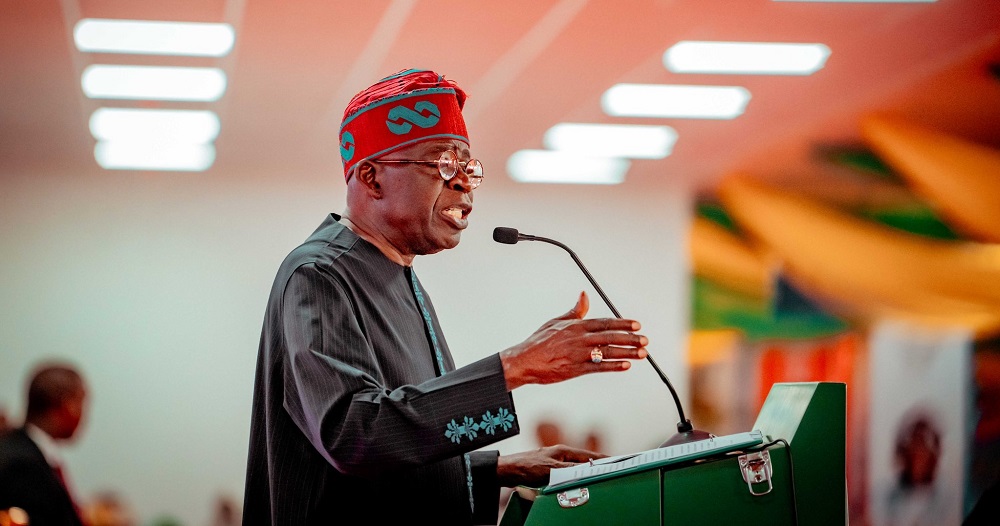
Special Adviser to the President, Information and Strategy, Mr Bayo Onanuga, in a statement, said that the story “openly incited unrest against President Bola Tinubu’s administration and advocated regime change under the guise of journalism”.

He said the inflammatory headline and content deviated from responsible reporting.

“The Guardian’s agenda was unmistakable from the cover illustration to the article.

Advertisement

“In attempting to create a balanced veneer, the author condemns military rule while fanning the flames of military intervention,” said Onanuga.

“This was evident in the introduction to the article,” he said.

The newspaper wrote: “Nigerians were exhilarated with the return of democracy in 1999, but 25 years on, the buccaneering nature of politicians, their penchant for poor service delivery, morbid hatred for probity, accountability, and credible/transparent elections, among others, are forcing some flustered citizens to make extreme choices, including calling for military intervention.

Continuing, the newspaper said, “Deep despondency permeates every facet of the polity consequent upon soaring cost of living.

Advertisement

“And while the political elite splurge on fine wines and exotic automobiles amid poor service delivery, calls for regime change could become more strident in the days ahead even though military insurrection holds no solution to the country’s woes.”

The Special Adviser said the newspaper must be questioned on how it could present an argument for military intervention while superficially denouncing it “unless it harboured a deliberate agenda”.

“This latest editorial reflects a troubling trend in which the publication has persistently propagated inflammatory and negative narratives, stepping dangerously close to undermining the very fabric of responsible journalism.

“Moreover, the lead story relies heavily upon emotive language and imagery—such as an illustration of military armoured tank—to bolster its argument while neglecting to present a balanced view.

Advertisement

“It indulges in lampooning the current administration while ignoring positive developments in Nigeria’s economic landscape. The report lacks empirical data and fails to exhibit the journalistic rigour that the situation demands,” Onanuga stated.

He said such narratives could embolden anarchists intent on disrupting the democratic process.

“Military rule is an anachronism in modern civilisations, irrespective of its framing, due to the oppressive nature typically associated with its practice.

“Guided by its experience in 1984, when two of its journalists were jailed by the military regime for reporting the truth, The Guardian acknowledges that military rule is terrible.

Advertisement

“Yet, it attempts to provoke public ire against President Tinubu by suggesting he governs with less regard for citizens than military dictators once did,” said Onanuga.

He said the narrative by the newspaper neglected the hard-fought battle that birthed the country’s democracy and served only to undermine the hard-won freedoms that Nigerians were enjoying.

“Good journalism is characterised by restraint and a commitment to national interest. Media outlets must propagate responsible reporting that contributes to an informed citizenry.

“During times of political and economic crises, the media, as a force for good, should rally the public around their leaders, fostering unity and patience as reforms are introduced,” Onanuga argued.

Advertisement

He explained that Tinubu had consistently called for understanding and patience amid the nation’s challenges.

“The President’s plea is not a sign of weakness but an affirmation of his dedication to a brighter future for Nigeria.

“Moreover, recent policy changes have initiated a turnaround, yielding positive economic indicators.

“According to the Minister of Finance and Coordinating Minister of the Economy, Wale Edun, the revenue-to-debt service ratio has notably declined from 97 per cent in 2023 to 68 per cent in 2024.

Advertisement

“Nigeria’s foreign reserves rose to 39.1 billion dollars on Oct. 22, with GDP growth achieving 2.98 per cent in Q1 2024—an increase from 2.31 per cent in Q1 2023,” stated Onanuga.

He said this growth was driven by sectors beyond oil, including the financial services sector, mining, and quarrying, marking a significant shift in the country’s economic structure.

“We are now exporting more than we are importing, with trade surpluses recorded in two consecutive quarters.

“In the light of the positive developments, it is unacceptable for any publication, including The Guardian, to incite calls for military intervention based on transient difficulties.

Advertisement

“A more cautious and responsible approach would have better served its readers and the nation,” he said.

According to him, journalism, like democracy, thrives on fairness and objectivity, a standard he says all media outlets must uphold.

“We encourage The Guardian and similar platforms to prioritise balanced reporting that fosters dialogue and understanding rather than division and unrest.

“At this time, we need our people and the media to rally around the government as the Tinubu-led administration steers our country through this challenging period toward a better future,” Onanuga said.

Advertisement

(NAN)

Continue Reading
Advertisement
Click to comment

Warning: Undefined variable $user_ID in /home/naijuinz/public_html/wp-content/themes/zox-news/comments.php on line 49

You must be logged in to post a comment Login

Leave a Reply

News

Real reason why we banned night vigils – MFM

Published

on

ADVERTISEMENT
Zoom Ad
ADVERTISEMENT
Zoom Ad

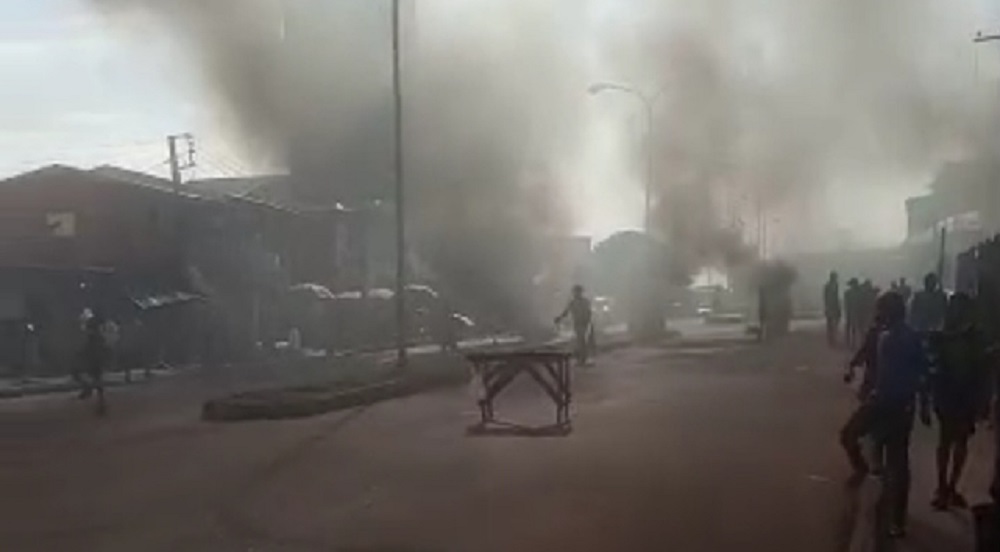
The Mountain of Fire and Miracles Ministries (MFM) has placed an indefinite ban on overnight vigils and ordered all church programmes to end by 8 p.m. daily, citing rising security concerns nationwide.

The new directive was contained in a circular dated June 5, 2026, sent to Regional Overseers and branch pastors. It takes effect immediately.

According to the memo, all services, meetings, and programmes at every level of the church must now close by 8 p.m. “for the foreseeable future.” Overnight vigils and late-night prayer meetings have been suspended indefinitely.

Where such gatherings are considered necessary, leaders are to restructure them into evening prayer sessions that must still wrap up by 8 p.m. at the latest.

Advertisement

The circular was signed by Temitope A. Olawale, Director of Administration at MFM International Headquarters and Nigeria. He said the decision is a safety measure based on the current state of security in the country.

“The directives are purely precautionary and aimed at safeguarding the lives and well-being of our members in the face of the current security situation in the country,” the statement read.

MFM is known for its marathon prayer sessions and overnight programmes. The new rule marks a major shift for the church as insecurity continues to impact religious gatherings across Nigeria.

Advertisement
Continue Reading

News

CBN Imposes N100M Penalty On Inadequate Processing Of Forex Documents

Published

on

By

ADVERTISEMENT
Zoom Ad
ADVERTISEMENT
Zoom Ad

The Central Bank of Nigeria (CBN) has introduced stricter sanctions for banks that process foreign exchange transactions without proper documentation, imposing penalties that could run into hundreds of millions of naira.

Under the revised foreign exchange regulatory framework, authorised dealer banks found to have completed forex transactions with insufficient supporting documents will pay a N100 million fine. They will also incur an additional N10 million penalty for each affected transaction.

The sanctions are contained in the fourth edition of the Foreign Exchange Manual released by the apex bank. The document serves as the operational guide for participants in Nigeria’s foreign exchange market.

According to the CBN, the updated manual is designed to strengthen regulatory compliance, improve transparency and reinforce confidence in the country’s foreign exchange system.

Advertisement

The regulator classified the offence as the execution of foreign exchange transactions without adequate documentation. It stated that any authorised dealer found culpable would be liable to the prescribed penalties.

The revised guidelines place greater emphasis on documentation requirements for all categories of foreign exchange transactions. These include spot transactions, forward contracts, swap arrangements, imports and export-related dealings.

Banks are now required to obtain, verify and retain all relevant supporting documents before foreign currency can be released to customers. Similar requirements apply to forward and swap transactions, where evidence of the underlying trade or obligation must be available before settlement.

The manual also retains existing documentation requirements for imports. Importers are expected to provide Form M, invoices, certificates of origin, packing lists and shipping documents, among other mandatory records.

Advertisement

In addition, importers must submit Exchange Control Documents within 90 days after negotiating shipping documents through overseas correspondent banks.

Failure to comply with the documentation requirements attracts progressively stiffer sanctions.

A first violation will result in a 90-day suspension from foreign exchange transactions. A second offence carries a 180-day restriction, while a third attracts a one-year suspension.

The CBN warned that a fourth violation could lead to a complete prohibition from participating in foreign exchange transactions.

Advertisement

Banks that fail to report cases of default to the regulator will also face sanctions under the new framework.

The apex bank further tightened reporting obligations for authorised dealers. Institutions that fail to submit required daily or monthly returns will be fined N500,000 for late submission.

Where returns are not rendered at all, the offending institution will pay a minimum penalty of N5 million. An additional N500,000 daily fine will apply until the breach is corrected.

The revised manual also strengthens oversight of banks’ foreign currency exposure levels.

Advertisement

Financial institutions that exceed approved Net Open Position limits will receive a warning for the first offence. A second violation will attract a 10-working-day suspension from the Nigerian Foreign Exchange Market.

A third breach will result in a 90-day suspension from market activities.

The CBN also imposed sanctions on unauthorised reallocation of foreign exchange funds. Any bank found engaging in such practices will pay N10 million for each transaction involved.

Beyond the monetary penalty, affected institutions may be referred to the Bankers’ Committee ethics framework for further disciplinary action.

Advertisement

The central bank said the new measures form part of ongoing efforts to deepen transparency, promote market discipline and establish a more rules-based foreign exchange regime.

According to the regulator, stronger compliance standards and stricter enforcement will help improve market integrity, reduce abuses and enhance investor confidence in Nigeria’s foreign exchange market.

Continue Reading

News

Umahi Threatens To Delist Road Contractors Over Non-Compliance

Published

on

By

ADVERTISEMENT
Zoom Ad
ADVERTISEMENT
Zoom Ad

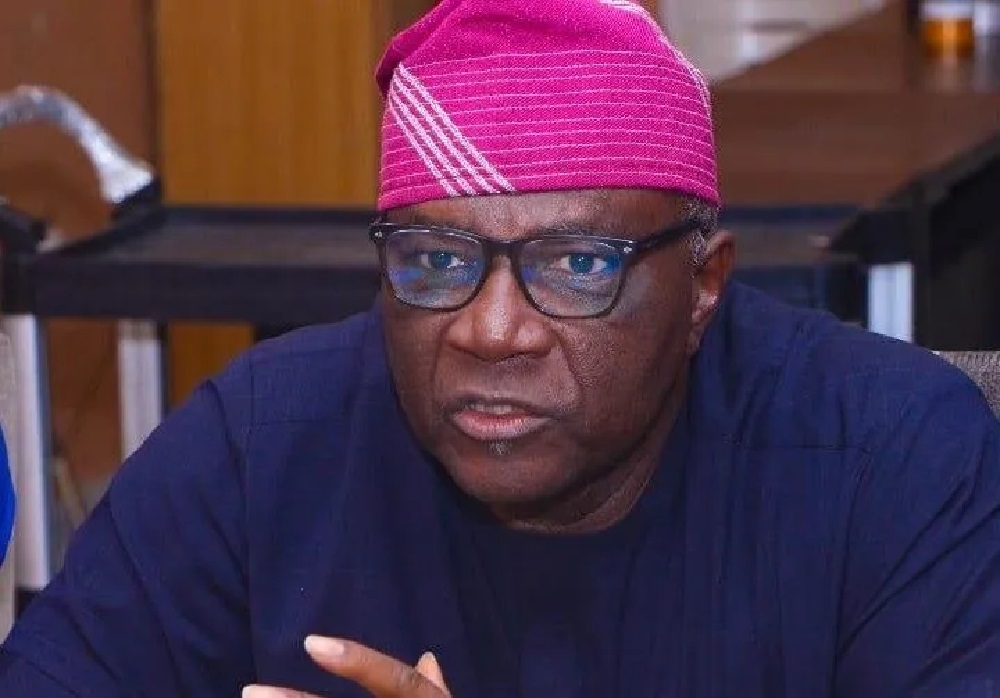
The Minister of Works, Engr. David Umahi, has threatened to delist contractors who fail to comply with federal government construction guidelines on road projects across the country.

He also warned that ministry officials who fail to enforce compliance would be removed or redeployed.

Umahi issued the warning on Saturday during an inspection of the Mararaba–Keffi road project.

He said the federal government would begin a cleanup of non-performing contractors from next week.

Advertisement

“From next week, we are going to weed out contractors—whether indigenous or expatriate—who are not committed. Some of them have up to 25 jobs awarded before we came on board. If you are not ready to invest while awaiting federal government payments, then you are not part of the progress of this country,” he said.

He added that contractors who only depend on advance payments before mobilising to site would be removed, noting that some had benefitted from government jobs for over 30 years without adequate performance.

Umahi, however, commended JRB Construction Company for its quality of work and commitment to road infrastructure development despite funding challenges.

“I declare JRB as the best indigenous contractor because of the quality of work he does, the amount of equipment he has, and his partnership with the Federal Government,” he said.

Advertisement

He explained that the contractor was selected for intervention works when funding delays slowed down the dual carriageway project and immediately mobilised without receiving advance payment.

“Where we are facing challenges is identifying true partners in progress. JRB, I commend you,” he added.

Also speaking, the chairman of the House Committee on Works, Hon. Akintola Alabi, criticised some foreign contractors for collecting mobilisation fees without moving to site.

He commended JRB for demonstrating that Nigerian contractors can deliver quality infrastructure projects.

Advertisement

“There are some contractors from abroad who collect mobilisation and go back without working, then return for variations. But you are different. You continue working because you understand this is your country,” he said.

He further praised the contractor for his consistency and contribution to national infrastructure development.

Continue Reading

Trending

Copyright © 2024 Naija Blitz News