
Foreign
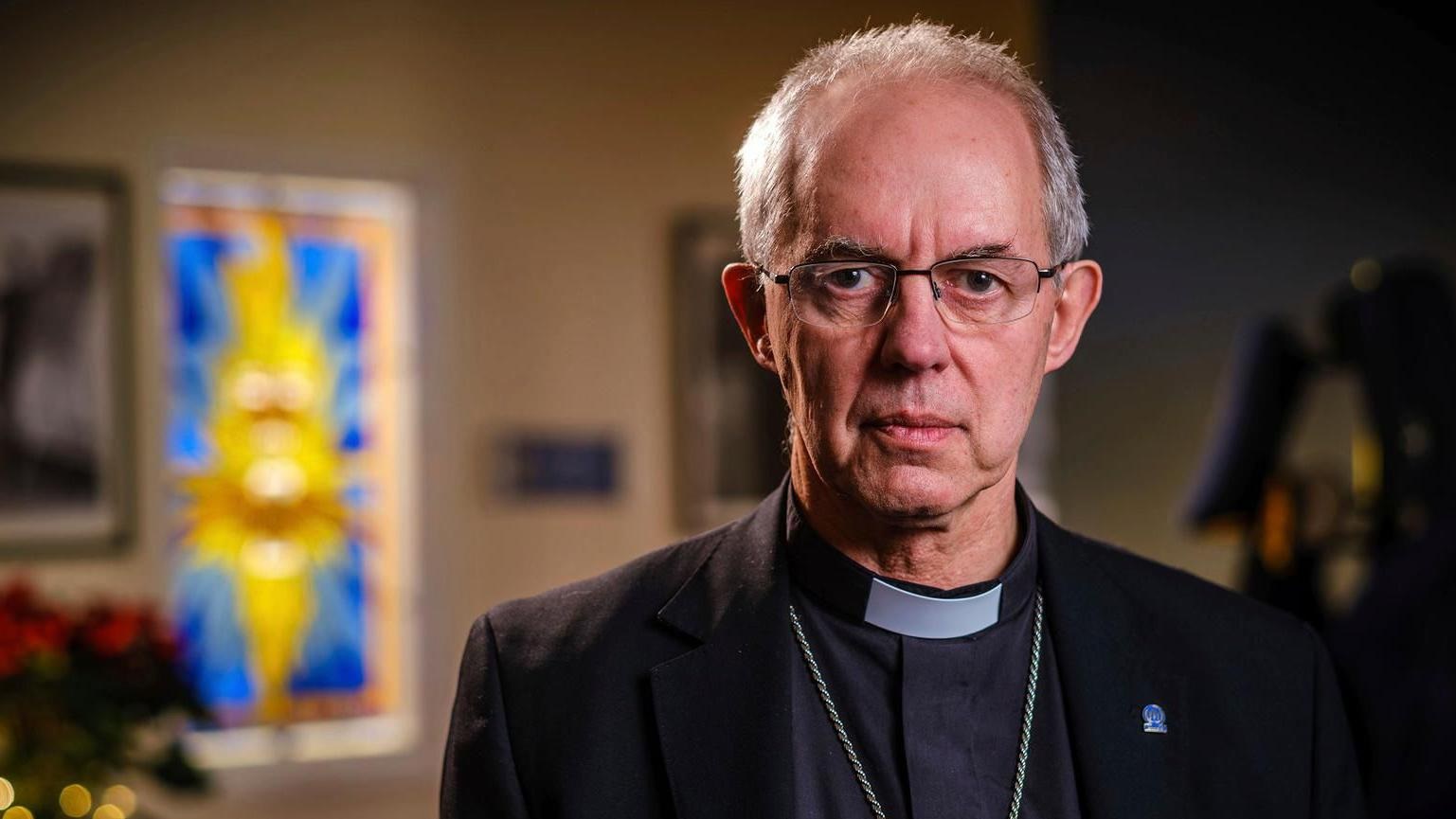
Child-abuse scandal: Archbishop of Canterbury resigns

- /home/naijuinz/public_html/wp-content/plugins/mvp-social-buttons/mvp-social-buttons.php on line 27
https://naijablitznews.com/wp-content/uploads/2024/11/Justin-Welby-1000x600.jpg&description=Child-abuse scandal: Archbishop of Canterbury resigns', 'pinterestShare', 'width=750,height=350'); return false;" title="Pin This Post">
- Share
- Tweet /home/naijuinz/public_html/wp-content/plugins/mvp-social-buttons/mvp-social-buttons.php on line 72
https://naijablitznews.com/wp-content/uploads/2024/11/Justin-Welby-1000x600.jpg&description=Child-abuse scandal: Archbishop of Canterbury resigns', 'pinterestShare', 'width=750,height=350'); return false;" title="Pin This Post">


The Archbishop of Canterbury and head of the global Anglican Church, Justin Welby, resigned on Tuesday, following a review that revealed senior church leaders covered up the widespread abuse of over 100 boys and young men.
The abuse was perpetrated by a British lawyer, John Smyth, who led Christian summer camps in the United Kingdom and other countries during the 1970s and 1980s.
The independent review, which was released last week, found that despite repeated efforts by individuals to bring Smyth’s actions to light, the response from the Church of England was inadequate, amounting to a cover-up.
Smyth, who died in South Africa in 2018 without facing any legal proceedings, abused boys and young men under his care for decades.
The review revealed that the church’s failure to act enabled Smyth to continue his abuse in the UK and abroad.
In a statement announcing his resignation, Welby expressed deep regret over the church’s failures.
“The last few days have renewed my long-felt and profound sense of shame at the historic safeguarding failures of the Church of England,” Welby said in the statement.
Welby admitted that he first learnt about the abuse allegations in 2013, the same year he became Archbishop, but acknowledged that his efforts to investigate and address the situation were insufficient.
He said, “For nearly twelve years I have struggled to introduce improvements. It is for others to judge what has been done.”
The Archbishop’s resignation came amid growing criticism from victims and other church leaders.
The Bishop of Newcastle, Helen-Ann Hartley, remarked, “I think, rightly, people are asking the question: ‘Can we really trust the Church of England to keep us safe?’ And I think the answer at the moment is ‘no’.”
Survivor Andrew Morse, who was among those abused by Smyth as a teenager, called for Welby’s resignation.
He criticised the Archbishop’s handling of the situation, stating that had Welby acted decisively in 2013, further abuse could have been prevented.
He said Welby’s “admission that in 2013, which is really modern day in comparison to the 1970s and 1980s, that he didn’t do enough, that he wasn’t rigorous… is enough in my mind to confirm that Justin Welby, along with countless other Anglican churchmen, were part of a cover-up about the abuse,” Morse told the BBC.
The scandal has cast a long shadow over Welby’s tenure, which included officiating high-profile events such as the wedding of Prince Harry and Meghan Markle and delivering the sermon at Queen Elizabeth II’s state funeral.
His resignation marked a moment for the Church of England, as it grapples with the legacy of abuse scandals and attempts to restore trust among its followers.
Welby concluded his statement by acknowledging the profound impact of the review’s findings, noting the pain endured by the victims and the failure of the church to protect those in its care.
“I am so sorry that in places where these young men, and boys, should have felt safe and where they should have experienced God’s love for them, they were subjected to physical, sexual, psychological and spiritual abuse,” he said.
Efforts to get the reactions of the Church of Nigeria (Anglican Communion) and the Christian Association of Nigeria failed.
When contacted, the Communication Officer of the Church of Nigeria, Anglican Communion, Korede Akin, informed our correspondent that he could not speak on the issue, stating that only the Primate of the Anglican Communion, Archbishop Henry Ndukuba, could provide the position of the church.
Similarly, the Director of National Issues and Social Welfare for the Christian Association of Nigeria, Abimbola Ayuba, told our correspondent that only the CAN President had the jurisdiction to speak on international matters, as he could only speak to issues of national concern or social welfare.
Meanwhile, efforts to reach the National Publicity Secretary of the Pentecostal Fellowship of Nigeria, Bishop Emmah Isong, failed as his phone line was switched off.

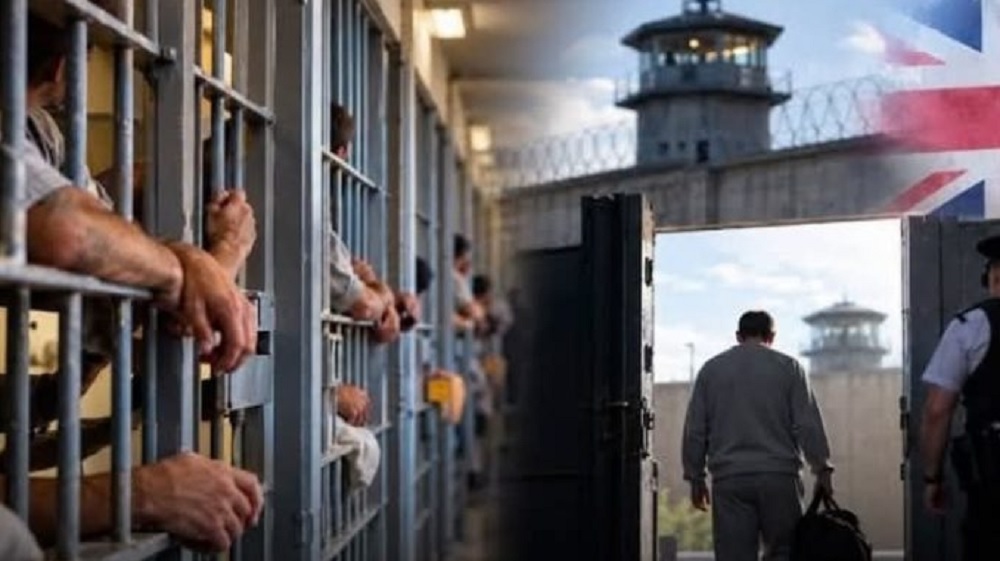
Hundreds of inmates across England and Wales are expected to walk free from prison on Thursday under an expanded early release programme, amid concerns that many could be left homeless and the probation system may struggle to supervise them.
About 2,000 offenders, including domestic abusers and violent criminals, are scheduled for release over the next month, while another 3,000 will be freed in phases over the following year to ease prison overcrowding. The initial target of 6,000 was reduced following Prime Minister Keir Starmer’s intervention.
However, probation officers have warned that accommodation shortages could force some former inmates onto the streets, despite evidence that securing housing after prison helps reduce reoffending.
A probation source told The Guardian: “We have a handful of places for ex-offenders and they are full. We are now looking at releasing some people straight on to the street.”
Enver Solomon, chief executive of charity Nacro, warned that homelessness after incarceration could increase the likelihood of offenders returning to prison.
Meanwhile, probation officers’ union Napo accused prison authorities of ignoring the challenges facing the service, including staff shortages, excessive workloads and problems with electronic monitoring.
Its national chair, Ben Cockburn, described the situation as absolute denial.
The expanded scheme, introduced under the 2026 Sentencing Act, allows eligible prisoners serving fixed-term sentences to qualify for release after serving one-third instead of 40%.
However, certain offenders, including those convicted in child grooming gang cases, indecent a§§ault and mansla¥ghter, are excluded.
The Ministry of Justice also announced plans to expand electronic tagging, but a recent watchdog report revealed that some offenders waited up to five months for monitoring devices, with only 55% of GPS and radio frequency tags installed on schedule.

Passengers aboard a Flydubai flight from Dubai to Israel were thrown into panic on Wednesday after one of the pilots allegedly stabbed his co-pilot and attempted to take control of the aircraft.
The incident occurred aboard Flydubai Flight FZ1073, carrying about 150 Israeli passengers, as the Boeing 737 was travelling from Dubai to Israel.
According to flight-tracking data cited in reports, the aircraft dramatically lost approximately 13,000 feet in about 30 seconds and veered off its course, triggering fears that the plane could crash.
The situation reportedly escalated when passengers heard screams coming from the cockpit. Some passengers subsequently rushed toward the cockpit after it was opened and found one of the pilots bleeding.
A passenger who spoke to Israel’s Channel 12 described the terrifying moments aboard the aircraft.
“We heard screams on the plane. Then they opened the cockpit and we saw blood, and someone had stabbed the pilot with a pocketknife.”
The passenger added: “We prayed. There were also moments when we thought we weren’t going to make it out alive.”
According to the reports, two other pilots who were aboard the flight intervened and took control of the aircraft, preventing a potentially catastrophic outcome.
The aircraft was subsequently diverted and made an emergency landing at Tabuk Airport in northwestern Saudi Arabia, where security personnel took charge of the situation.
The passengers were later safely evacuated from the aircraft.
Israeli officials described the incident as one in which a “major disaster was narrowly avoided.”
Israeli security agencies, including the Israel Defense Forces (IDF), Mossad and Shin Bet, are reportedly examining the incident as a possible act of terrorism.
The circumstances surrounding the alleged stabbing, including the identity and motive of the attacker and how the cockpit was accessed, remain subject to investigation.
NewsMediaNG will continue to monitor developments as authorities provide further details.
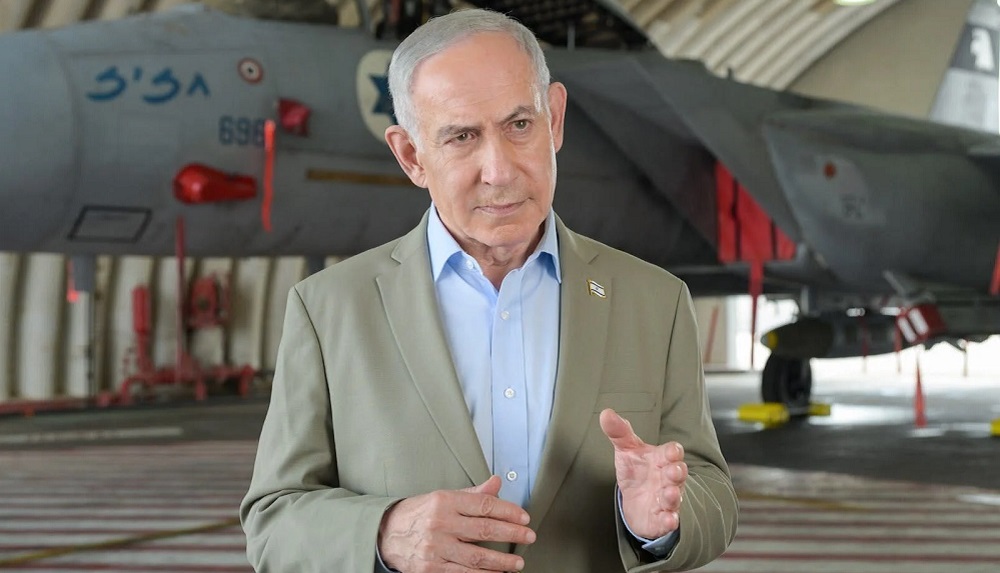
Israeli Prime Minister, Benjamin Netanyahu on Tuesday issued a stern warning to Israel’s enemies, declaring that the country’s military will continue to operate on all fronts and will reach any threat anywhere, at any time.
The Prime Minister spoke during a visit to the IDF Air Force Tel Nof base, where he met with pilots and ground crews. Flanked by members of the Israeli Air Force, Netanyahu said Israel’s operations have achieved significant results in recent weeks, particularly in Gaza and Lebanon.
“I am here at the Air Force base with our heroic pilots and our outstanding ground crews. We are operating constantly on all fronts,” Netanyahu said.
He disclosed that Israeli forces have eliminated key terrorist figures in Gaza in recent days. According to the Prime Minister, two days ago, forces killed the terrorist responsible for kidnapping Noa Argamani and Avinatan Or.
Argamani, who became one of the most recognized faces of the October 7th hostage crisis after video of her abduction went viral, was rescued in a special operation in June 2024 alongside three other hostages. Or was also rescued.
“We brought them home, and we eliminated him. Last night, we eliminated the commander of Hamas’s Northern Gaza Brigade. He joined his predecessors, whom we also eliminated,” Netanyahu stated.
He said the latest operations are part of a broader offensive that has seen more than 100 terrorists eliminated in Gaza in recent weeks alone.
“All told, in recent weeks we have eliminated more than 100 terrorists — and that is just in Gaza. Of course, we are also operating in Lebanon. You remember what we did to the Ali Taher Ridge,” he asked, referring to recent Israeli strikes in southern Lebanon targeting Hezbollah infrastructure.
The Prime Minister acknowledged that despite military achievements, Israel is facing mounting international and domestic pressure to scale back operations and agree to withdrawals.
“There have been tremendous achievements, but there are also tremendous pressures — pressure to withdraw, to give up the great achievements secured through the heroism of our fighters. I am not allowing that to happen, and I will not allow it to happen,” he vowed.
Netanyahu also issued a direct warning to hostile actors he said may attempt to attack Israel ahead of the country’s upcoming elections. He said intelligence indicates that Israel’s enemies may seek to exploit the election period.
“We have indications that, ahead of the elections, our enemies will try to attack us. So from here, from this Air Force base, from the long arm of the State of Israel, I have a message for them: Don’t mess with us — not now, and not ever. Our long arm will reach you anywhere, at any time,” the Prime Minister boastfully declared.
The visit to Tel Nof, one of the Israel Defense Forces’ principal air bases and home to several fighter squadrons and transport units, comes as the IDF continues to maintain high alert across multiple fronts, including Gaza, the northern border with Lebanon and Syria, and the West Bank.
Tel Nof has played a central role in Israel’s recent long-range operations, which Netanyahu described as proof of Israel’s ability to project power far beyond its borders.
The Prime Minister also praised the airmen and ground crews, calling them “heroic” and “outstanding” and credited them with securing the achievements on the battlefield.

Political Earthquake in Zamfara as Eight APC Lawmakers Quit Party, Reportedly Eye Wike-Backed Rainbow Coalition

Five nabbed for allegedly destroying Tinubu’s posters in Kano

Tinubu’s lawyers agree there are errors in U.S. Court filing on 1990s drug probe, demand amendment




-

 News13 hours ago
Imo Police Locate Kidnappers’ Camp, Reveal Why Abducted Corps Members Are Yet to Be Rescued
-
 News13 hours ago
Was Tinubu’s Speech AI-Generated? Elon Musk’s Grok AI Makes Strong Revelation
-

 News21 hours ago
Confusion As Abductors Of Oyo Corps Members Demand ₦50m Ransom For Each Victim
-

 News13 hours ago
Edo 2027: APC Chairman ‘AK-47’ threat – Amnesty International Makes Strong Demand
-

 News13 hours ago
How I Hired Cars To Get Drivers Abducted By My Gang, Kidnap Suspect Reveals
-

 News13 hours ago
INEC Alerts Nigerians To Fake Voter Registration Website
You must be logged in to post a comment Login