Connect with us

News

Reps Direct IGP, DG DSS To Deploy Personnel To Etsako LGA Over Worsening Insecurity

Published

on

ADVERTISEMENT
Zoom Ad
ADVERTISEMENT
Zoom Ad
By Gloria Ikibah
The House of Representatives has directed the Inspector General of Police, Kayode Egbetokun, Chief of Defence Staff, General Christopher Musa and Director General, Department of State Services, Oluwatosin Ajayi to urgently deploy personnel to tackle the worsening insecurity in Itsukwi, Imiakebu, Imiegba and Okpekpe communities in Etsako East Local Government Area of Edo State.
The resolution was sequel to the adoption of a motion of urgent public importance on the “Urgent need to deploy security agents to Itsukwi, Imiegba, Okpekpe and Imiakebu communities to halt herdsmen’s onslaught against innocent citizens,” by Rep. Billy Osawaru, member representing Orhionmwon/Uhunmwode Federal Constituency, Edo State on Thursday at plenary.
Rep. Osawaru, drew the attention of the House to the provision of Section 14 (b) of the 1999 Constitution (As amended) on the need for government to provide security and welfare for the people.
He stated that Section 17 (b) of the Constitution provides that the sanctity of the human person shall be recognised and human dignity shall be maintained and enhanced; governmental actions shall be humane.
According to him,  Chapter 4 of the nation’s Constitution in Section 33 (1) provides that “Every person has a right to life, and no one shall be deprived intentionally of his life, save in execution of the sentence of a court in respect of a criminal offence of which he has been found guilty in Nigeria.”
He said: “The House is aware that on Monday, October 28, 2024, herdsmen invaded Ugbereke, a popular farmland known for its fertility and destroyed completely the yam plantation of a youth leader in Itsukwi community (Ward 9, Etsako East Local Government Area, Edo State), Mr Samuel Igbeneghu.
“The House is also worried that on Tuesday, November 5, 2024, three farmers by the names Umuagene Obey, Emuesugheli Obi and Ogbitabu Imoudumhe (all from Okpekpe community in Ward 10, Etsako East Local Government Area of Edo State were ambushed on the way to their farms and brutally murdered by suspected herdsmen.
“Same day, the killers made their way to Ugbereke, and killed one Undyar Aondongu (male) while  five women were beaten and left to flee with various degrees of injuries.”
The lawmaker stated that as a result of these violent campaigns, farmers in these communities no longer visit their farms for fear of being attacked or killed.
He therefore warned that if the Federal Government fails to take urgent steps to address the crisis, acute hunger owing to food scarcity would be the natural consequence, not just for the people of the area but the entire Etsako East Local Government Area and by extension, Edo State as a whole.
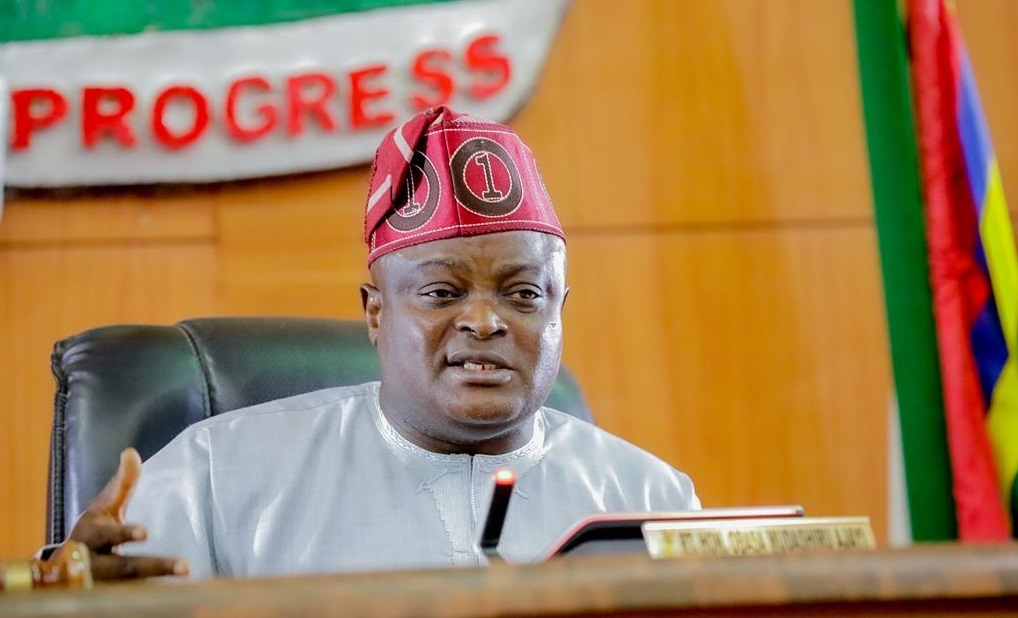
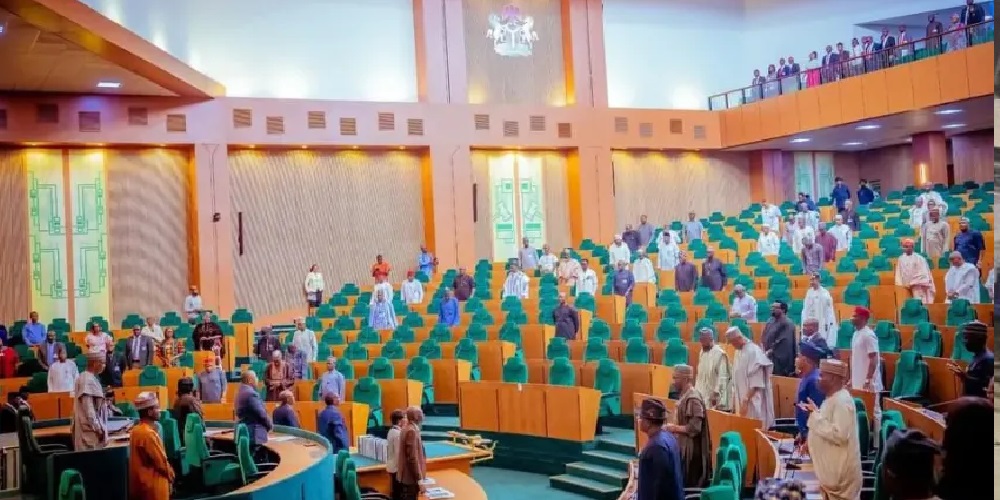
Then the presided officer, Speaker Tajudeen Abbas put itcto a vote, the House unanimously adopted the motion, observed a minute silence in honour of the dead and directed the immediate deployment of security agents to the four communities.
The House also mandated the Inspector General of Police and other relevant security agencies to investigate this tragic incident and fish out the perpetrators for prosecution, while also tasking them to Immediately step up the security surveillance to contain the escalation of insecurity within Itsukwi, Imiakebu, Imiegba and Okpekpe communities and beyond.
The legislative body also urged the Inspector General of Police, Chief of Defence Staff, DG, DSS, General Officer Commanding 2 Division of the Nigerian Army and the Commander, 4th Mechanised Brigade in Edpo State to deploy their personnel to Itsukwi, Imiakebu, Imeigba and Okpekpe communities to safeguard the lives and properties of the people.
The motion was subsequently referred to the House Committee on Army, Police, National Intelligence and Legislative Compliance with a timeframe of four weeks to report back for further action.

News

Real reason why we banned night vigils – MFM

Published

on

ADVERTISEMENT
Zoom Ad
ADVERTISEMENT
Zoom Ad

The Mountain of Fire and Miracles Ministries (MFM) has placed an indefinite ban on overnight vigils and ordered all church programmes to end by 8 p.m. daily, citing rising security concerns nationwide.

The new directive was contained in a circular dated June 5, 2026, sent to Regional Overseers and branch pastors. It takes effect immediately.

According to the memo, all services, meetings, and programmes at every level of the church must now close by 8 p.m. “for the foreseeable future.” Overnight vigils and late-night prayer meetings have been suspended indefinitely.

Where such gatherings are considered necessary, leaders are to restructure them into evening prayer sessions that must still wrap up by 8 p.m. at the latest.

Advertisement

The circular was signed by Temitope A. Olawale, Director of Administration at MFM International Headquarters and Nigeria. He said the decision is a safety measure based on the current state of security in the country.

“The directives are purely precautionary and aimed at safeguarding the lives and well-being of our members in the face of the current security situation in the country,” the statement read.

MFM is known for its marathon prayer sessions and overnight programmes. The new rule marks a major shift for the church as insecurity continues to impact religious gatherings across Nigeria.

Advertisement
Continue Reading

News

CBN Imposes N100M Penalty On Inadequate Processing Of Forex Documents

Published

on

By

ADVERTISEMENT
Zoom Ad
ADVERTISEMENT
Zoom Ad

The Central Bank of Nigeria (CBN) has introduced stricter sanctions for banks that process foreign exchange transactions without proper documentation, imposing penalties that could run into hundreds of millions of naira.

Under the revised foreign exchange regulatory framework, authorised dealer banks found to have completed forex transactions with insufficient supporting documents will pay a N100 million fine. They will also incur an additional N10 million penalty for each affected transaction.

The sanctions are contained in the fourth edition of the Foreign Exchange Manual released by the apex bank. The document serves as the operational guide for participants in Nigeria’s foreign exchange market.

According to the CBN, the updated manual is designed to strengthen regulatory compliance, improve transparency and reinforce confidence in the country’s foreign exchange system.

Advertisement

The regulator classified the offence as the execution of foreign exchange transactions without adequate documentation. It stated that any authorised dealer found culpable would be liable to the prescribed penalties.

The revised guidelines place greater emphasis on documentation requirements for all categories of foreign exchange transactions. These include spot transactions, forward contracts, swap arrangements, imports and export-related dealings.

Banks are now required to obtain, verify and retain all relevant supporting documents before foreign currency can be released to customers. Similar requirements apply to forward and swap transactions, where evidence of the underlying trade or obligation must be available before settlement.

The manual also retains existing documentation requirements for imports. Importers are expected to provide Form M, invoices, certificates of origin, packing lists and shipping documents, among other mandatory records.

Advertisement

In addition, importers must submit Exchange Control Documents within 90 days after negotiating shipping documents through overseas correspondent banks.

Failure to comply with the documentation requirements attracts progressively stiffer sanctions.

A first violation will result in a 90-day suspension from foreign exchange transactions. A second offence carries a 180-day restriction, while a third attracts a one-year suspension.

The CBN warned that a fourth violation could lead to a complete prohibition from participating in foreign exchange transactions.

Advertisement

Banks that fail to report cases of default to the regulator will also face sanctions under the new framework.

The apex bank further tightened reporting obligations for authorised dealers. Institutions that fail to submit required daily or monthly returns will be fined N500,000 for late submission.

Where returns are not rendered at all, the offending institution will pay a minimum penalty of N5 million. An additional N500,000 daily fine will apply until the breach is corrected.

The revised manual also strengthens oversight of banks’ foreign currency exposure levels.

Advertisement

Financial institutions that exceed approved Net Open Position limits will receive a warning for the first offence. A second violation will attract a 10-working-day suspension from the Nigerian Foreign Exchange Market.

A third breach will result in a 90-day suspension from market activities.

The CBN also imposed sanctions on unauthorised reallocation of foreign exchange funds. Any bank found engaging in such practices will pay N10 million for each transaction involved.

Beyond the monetary penalty, affected institutions may be referred to the Bankers’ Committee ethics framework for further disciplinary action.

Advertisement

The central bank said the new measures form part of ongoing efforts to deepen transparency, promote market discipline and establish a more rules-based foreign exchange regime.

According to the regulator, stronger compliance standards and stricter enforcement will help improve market integrity, reduce abuses and enhance investor confidence in Nigeria’s foreign exchange market.

Continue Reading

News

Umahi Threatens To Delist Road Contractors Over Non-Compliance

Published

on

By

ADVERTISEMENT
Zoom Ad
ADVERTISEMENT
Zoom Ad

The Minister of Works, Engr. David Umahi, has threatened to delist contractors who fail to comply with federal government construction guidelines on road projects across the country.

He also warned that ministry officials who fail to enforce compliance would be removed or redeployed.

Umahi issued the warning on Saturday during an inspection of the Mararaba–Keffi road project.

He said the federal government would begin a cleanup of non-performing contractors from next week.

Advertisement

“From next week, we are going to weed out contractors—whether indigenous or expatriate—who are not committed. Some of them have up to 25 jobs awarded before we came on board. If you are not ready to invest while awaiting federal government payments, then you are not part of the progress of this country,” he said.

He added that contractors who only depend on advance payments before mobilising to site would be removed, noting that some had benefitted from government jobs for over 30 years without adequate performance.

Umahi, however, commended JRB Construction Company for its quality of work and commitment to road infrastructure development despite funding challenges.

“I declare JRB as the best indigenous contractor because of the quality of work he does, the amount of equipment he has, and his partnership with the Federal Government,” he said.

Advertisement

He explained that the contractor was selected for intervention works when funding delays slowed down the dual carriageway project and immediately mobilised without receiving advance payment.

“Where we are facing challenges is identifying true partners in progress. JRB, I commend you,” he added.

Also speaking, the chairman of the House Committee on Works, Hon. Akintola Alabi, criticised some foreign contractors for collecting mobilisation fees without moving to site.

He commended JRB for demonstrating that Nigerian contractors can deliver quality infrastructure projects.

Advertisement

“There are some contractors from abroad who collect mobilisation and go back without working, then return for variations. But you are different. You continue working because you understand this is your country,” he said.

He further praised the contractor for his consistency and contribution to national infrastructure development.

Continue Reading

Trending

Copyright © 2024 Naija Blitz News