Connect with us

News

Reps Quiz Federal Polytechnics Damaturu, Mubi, Monguno Over Infractions

Published

on

ADVERTISEMENT
Zoom Ad
ADVERTISEMENT
Zoom Ad

By Gloria Ikibah

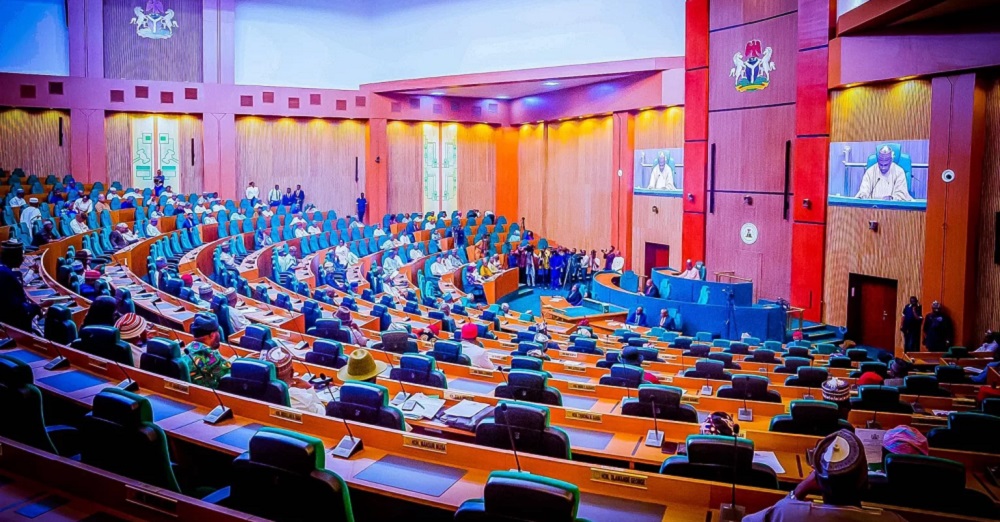
The House of Representatives has queried the Federal Polytechnic Mubi, Adamawa State, Federal Polytechnic Monguno, Borno State and Federal Polytechnic Damaturu, Yobe State over series of administrative and financial infractions.
This was as Rectors and some management staff of the three institutions appeared before the house Committee on Polytechnics and other Higher Technical Education, as part of oversight function to render accounts of their budget performances.
But the Committee found various infractions in the documents presented by the three institutions which ranged from abuse of Federal Character in employment, Extra-Budgetary spendings and recurring abandoned, uncompleted  projects in one of the institutions.
During presentation by the Rector of Federal Polytechnic Mubi, Dr.  Abdulrahman Ishaku, the Committee discovered that projects that were to be completed in two to three years were not finished despite adequate release of funds in budget.
Specifically, the Committee was provoked by the non-completion of a staff quarters and an administrative block project by the institution for years.
Speaking, Rep. Emil Inyang who stood in for the Committee Chairman, Rep. Fuad Kayode Laguda at the meeting on Thursday, lamented that, the projects have not been completed and have been recurring in the budgets.
He said, “Physical Planning, can you show me where you rolled over the project to 2023? It’s not here. Is it in 2024? Why do you come here to lie? Where is it? That admin block, is it in use? Has it been completed? So, you have abandoned it.
“Gentlemen, I don’t know what to say to these kinds of people. Construction of staff quarters, Item number Nine under 2022 capital projects. Have you seen it Rector? What is the state of that building? Is it completed? It is completed, that’s what is shown here, and you are saying it is still remaining fittings. Is fittings not part of completion?
“You people are just disgracing yourselves. We are just killing this country from various directions. From our various positions we are just killing this country. Let me ask a question on this staff quarters. In 2022, the amount appropriated was N57.9 million, N28.9 was utilized was released, so remaining N28.9 that’s half.
“But, by 2023, appropriation was 88 and the entire amount has been released. So, is it the same project?If it is the same project, when this appropriation was done, does it mean that, the other 28 that was not done, not utilised that time, is it kept somewhere?”
The Rector however informed the Committee that, the fund was later mopped up.
In his ruling after the submission, the Chairman stated, “What I will tell you now is that, instead of going through this your document that does not satisfy anything, please, you will.list all the abandoned, all the structures you have not completed. When it started, How much was appropriated, How much you have put in till date, the state of those projects one after the other in the entire school.
“Not just in. your regime. From inception till date.So that, we will include them in your 2025 budget. You will not do any new thing as capital. You must complete these abandoned. You have turned some of these projects to conduits of putting money into them and not completing them. Even the ones you have written as completed here. You used your own mouth to tell us here that, you have not installed fittings. That is what you said.
“So, this is why it is necessary for us to go there and see things for ourselves.Because what you are doing here, you are just wasting governments’ resources. These abandoned projects or the state of the jobs especially constructions, let’s have it in one week time. How much you have put in there, at what stage are they, how much you will need to complete”.
Similarly, the Committee criticized the Federal Polytechnic Damaturu over using Insecurity as an excuse for financial malfeasance and other infractions as well the abuse of Federal Character in employment.
Chairman of the Committee noted that, the institution has carelessly spent its Internally Generated Revenue (IGR) according to the records presented to the Committee.
In his presentation, the Acting Rector, Dr Ibrahim Babale Gashua said, the institution is faced with the challenge of low IGR as a result of the insecurity being faced in the state, which according to him, has reduced students intake and other activities.
He said, “We that are residing in Damaturu, the capital of Yobe State, we have three different high institutions. We have to lower our tuition fee because not everybody will come from outside the state. Even those in the state, it is only the course that is not available in their places that they come for in Damaturu because of the insurgency”.
The Committee however discovered that, despite the insurgency claim that reduced the institutions IGR, there was no commensurate reduction in its spending which the Committee said cannot be justified.
Another member of the Committee while commenting on the matter said, “Everybody comes to claim insurgency. Students don’t want to come to the schools. But it doesn’t stop them from spending the whole money.IGR, you blow it, Overhead, and yet, there is insurgency. So, it’s funny. You see, if I have a house and I am supposed to have 10 people occupying it. If 10 people are not occupying it, it means that my NEPA.payment, my PHCN money will reduce, because consumption of power supply will reduce. My water consumption will reduce. My number of cleaners will reduce because I don’t have full occupation. You understand what I am saying? My security personnel will reduce in terms of numbers.
“So, these are the issues.Most of the Polytechnics in the North come here brandishing this insecurity issue as the major reason for non performance. You are not performing on students admission, but you are performing on your expenditure profile”.
Speaking, Chairman of the Committee said, “Ok, this insurgency is a big excuse. Once you mention it, you will all close our mouths.Look at your Nominal Role, a federal Institution. Open to page 47 and 48, you will see how you have obeyed the law of the land, the Federal Character. Have you seen it Acting Rector? That’s the best you can do? You think from all those Zero-Zero states, if you offer them employment they wouldn’t come?”.
The Rector however reacted saying, “Some of them don’t come. Even those that we have left. I am telling you Sir”.
But a member of the Committee, Rep. Adebayo Adepoju faulted the Rector’s claim and said, it was not justifiable.
He said, “You cannot defend it, because if you are trying to defend it, saying that you’ve done everything in your powers and Nigerians have refused to come to your school, at that point, you say you have done the most you can do.
“But, when you did not even given Nigerians the opportunity to apply. We know what goes on in Federal Character. We know. I am telling you, if you go there and you want to apply, everybody has an interest, they give you. And before you know, they give you Certificate of Compliance.
“That Certificate of Compliance, we have shredded it so many times. Give yourself the opportunity to be fair to Nigerians.People want jobs in this country. We have so many jobless people and you will agree with me, there are many that will say, I won’t mind to go to Borno to teach.Please let’s give them an opportunity”.
The Rector and Management of the Polytechnic were directed to remedy the anomalies in their employment and henceforth advertise all vacancies in national dailies in order to give all Nigerians equal opportunity.
Similarly, after a presentation by the Rector, Federal Polytechnic Monguno, Prof. Garba Mohd, the Committee directed the institution to also be diligent in its observance of Federal Character and other issues as the Committee discovered a skewed empolyment in the institution in favour of a particular section of the country.
It reminded the Rector and members of his management that, as a federal institution, it is required by law to treat all parts of the country in terms of employment and other considerations.

News

Natural Disasters Destroy Up to $800bn Infrastructure Annually, CDRI Warns

Published

on

ADVERTISEMENT
Zoom Ad
ADVERTISEMENT
Zoom Ad

By Gloria Ikibah

Natural disasters destroy between $700 billion and $800 billion worth of infrastructure globally every year, with the wider economic impact estimated to be about seven times higher.

The Director General of the Coalition for Disaster Resilient Infrastructure (CDRI), Amit Prothi, stated this while addressing international journalists covering the BRICS meetings in New Delhi, India.

Prothi called for stronger investment in disaster-resilient infrastructure as climate change increases the frequency and severity of extreme weather events.

Advertisement

He said. “On average, we lose about $700 to $800 billion of infrastructure every year. That’s only the direct damage. The economic cost of that damage is roughly seven times higher”.

He cited wildfires in Los Angeles, floods, earthquakes and cyclones in different parts of the world as examples of disasters causing increasingly severe damage to infrastructure and placing additional pressure on national economies.

According to him, governments need to have a clearer understanding of the risks facing critical infrastructure and ensure that resilience is incorporated into planning and construction before disasters occur.

Naijablitznews.com reports that CDRI was launched by India at the United Nations in New York in 2019 and has since grown from 24 founding members to 70 members, with the Philippines expected to become the 71st.

Advertisement

Its membership cuts across Africa, Asia, Europe, the Americas and the Pacific and includes multilateral institutions such as the World Bank and regional development banks.

“The coalition was created to bring practices, knowledge and experiences together so that countries can better understand and address the growing complexities of disaster risks,” Prothi said.

India remains the permanent co-chair of the coalition, while the second co-chair rotates every two years. Previous co-chairs have included the United Kingdom, the United States and France, while India and Brazil currently lead the organisation.

Prothi explained that CDRI does not directly finance infrastructure projects but works with governments to ensure that resilience is considered when infrastructure is planned and designed.

Advertisement

“We are the chilli in the soup,” he said, using an analogy to explain CDRI’s role.

“When countries build roads, power systems or telecommunications networks, we help them understand how those investments can withstand future risks from climate change and disasters”, he added.

He said changing climate patterns meant that governments can no longer rely solely on traditional infrastructure standards and building codes based on past experiences.

“You may not have experienced floods before, but patterns are changing. The question is how you prepare your infrastructure for those future risks,” he said.
Critical infrastructure at risk
Telecommunications, power and transport systems are among the key areas receiving attention from the coalition because of their importance during and after disasters.

Advertisement

Recalling his experience during Nepal’s devastating 2015 earthquake, Prothi said the failure of telecommunications infrastructure demonstrated how critical communication networks become when disasters strike.

“I was in Kathmandu during the earthquake and could send a brief message to my family. Others couldn’t contact their loved ones because telecommunications infrastructure had broken down.

“Communication is becoming increasingly critical during disasters,” he said.

CDRI is also working with governments to assess risks facing electricity networks and transport infrastructure and to incorporate risk data into infrastructure planning.

Advertisement

The coalition has increasingly become involved in major international discussions on disaster risk reduction, climate adaptation and resilient infrastructure, including the G20, BRICS, COP climate conferences and United Nations platforms.

During India’s G20 presidency, CDRI supported the establishment of a Disaster Risk Reduction and Resilient Infrastructure Working Group. The initiative continued under Brazil’s G20 presidency and has remained part of wider discussions on climate adaptation and resilience.

“As global conversations move increasingly toward adaptation and resilience, the relevance of disaster-resilient infrastructure is growing,” he said.

The CDRI DG, also stressed that resilience should not end with disaster preparedness and prevention, arguing that countries must have systems that allow them to recover quickly when disasters occur.

Advertisement

“The speed of recovery matters. The longer it takes countries to rebuild, the greater the impact on communities and national economies,” he said.

He said the coalition was exploring innovative financing options, including insurance and private-sector participation, to enable countries to mobilise funds for reconstruction more quickly after disasters.
CDRI turns to data, technology
The coalition has also developed a global risk database designed to estimate infrastructure losses across countries and identify vulnerabilities in different sectors.

Prothi said Brazil records average annual infrastructure losses of about $13 billion, while losses across Africa are estimated at a similar level.

The database enables governments to identify infrastructure vulnerabilities and develop resilience measures based on the specific risks facing different sectors.

Advertisement

“Different infrastructure sectors face different risks. Power transmission systems, for example, may be highly vulnerable to cyclones, while buildings may face greater risks from earthquakes,” he said.

Looking ahead, CDRI plans to develop dedicated programmes for Africa, small island developing states, mountain regions and cities, where the effects of climate change and natural disasters are becoming increasingly complex.

Prothi also identified artificial intelligence, satellite data and advanced modelling as emerging tools that could strengthen early warning systems and improve disaster preparedness.

“There is an incredible amount of work under way on using data and predictive models. This will be one of the most important conversations over the coming years,” he said.

Advertisement

He called for greater participation by ASEAN countries, noting that nations in the region had developed considerable experience in dealing with earthquakes, tsunamis, floods and other natural hazards.

“The expertise that countries such as those in ASEAN have developed can benefit the rest of the world, while they also gain from shared global experiences,” he said.

Prothi said stronger international cooperation would be essential as countries confront increasingly unpredictable climate and disaster risks, with resilient infrastructure becoming a critical part of efforts to protect lives, economies and essential services.

Advertisement
Continue Reading

News

Niger unveils fresh Chief of Staff after botched coup

Published

on

ADVERTISEMENT
Zoom Ad
ADVERTISEMENT
Zoom Ad

Niger’s junta chief appointed a new chief of staff, state TV reported on Friday, after a thwarted army mutiny last month shook his grip on power.

Supporters of the military government put down the attempted uprising with the help of Russian mercenaries, but not before intense fighting in the capital.

Disgruntled soldiers attacked several sensitive sites in Niamey and hunkered down in a key military base at the airport.

“By a decree signed on September 11, 2026, General Abdourahamane Tiani has appointed Brigadier General Mamane Sani Kiaou as chief of staff of the armed forces,” state TV reported a statement as saying.

Advertisement

Kiaou, who previously served as army chief of staff, replaces General Moussa Salaou Barmou.

The statement did not say why Barmou had been dismissed.

Niger has been run by General Tiani since a coup in July 2023 that toppled the elected president Mohamed Bazoum, who has been detained ever since.

Tiani also appointed General Abdourahmane Abou Zataka to succeed Kiaou as army chief of staff, the statement added.

Advertisement

Described as a “seasoned field commander” by associates, Kiaou has led a fight against jihadist groups in Niger’s western Tillaberi region and in the southeastern Diffa area.

Nigerien state media reported that he recently concluded a tour of the country’s key military garrisons aimed at “restoring cohesion among the troops.”

Kiaou also led negotiations that resulted in the withdrawal of French and US forces from Niger following the July 2023 coup.

Tiani has moved the country closer to Russia and away from Western partners, notably former colonial power France.
State television had previously broadcast accusations that France was behind last month’s uprising.

Advertisement

AFP

Continue Reading

News

Just in: Dangote Refinery jerks up petrol price by N85

Published

on

ADVERTISEMENT
Zoom Ad
ADVERTISEMENT
Zoom Ad

Dangote Petroleum Refinery has raised its Premium Motor Spirit (PMS) gantry price by ₦85 per litre, pushing the wholesale price from ₦1,265 to ₦1,350 and signalling fresh upward pressure on petrol prices across the country. The latest adjustment, according to Petroleumprice.ng, represents a 6.7 per cent increase and comes as international crude oil prices and petroleum product replacement costs continue to climb.

The development is particularly significant as the new Dangote price is now above the current PMS landing-cost benchmark of ₦1,311 per litre, further complicating pricing decisions for depot owners and independent marketers.

The refinery had earlier maintained its Lagos gantry price at ₦1,265 per litre despite rising international market prices. However, the renewed surge in crude oil and replacement costs appears to have forced a reassessment of its pricing position.

The impact is already being felt in the wider market, with depot marketers across the country adjusting their prices and stock positions in anticipation of higher replacement costs.

Advertisement

Market operators said the pressure is also spreading beyond Lagos, with similar concerns emerging across major coastal trading hubs, including Warri, Port Harcourt and Calabar.

However, actual depot prices vary from one supplier to another, depending on factors such as available stock, product source and prevailing market conditions.

The new ₦1,350 per litre ex-gantry price effectively establishes Dangote Refinery’s latest wholesale reference point, putting further pressure on depot owners and marketers, whose next pricing decisions will largely depend on how crude oil prices and international product replacement costs evolve.

With replacement costs already elevated, the latest Dangote adjustment could therefore translate into another round of price reviews across the downstream petroleum market if the international crude rally persists.

Advertisement

Recall that global crude oil prices climbed above $100 per barrel, reaching their highest level since July, as escalating military tensions in the Middle East raise fresh fears of disruptions to crude production and international oil shipments.

Brent crude, the global benchmark against which Nigeria’s crude is priced, rose 2.8 per cent on Wednesday to break above the $100 per barrel mark, while US West Texas Intermediate (WTI) gained 2.9 per cent to $95.70 per barrel.

The latest rally has pushed both benchmarks more than 60 per cent higher than their levels at the beginning of the year, increasing concerns that a prolonged energy shock could drive up the cost of petrol, diesel, aviation fuel, electricity generation, transportation and manufactured goods across the world.

The surge was triggered by a fresh escalation in the Middle East, following reports of strikes involving Iranian oil tankers in the Gulf of Oman and another vessel near Kharg Island, one of Iran’s major oil export centres.

Advertisement

The development came amid reports of attempted missile attacks on a US Navy warship, raising concerns that the conflict could widen and threaten key oil-producing and shipping areas. (The Sun, but headline reworked)

Continue Reading

Trending

Copyright © 2024 Naija Blitz News