News
What Oyo MILAD, Jemibewon, did to me over ‘Joy Girl’ advert ―Omisore
- /home/naijuinz/public_html/wp-content/plugins/mvp-social-buttons/mvp-social-buttons.php on line 27
https://naijablitznews.com/wp-content/uploads/2025/01/Screenshot_20250105-233708.jpg&description=What Oyo MILAD, Jemibewon, did to me over ‘Joy Girl’ advert ―Omisore', 'pinterestShare', 'width=750,height=350'); return false;" title="Pin This Post">
- Share
- Tweet /home/naijuinz/public_html/wp-content/plugins/mvp-social-buttons/mvp-social-buttons.php on line 72
https://naijablitznews.com/wp-content/uploads/2025/01/Screenshot_20250105-233708.jpg&description=What Oyo MILAD, Jemibewon, did to me over ‘Joy Girl’ advert ―Omisore', 'pinterestShare', 'width=750,height=350'); return false;" title="Pin This Post">
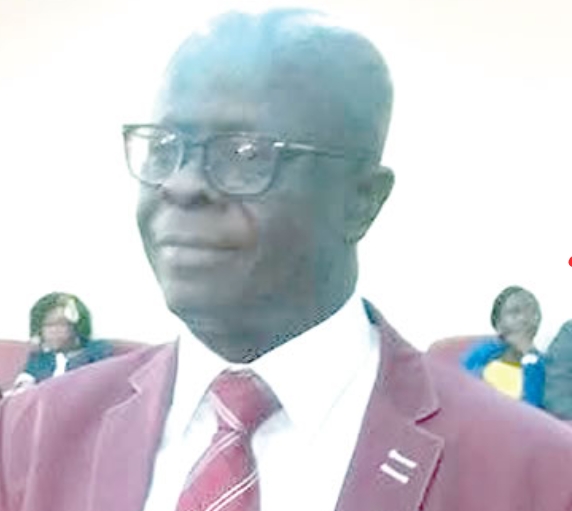
Director General, Bola Ahmed Tinubu (BAT) Foundation, Ipoola Omisore, is an ex-lawmaker and advertising guru. He told BOLA BADMUS stories of his life journey.

Can you tell us your background?
My name is Ahmed Ipoola Omisore. I was born in Ile-Ife on the 8th of July 1948 to a very large family–one of the largest families in West Africa–the Omisore family dynasty. My father was Alhaji Saliu Olayemi, the Baba Adini of Ile-Ife Muslims and the Baale of Olode town in Ife South. I attended Ansar-ul-deen Primary School in 1955, I was one of the first sets of beneficiaries of Chief Obafemi Awolowo’s free education in the old Western Region and I left in 1960 during the Independence. I was one of the beneficiaries of the free rice, free cup, free national flag, and it was very remarkable that the year was the first time I entered Lagos to attend the first Trade Fair and Exhibition at the Bar Beach, which was organised in 1960 for the Independence ceremony by the British. And it was eye-opening for a man from the hinterland to come to the city.

attended Oduduwa College, Ile-Ife in 1962 and left in 1967. Among my mates in the college was the late Dele Giwa, who was my junior in the primary school. We met again at the college, and we left at the same time. At the college, I was one of the Literary and Debating society’s men. I was a member of the crew of the school magazine called The Touch and Dele Giwa was the editor. I remember that was the time they first introduced what we called Oral English, the phonics of today and Dele Giwa was the sole candidate for Oral English in those days. All of us cut our teeth right from our school days.
What are the earliest memories of your dad?
I knew that my father earmarked me to be a Muslim Alfa (cleric). He wanted me to attend ‘Ile kewu’ to study Arabic and he said ‘among all my children I want you to serve me.’ But luckily enough, I saw my uncle taking his own children to go and register for free primary school education, so I ran and joined them. And those were the days when your right hand must touch your left ear, or your left hand must touch your right ear, and I was lucky to scale through; I was over six years or so then. In secondary school, I remember we had what we called the American corps that were seconded to Nigeria to come and teach. We had one Mr. Epner, a West Indian tutor, who brought exposure to the hinterland, and most of us who went through that school succeeded because of the exposure; people like Dele Giwa, who became a world-famous journalist, like Biodun Sote, who is a professor at UNILAG, like Mulikatu Bello, like Lawal then, who became Controller of WAEC.
And after secondary school…
Leaving secondary school, I had the background of a son of a produce merchant. My father was a produce merchant. I worked at close range with people involved in produce inspection service, grading cocoa and palm kernel in those days which was the highlight of Nigeria’s economy then. So, I insisted on becoming a produce inspector because, in those days, produce inspector was like a Custom officer who makes more money than working as a clerk. And I was employed by the Western Nigeria Ministry of Agriculture, I think, in 1968. That was after my secondary school
I trained at Onireke, seconded to the Wharf, where I became a check tester and transferred back to Ile-Ife as a produce inspector. And in those days, it was beautiful. We were earning £198 a year, £16.10 per month. Even while I was transferred back to Lagos, we were still earning that amount. I was brilliant, I passed assimilated advancement test, which was to be taken by three-year-olds in service. I took it in one and a half years, and I passed. Then my salary went to £207 per annum amounting to £17.10 per month, and that was big. But income tax would take away one pound. While Lagos was paying heavy tax then, the other part of the country was paying less. So, taxation, introduced by Awolowo, was building Western Region then. After about three years, I travelled abroad. I first of all went to Hamburg in West Germany.
What was the motivation to travel when doing well at home?
In my family, we believe in education and as at that time, we had more than 90 Omisores in England. So, it became a culture of every Omisore, after secondary school education, to travel abroad; we have a historical background there. The Omisores, as far back as 1940, were having houses and studying there. So, most of the successful Omisores went through UK and I had to follow suit. The visa was difficult then, you normally get visa at the point of entry. So, if you get to Heathrow and they say no, you’re coming back to Lagos. It’s a greater risk than turning you down at the embassy. I had to go through West Germany, Hamburg, by ship, by rail, to London.
In Germany, I went to study journalism and I discovered that German language is very difficult. So, I chose to go to England. I arrived in England July 1971and I attempted to study insurance. A month to the time I got there, they just changed their entry qualification to OND. So, I said no. I went straight to go and study advertising which was mocked by those around me, but while I was in the college, I remember I was listening to commercials. In those days, on the radio, we used to hear advert calling our attention to one particular popular product people should buy if they wanted to cook, so I like the poetic method and all that.
What really fired your imagination?
I said, “who are those doing this radio adverts?” They said it was advertising people and that was what motivated me to say, “I wanted to study it.” I like things that are literary and imaginative.
So, I joined London Polytechnic, Moorgate for a three-year course. I was quite serious and I had an uncle that told me, “You have to face your studies.” So, I followed them to the library on Saturdays and on Sundays and within six months, I finished the one-year course. So, I now checked the condition of entry for that course, nothing says that you must pass part one before you go to part two.
I said, “I can try part two now.” I looked at it and I went to correspondence school, Rapid Results College, ICS. I took correspondence; I did that at home. The reason why I took that correspondence was actually because of the English teachers. I couldn’t hear them well and I always say, “pardon, pardon” and the whole class will burst out laughing. They knew I am an African and most of them normally made sure that I don’t hear them. So, I now devised a method of reading ahead of the class.
Second year, I went to attend one of the classes. When I finished that subject and I was to go out, they asked “won’t you wait for the next subject?” I said, “I had passed it.” And my classmates then were already in the industry and were top advertising men in their companies. So they said, “What do you mean?” I said, I passed it and I brought out the results sheet. They said this man had done an illegal thing. I read the conditions and nothing says otherwise. The lecturer then replied that “it is true; nothing says he cannot do it.” They went to the institute to find out, the institute said nothing stops me from doing so and that is why if you go to my school in the UK today, my name is still engraved on an 11-storey building as winner of Best African Student Award.
Nigerian Tribune
News
Photos: We’re building infrastructure for a knowledge-driven economy – Tinubu
President Bola Tinubu has said that his administration was building road infrastructure to lay the needed physical foundation for a knowledge-driven economy, stressing that education, justice, and innovation need roads to thrive.

Tinubu stated this in Abuja on Tuesday, while flagging off the construction of Collector Road CO1 in the Institutional Research District, from Nile University to Ring Road III.
Represented by the National Chairman of the All Progressives Congress, Prof Nentawe Yilwatda, the President said that the project included dualisation of the road from Baze University roundabout to Nile University, that is the Base University.
He noted that three years into his administration, the results were speaking out.
“From the Southern Parkway to the Institution and Research District, we are laying the physical foundation for a knowledge-driven economy.

“Today, we provide those roads that are needed to provide justice, education, and innovation to our people.
“To the university community, this road is more than a route. It is a connection between learning, law, and the future of our capital,” he said.
He pointed out that the Institution and Research District was designed to be the intellectual heart of Abuja, adding that universities, law chambers, research centers, and innovation hubs were growing in the area.
He, however, stressed that ideas could not move if roads do not move and connect the heart and people together.
Tinubu further said: “Under the Renewed Hope Agenda, we made a choice to finish what was started and to start what we must finish.
“The first phase of this corridor connecting the Body of Benchers, Nile, and Base University is done and ready for commissioning. Today, we begin the next phase to Ring Road III to complete the loop.
“That is how we build a city—with a plan. Not a city of abandoned pieces. Infrastructure must be continuous, and it must also be useful to the people within the environment”.

He commended FCT Minister Nyesom Wike for turning FCT into a delivery agency, stressing that the transformation of Abuja under the minister’s watch is bold, visible and worthy of commendation.
He said, “Wike, your energy is unmatched. You took over a capital with many stalled projects and turned the FCTA into a delivery agency. ‘Mr. Projects’ is not a slogan, it is a record. You have revived sleeping roads, built new interchanges, and brought development to satellite towns. You have domesticated the Renewed Hope Agenda; street by street, district by district. The transformation of Abuja under your watch is bold, visible, and worthy of commendation. Well done, Minister Wike.”
In his remarks, Wike explained that the project was considered following a plea by the Body of Benchers to provide access roads to ease the movement of people in and out of the area.
He assured FCT residents that the Tinubu administration would fulfill all the promises made to the people of FCT, adding that the project would be completed by January 2027.
The minister said that he would continue to deliver life-impacting projects to FCT residents as directed by Tinubu, stressing that the delivery would not be affected by 2027 political activities.
Earlier, acting Executive Secretary, Federal Capital Development Authority, Mr Richard Dauda, said that the Institutional Research District of the FCT is located in Phase III of the city.
Dauda said that the area was planned to accommodate educational institutions like universities, research institutions, and other government institutions as provided in the Abuja master plan.
He added that the district was being developed in stages, with this project being a major intervention in the opening of this district.
He explained that the scope of the current stage involved the construction of Collector Road CO1, from the Nile University to Ring Road III with a total length of about six kilometres.
He added that the project also included the dualisation of the section from the Base University Junction to Nile University.
News
Just in: Kidnapped APC Chairman, Another Victim Die in Abductors hideout
Tragedy struck in northern Nigeria following reports that two abducted victims, including a former chairman of the All Progressives Congress (APC) in Koko/Besse Local Government Area of Kebbi State, have died while in captivity.
The deceased, Alhaji Muhammadu Mai Barga Besse, who previously served as APC chairman in the local government area, was reportedly held hostage by armed kidnappers for an extended period before his death. Another victim who was abducted alongside him was also confirmed dead, although his identity had not been officially disclosed at the time of filing this report.
The sad development comes months after disturbing videos emerged online showing the victims in dire conditions while being held captive in the notorious Birnin Gwari forest.
The footage sparked widespread concern among family members, political associates and members of the public who called for urgent intervention to secure their release.
Despite efforts made during their captivity, both men were reportedly never reunited with their families before their deaths.
The incident has once again drawn attention to the persistent security challenges facing communities across northern Nigeria.
The Birnin Gwari axis, located along the Kaduna-Niger corridor, has become one of the country’s most dangerous regions, with criminal gangs and armed bandits frequently carrying out kidnappings, attacks on villages and other violent crimes.
Residents and stakeholders have repeatedly called on security agencies to intensify operations in the area and dismantle criminal hideouts within the vast forest, which has long served as a sanctuary for armed groups.
News of the deaths has generated an outpouring of grief on social media, with many Nigerians expressing sadness over the fate of the victims and urging authorities to strengthen efforts against kidnapping and banditry.
Popular social media personality Denglishalhajii also shared the development on Instagram, mourning the victims and drawing attention to the growing insecurity affecting many parts of the region.
The deaths of the former APC chairman and his fellow captive have further underscored the human cost of the country’s security crisis, leaving families, friends and political associates in mourning while raising renewed concerns about the safety of citizens in vulnerable communities.
News
Tinubu Seeks Constitutional Backing For State Police, Writes Senate
President Bola Tinubu has asked the senate to approve a constitutional amendment bill seeking to establish state police across Nigeria as part of efforts to strengthen the country’s security architecture.
The request was contained in a letter dated June 15, 2026, and read on the floor of the senate on Tuesday by Godswill Akpabio.
In the correspondence, Tinubu said the proposed Constitution of the Federal Republic of Nigeria (Alteration) State Police Bill, 2026, seeks to amend the 1999 constitution to provide a legal framework for the creation of state police services.
The president said the bill is designed to address Nigeria’s evolving security challenges by introducing a dual policing structure that would allow both federal and state policing systems to operate within a constitutional framework.
According to him, the proposal builds on previous legislative efforts by both chambers of the national assembly and contains additional safeguards to ensure effective implementation.
“This bill builds on the significant work already done in this regard by the House of Representatives and the Senate, and incorporates additional safeguards to ensure that the creation of a dual policing structure to address our nation’s evolving national security challenges, will be achieved quickly and effectively to the benefit of all Nigerians,” Tinubu said.
The president described the proposed legislation as a key component of his administration’s broader plan to reform Nigeria’s security system and improve the protection of lives and property.
“The proposed legislation is a critical component of our administration’s strategy to reorganize Nigeria’s security architecture to better protect our citizens, and I’m confident that the Senate will act quickly to consider and pass this bill,” he added.
Read Also: Amnesty International Demands Immediate Release of Omoyele Sowore, Condemns Detention
Tinubu urged lawmakers to give the proposal expeditious consideration.
Following the reading of the letter, Akpabio referred the bill to the senate committee on constitution review for further legislative action.
The committee was directed to report back to the chamber on the next legislative day.
-
News23 hours agoTinubu Appoints Former UNILAG VC Ogundipe as NUC Governing Board Chairman
-
Metro23 hours agoDisaster Averted in Enugu as Rescue Teams Contain Gas Leak After Truck Crash at Ugwuonyeama
-
News23 hours agoWait for 2027, Presidency Tells Peter Obi Amid Calls for Tinubu’s Resignation
-
News23 hours agoEl-Rufai confessed to wiretapping NSA’s phone on TV interview- witness
-
News18 hours agoSenator Abba Moro hails Olaka Nwogu on electoral victory
-
Metro23 hours agoBuilding Collapses Along Slaughter Road in Port Harcourt, No Casualties Reported
-
News23 hours agoEx-Delta Gov Okowa Visits EFCC Lagos Office
-
News18 hours agoTinubu set to Flag-Off Construction of Service Carriageways of the Southern Parkway, from Arterial Road S20 (Oladipo Diya way) to Ring Road II, today

Warning: Undefined variable $user_ID in /home/naijuinz/public_html/wp-content/themes/zox-news/comments.php on line 49
You must be logged in to post a comment Login