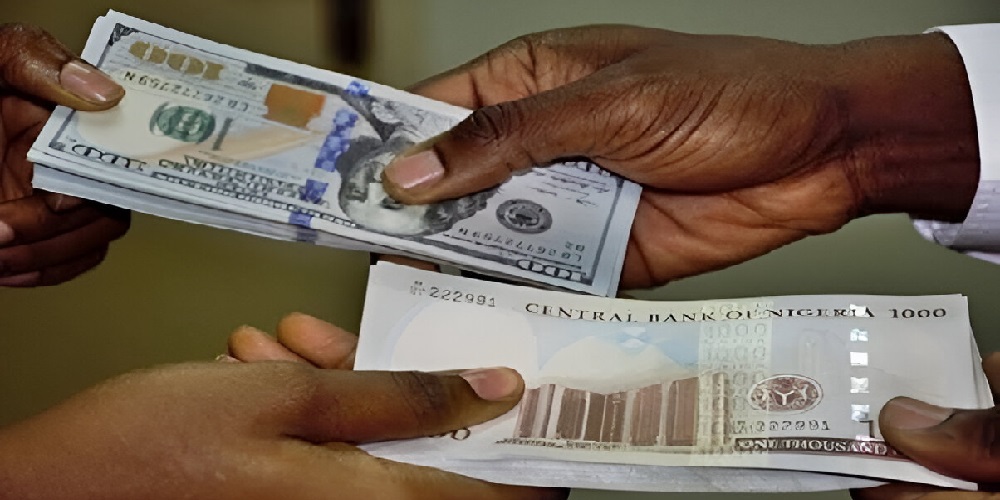

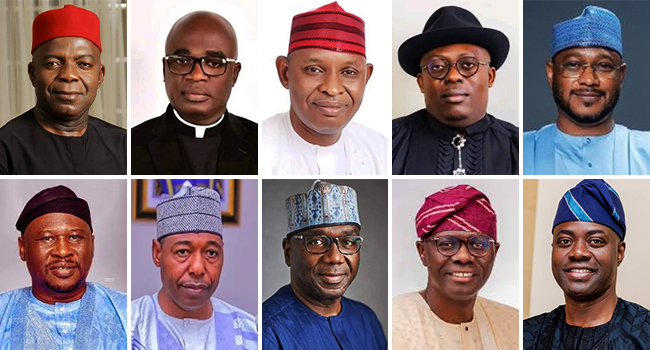


A total of 29 state governors spent N1.994 trillion on recurrent expenditures, including refreshments, sitting allowances, travelling, and utilities in the first nine months of 2024, findings have shown.
It was also gathered that the states obtained a N533.29bn loan, while it spent N658.93bn to service its debts owed to local, foreign, and multilateral creditors, reports The PUNCH.
However, these states fell short in their revenue-generating targets, collecting a total sum of N1.92tn as internally generated revenue but fell short of the revenue target of N2.868tn, recording a deficit of N948.28bn.
The recurrent data utilised in this report did not include personnel costs.
An analysis of the fiscal performance of each state, utilizing data from the Q1 to Q3 budget performance reports obtained from each state’s website, revealed a pressing need for stringent measures to prioritise fiscal discipline, especially amidst growing calls to reduce the costs of governance.
This comes despite a 40 per cent increase in the state’s statutory allocations from the Federation Account.
For the first three quarters of the year, our correspondent examined budget implementation data from twenty-nine states; data for six states was not available.
Borno, Gombe, Kaduna, Kano, Kwara, Sokoto, and Ogun states were the ones without the latest data from January to September 2024.
Since the commencement of the current administration, state governments have enjoyed improved monthly allocation mainly due to the elimination of fuel subsidies and the unification of the foreign exchange market.
The Nigeria Extractive Industries Transparency Initiative recently noted that the Federation Accounts Allocation Committee disbursed N3.473tn to the three tiers of government in the second quarter of 2024.
This reflects an increase of N46.77bn (1.42 per cent) compared to the first quarter of 2024.
The federal government received N1.102tn, representing 33.35 per cent of the total allocation, while 36 states received N1.337tn (40.47 per cent), and the 774 local government councils shared N864.98bn (26.18 per cent).
A comparison with the previous quarter shows that the Federal Government’s allocation decreased by N41.44bn (3.76 per cent), while state governments saw an increase of N58.13bn (4.29 per cent), and local government councils experienced a rise of N30.82bn (3.57 per cent).
But this improved funding hasn’t translated to an improved standard of living for its citizens.
A breakdown showed that the 29-state government spent N1.994tn on its recurrent expenditure, which included refreshments for guests, sitting allowances to government officials, local and foreign travel expenses, and utility bills.
The general utilities include electricity, internet, telephone charges, water rates, and sewerage charges, among others.
Lagos, Plateau, and Delta States spent the highest on their operating expenses, incurring a cost of N375.19bn, N144.87bn, and N121.54bn, respectively. This was followed by Ondo and Bauchi spending N107.34bn and N99.31bn.
Niger State, under the leadership of Governor Mohammed Umar Bago, was the highest borrower within the review period, obtaining loans worth N79.09bn. Katsina followed with a loan of N72.89bn. Oyo State also got a loan of N62.48bn.
In terms of revenue, Lagos State collected the highest of N912.17bn, followed by Rivers State with a collection of N269.18bn. Third on the list was Delta (N97.02bn).
A state-by-state analysis revealed that Abia State, led by Governor Alex Otti, spent N17.91bn on operating expenses and generated N22.15bn in revenue, falling short of the N32.14bn revenue target. Additionally, the state borrowed N3.901bn and allocated N10.91bn for debt servicing.
Adamawa State spent N41.45bn on recurrent expenditure, while it earned N9.16bn income out of its revenue of N22.24bn. This state borrowed N10bn and paid N22.68bn to service its debts.
Akwa-Ibom State recurrent spending reached N85.45bn in nine months, N43.98bn more than its generated revenue of N41.47bn in nine months. The state paid N34.47bn as debt service but didn’t borrow.
Anambra State generated more revenue (N28.296bn) than its recurrent spending of N12.70bn. It spent N4.56bn on debt service and didn’t record any borrowing.
The Bauchi government spent N99.31bn on its operating expenses. This state only got N15.92bn out of its budgeted target of N37.03bn but borrowed N33.64bn and paid N27.54bn as debt service.
Bayelsa state got N57.85bn IGR more than its revenue target of N23.87bn. It spent N75.23bn on its operating costs and spent N30.54bn on its debt service.
Governor Hyacinth Alia of Benue state approved the spending of N29.45bn for operating expenses while it collected N8.71bn as revenue out of an N23.91bn target. This state didn’t borrow but spent N5.48bn to service previous loans collected.
Similarly, Cross Rivers spent N55.73bn on recurring expenses, collected N32.42bn IGR, borrowed N20.67bn from its creditors and spent N19.99bn on debt service.
Delta State recurrent expenditure reached N121.54bn in nine months while it earned N97.02bn as revenue out of the N110.3bn target. The oil-rich state serviced its debt with N55.9bn and didn’t obtain any loan.
Also, Ebonyi State spent N37.73bn on its recurrent expenses but earned N15.67bn as revenue. The state borrowed N15.65bn and spent N8.46bn on debt service.
Edo State spent N75.78bn on recurrent expenditure but generated N52.68bn revenue. The state borrowed N12.84bn and spent N27.5bn on its debt service commitments.
Similarly, Ekiti State recurrent spending was N74.73bn, generated N23.16bn revenue, borrowed N11.75bn and spent N12.93bn to service its debts.
Enugu State spent N10.88bn on its operating expenses but got N39.98bn in revenue. This state borrowed N1.39bn and spent N6.93bn on its debt service.
Imo State under Governor Hope Uzodinma, spent N42.75bn on its operating expenses but got N15.24bn as revenue. This state spent N15.94bn to service its debts but didn’t obtain any loan.
While Jigawa incurred N35.69bn as operating expenses, it collected N18.41bn as revenue out of its target of N50.65bn borrowed N744.75m, and N2.17bn on debt service.
Further analysis showed that Katsina State spent N40.73bn on its recurrent expenditure while it generated revenue of N29.95bn. This state increased its loan by N72.89bn and paid N12.78bn as debt service.
Kebbi State recurrent spending was N22.42bn while it generated N7.86bn revenue. It also obtained an N24.59bn loan and paid debt service of N3.42bn.
Kogi State spent N84.48bn on its operating expenses but earned N19.86bn in revenue. The confluence state also obtained N51.68bn as loans and repaid N18.12bn debt.
Lagos State spending on recurrent expenses was N375.19bn, while it earned N912.15bn revenue. The state paid N84.53bn as debt service but didn’t obtain any loan.
Within the same period, Nasarawa spent N42.63bn on its operating expenses but got N22.78bn as revenue, Niger state recurrent expenses reached N41.28bn while it earned N29.22bn.
Ondo State spent N107.34bn on recurring expenses but only earned N24.43bn, Osun State spent N48.87bn but earned N28.86bn as revenue while Oyo State spent N51.24 on its recurrent expenditure, N45.79bn was collected as revenue.
Plateau spent N144.86bn on its recurring expenses but only earned N18.03bn; Rivers State’s spending on its operating costs was N72.69bn, but it earned N269.17bn.
Taraba State spending on recurrent expenditure reached N58.39bn, surpassing its revenue generation of N7.84bn, resulting in a deficit of N50.55bn. This state borrowed N52.63bn and paid N21.19bn.
Yobe State spent N51.29bn on its recurrent costs but earned N8.14bn as revenue. Also, Zamfara spent N36.34bn on its recurrent expenditure but earned N18.46bn.
Commenting in an interview, A professor of Economics at Babcock University, Segun Ajibola, stated that the enduring problem of high governance expenses had persisted at the state level, with inadequate oversight and accountability resulting in minimal economic benefits for grassroots citizens.
Ajibola, a former president of the Chartered Institute of Bankers, lamented that state assemblies had also abandoned their oversight duties, leaving the state governors to operate with no iota of transparency and accountability.
The Fiscal Responsibility Commission last week expressed concerns over Nigeria’s current fiscal federalism structure, cautioning that the system may be unsustainable in its present form. ( Culled from PUNCH)