Cosmas Maduka, an astute entrepreneur and Chairman of a renowned conglomerate—the Coscharis Group— in this interview with Tessy Igomu and Oghenovo Egodo-Michael, reflects on his career milestones guiding principles, and humble beginning as an apprentice in a small auto-parts shop to building a multi-billion-naira empire spanning automobile sales, agriculture, and manufacturing


You grew up in Jos, a city known for its pristine environment back then. How would you describe your childhood experiences there?
One of the highlights of my childhood was when my father would drive me to a white man’s bakery to buy bread. They were the bakers at the time. Jos was a beautiful place, and I vividly remember the cold weather. 
I was only four years old when my father passed away, and life became rough as we had to return to the village. His death was another unforgettable moment for me.
I recall that after my father’s death, there was a festival at our house with masquerades and a large crowd. I remember the double-barrelled gunshots fired in his honour and how I ran around, picking up the empty shells. I grew up at a time when rice was considered a festive delicacy, but on that day, I ate so much rice that I wished the day would never end.
But amidst the celebration, I saw my mother, devastated and in tears. I couldn’t understand why she was so sad while everyone else seemed happy. Much later in life, I realised that it was my father’s funeral, but as a child, I didn’t comprehend the concept of death. Not long after, the civil war broke out.
Life became extremely tough after his death, especially with the war. Survival was a daily battle. I saw many children suffering from kwashiorkor.
At one point, we heard that Ojukwu had made arrangements to bring food supplies, but people had to queue to collect them. We called it “kwashiorkor food” because it was intended to provide a balanced diet for those suffering from malnutrition. Even basic necessities like salt were unavailable at the time.
My mother often said we needed to eat vegetables and protein to survive, but there was hardly any protein.
Everything with four legs became a source of protein, including rats and lizards, while any plant with leaves became a vegetable.
We had a bunker in front of our house, and sometimes, when the Nigerian fighter jets flew by, the alarm would sound and we would rush out to jump into the bunker.
A bunker, as It was then, was essentially a large hole dug in the ground and covered with the roots and leaves of palm trees.
Our houses were camouflaged to look like bushes because wherever houses were visible, bombs were dropped.
Many people around me lost their lives to those bombings. These were the memories that shaped the childhood of young people like me.
One day, we heard the war was over, and it brought an enormous sense of relief to everyone.
Can you share your journey into entrepreneurship?
It was after the war that an uncle came to the village and brought me to Lagos. He had a small shop that he managed. I was so small that my uncle thought I wouldn’t be able to lock the shop, so he would always lock me inside and go home.
I worked for my uncle for six years, after which he settled me with N200.
Under apprenticeship, nothing is negotiable. When he offered me the N200 as a settlement, my brother advised me not to accept it. I asked him if he had anything else to offer me back home, and when he said no, I questioned why he wanted me to refuse it.
That experience shaped my perspective, and it’s why I teach young people about mindset. It’s not what happens to you that defines you, but how you react to it.
A negative mindset does more harm than the event itself, but a positive mindset can turn difficulties into opportunities and challenges into success stories.
Because I knew Lagos very well, I would often travel here to buy merchandise and take it to Nnewi in Anambra State to sell. The company that truly inspired me was Leventis. Growing up, I would visit their store to purchase items and was always impressed by how organised they were, especially with their use of computers.
One of the days, before leaving my uncle, I was travelling with him on a night bus to buy merchandise, and as we passed the Leventis building, I pointed at it and said, “One day, I’m going to own a building like this.”
My uncle knocked my head, unable to understand how I could dream of such a thing at that age. But you see, this is the power of vision in anything one does. Vision is not about physical sight; it’s about what the spirit conceives—what you can imagine and see beyond the physical realm.
By the age of 15, I was very clear about what I wanted to achieve in life. I wrote down five goals I wanted to accomplish by the age of 25 on a piece of paper and placed it by my bedside.
Every night, I would look at those goals before going to sleep, and I would dream about things that aligned with them. It became like a ritual for me.
The first goal was to live in a three-bedroom apartment of my own by the age of 18.
The second was to get married by 20. The third was to have a male child by 21. The fourth was to own a car by 23. Finally, by 25, I wanted to become a millionaire. Whenever I interacted with people, I would assess how their words or actions aligned with these goals. If I didn’t see how they could support me in achieving any of those dreams, I would consider them a distraction and cut them out of my life. This caused people to say I was proud or arrogant, but that wasn’t the case—I was simply driven by my dreams.
I tell young people that living intentionally is key. To live intentionally, you must have honest conversations with yourself about where you want to be. The only way to fail is not to plan. You can’t just accept whatever life throws at you; you have to chart your own course and define what you want life to be.
I got married before the age of 20, and many people asked me why it was so important to me. It was important because, by 17, I already felt like a man. I knew that an unwanted child would be a distraction from my goals. However, God didn’t bless us with a child until I was 26.
By 22, I owned a car. I worked hard, planning for every goal I set for myself. Not everything you plan will happen exactly as you imagine, but writing down your goals allows you to monitor your progress, stay motivated, and focus on what to do next.
My mother was a dedicated Christian who made sure we prayed every morning, and this instilled a deep hunger for God in me. She once told me that I was a likeable person, which made it hard for anyone to say no to me. As a child, I believed her. Back then, I used to hawk akara (bean cakes), and I would always sell out and return for more. When I approached customers and they said “no,” I would hold onto their clothes and tell them my mum said nobody can say no to me. They would usually marvel at my confidence and eventually buy my akara.
This helped build my confidence, and as a child, I had the optimism that no doors would ever close before me.
I recall a time when my mother was in the car with me and my wife. I told my mother that time was running out for me, and she asked what I meant. I told her that in two years, I was going to be a millionaire. She said my boasting made her stomach turn and told me to stop the car. She warned me not to repeat what I said again, and if I did, she would get out of the car.
I stopped the car, rolled down the window, looked her in the face, and repeated it. My mother got out of the car, and my wife asked me if I was mad. I told her that if she wanted to be with my mother, I was ready to send her out of the car.
When you have a vision, you’re almost like a mad person. You become possessed by something in your soul that you truly believe. I acted in a way that seemed incredible because I felt like I was pregnant with my vision, and my mother wanted me to abort it. I was ready to protect that vision with everything in me.
True to my belief, by 24, I made my first $2 million, and the rest is history. I still live in the house I built when I was 25. I am a great believer in the power of vision.
There is nothing anyone sets out to accomplish and puts their mind to that is unattainable. Experience has shown me that with constant belief, hard work, and a solid plan, our visions are achievable.
Can you tell us about your educational background?
I didn’t have a formal education, but I educated myself. I believe the world is the biggest university one can attend. I started speaking English bit by bit, even though I didn’t go beyond the third grade in school. As people often say, practice makes perfect.
Before establishing Coscharis, you co-founded a brand called CosDave with a friend, which didn’t succeed. What were the key challenges you faced during that venture, and how did those experiences shape your approach to business later on?
In teaching young people, I often advocate partnerships, as two heads are better than one. However, before parting ways with David, I had been involved in three previous partnerships, and each time, ideological differences arose.
The Coscharis you see today is a partnership I formed with my wife, using parts of our names, Cosmas and Charity. It was after breaking up with David that I came up with this idea. David also did something similar with his wife and registered a company called DaveRose.
What are some of the biggest risks you’ve taken on your journey as a businessman?
I have taken quite a number of risks, but when you ask about the biggest, it’s relative. Some risks I took gave me good returns, like when I partnered the Nigerian government in 2003. No one in my company believed it was a good idea to provide the government with 1,000 units of BMW without payment.
It was a risk, but what makes you a visionary is your ability to see through risk and mitigate it.
However, if we’re talking about a risk that threatened my franchise, it was when I stepped in for a younger brother and got involved in a risky business that cost me millions of dollars and almost brought Coscharis to its knees.
What would you consider the breakthrough moment in your journey with Coscharis?
The breakthrough moment for me came in 1981 after I had incorporated Coscharis and applied for an import license under Coscharis Limited. This was one of the reasons my brother parted ways with me. I suggested we incorporate our company, but he felt we didn’t have enough funds for it. He believed that incorporation only made sense once we had made money.
Nevertheless, I applied for the license, and it was granted. We were number seven on the list, and it was a seller’s market. I was making over 300 per cent.
The first real break I had, however, came when I left Nnewi for Lagos to buy merchandise. I went to Bullocks, who represented Suzuki and bought some products from them, making over 100 per cent profit. When I bought the items, I would remove the address and sticker of Bullocks so no one would know where I was getting the merchandise from. I did this for a week and made so much money that I was able to buy myself a Honda 175. By the time people discovered it was coming from Bullocks, I had already made a fortune.
Based on your experience in entrepreneurship, would you still recommend apprenticeship to young people?
I am a strong advocate of apprenticeship. It is similar to mentorship, but the major difference is that in apprenticeship, you are fully working for that person, and they have authority over you. As a result, you can be punished if you don’t do what you’re supposed to. Apprenticeship teaches unprecedented discipline. You cannot afford to fool around because your success depends on completing the required number of years successfully.
It takes more than financial capital to succeed in business. Other factors, like social capital, are often more useful before cash.
Many believe they can achieve wonders once they have money, but they also need to learn how to position themselves properly so the funds are utilised effectively. Apprenticeship is an education in its own right, albeit informal.
Despite your business success, why didn’t you go into politics?
There is no reason for me to go into politics because I don’t have what it takes. I don’t even have a school certificate unless I want to fake one. However, I have highly educated people working with me, and I have sat on the boards of two publicly quoted banks.
I was also the chairman of the Nigeria Table Tennis Federation for 16 years, during which I led Segun Toriola to beat the UK team in their home country, Manchester.
Additionally, I led the team to the Commonwealth Games in Australia, where we triumphed.
You once took your preaching to the streets of Lagos. How did the people around you respond to that?
Part of the rules of success is that you must be willing to be misunderstood. Once you try to fit into everyone’s will, you will never amount to anything in life. You must be purpose-driven. Some people have actually seen me as a controversial person because I live a purposeful life. I started evangelism before I turned 15 and bought a horn speaker with the first money I made.
If I reflect on it in the context of what it used to be, then I have backslidden, because before, I would go out in the morning to evangelise before doing anything else. Since this was part of my upbringing, I do it effortlessly.
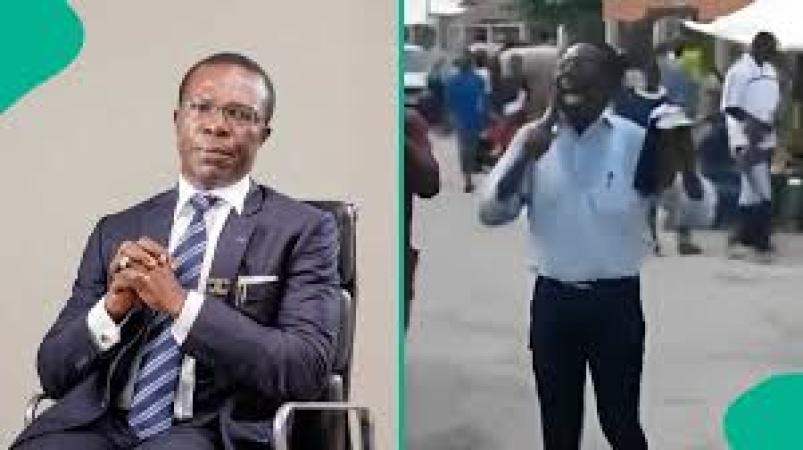
The particular video that made the rounds on the internet was from an outreach in Makoko. A friend of mine was supposed to speak but wasn’t around, so I stepped into his shoes. Someone saw me, took the clip, and forwarded it to the friend I stood in for. He posted it on Facebook, and it went viral. It was never planned.
I wasn’t a rich man who became a Christian; rather, I was a Christian who became rich. My Christian values and principles come first in my life and drive me. I am comfortable going to the street to preach the gospel.
What is your view on pastors who share controversial messages from the pulpit, outside of the gospel of salvation?
Frankly speaking, we cannot say all Nigerian money is counterfeit, because there are some fake naira notes. It takes the original to identify a counterfeit. I don’t understand why people think there won’t be fake ministers in the gospel, and when there are, they claim the whole gospel is fake.
The earth Is the Lord’s and everything in it. I remind myself every day that whatever God trusts me with in Coscharis is not my money. I am a steward, and I will be held accountable. When I decide to spend money, I must ask myself, “What impact is this money making on the kingdom?”
What was the nature of your relationship with Ifeanyi Ubah, and were you able to resolve your differences before his death?
Absolutely. One of my in-laws, Dozie, brokered a meeting, and Ifeanyi knelt down before me and my wife and apologised. I told Ifeanyi that I would no longer discuss the matter, and from that day, it was all over.
When he passed away, I attended his funeral against the wishes of my family. I went and even spoke at his tribute. I said it was not that we were trivialising what happened, but I had moved on with my life. One cannot drink poison and expect another person to die.
Bitterness and anger are poisons, and 90 per cent of cancer comes from the pressure of bitterness that one harbours in the heart. You don’t forgive people for their own interests; you forgive them for your own good. If God extends grace to us, we must remember to extend it to others.
Since his passing, how has your relationship with his family evolved?
I was speaking at an event when my son called to tell me about his death. I didn’t believe it, so I called his wife, and she answered the phone. Even though she was still in London, she explained what happened to me. I encouraged her afterwards.
If there had been any issues, she wouldn’t have picked up my call.
How do you identify and nurture talents within your organisation?
We continue to hunt for talents, but nothing comes easy. We have a culture of training people and fostering an entrepreneurial mindset in them.
We deliberately encourage people not to work here until they’re 60 and retire with a golden handshake. When you work for someone, don’t just stay idle after hours or engage in unproductive activities. Use that time to think about how you can add value to yourself. Your job won’t make you wealthy, but your work can. Your work is where you deploy your gift, and there’s no one without talent. However, when you’re at your job, give it your all. Remember, money is an exchange of value.
Salary is a remedy for poverty, but it doesn’t cure it. You need a cure, and that comes when you deploy yourself and get creative.
What advice would you give to young entrepreneurs?
I would tell them not to be overly excited just because they are young. You build yourself when you’re young. Starting early allows you to make mistakes, learn from them, and rise again.
If you wait until you’re older, the consequences of mistakes will be much greater. The man who built Kentucky Fried Chicken was on the verge of suicide under a tree when he asked himself if there was anything else he could do. He realised he could fry chicken, so he went home and gave it a try. He started frying and delivering chicken to homes, becoming a US billionaire at 88— but what is left for him at that age?
At a young age, you must captivate your mind. Energy is powerful, and so is a focused mind. When you channel that energy into creativity, you will be amazed. A positive mindset is also essential.
If you could accomplish one more thing in your lifetime, what would it be?
If I could accomplish one more thing in my life, it would be exactly what I am doing now—to die empty. I do not want to take any gift that God has placed in me to the grave.
Many people have gone to their graves with their gifts, all because of procrastination. That’s why I always encourage young people to take positive action. The worst thing you can do to yourself is nothing.
Outside of work, how do you unwind?
I am a biker and love riding my power bikes. You may have seen me on the road without realising it. Whenever I’m less busy, I take my bike out for a ride. I have different types, including BMW, Suzuki, Bugatti, and Sport 1.
I rode my bike just a few days ago. I usually wear my crash helmet and complete riding gear. So, you might pass by and not recognise me.
Occasionally, I take my daughter on a ride on the Third Mainland Bridge to help ease her fear.
People often ask if I fear anything, but fear is necessary for courage to exist. You must confront your fears.
PUNCH